Category: Gamebooks

Gamebooks For Girls?

In the early 1980s, gamebooks were topping children’s best-seller charts in many markets. And while they were popular with both boys and girls (and adults), this didn’t stop publishers from dabbling into gamebooks targeted at girls.
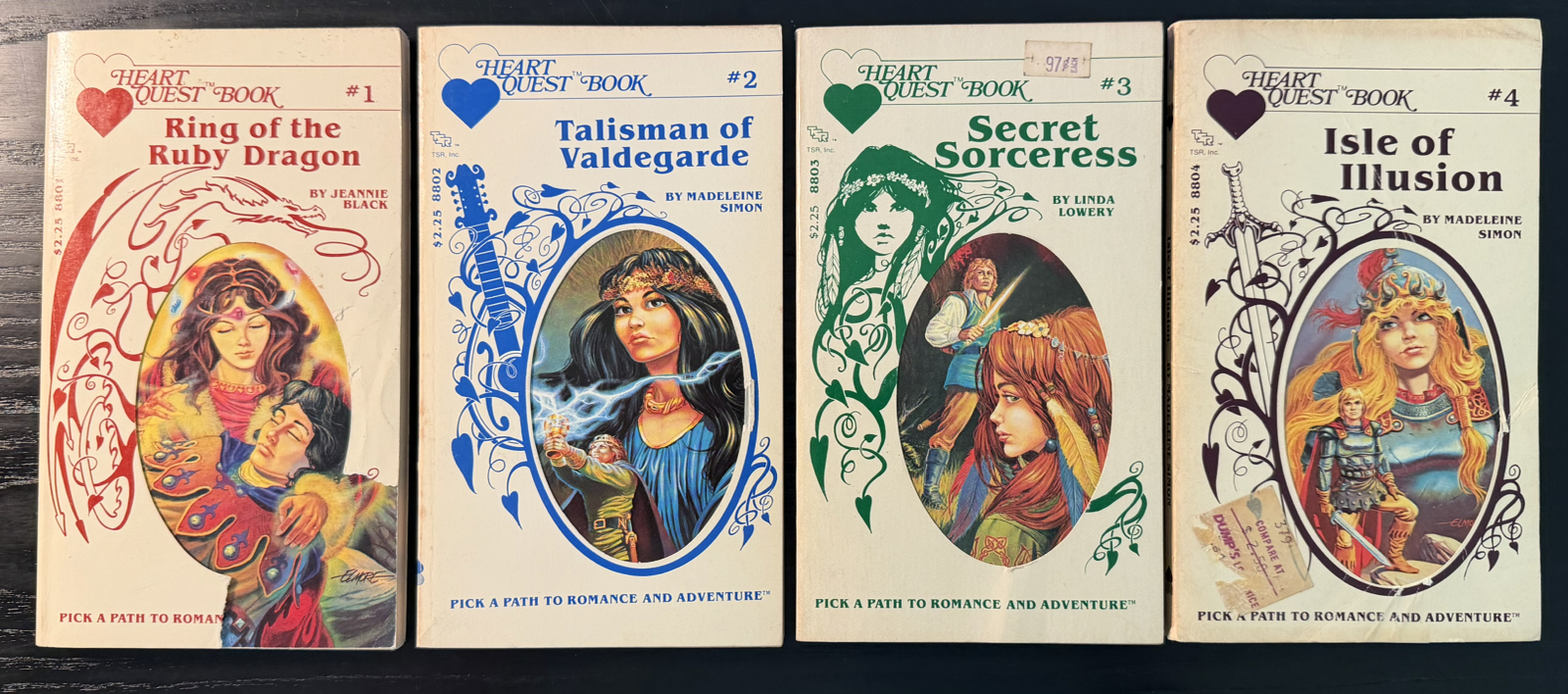
These are four books from TSR’s 1983 Heartquest series. These were a spin-off from their successful Endless Quest series of Dungeons & Dragons Gamebooks, only with less combat and more romance.

In the books you play teenage heroines on quests to defeat evil. You are joined by one or more young men with which romance inevitably ensues. In advertisements of the time the romantic aspects of these books were highlighted, which seemed quaint now until I recalled the ‘romantasy’ genre currently dominating women’s book sales!
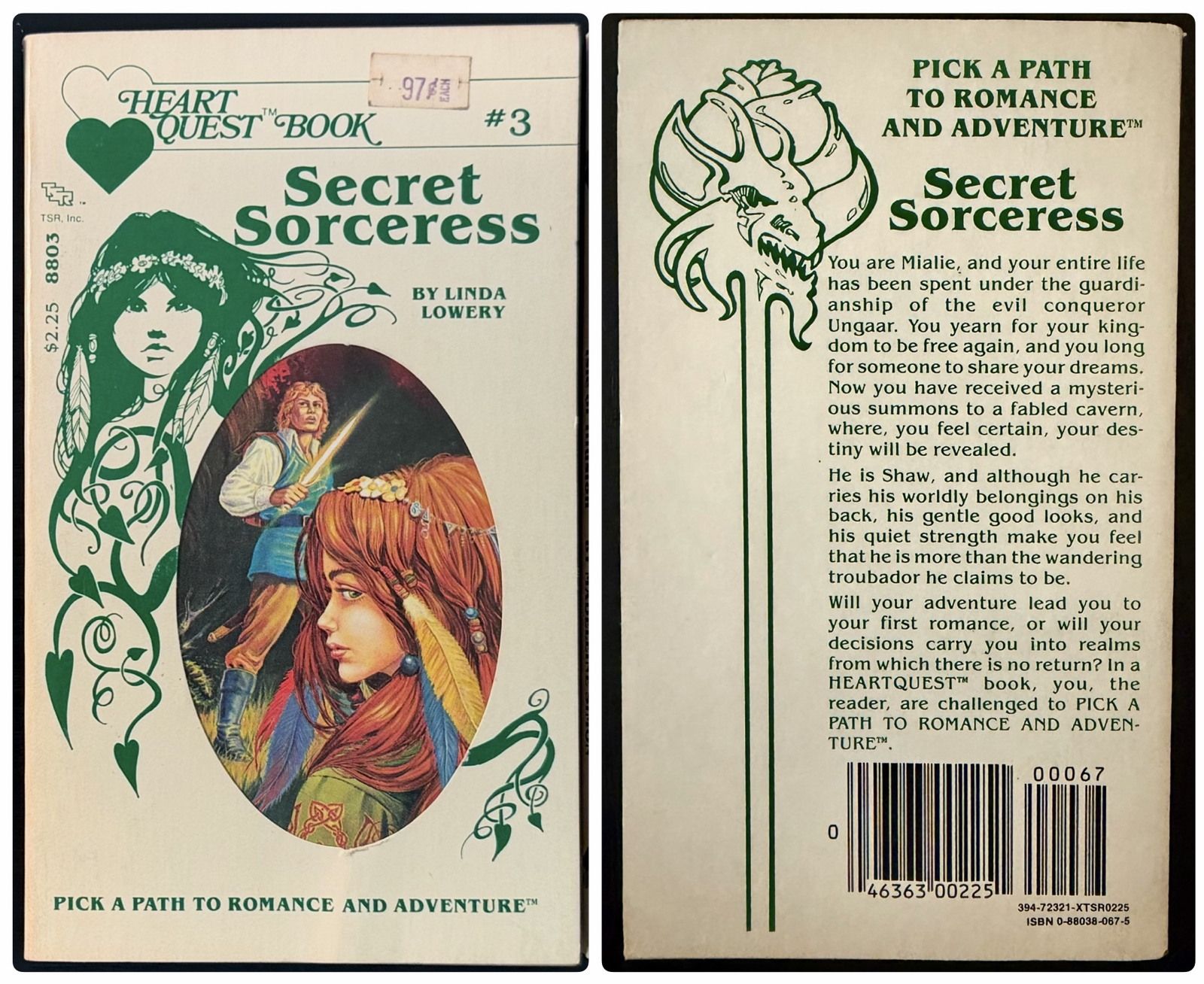
In Secret Sorceress you play an orphaned girl going on a quest with an equally orphaned prince to find a magical scepter with which you can defeat a usurper. It’s a slim volume with only about a dozen choices and the D&D trappings (a Dragonne, Leprechauns) take a backseat to fluttering hearts!
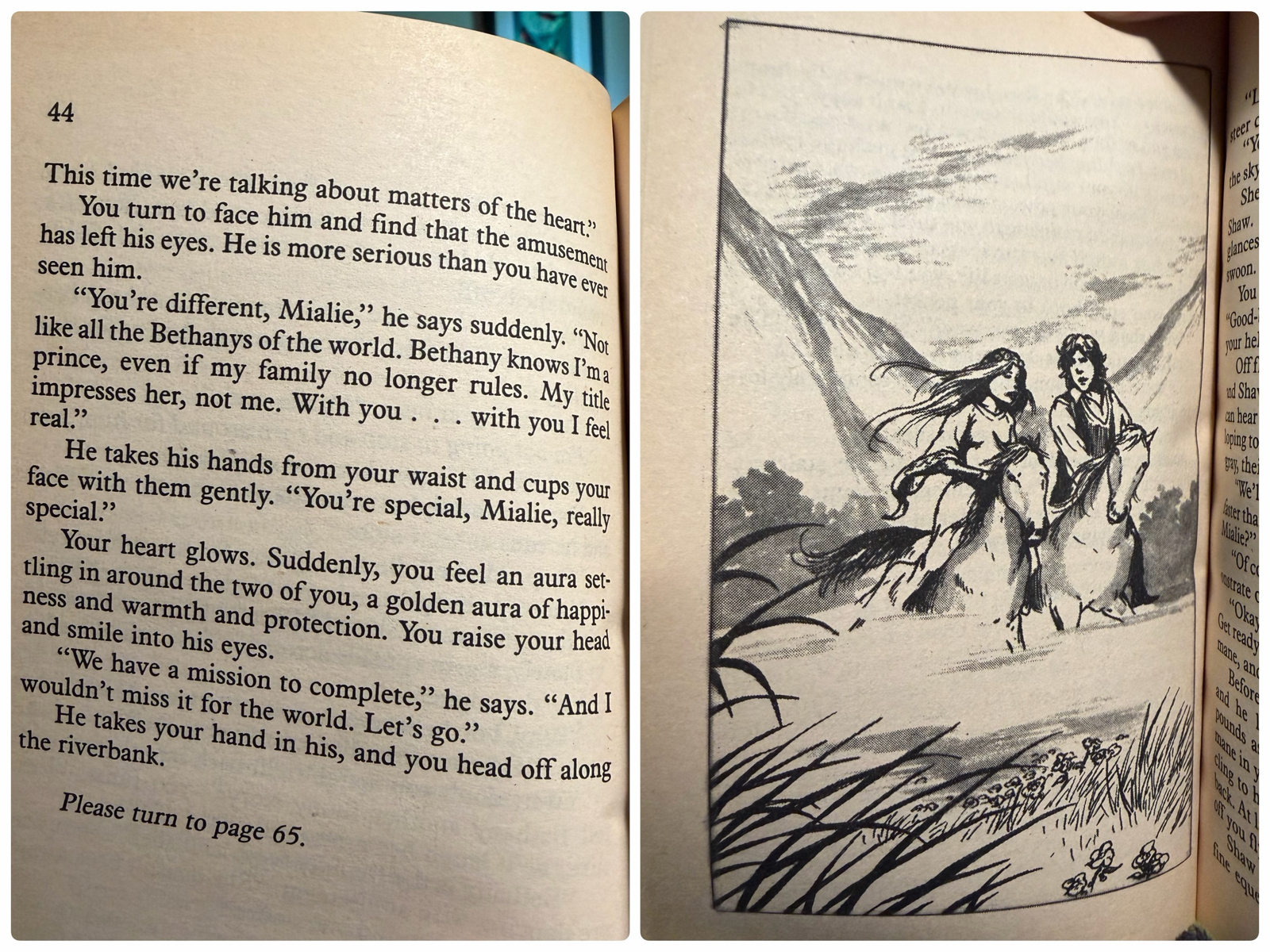
The book ends when the scepter is found (there is no mention of what the scepter does and the big bad never makes an appearance), although some ‘bad’ endings throughout don’t seem bad at all since they involve your character living happily ever after with the prince after all!

Both as a gamebook and as a fantasy novel I found this underwhelming, but then I’m not a young teen girl in 1983! My opinion may not be too removed from the original audience since the line failed and the final two books (which I don’t own) received extremely limited distribution. Forty-three years removed this series is now a curious footnote in the history of D&D, and the books themselves have become expensive and rare collectibles.
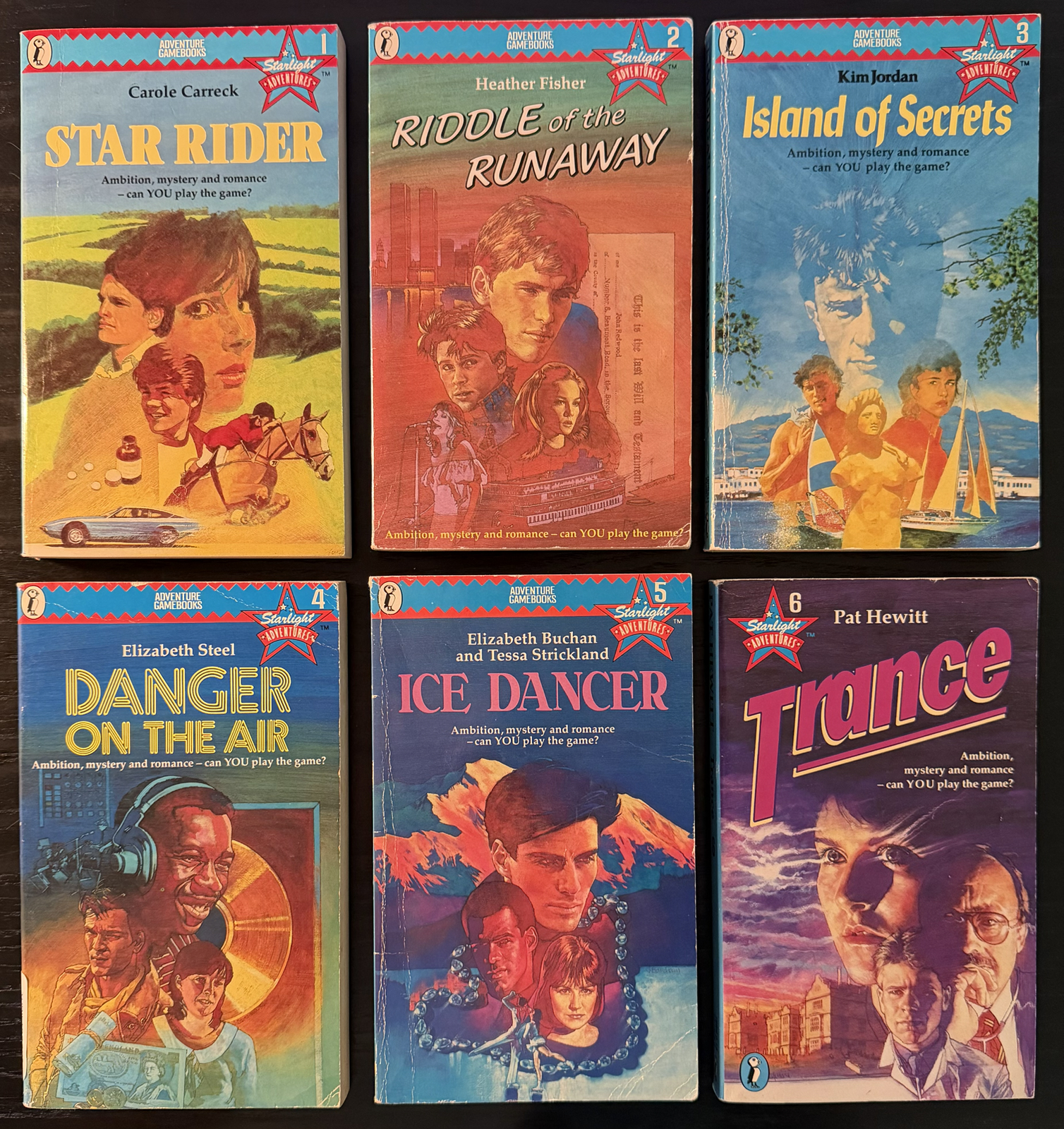
The Starlight Adventures were six gamebooks released by Puffin in 1985. These were a spin-off from the very successful Fighting Fantasy series and featured similar trade dress, formatting and even utilized many of the same artists for interior art. They were advertised in some of the Fighting Fantasy (FF) books at the time, although they have no fantastic elements at all, instead taking place in the real world.

The books are much longer than the Heartquest series, telling a robust story with many more choices. While they all include potential romance, the player can choose to ignore it if they wish. Also, despite a whimsical series title, these are definitely written for an older reader than Heartquest, featuring young adult protagonists who have careers and drink alcohol!
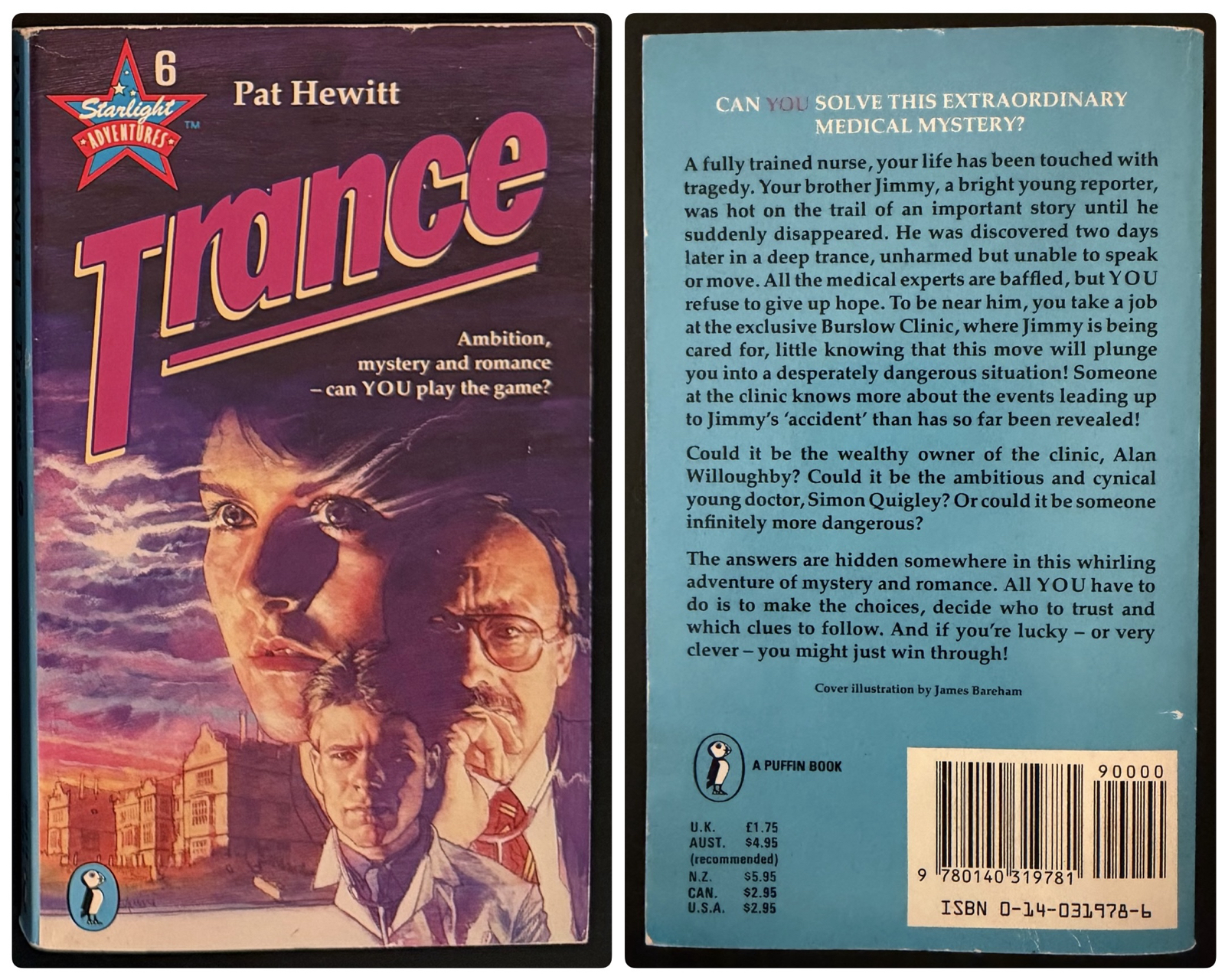
In Trance you play a young nurse investigating the cause of your brothers mysterious illness. You’ll discover a conspiracy to defraud wealthy patrons of a clinic, and in the process you may be aided – and even abetted – by several eligible young men.
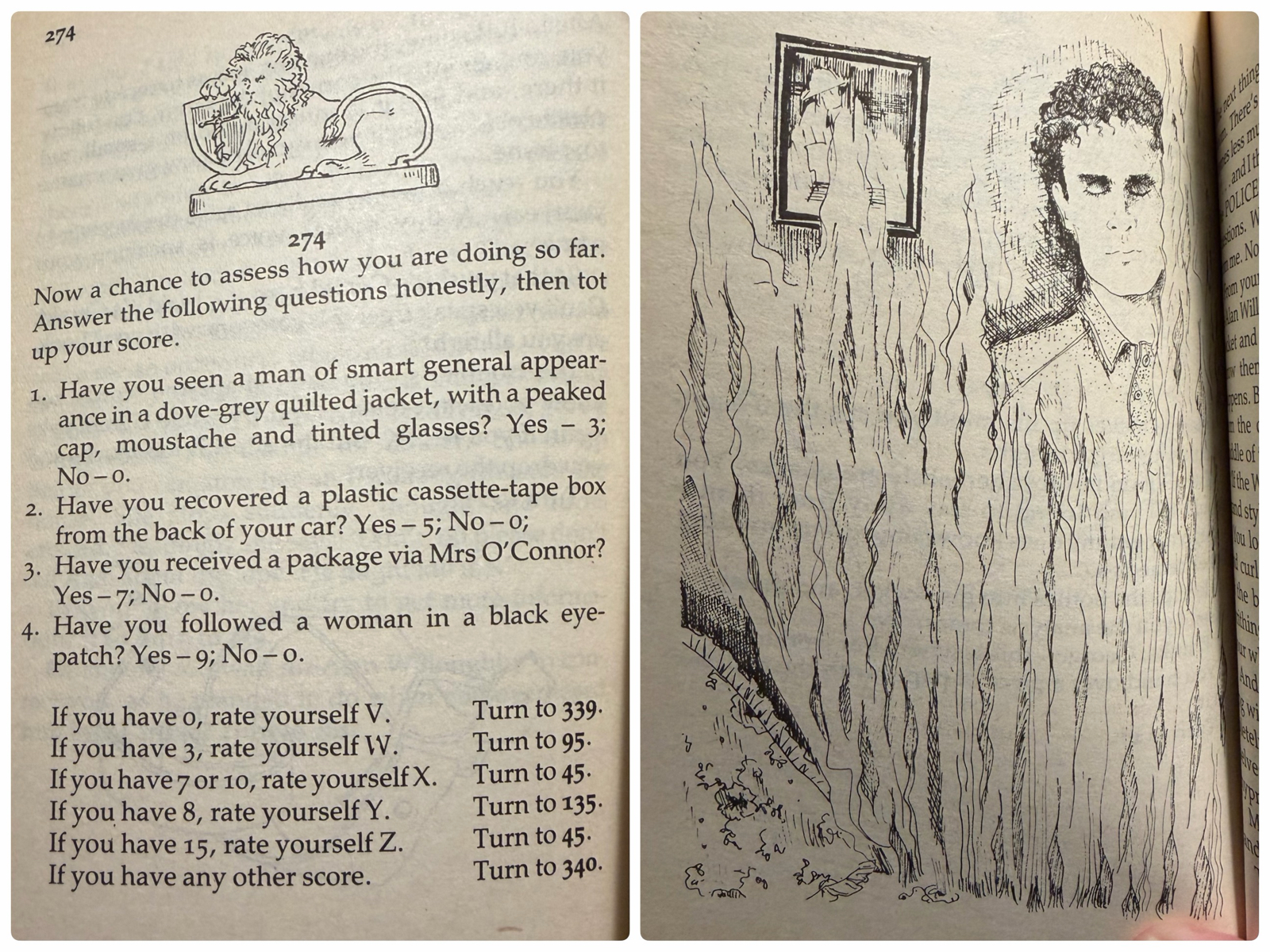
It’s a mysterious albeit predictable scenario, but I found it interesting to read a real-world tale using the familiar skeleton of a FF book. Some of the jumps between sections are too abrupt, and I would have preferred dice or even some sort of game system to replace choice in a few spots, but overall I felt this was a good read and enjoyed the book.

Like Heartquest, only six books in the Starlight Adventures series were ever released. I was still actively buying new gamebooks at the time, and I have no memory of ever seeing these and didn’t learn of their existence until over twenty years later! I’m happy to have them in my collection now, since these have skyrocketed in price on the secondary market.
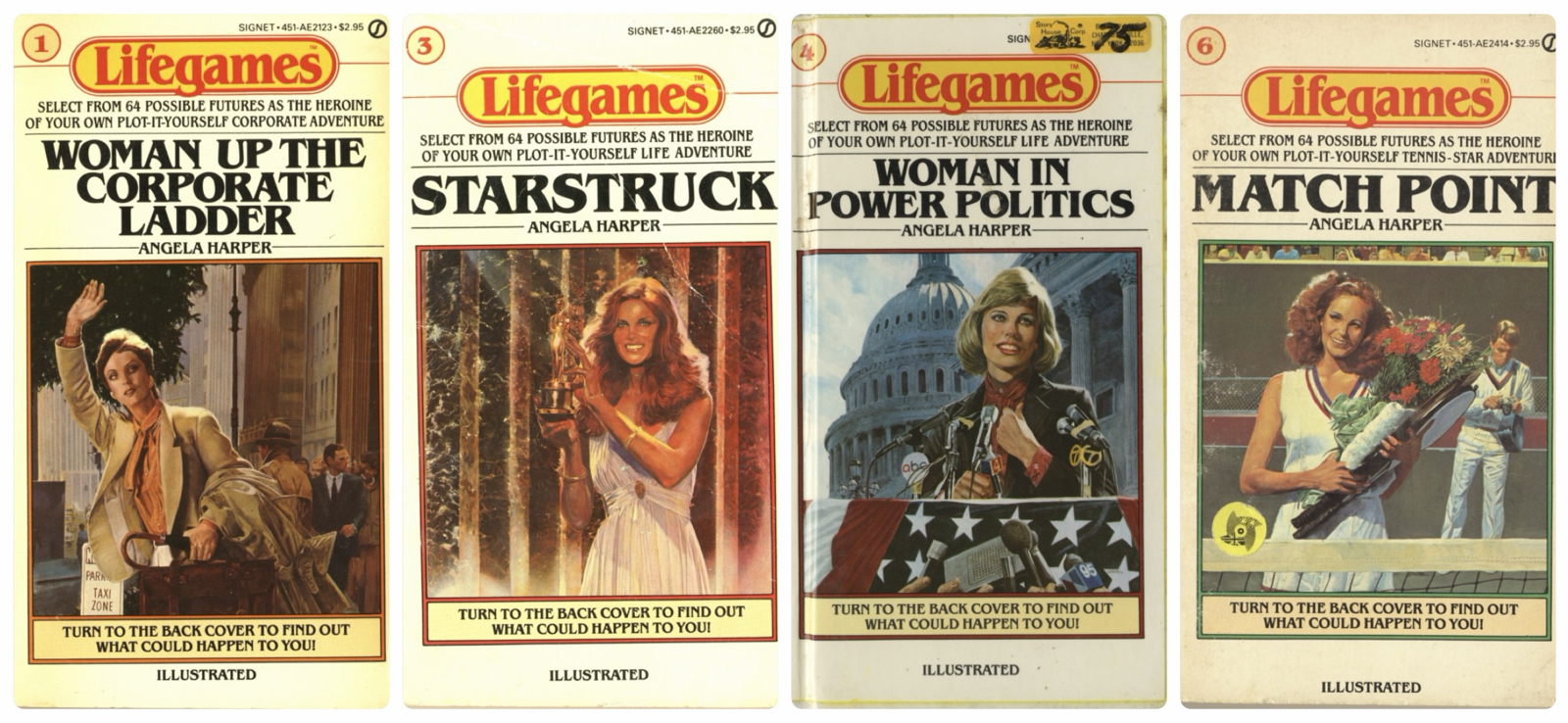
One last series I’ll mention is Lifegames, also from 1983. Four of the six books were targeted at adult women. I’ve never read these and even by gamebook standards these are rare today and I can’t even find reviews of them online. I recall reading once that they are very simplistic branching-choice choose-your-own-adventure style books and they may have contained Christian elements!

Aside from these three series, I know of very few other gamebooks published ‘back then’ specifically targeted at girls. Possibly this is because the above ‘failed’, or probably it was because publishers realized girls were happy reading ‘normal’ gamebooks πŸ™‚

Japan Pickups: Gamebooks

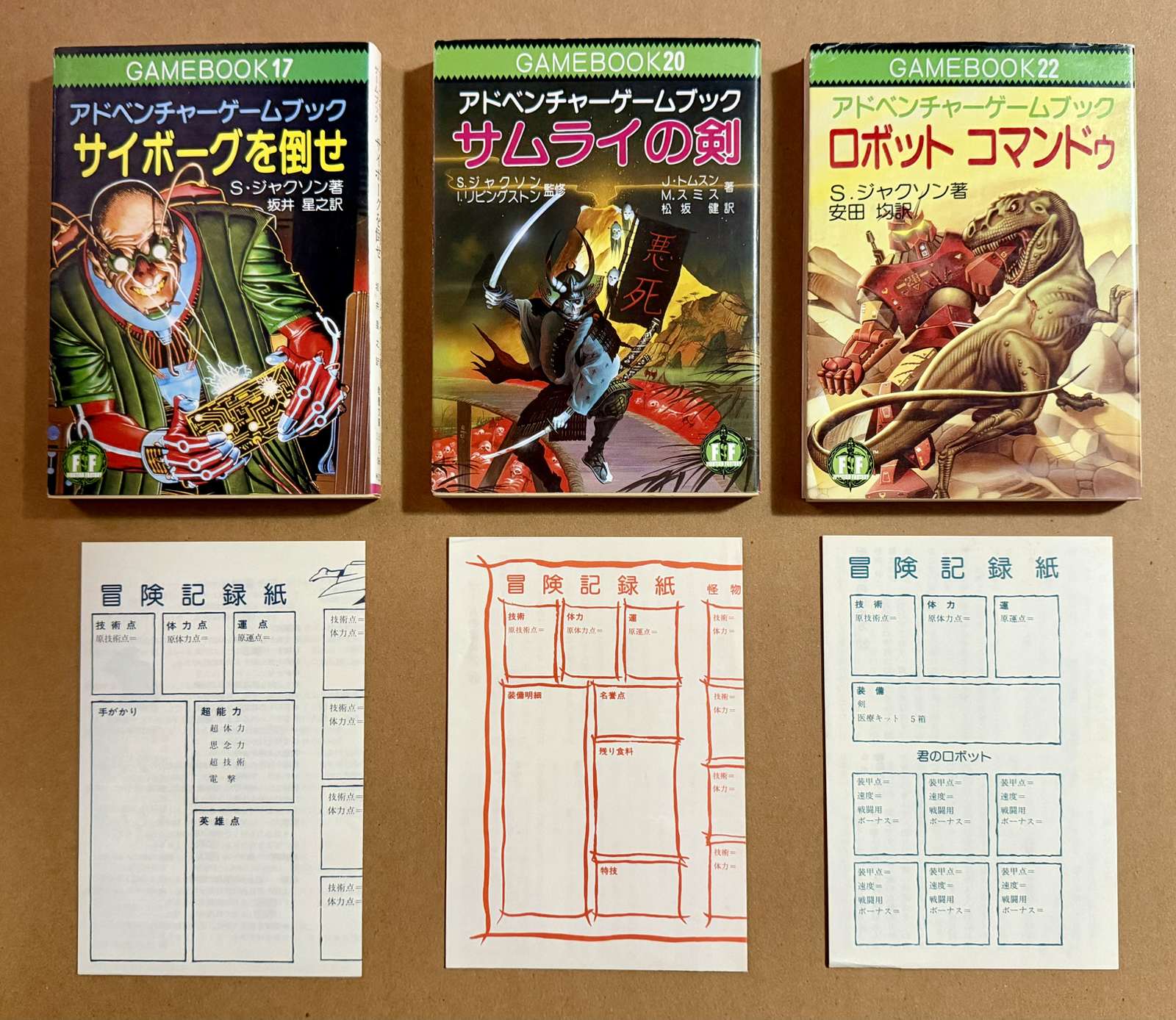
I was stoked to buy the above three Japanese Fighting Fantasy (FF) books on the recent trip. Each is in immaculate condition for books almost forty years old, and included unused adventure sheets (shown below each in the photo). These weren’t cheap, but I now own 75% of the original Japanese editions and if I see one I don’t own, I’m buying it πŸ™‚

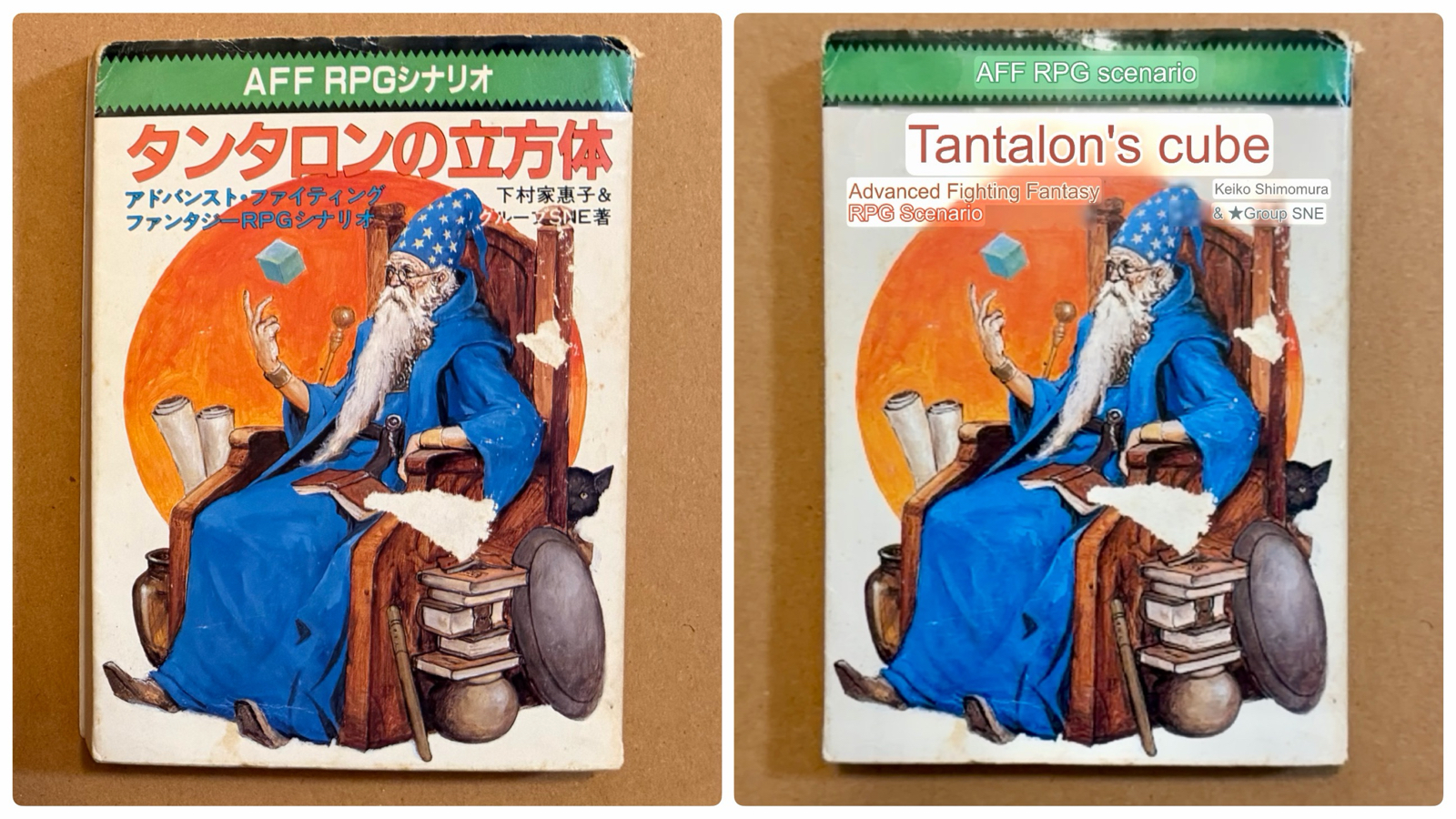
This was a surprise! Tantalon’s Cube describes itself as the first Advanced Fighting Fantasy (AFF) adventure, and is a lengthy quest where adventures must assembled the ‘Cube Of Balance’ created by the legendary King Tantalon to save the Kingdom of Galantaria from invasion. This – a Japanese only book – seems to be full of references to the larger FF world, not the least being Tantalon himself. I’m sure you’ll agree the cover art is wonderful.

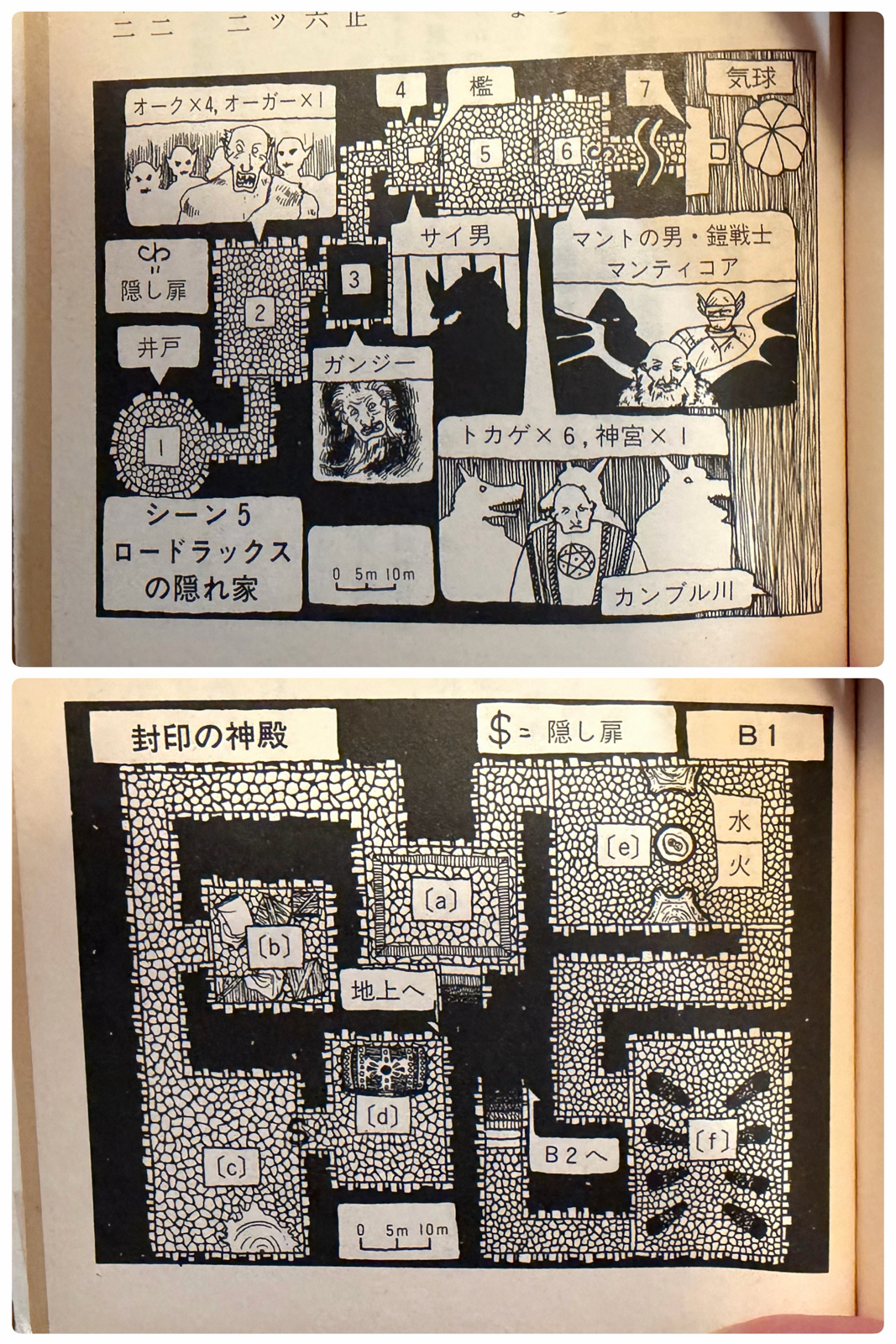
The book itself is a traditional RPG module in the bunko (A6) size as was common in Japan when it was printed. It’s full of original art and many half-page small maps like those above. I’ve never seen or even heard of this book before, so I was surprised to find it for a very low cost (under $10)!

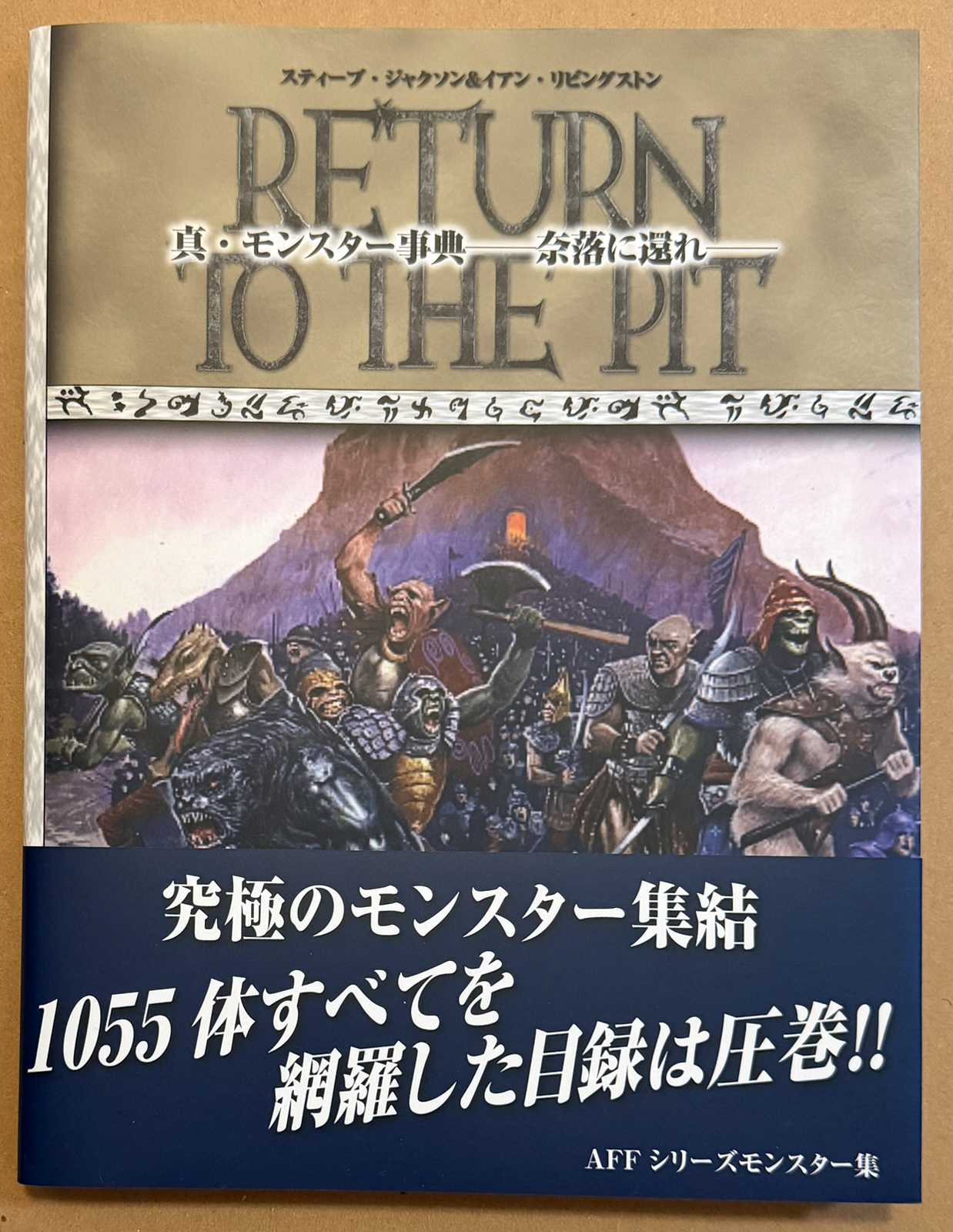
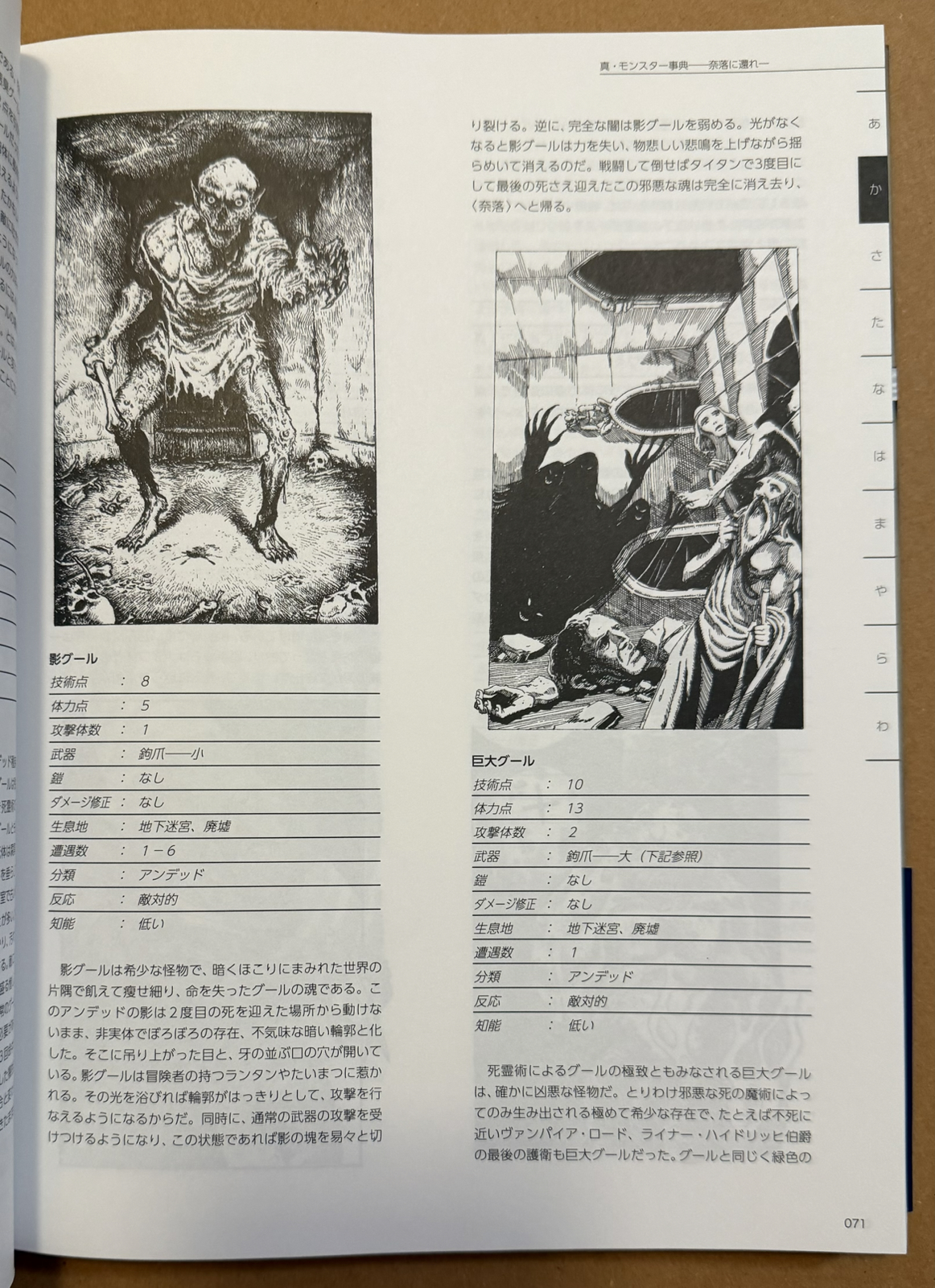
I don’t often buy Japanese AFF rulebooks, but I like monster manuals and this recently printed third version caught my eye.

Much like the previous ‘Out Of The Pit’ monster manuals this is loaded with stat blocks for monsters taken from FF books, including the newer titles published during the Wizard and Scholastic era. Lots of lovely art and detailed descriptions for beasts that had perhaps a single line in the original books πŸ™‚

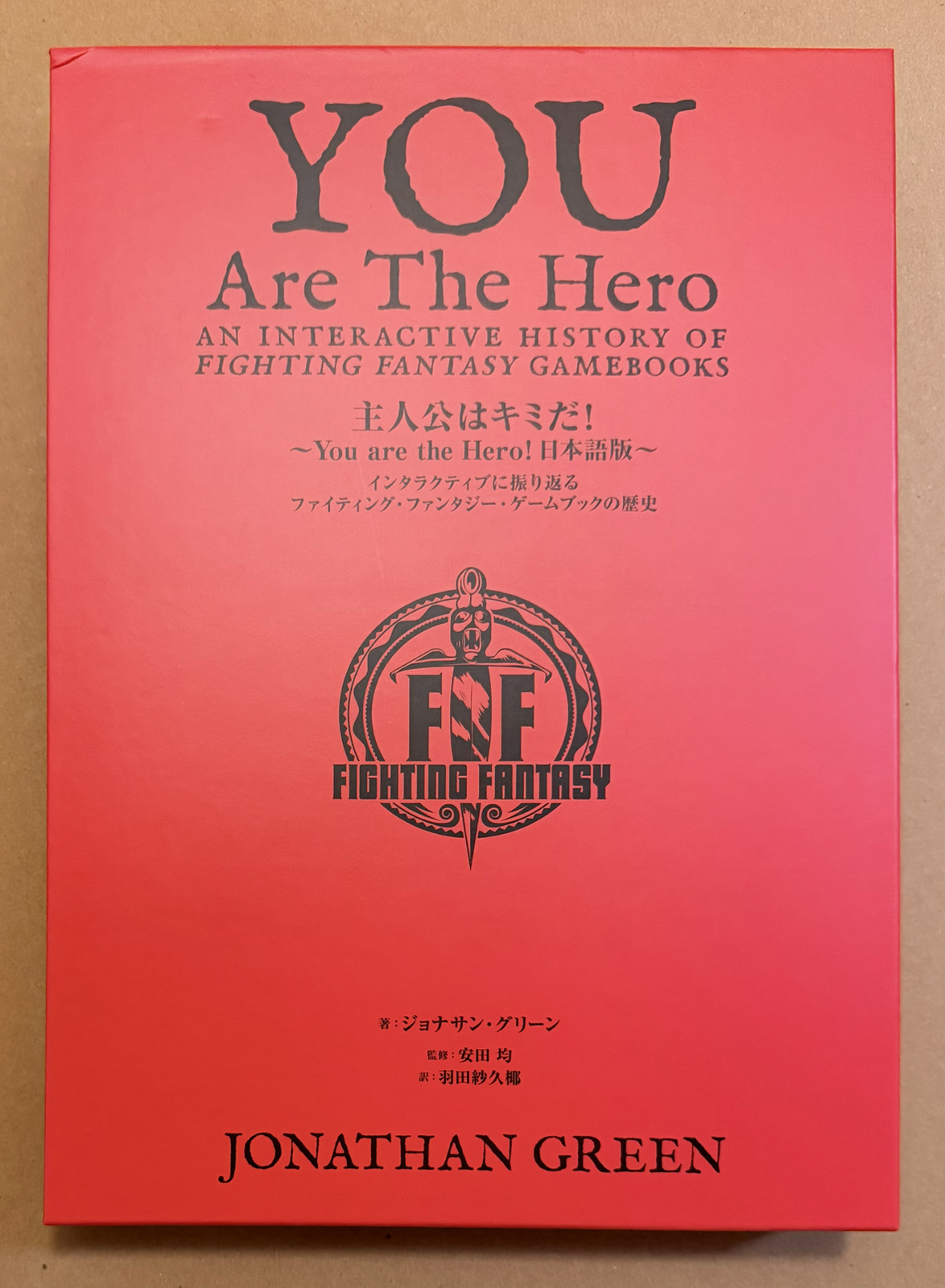
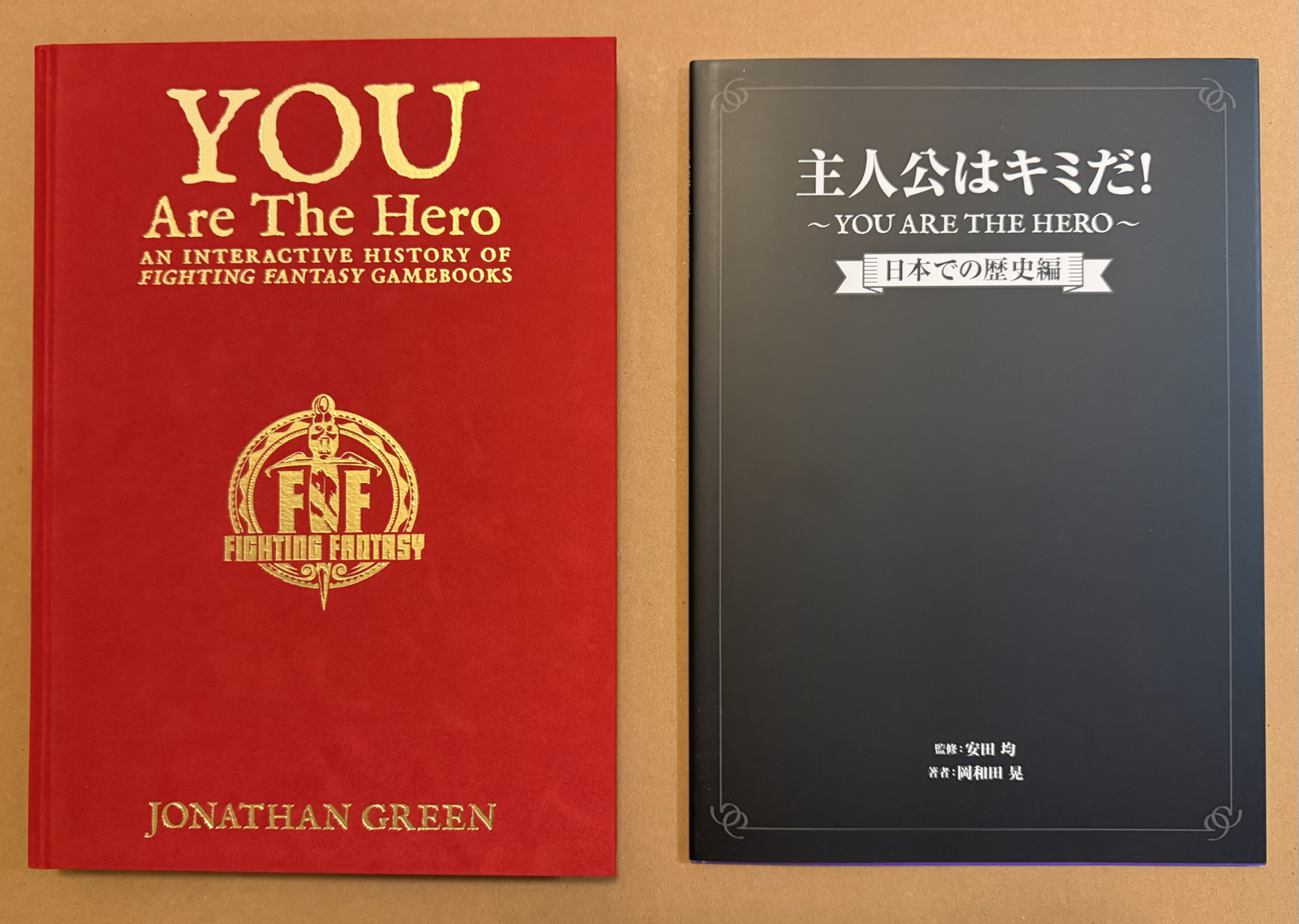
This is the very recent Japanese translation of the FF history book first published in 2014. From what I read this was a kickstarted product that is currently still shipping to backers, so I was surprised to find it in a used store. This was expensive, at about $100.

I was even more surprised when I opened it and found it was actually new! This is a lovely book – printed on high quality paper, hardbound and with a metallic ink and red velvet cover. It’s also written in an interactive format which surprised me, since I’ve got the original 2014 version (and the 2016 update), neither of which were written as a gamebook:

I was so impressed by this updated version I’ve now purchased the English edition, which while hardly as impressive in terms of production quality, means I’ll be able to read it!

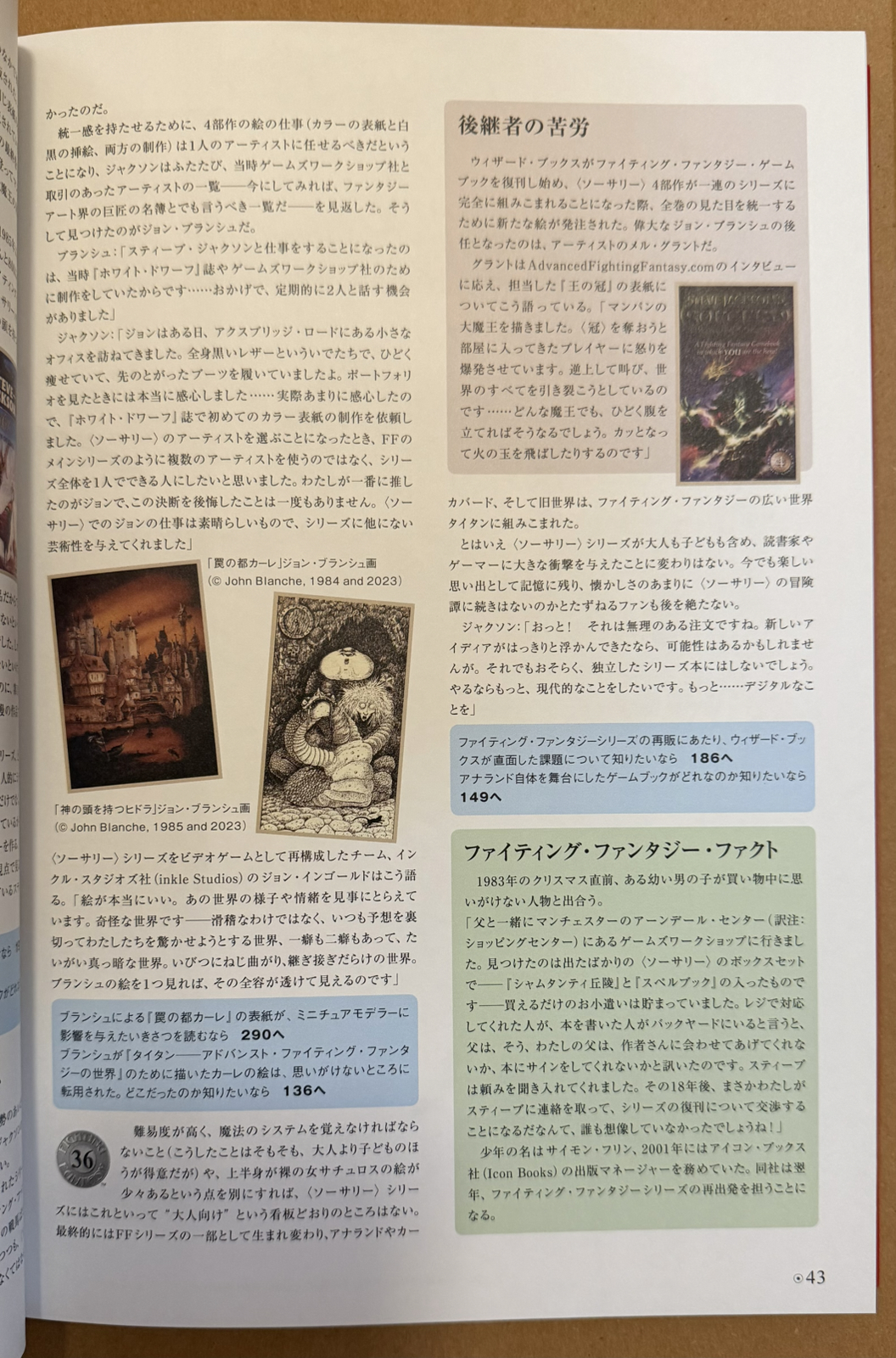
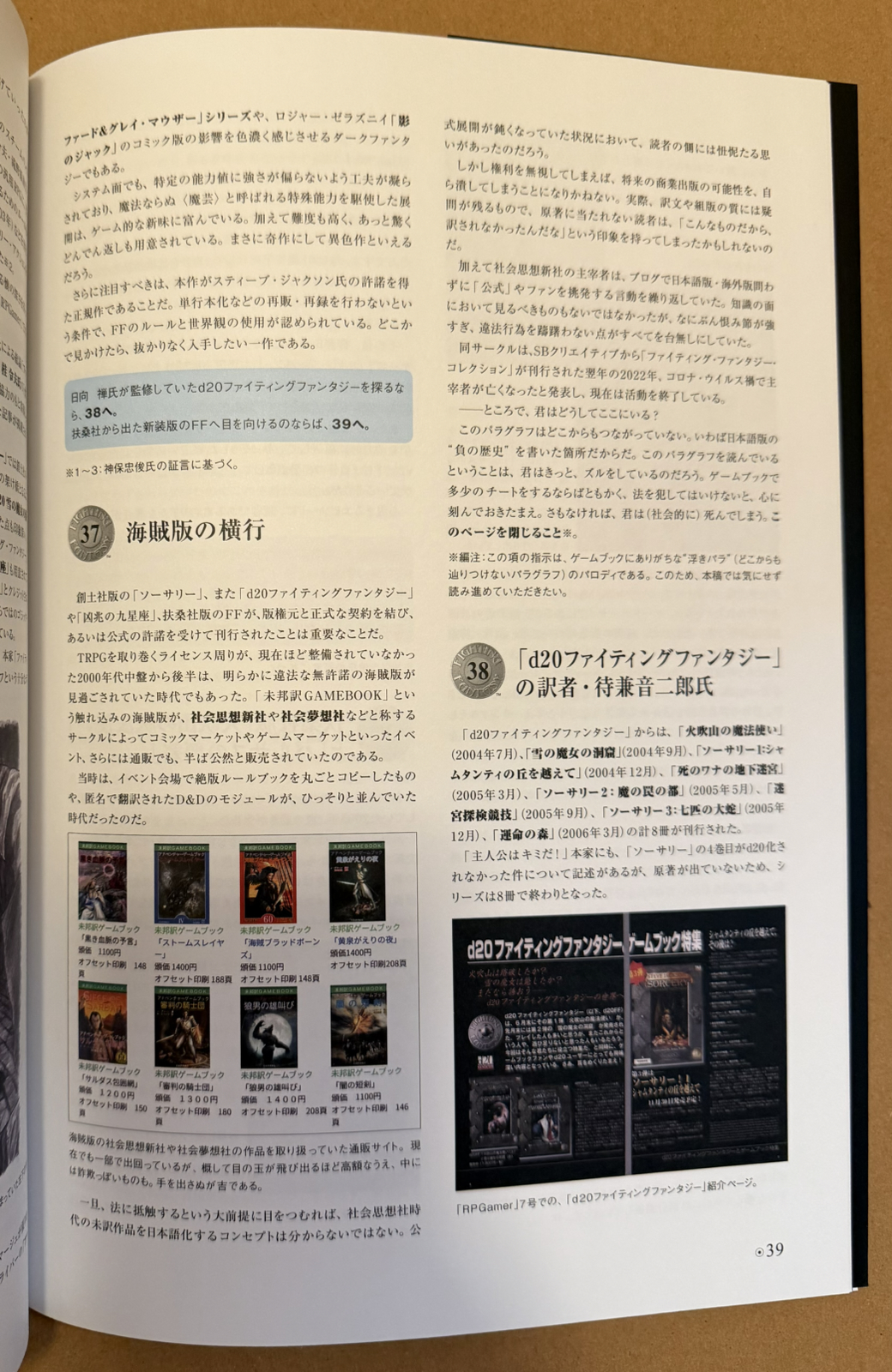
But the best part of this premium set is the inclusion of a separate, smaller volume that is a history of FF in Japan. As a collector of the Japanese editions, I hope this is full of answers to many questions I have:

The above example page contains a discussion of Japanese bootleg FF books (!) and the entry itself is impossible to reach if you read the book interactively, which is a joke reference to paragraphs in some FF books which the player can never read without ‘cheating’ πŸ™‚

I’m very much looking forward to reading this Japanese history!

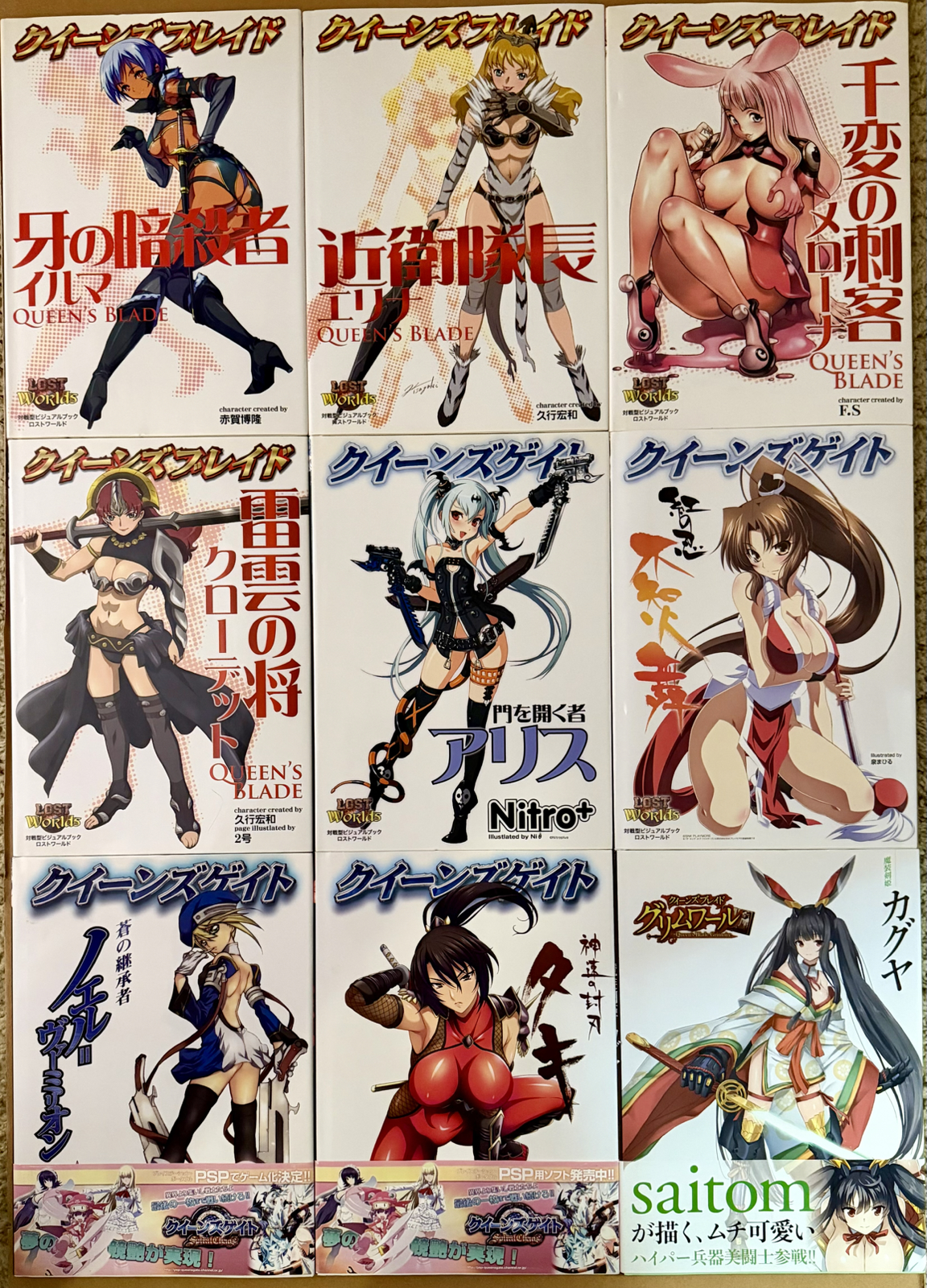
Lastly I purchased nine Queen’s Blade gamebooks. I already owned about twenty, and with this purchase I think I have more than half of them. These remain very inexpensive at the used stores in Japan – none of the above cost me more than $7 – and I’ll continue to buy them as I see them on future trips.

Happy Birthday To Me

For a time now I’d been wanting to reduce my collection of gamebooks. This was partially for space, and partially so I could concentrate on the series that mean the most to me. I found potential buyers online but the (very fair) offers received for the books I had decided to sell hardly covered the cost of shipping them. I had no regrets when I decided to toss about 200 books into a recycling bin a few weekends ago.

The silver lining of this process was that in the process of searching for potential buyers I found a store that had some items for sale I was very interested in. I hastily made a purchase, and a box arrived in time for my birthday (today). These were inside:

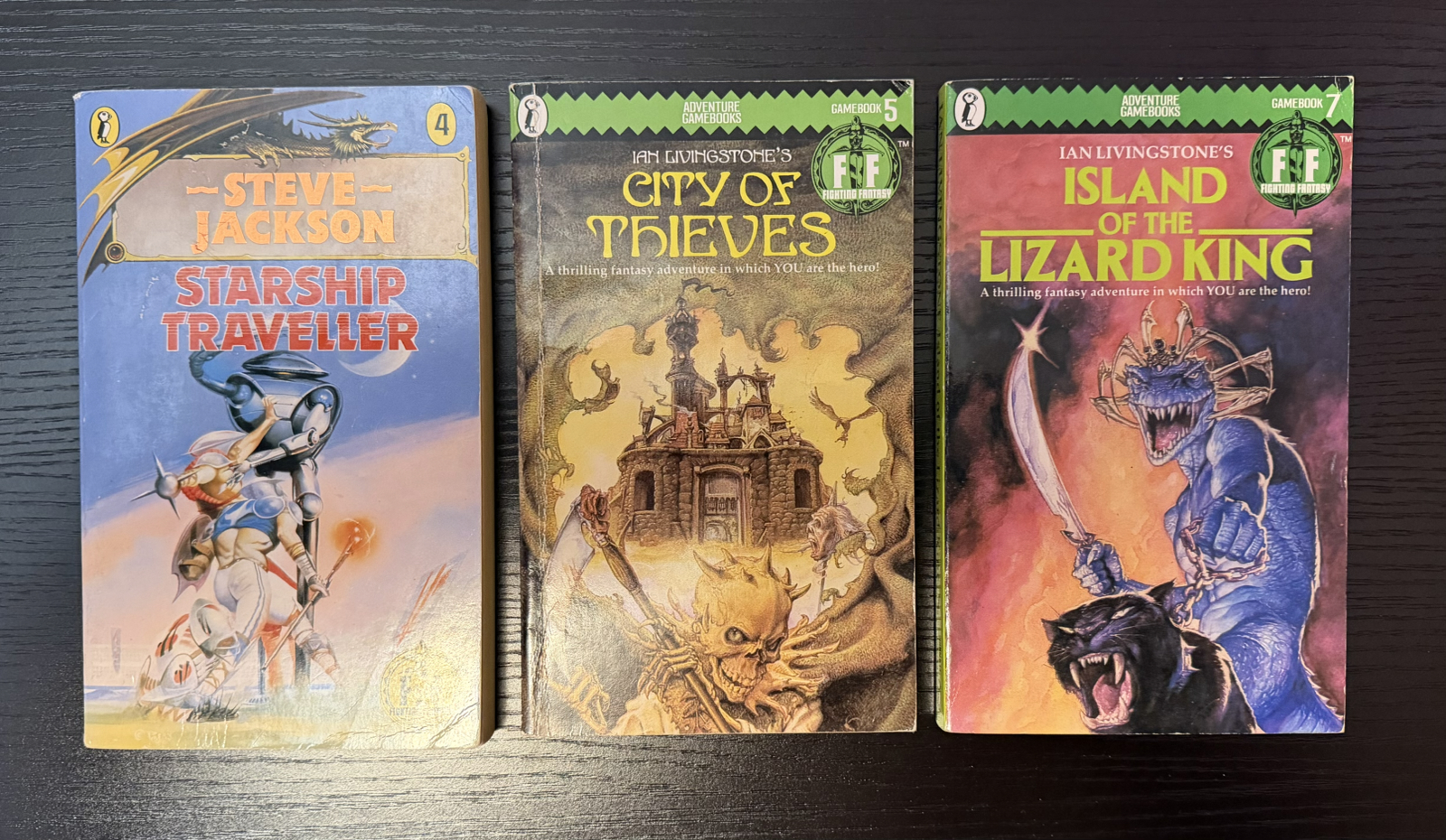
The core of my collection is the Fighting Fantasy series, which I have loved since childhood. I’ve got hundreds of volumes, which means many copies of each since there are only about 70 unique books. It’s been many years since I’ve found an imprint I didn’t have, so I was surprised to see the above for sale. Of course I already own each book – in fact I already had 8 different copies alone of City Of Thieves – but I didn’t own the ‘Green stripe’ edition. Now I do πŸ™‚

As happy as I was with these, I also bought this:

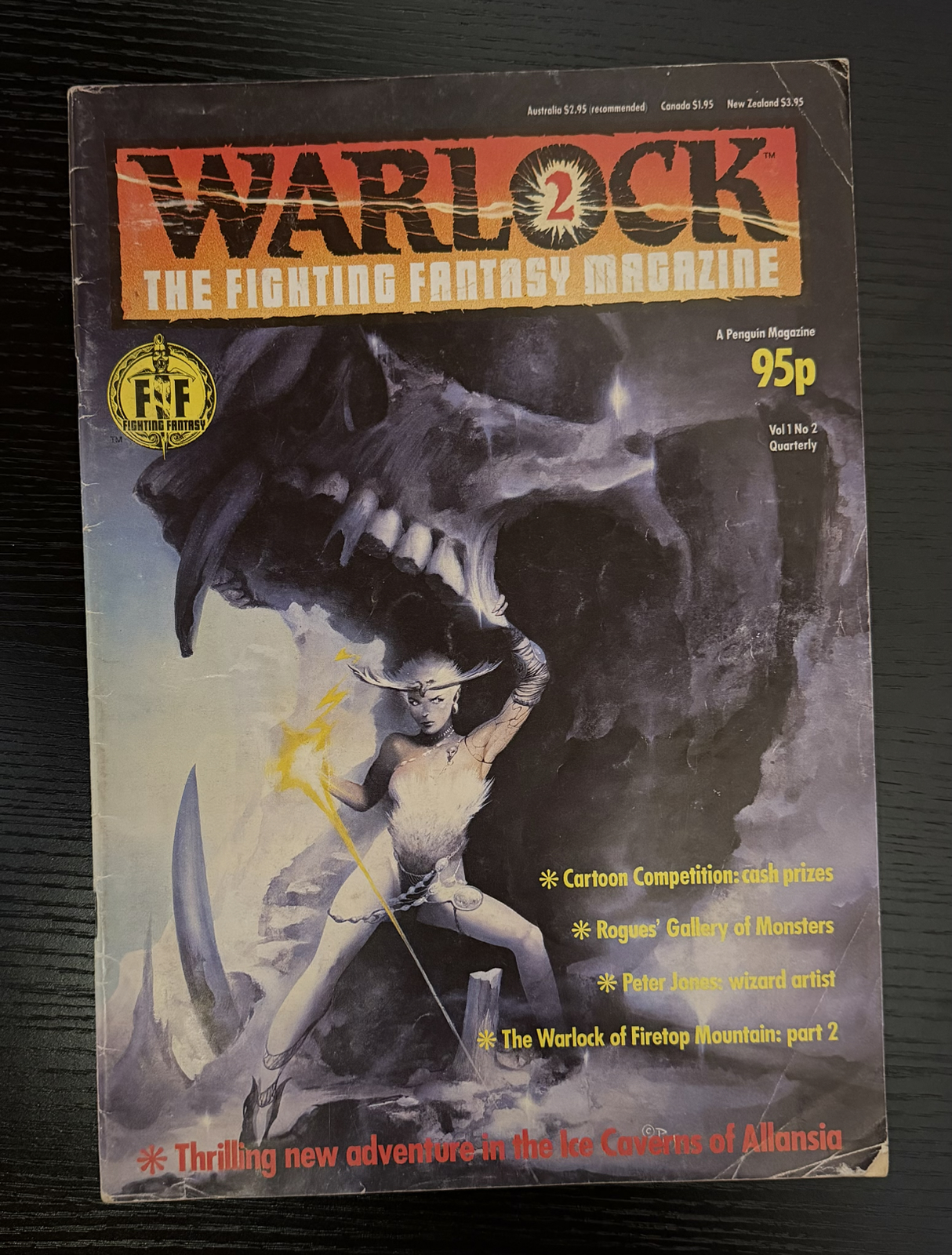
I was absolutely amazed to see they had this. It’s issue #2 of the Fighting Fantasy magazine from 1985. This was a ‘holy grail’ item to me, and given the scarcity of these I had essentially given up ever owning one.

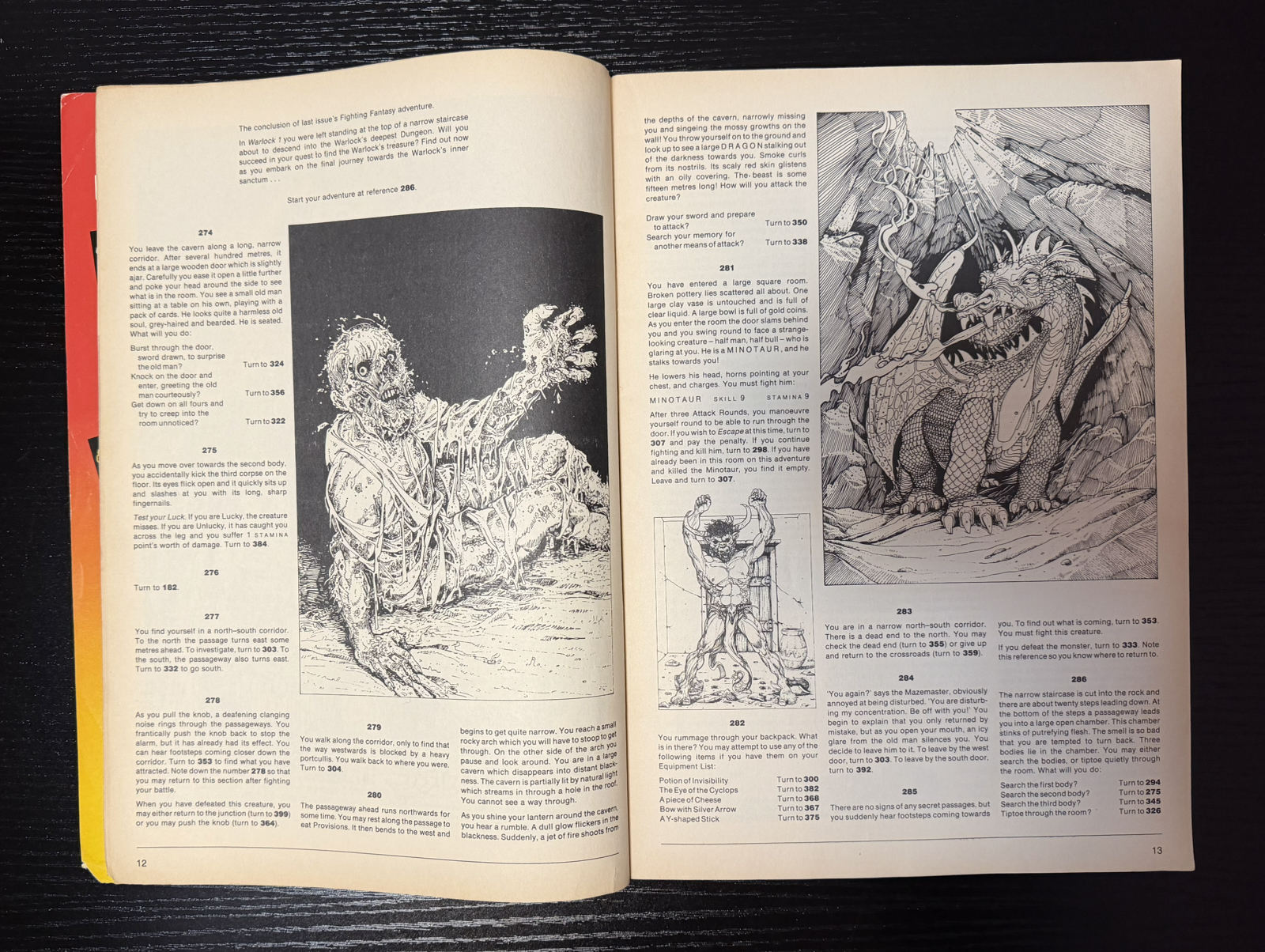
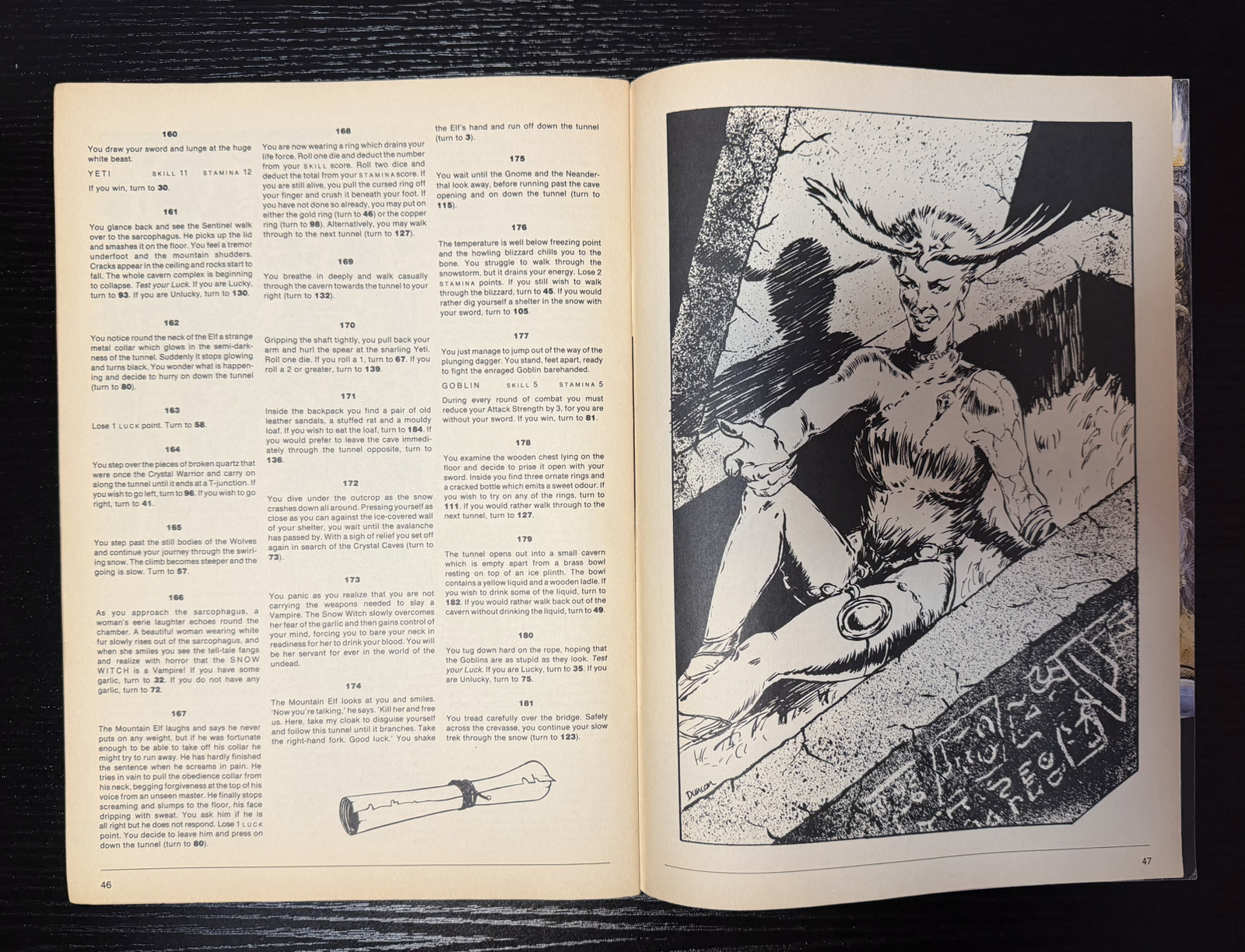
It’s a fairly slim publication, sparse on editorial content. It reprints (half of) Warlock Of Firetop Mountain with beautiful large reproductions of the art, and also contained an original new solo adventure called Caverns Of The Snow Witch:

It’s short at only 190 entries, but would eventually be expanded and become the 9th FF book. I recall when I learned this as a child being amazed a magazine existed with gamebook adventures in it!

Indeed Warlock magazine was almost unobtainable in Australia. I somehow knew of it and looked for it in newsagents but only ever owned one copy, specifically #11 (which Adam inherited from me and graciously returned to me decades later). Much later I learned the magazine was poorly distributed even in the UK, so it’s a miracle any ever made their way to Australia at all.

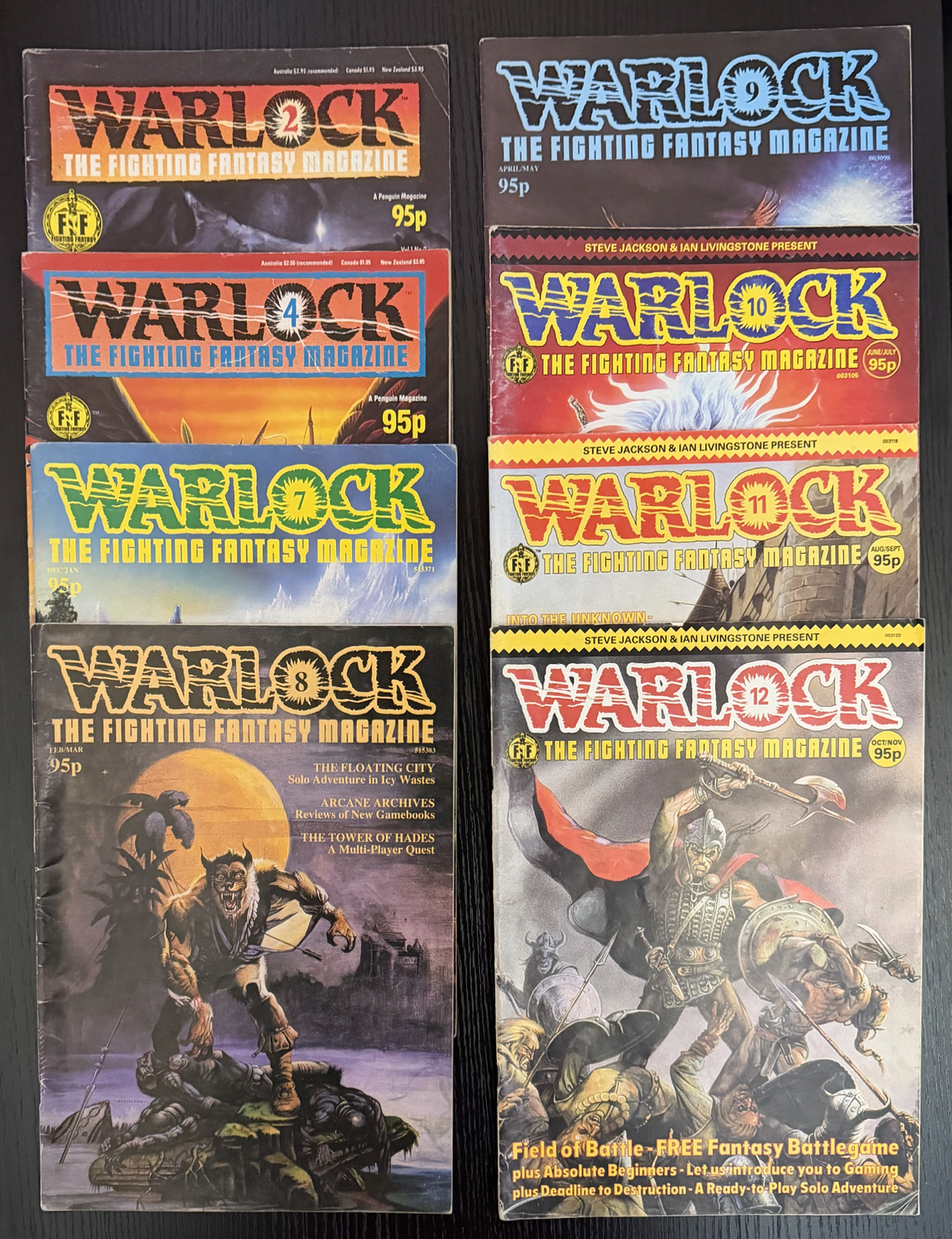
So you can imagine how fast I clicked that ‘submit order’ button when the store I bought the above at didn’t just have one Warlock, but had eight:

These are all from 40+ years ago, and represent about two-thirds of the entire run of the magazine (which ended at issue #13). I was so happy to open the box when they arrived, and learn they were all in great condition. Whoever owned these took care of them!

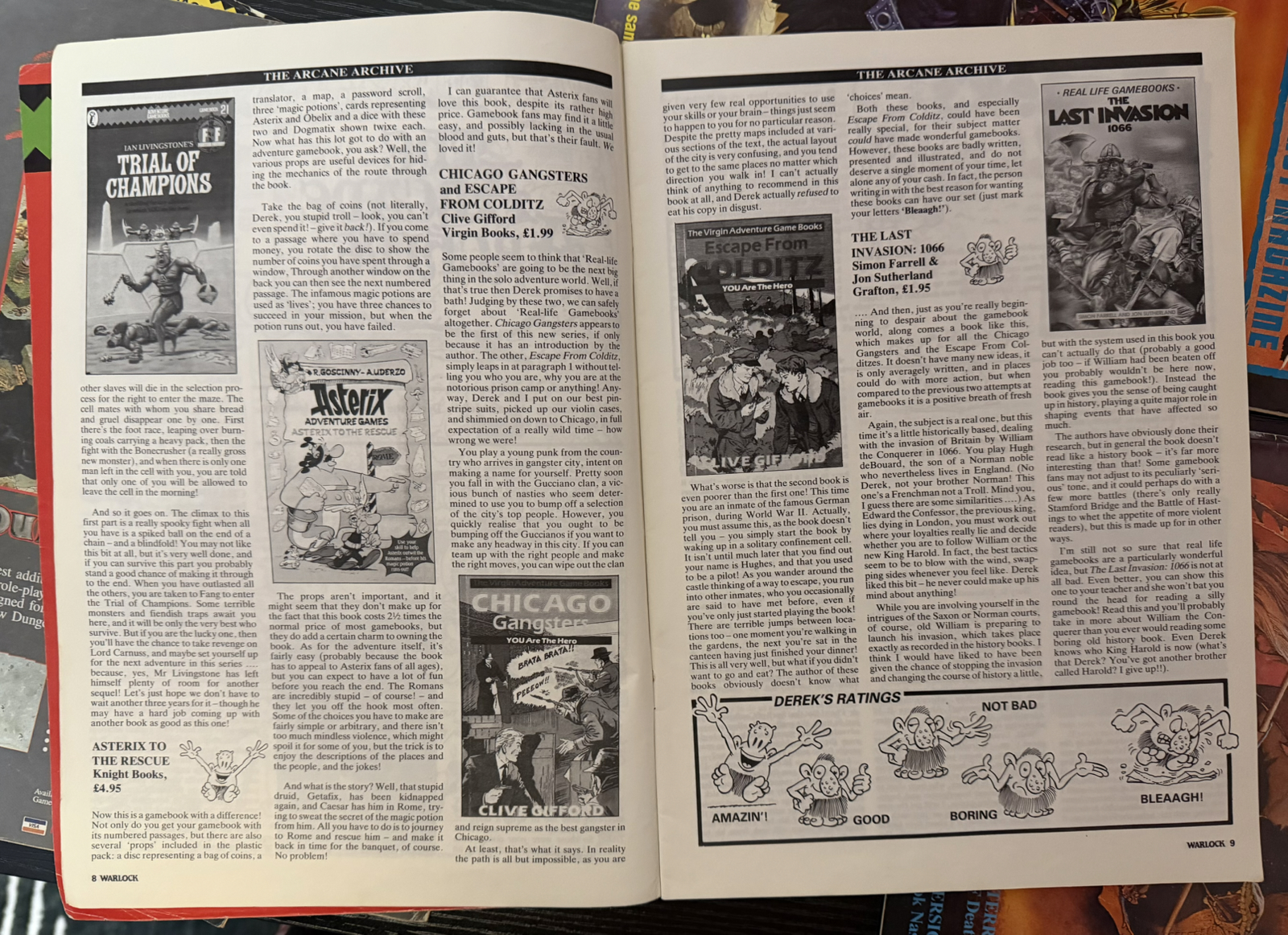
These magazines are a delightful window into the early years of gamebooks. Full of news, reviews, artwork and advertisements, they also contain many original adventures – almost none of which were ever republished.

These magazines were never distributed to the USA so I remain amazed I found them for sale at an American hobby store. I wonder if they came from the same collection, and why the owner sold them?

And if you’re wondering, yes they were expensive πŸ™‚

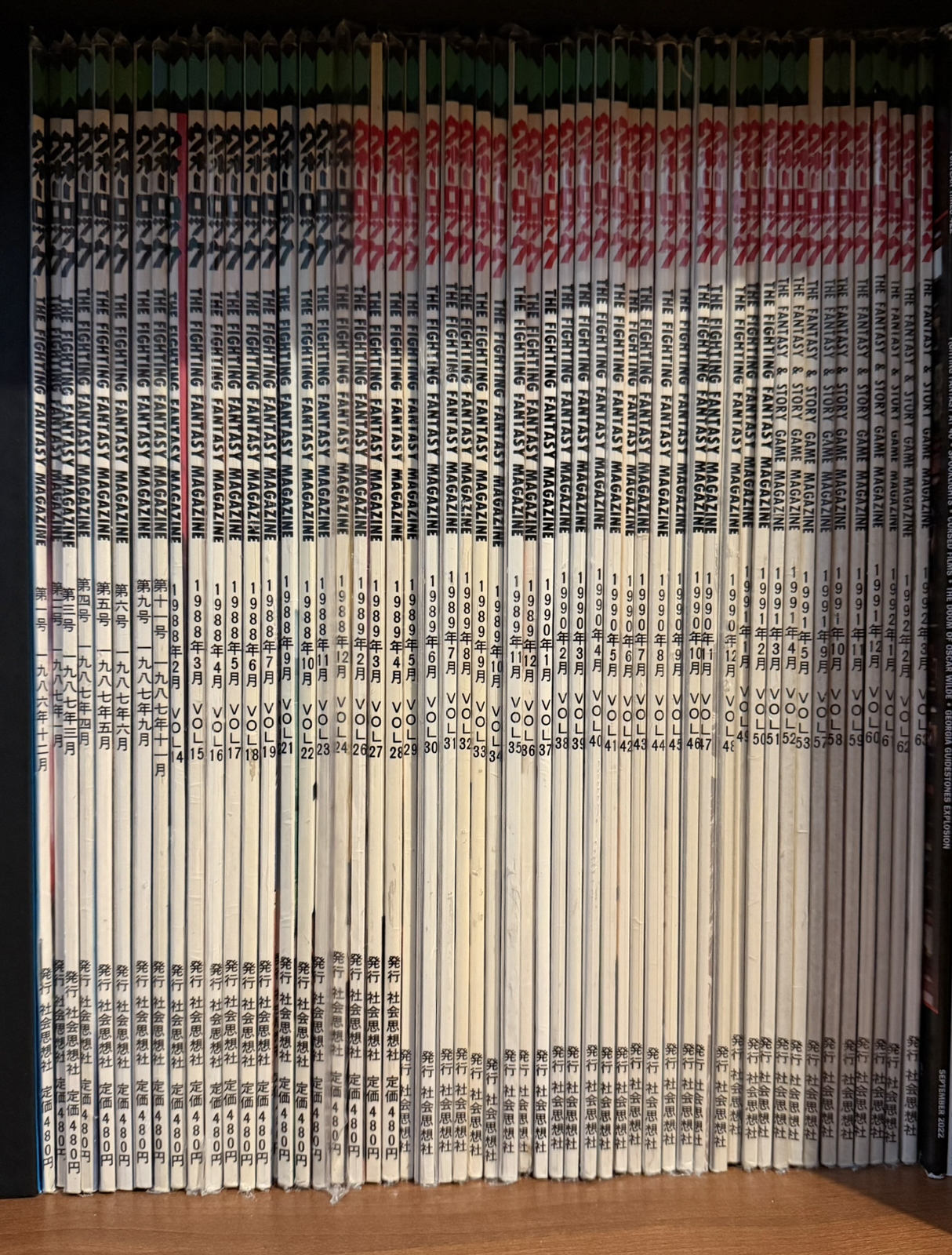
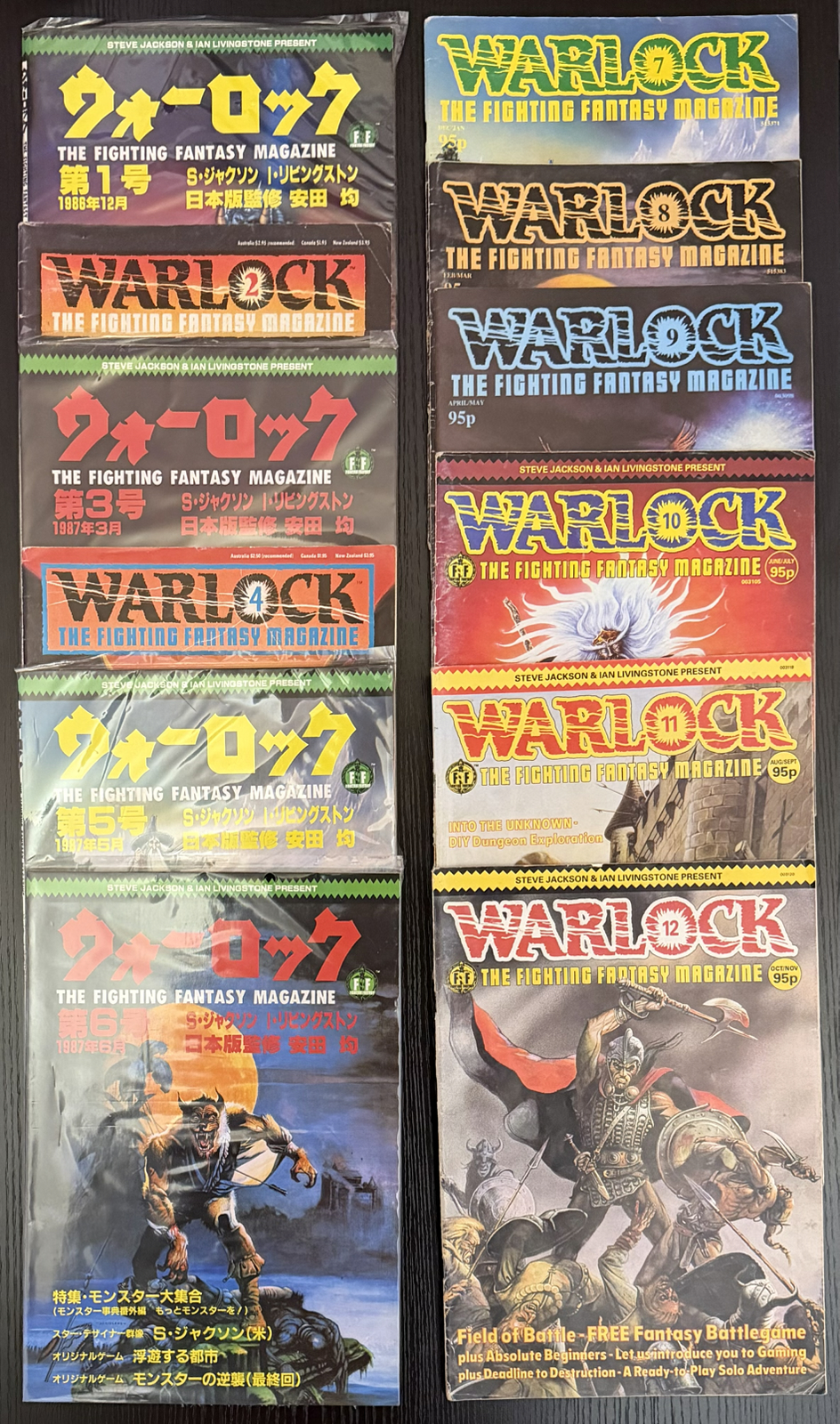
The above is a photo of my current Japanese Warlock magazine collection. I’ve got almost all of them, and you can see the magazine survived much longer in Japan than the 13-issues it ran for in the UK. Here’s a photo of the first dozen issues in two different languages:

Just holding and flipping through these brings a big smile to my face. Happy Birthday to me πŸ™‚