In the early 1980s, gamebooks were topping children’s best-seller charts in many markets. And while they were popular with both boys and girls (and adults), this didn’t stop publishers from dabbling into gamebooks targeted at girls.
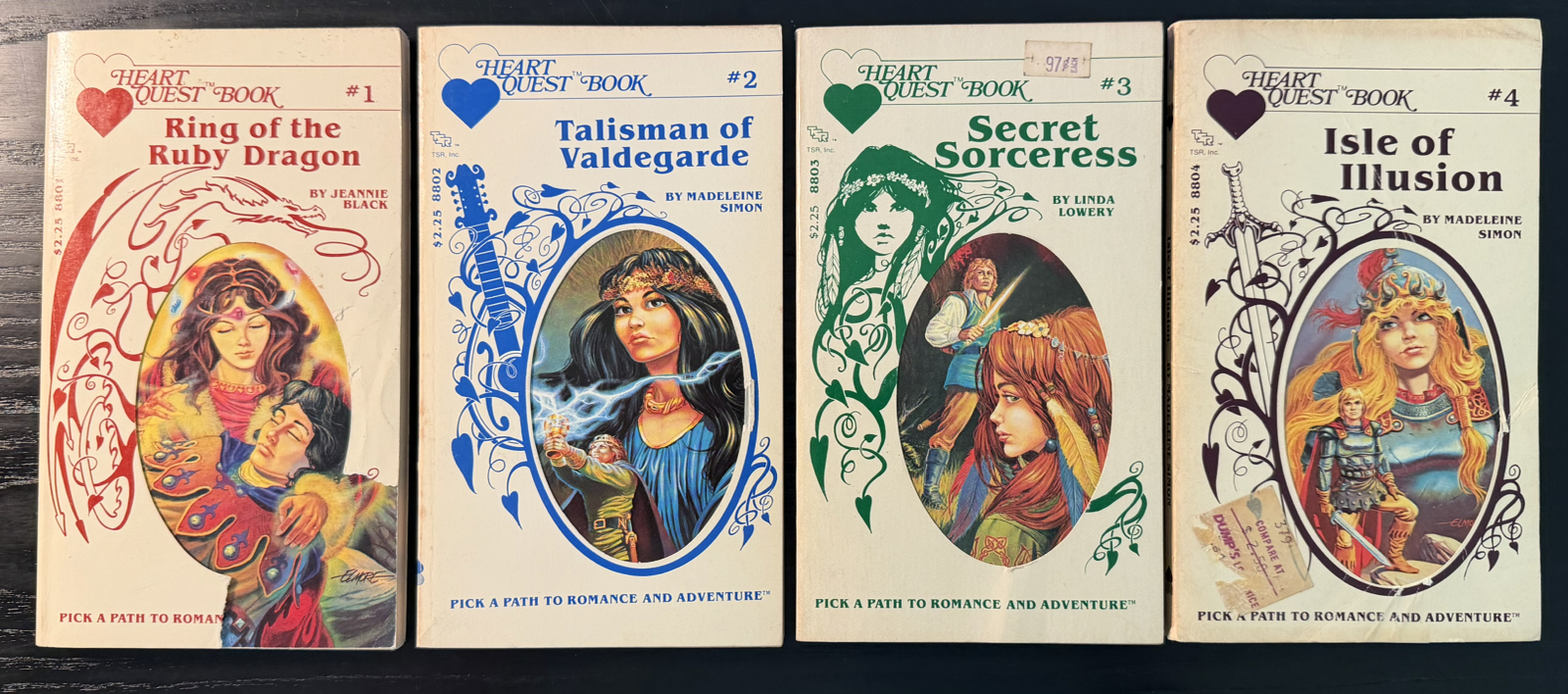
These are four books from TSR’s 1983 Heartquest series. These were a spin-off from their successful Endless Quest series of Dungeons & Dragons Gamebooks, only with less combat and more romance.
In the books you play teenage heroines on quests to defeat evil. You are joined by one or more young men with which romance inevitably ensues. In advertisements of the time the romantic aspects of these books were highlighted, which seemed quaint now until I recalled the ‘romantasy’ genre currently dominating women’s book sales!
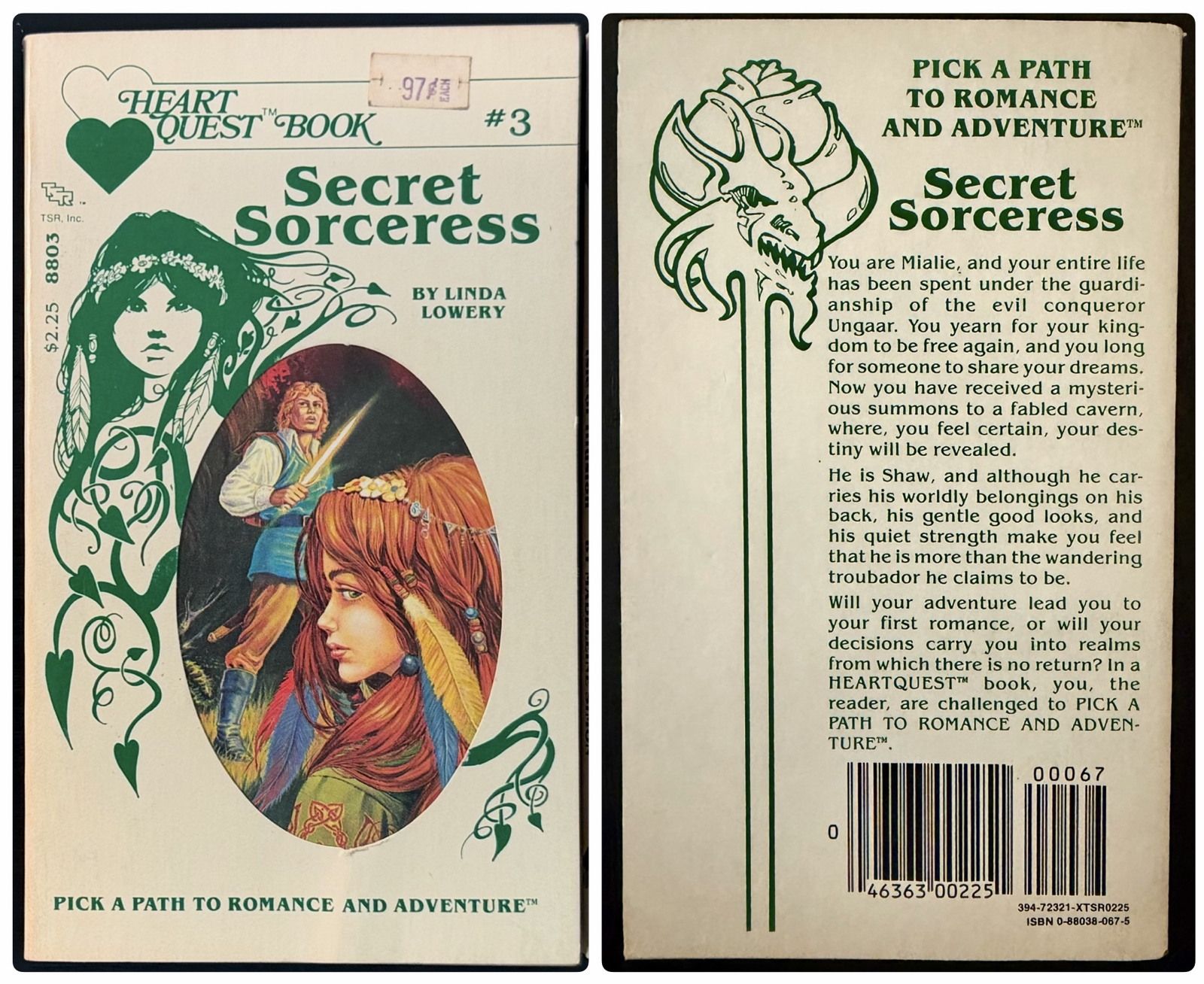
In Secret Sorceress you play an orphaned girl going on a quest with an equally orphaned prince to find a magical scepter with which you can defeat a usurper. It’s a slim volume with only about a dozen choices and the D&D trappings (a Dragonne, Leprechauns) take a backseat to fluttering hearts!
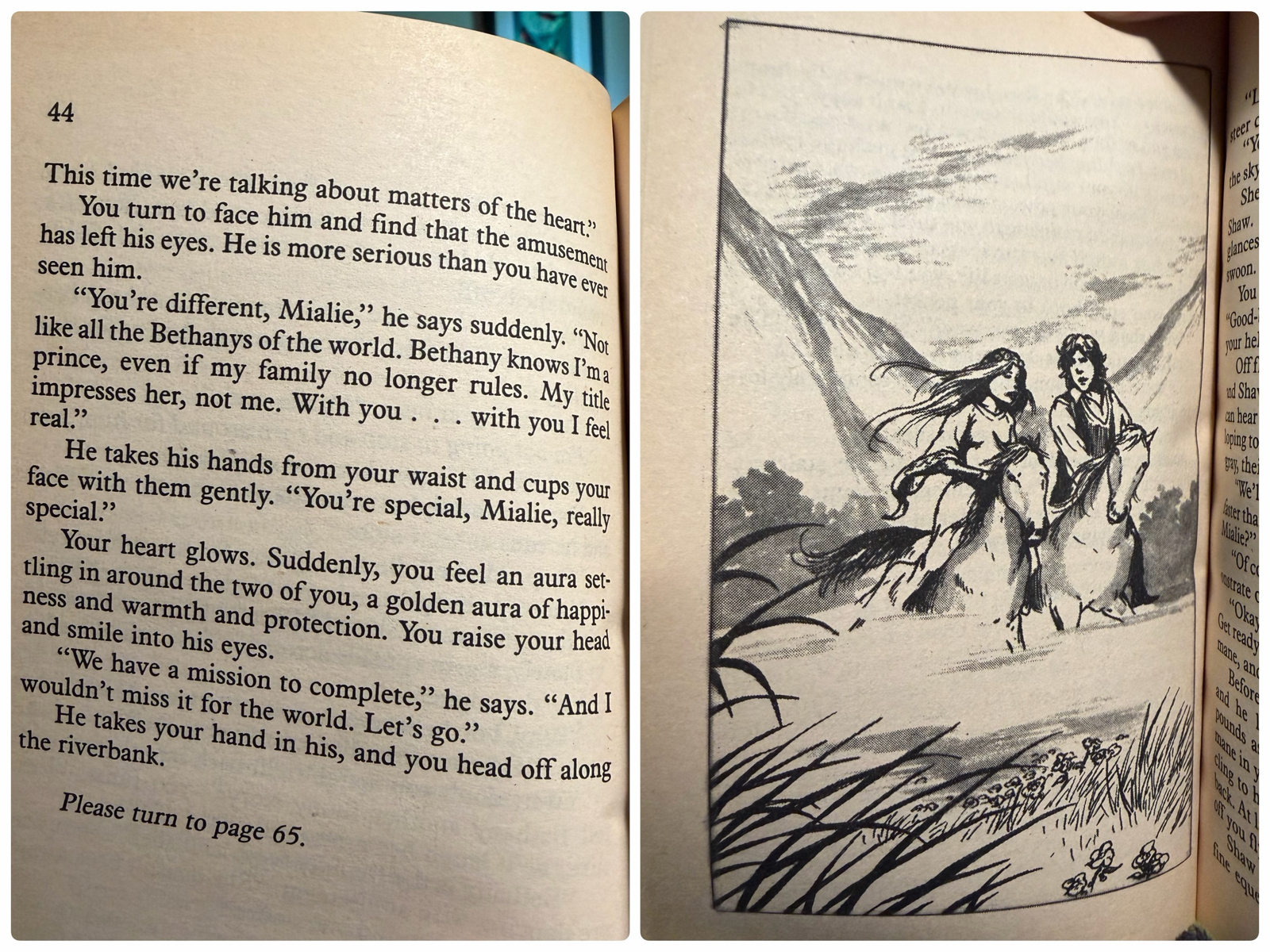
The book ends when the scepter is found (there is no mention of what the scepter does and the big bad never makes an appearance), although some ‘bad’ endings throughout don’t seem bad at all since they involve your character living happily ever after with the prince after all!
Both as a gamebook and as a fantasy novel I found this underwhelming, but then I’m not a young teen girl in 1983! My opinion may not be too removed from the original audience since the line failed and the final two books (which I don’t own) received extremely limited distribution. Forty-three years removed this series is now a curious footnote in the history of D&D, and the books themselves have become expensive and rare collectibles.
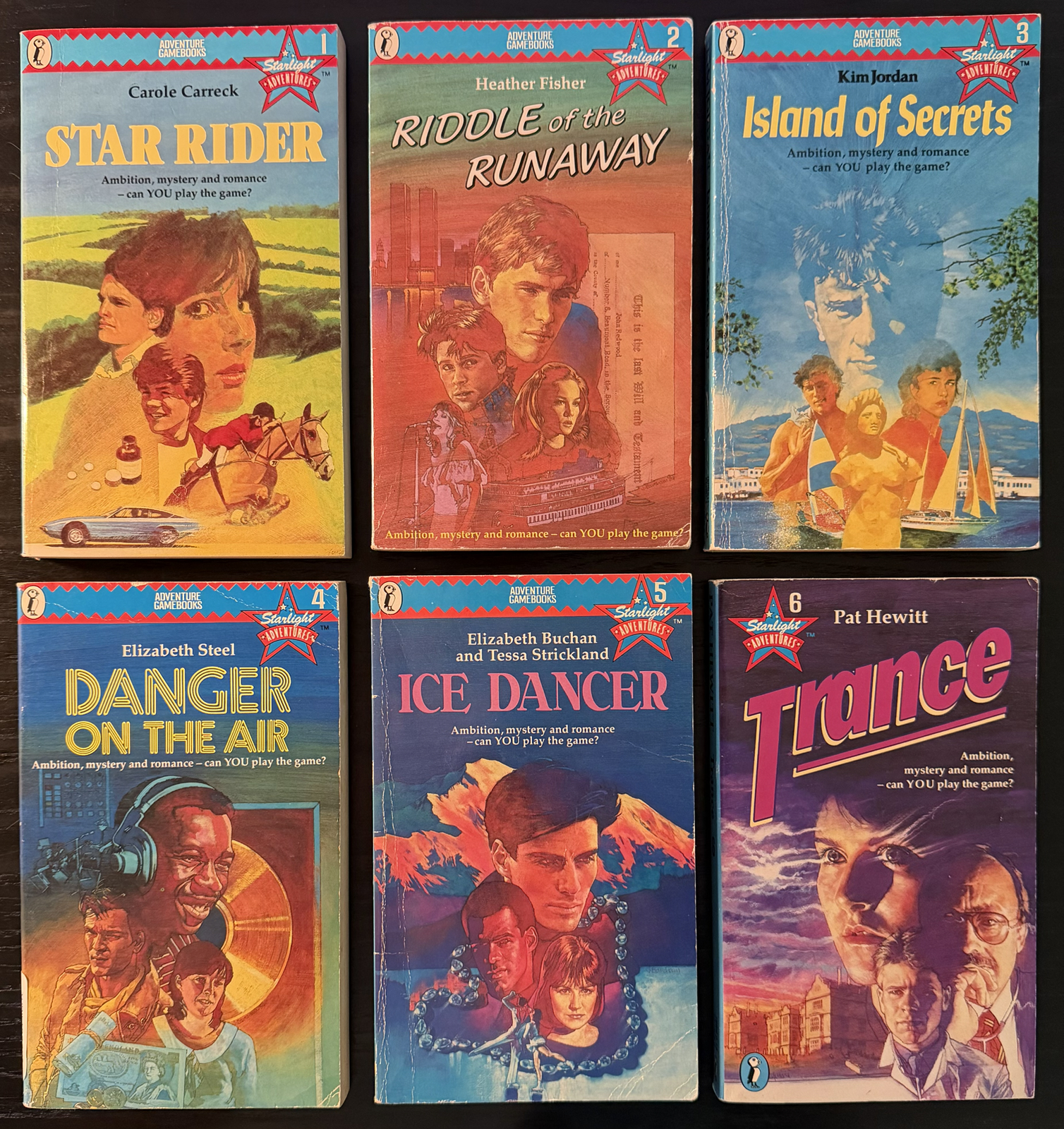
The Starlight Adventures were six gamebooks released by Puffin in 1985. These were a spin-off from the very successful Fighting Fantasy series and featured similar trade dress, formatting and even utilized many of the same artists for interior art. They were advertised in some of the Fighting Fantasy (FF) books at the time, although they have no fantastic elements at all, instead taking place in the real world.
The books are much longer than the Heartquest series, telling a robust story with many more choices. While they all include potential romance, the player can choose to ignore it if they wish. Also, despite a whimsical series title, these are definitely written for an older reader than Heartquest, featuring young adult protagonists who have careers and drink alcohol!
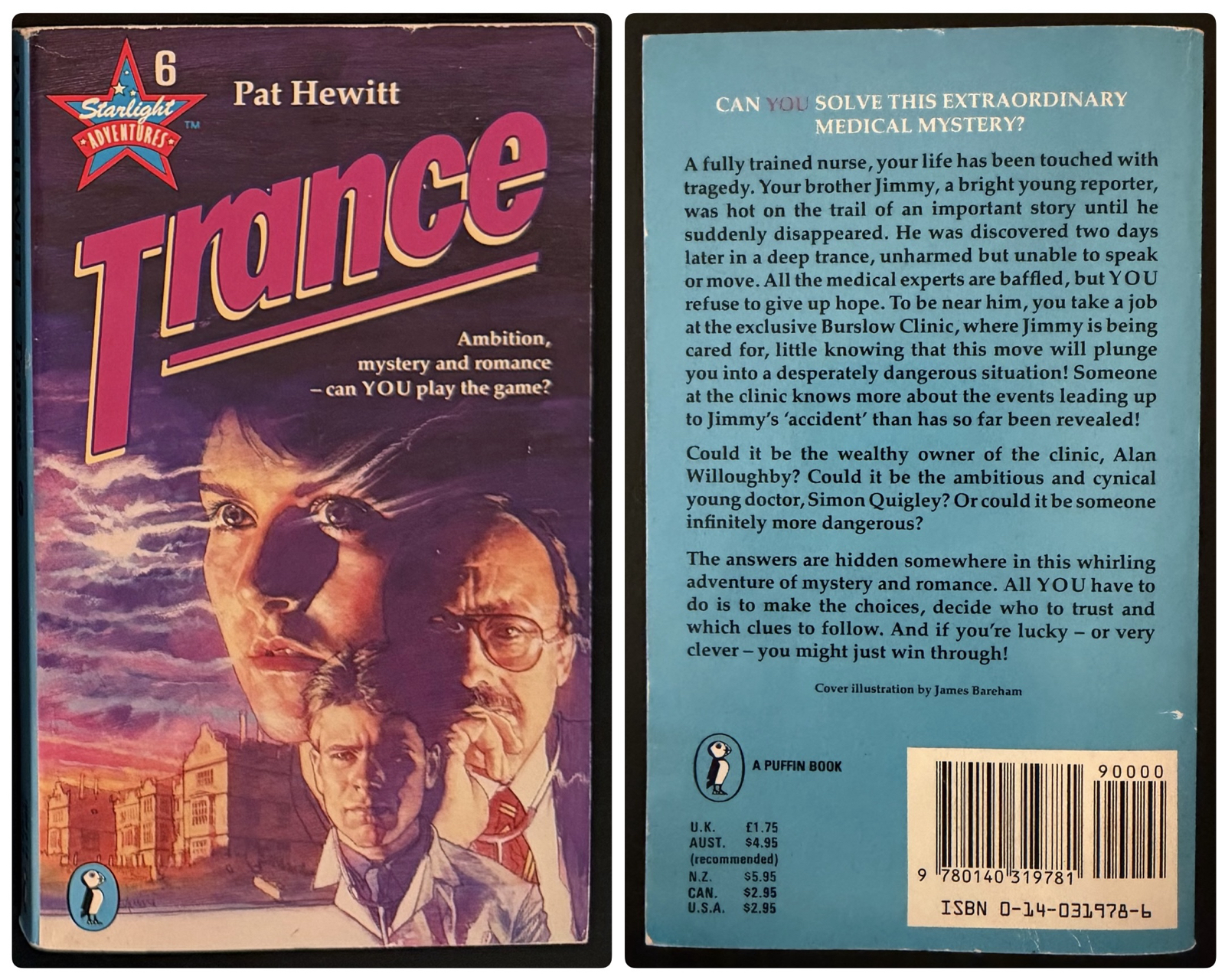
In Trance you play a young nurse investigating the cause of your brothers mysterious illness. You’ll discover a conspiracy to defraud wealthy patrons of a clinic, and in the process you may be aided – and even abetted – by several eligible young men.
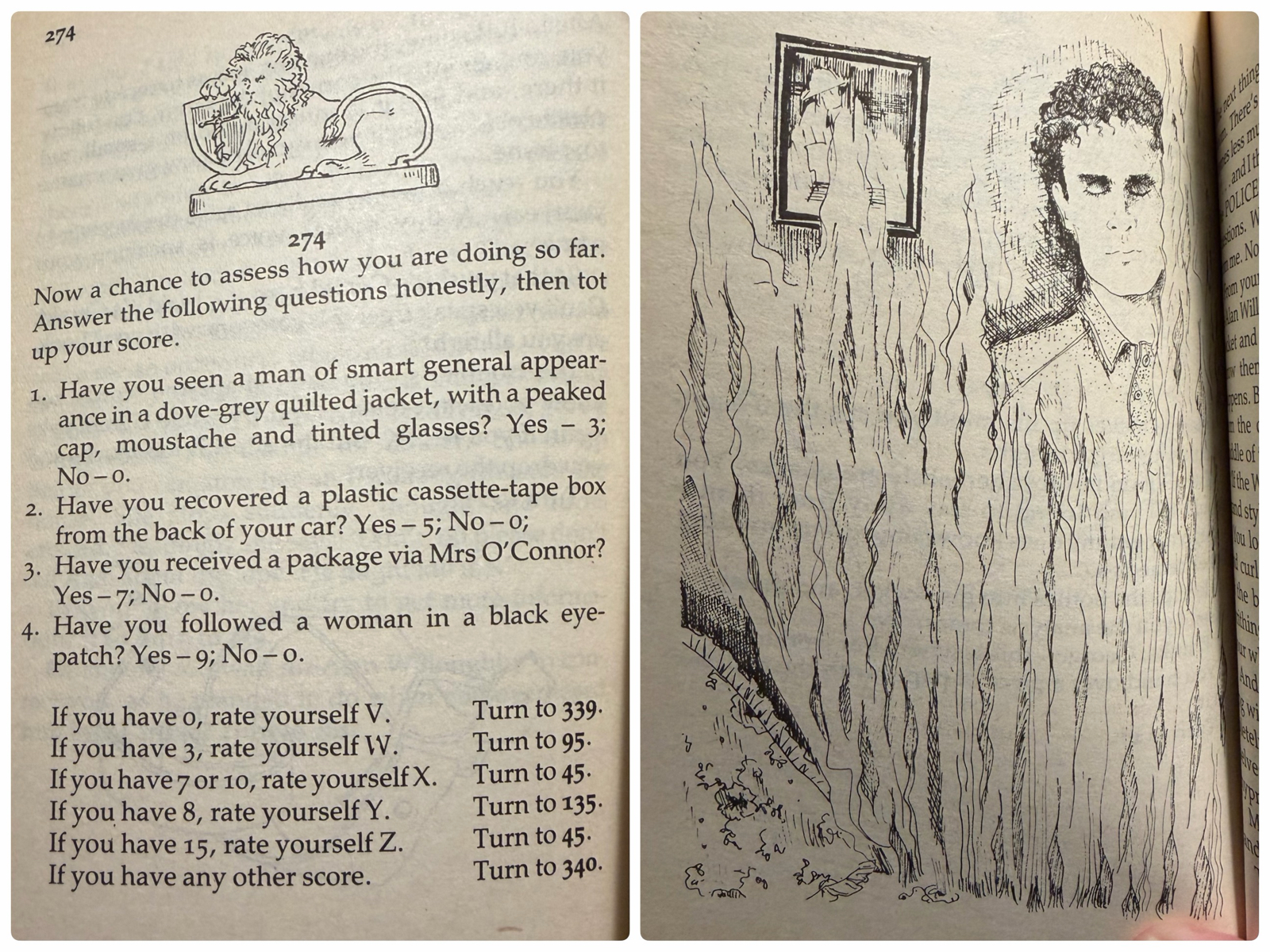
It’s a mysterious albeit predictable scenario, but I found it interesting to read a real-world tale using the familiar skeleton of a FF book. Some of the jumps between sections are too abrupt, and I would have preferred dice or even some sort of game system to replace choice in a few spots, but overall I felt this was a good read and enjoyed the book.
Like Heartquest, only six books in the Starlight Adventures series were ever released. I was still actively buying new gamebooks at the time, and I have no memory of ever seeing these and didn’t learn of their existence until over twenty years later! I’m happy to have them in my collection now, since these have skyrocketed in price on the secondary market.
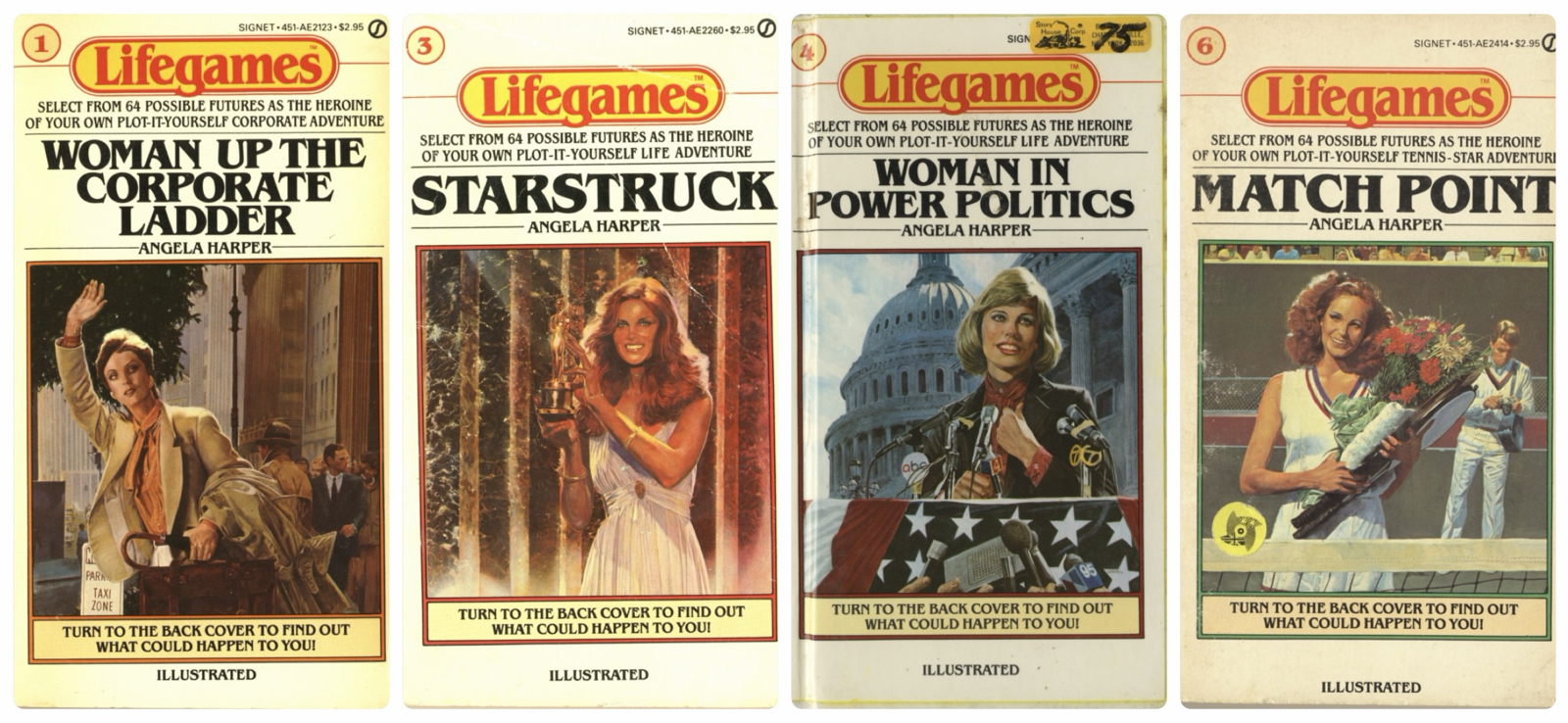
One last series I’ll mention is Lifegames, also from 1983. Four of the six books were targeted at adult women. I’ve never read these and even by gamebook standards these are rare today and I can’t even find reviews of them online. I recall reading once that they are very simplistic branching-choice choose-your-own-adventure style books and they may have contained Christian elements!
Aside from these three series, I know of very few other gamebooks published ‘back then’ specifically targeted at girls. Possibly this is because the above ‘failed’, or probably it was because publishers realized girls were happy reading ‘normal’ gamebooks 🙂