SMC recently asked me: “What sort of insects do you get in your garden?” A simple question indeed, but what memories it brought back! Being outdoors in Australia, especially in summer and especially near (or working with) plants always means being around insects, but things are quite different here. I could go outside and cut down bushes or plant flowers or just mow the lawn for an hour or more and never see a single insect. And when I do they’re rarely amazing or scary or beautiful or dangerous like the sorts of things I remember from my youth!
So let’s have a faceoff, comparing categories in terms of common garden insects. You can decide which garden wins!
Lepidoptera (Butterflies, Moths etc)
The simple fact is that butterflies and moths seem more common in Australia than they are here in the northeast. My guess is winter has something to do with this (and Florida may be full of butterflies) but they are uncommon enough here that whenever I see one it’s noteworthy. And when that happens, they are usually small and not particularly colourful. Of course butterflies are always pretty, but I recall much more spectacular examples in my youth than I see here. Australian moths always seemed larger and – if this doesn’t sound strange – scarier than those I see here. Overall moths are more common in our garden than butterflies.
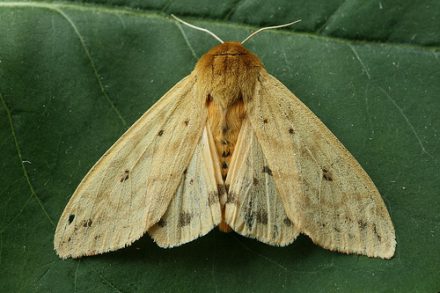
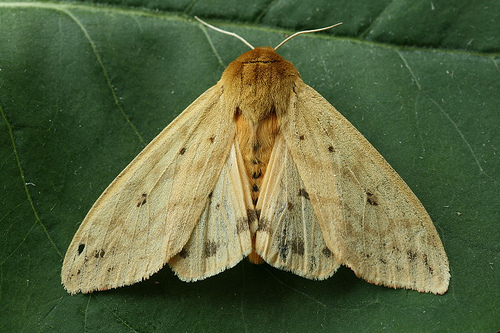
That’s a wooly bear moth, probably the most common garden moth I see in these parts. It’s not the most exotic (that would be hemaris thysbe, that we saw once in our garden back in Marcy) but it’s pretty enough and has a lovely fluffy caterpillar! If I were to think of the most common butterfly/moth in my garden, it’s probably this guy. You read a list of common NY state butterflies and moths here.
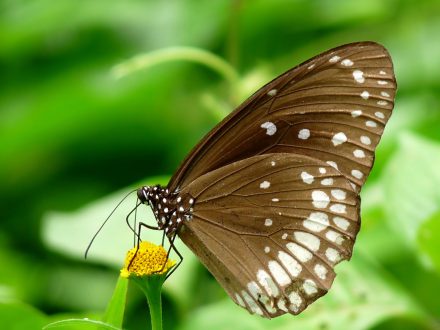
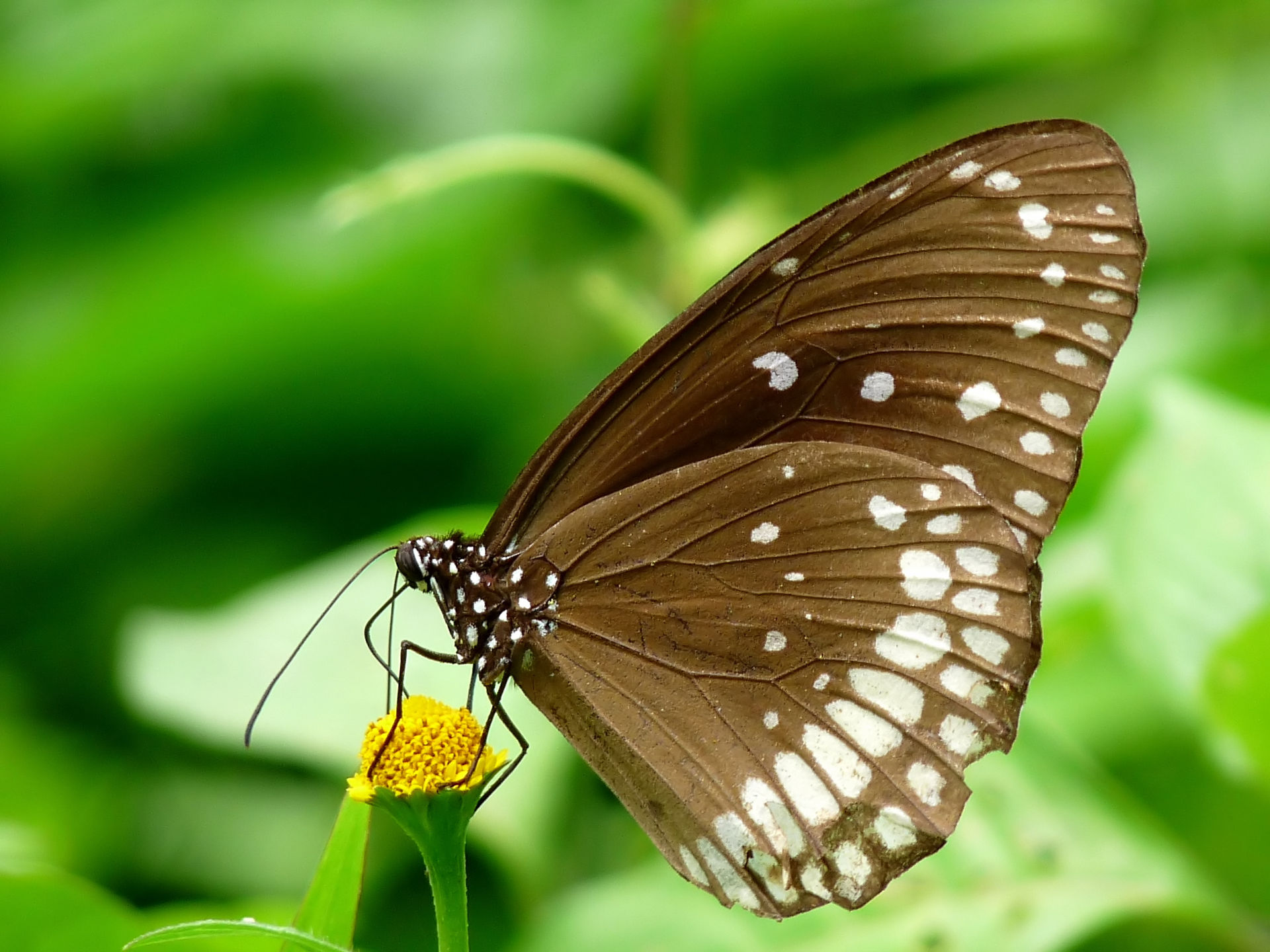
That’s the common crow butterfly, apparently one of the most common in Australia. It’s inedible, so birds avoid it. I remember these guys everywhere in my youth. It’s not the prettiest butterfly, but it’s fairly large and very striking!
Blattodea (cockroaches)
No contest; Australia wins hands down. During any single one of my annual trips to Oz I see more cockroaches than I have probably seen during my nearly 25 years here in the US. Plus the Australian ones are larger, more mobile and in general more handsome than the little guys I’ve seen here.
Odonata (dragonflies etc.)
I’d say these are reasonably-to-very rare in the garden, but then we don’t live particularly close to enough water. When we see them they’re usually small and drably coloured. As a youth we lived near creeks a few times and dragonflies were therefore reasonably common in our garden (and I used to enjoy hunting the larvae in the creeks). In general I remember Australian dragonflies being quite vibrantly coloured and more abundant than what I see here. (As an aside, NSW apparently has about 300 species of dragonflies compared to NY state having about 190, only 80 of which are ‘common’.)
Orthoptera (grasshoppers and crickets)
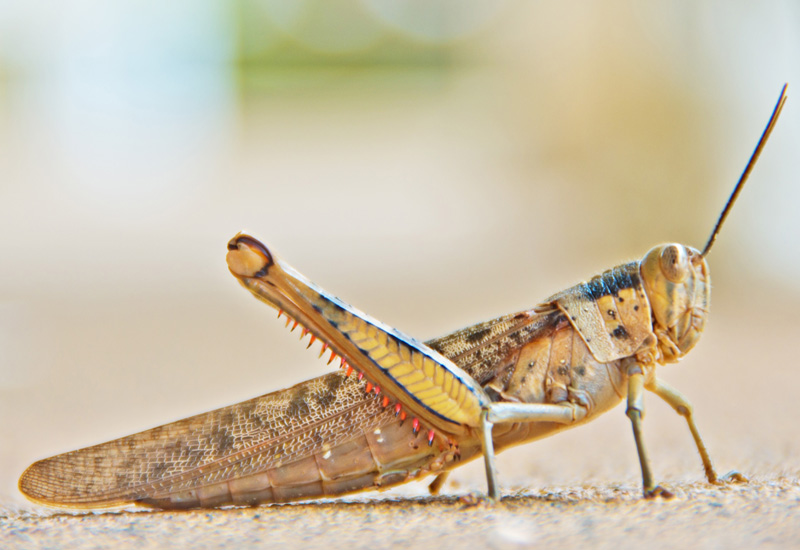
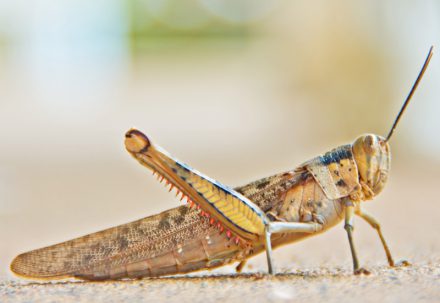
Grasshoppers are very rare here. I’m actually struggling to remember the last time I saw one! In Australia they are bonkers common, and indeed were one of my favourite ‘bug catcher’ targets as a kid (read this post). Many were the times when I caught grashoppers as big as my palm, and would study them for hours before releasing them. Here’s the most common type (called common, hedge or giant grasshopper), which is about 5 cm long but can grow to almost twice that and seemed to be abundant everywhere during the summers down under:
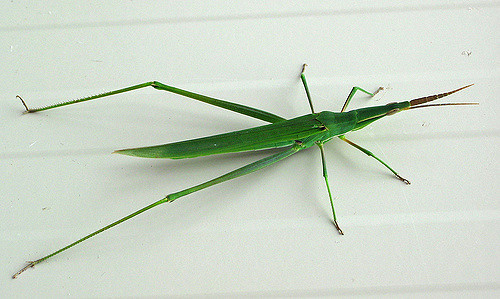
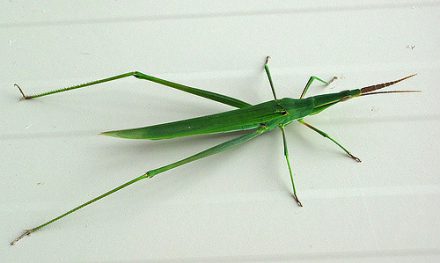
There are many other types in Australia as well of all shapes and sizes, including the green guys with long ‘horns’ (as I called them as a child), the grass pyrgomorph:
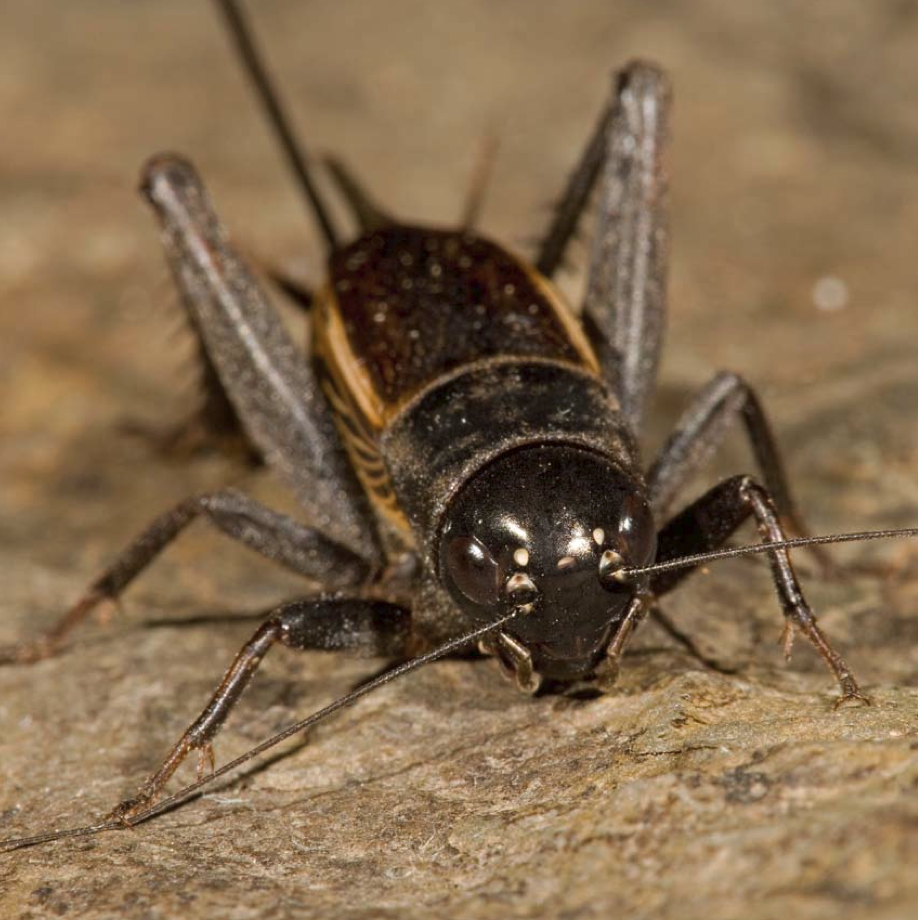
As I said I’m struggling to think of any grasshoppers I’ve ever seen in the garden here, much less at all. But crickets… crickets are common… just not ever seen!
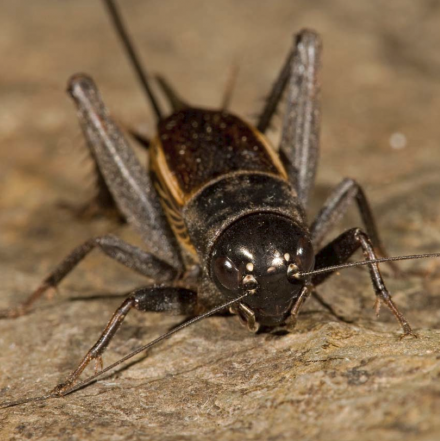
That’s a field cricket, a little (<2 cm) guy that is probably the most common insect in our backyard. We rarely ever see them since they are nocturnal, but we hear them in mid summer when they start to chirp. Sometimes it seems the yard is full of crickets so loud is the chirping, and it’s a lovely sound to drift off to sleep to. I’m sure Australia has chirping crickets as well, but I don’t remember anything like the intensity we get up here in the northeast.
As with many insects they can’t survive the winter, so the chirping is only for a little while. It’s a rite of summer, and one we always look forward to and enjoy.
Mantodea (praying mantis etc.)
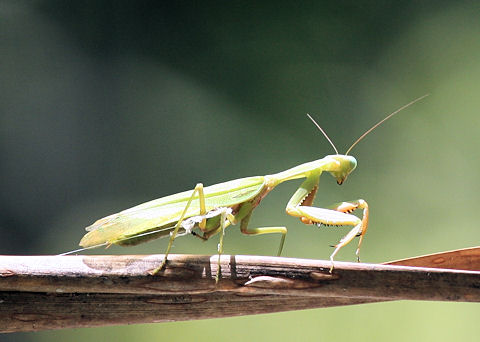
Another class of insect that is common in Australian gardens but very rare to the point of nonexistent here. I’m struggling to recall if I’ve ever seen one in my garden yet feel quite familiar with them due to my exposure in the gardens of my youth. They are not nonexistent in NY state, just (apparently) not particularly common.
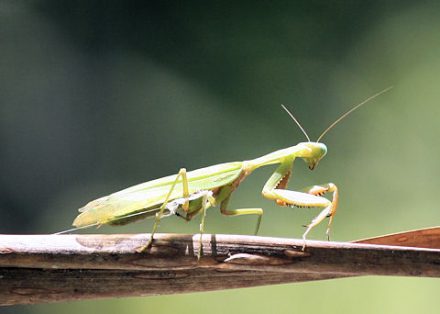
Australia is (in)famous for the abundance and size of both praying mantissa (yes I invented that plural) and stick insects (see below) and I was fascinated by them as a child. Praying mantis in particular ranged from tiny little guys that fit on the tip of your finger through to the ‘king mantis’ easily as big as your open hand. I remember putting them on my shirt and marveling at how they would grab on with their claws when you tried to lift them off.
Phasmatodea (stick insects etc.)
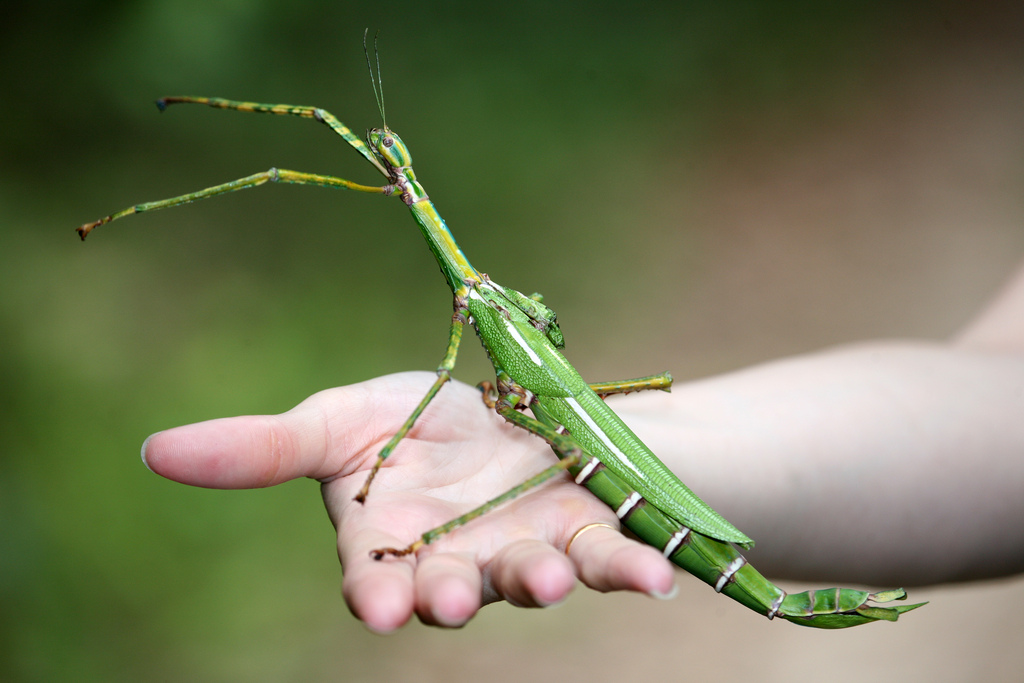
This one is another no brainer. Not only does the NY state garden fail miserably at delivering even a single stick insect (to the best of my memory), but the Australia garden only need to contribute one competitor for an easy win. Ladies and gentleman, may I present the goliath stick insect:
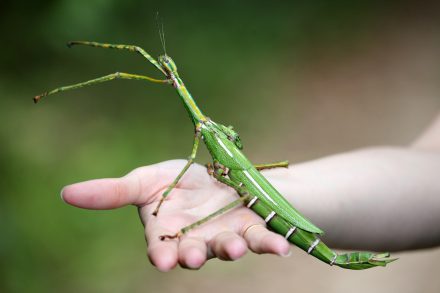
There are a lot of stick insects in Oz, ranging from the tiny to the monstrous (like the above). They are common – or were when I was a kid – and while the goliaths were rare in the garden (apparently they prefer to live high in a trees canopy) we saw them from time to time. More common were brown ones that weren’t much smaller but would nearly perfectly camouflage themselves as twigs.
Hymenoptera (bees, wasps & ants)
This category would be the one with the smallest difference between Australian and US gardens in my opinion. When I do see an insect, it’s almost always (maybe 75% of the time) a bee, wasp or ant. Most are unremarkable, especially the ants, and most just walk/buzz around doing their own thing.
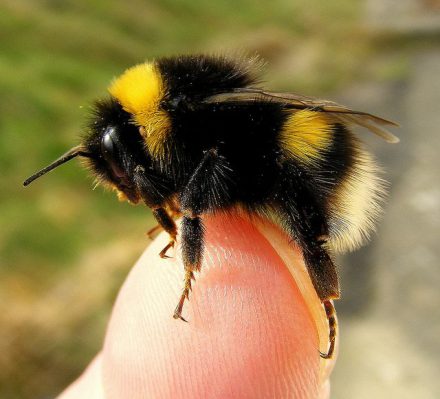
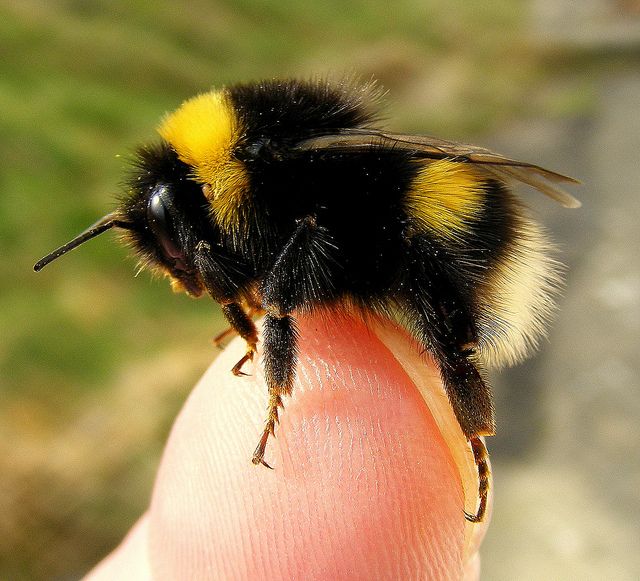
That’s a bumblebee, which are fairly common in our garden in summer. We have a specific bush in our backyard that seems to attract them when it’s in flower, and they are also fans of black-eyed-susan flowers which we have a lot of. I love their loud buzzing, and the fact that they happily continue their work seemingly oblivious (or at least unconcerned) of me as I watch them. Plus they’re cute!
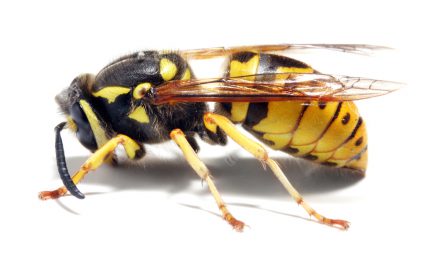
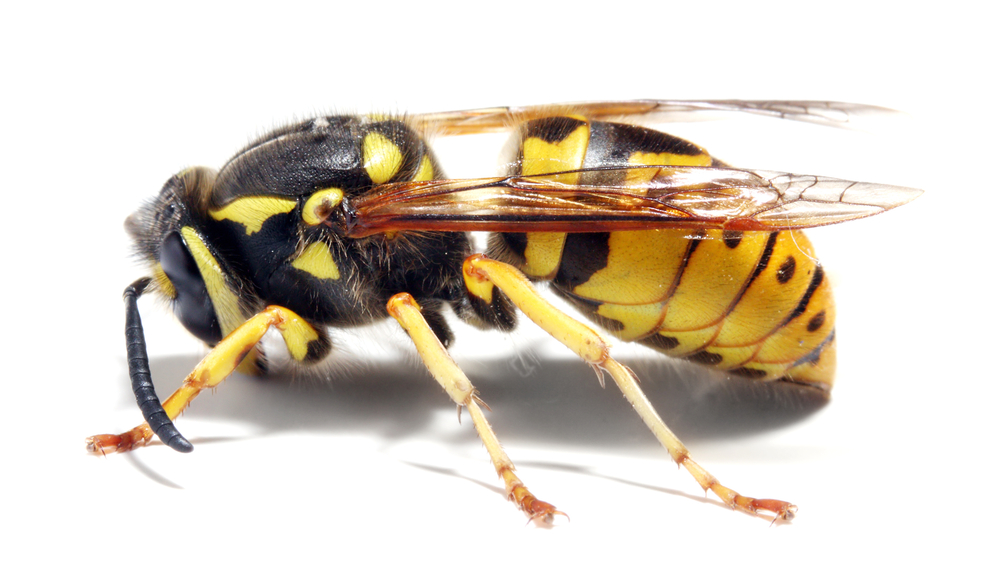
That’s a yellowjacket, a type of wasp very common here. Several years ago some of these even tried to kill me! As a result I am wary of these guys, who build nests on our around our house every year and always make me run away when I see them in the garden 🙂
Diptera (flies)
Again, Australia wins hands down. Flies are rare here in the northeast, so much so it’s remarkable to see one (especially indoors). My memories of summer in Australia are not complete without swarms of flies and I can assure you since I only just recently returned from there they are still common today 🙂
Hemiptera (true bugs)
Australia wins hands down. While we get the occasional cicada here, they are not a ‘rite of summer’ (to quote myself!) as they are in Oz. If I could import any insect en masse, it would certainly be cicadas. (I wrote about them here.)
Coleoptera (beetles)
After bees/wasps/ants, I’d say this is the second most common category of insect we see in gardens here. In fact, beetles may be even more common proportionally than in Australia. That said the variety doesn’t seem as profound, and indeed the following three types represent the majority of beetles we see in our garden:

Ladybugs are fairly common, and pretty much the same as the ones I’ve seen in Oz or for that matter anywhere in the world. Back when we owned the house in Marcy they spawned in the woods out back one time and we had swarms of them in our yard. Thousands of them, and obviously many of them got into the house as well. Since they are pretty and harmless little guys this was no problem, and for a few days we were ladybug central. I’ve never seen an abundance quite like that since.
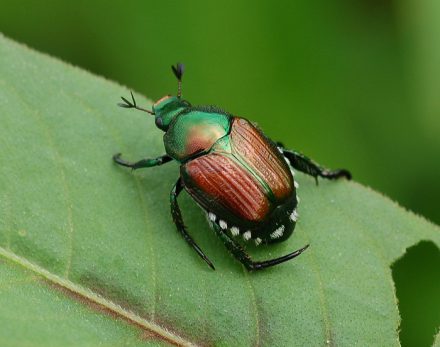
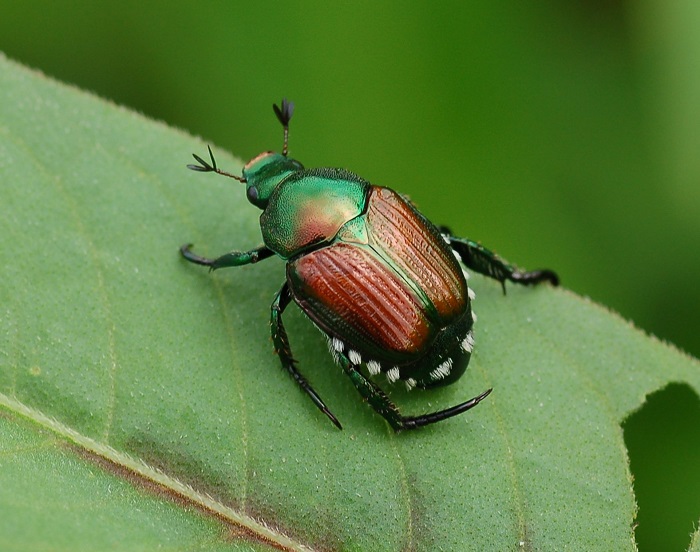
Japanese beetles are the scourge of American gardens, and so common that you can go to the store and purchase any number of products specifically designed to prevent (or kill) them. They descend on plants and ruin them in a few days, and KLS hates them! I’m sure they are equally common in Australia, only I don’t remember them in favour of the (bigger and prettier) Christmas Beetles.
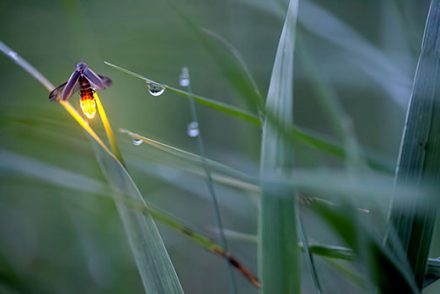
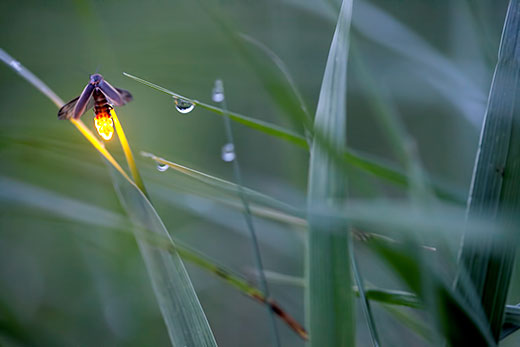
Fireflies are common here in late summer, and we often see them in the backyard blinking at night. While they exist in Australia, I don’t remember ever seeing any before coming to the US, and the first few times I spotted them I was dazzled. It’s fun to try to catch these guys, since the flash – while bright – is short enough that if the firefly is flying around randomly you never manage to actually reach him. I’ve caught a few though, and watched them flash in my hand from close-up before releasing them. Lovely, pretty little things and a welcome visitor to our backyard.
I could go on into more exotic categories (such as Plecoptera or Diplura) but this is (more than!) enough and covers the common differences. I also avoided spiders, since as everyone knows Australia just beats every other countries gardens down into the ground in that category!
So the take-away: The variety, freqency, size and even quality of backyard insects in Oz eclipses America, at least in my experience. But certain star players – the crickets and fireflies for instance – mean that the gardens here don’t lack insect charm of their own.
Besides, you may hate bugs. In which case you probably should avoid ever thinking about moving to Australia 🙂