Over the decades I’ve been alive, I have amassed a slight collection of stamps. Mostly in the form of first-day covers to be true, but I hardly turn aside when confronted by a lovely loose stamp either. Philately was my first hobby I suppose, and thought my childhood collection is (mostly) gone now, I still seem to have retained the gene.
Over the next few weeks I’ll be sharing the bulk of my collection, loosely divided into thematic posts as a stamp collector may be inclined to do. Where relevant (or possible) there may even be a bit of history as well, or maybe just reminiscing since some of my oldest personal possessions are stamps.
Today we’ll start… with animals!
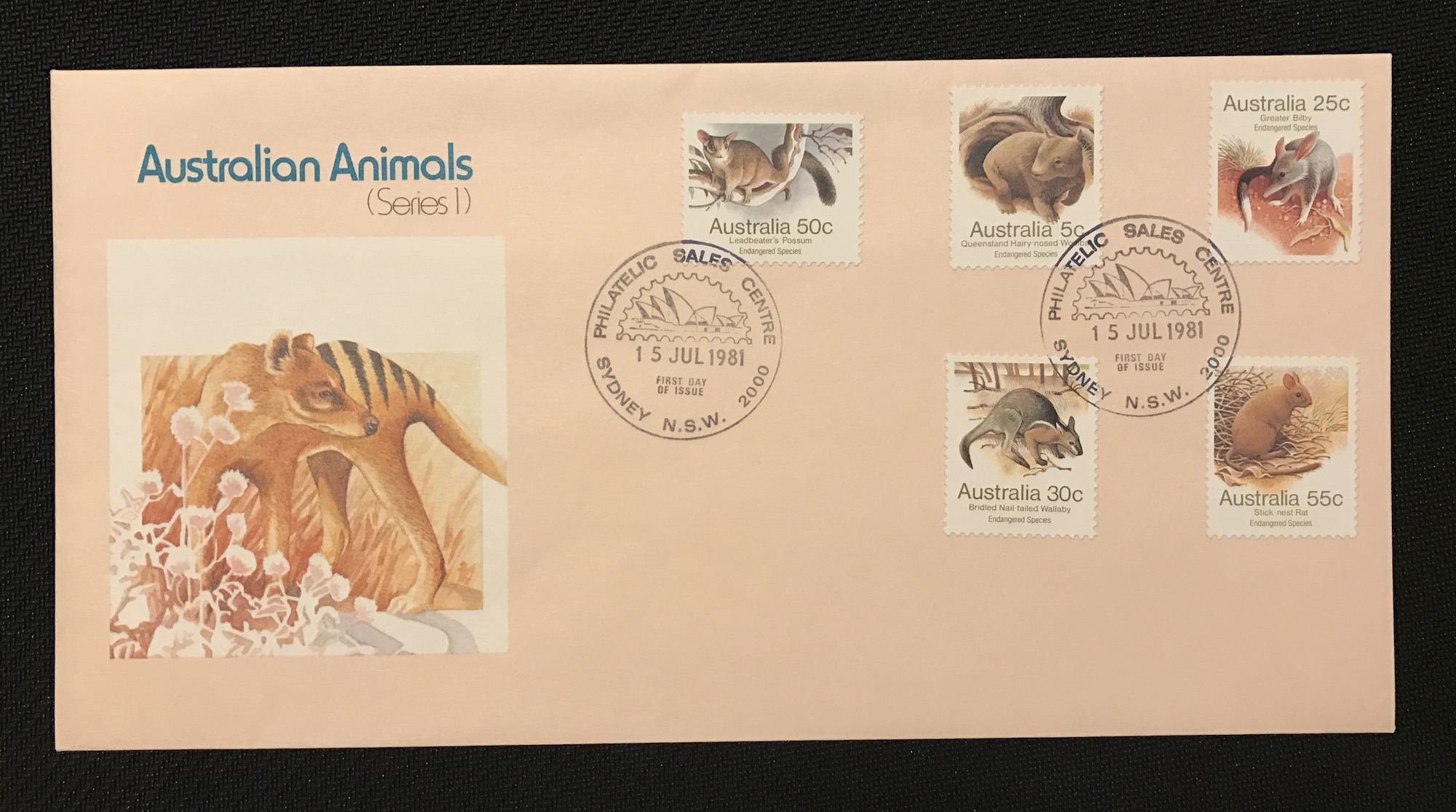
This is what’s called a ‘first day cover’, which is an envelope – usually appropriately printed – on which a new series of stamps are all placed and then canceled. It’s done on the first day the stamps are issued, and is intended for the collectors market. It’s a cheap and easy way to obtain the stamps themselves, and convenient to store as well. As a youth I used to buy these now and then, and as an adult I buy them more often (although strangely never here in the USA).
Look long enough in thrift/collectible/antique stores and you’ll find loads of these. I do, and I have spent hours over the years flipping through them. These days I only buy them in three categories, one of which is animals. Most the first day covers you see in this post were purchased this way during the last decade or so. Most of them were very inexpensive, maybe $1 or less. I’m no diehard collector, and more pick at the worthless dregs because I think they’re attractive than invest in ugly rarities 🙂
The above cover, despite dating from my stamp-collecting youth, was only bought a couple of years ago.
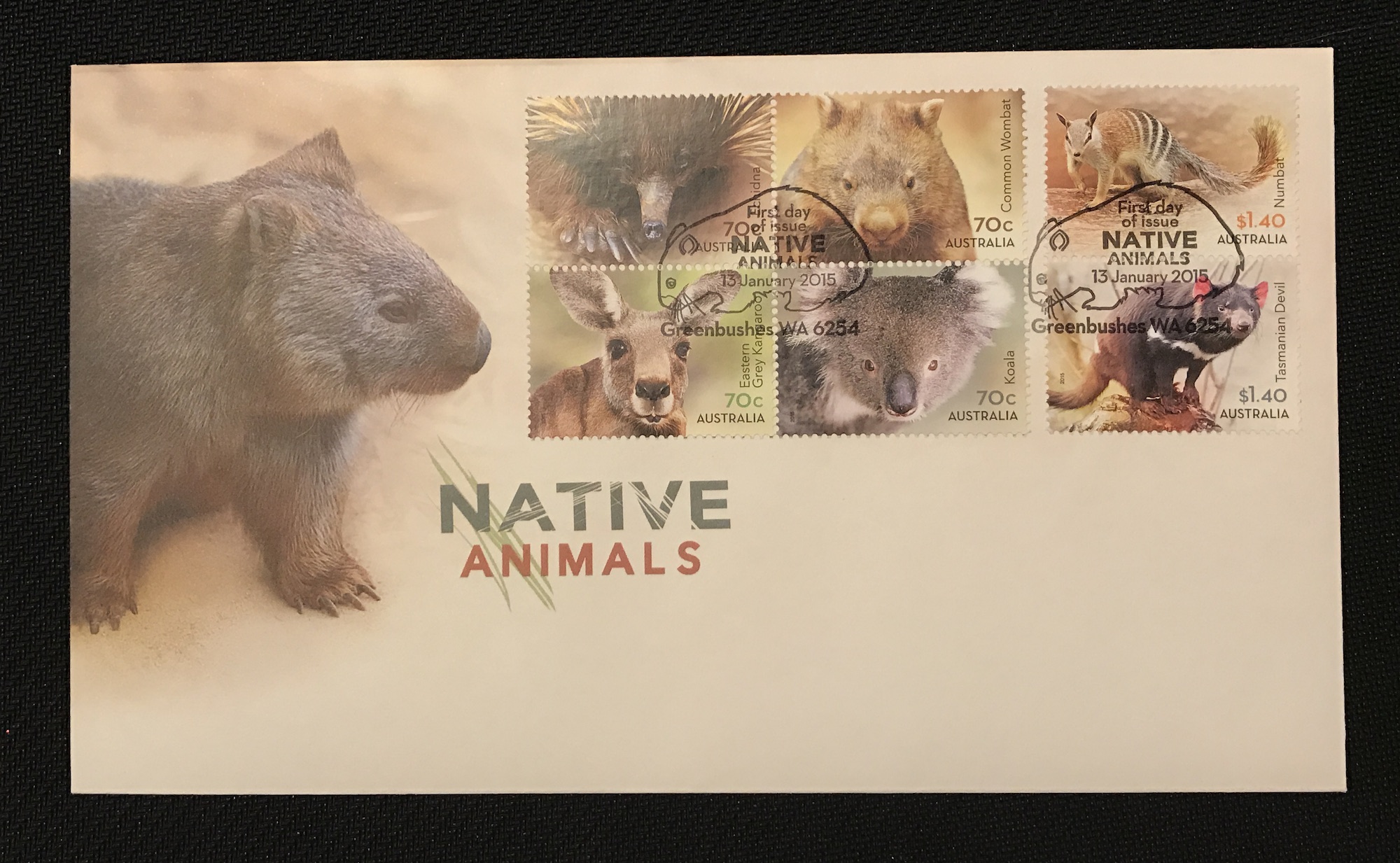
A more recent purchase. Australian post offices still have sections for stamp collectors and you can find things like this right out on display. It’s pretty isn’t it?
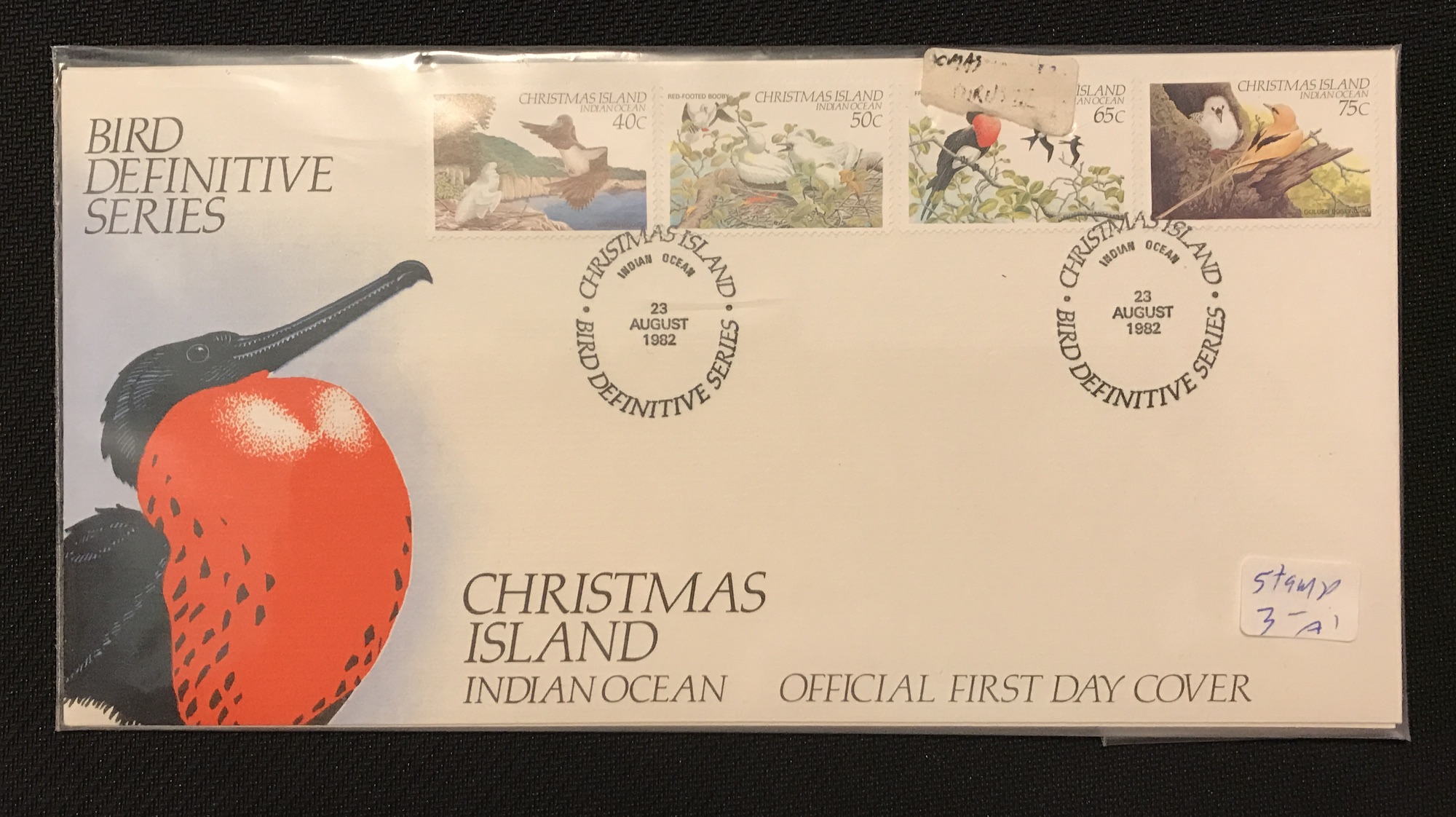
Another ‘Australian’ example. Many stamps are issued from Christmas Island solely (I believe) for the collectors market. You’ll see a few others in these posts. Note in the above example that the cancellation is themed to the stamp series as well. This is unusual and illustrates the collectors nature of the Christmas Island issues.

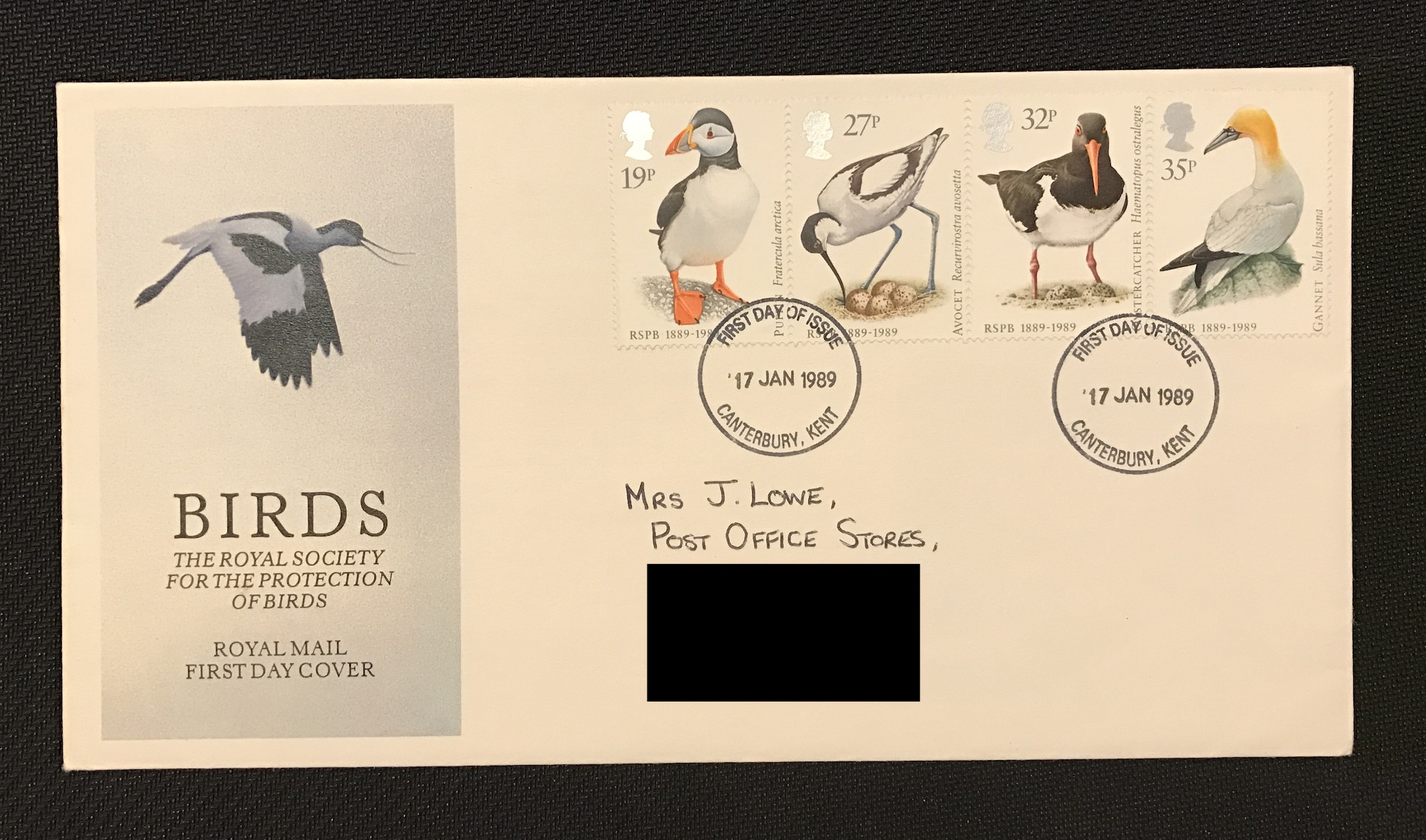
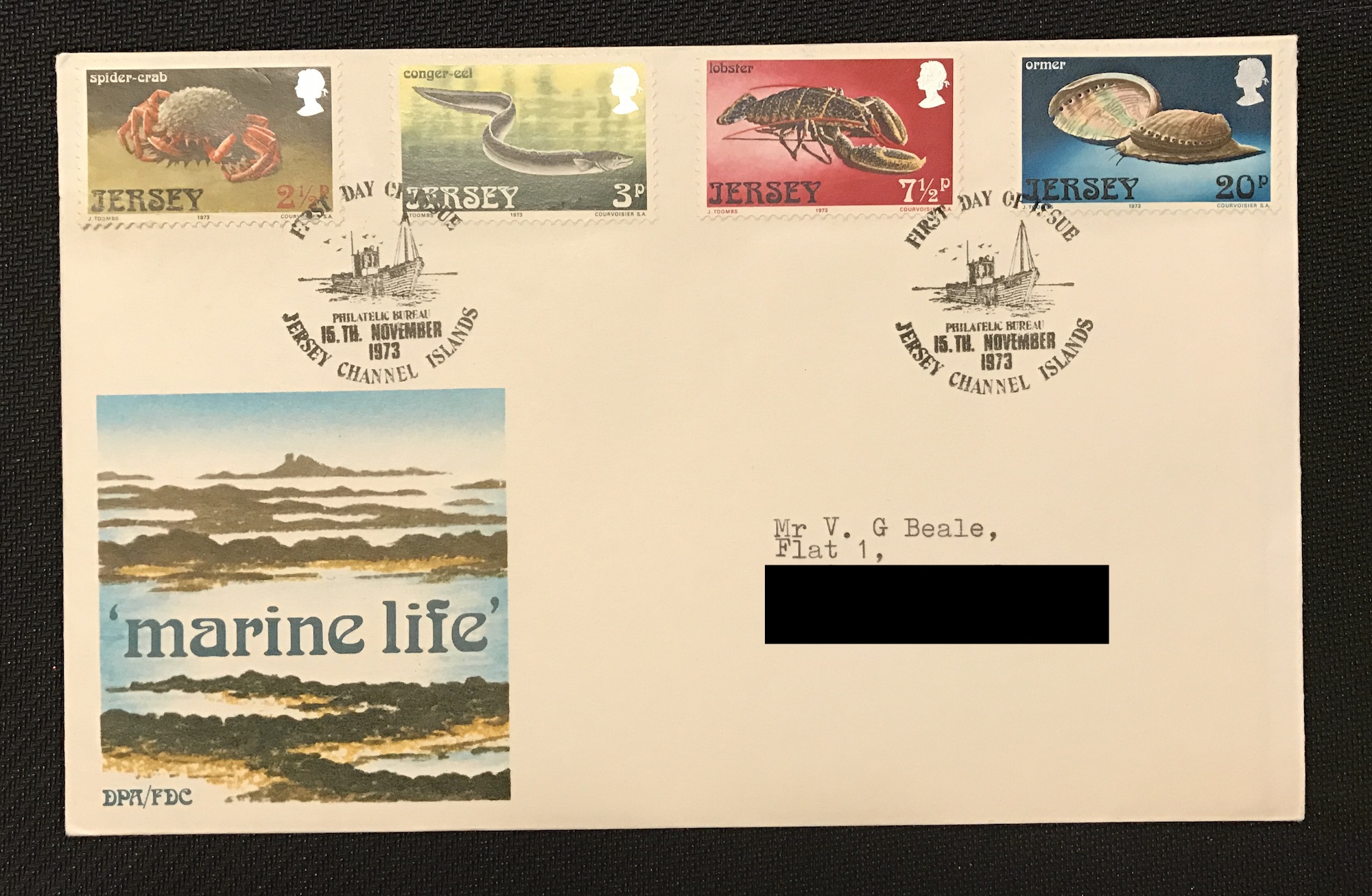
A few from the UK. I have obscured the addresses. Most of the time when I see British first day covers for sale they are addressed, although rarely show signs of having actually gone through the mail. I wonder if collectors in England address the covers to themselves? The stamps themselves are all fantastic, with detailed artwork and metallic accents. Even those these cost me only 50p apiece a few years ago I love them 🙂
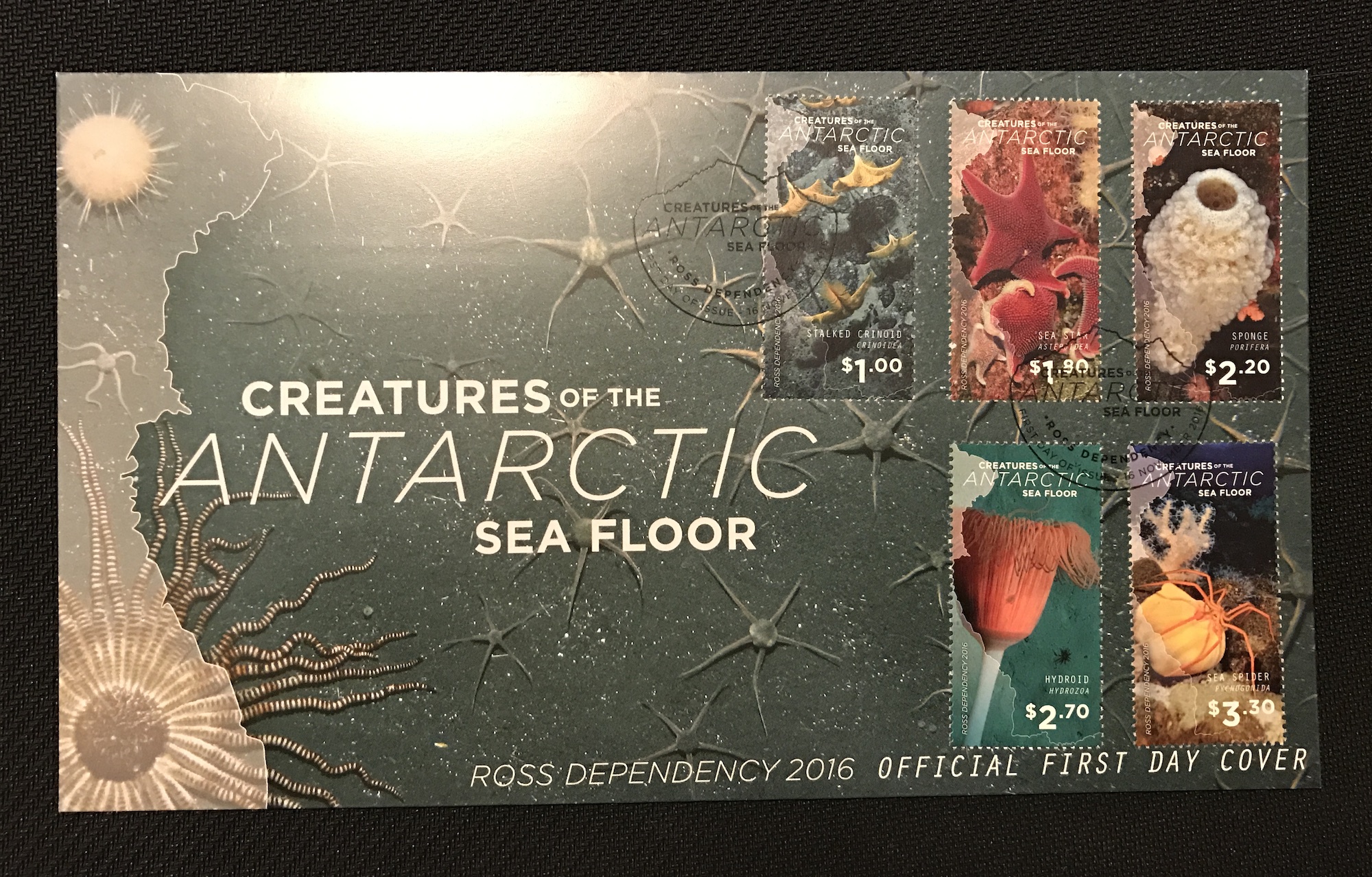
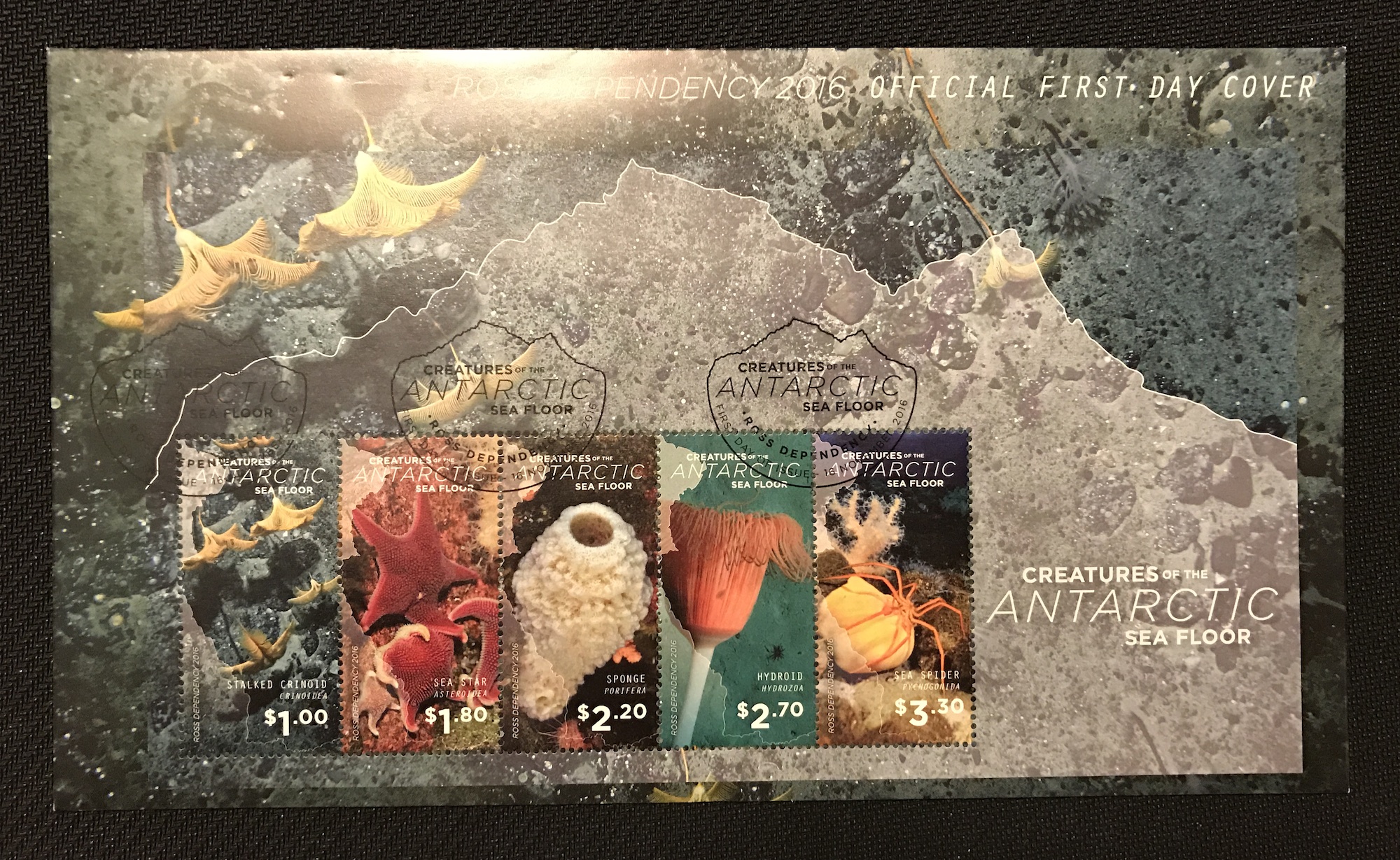
Two different examples of a first day cover from Antartica, specifically Ross Dependency, which is the part of the continent claimed by New Zealand. Bernard got me the above on his trip last year, and while they are certainly unique I feel they are unmailable. The envelope is too busy and glossy. The stamps would have been better displayed on a plain white envelope, perhaps with some line art of a hydroid or sponge at the side. (Even so, I doubt I’ll ever get any more Antarctic first day covers!)
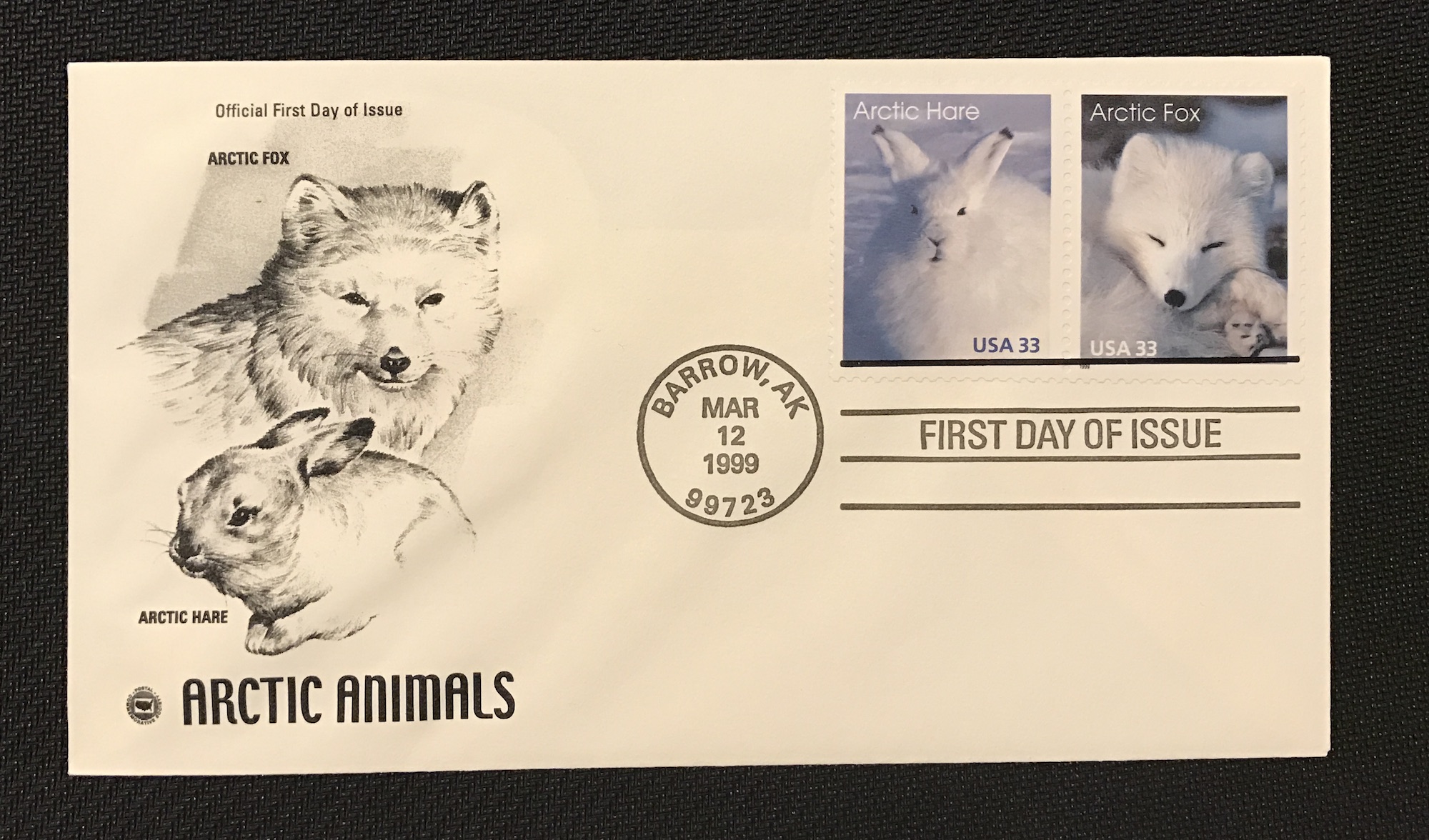
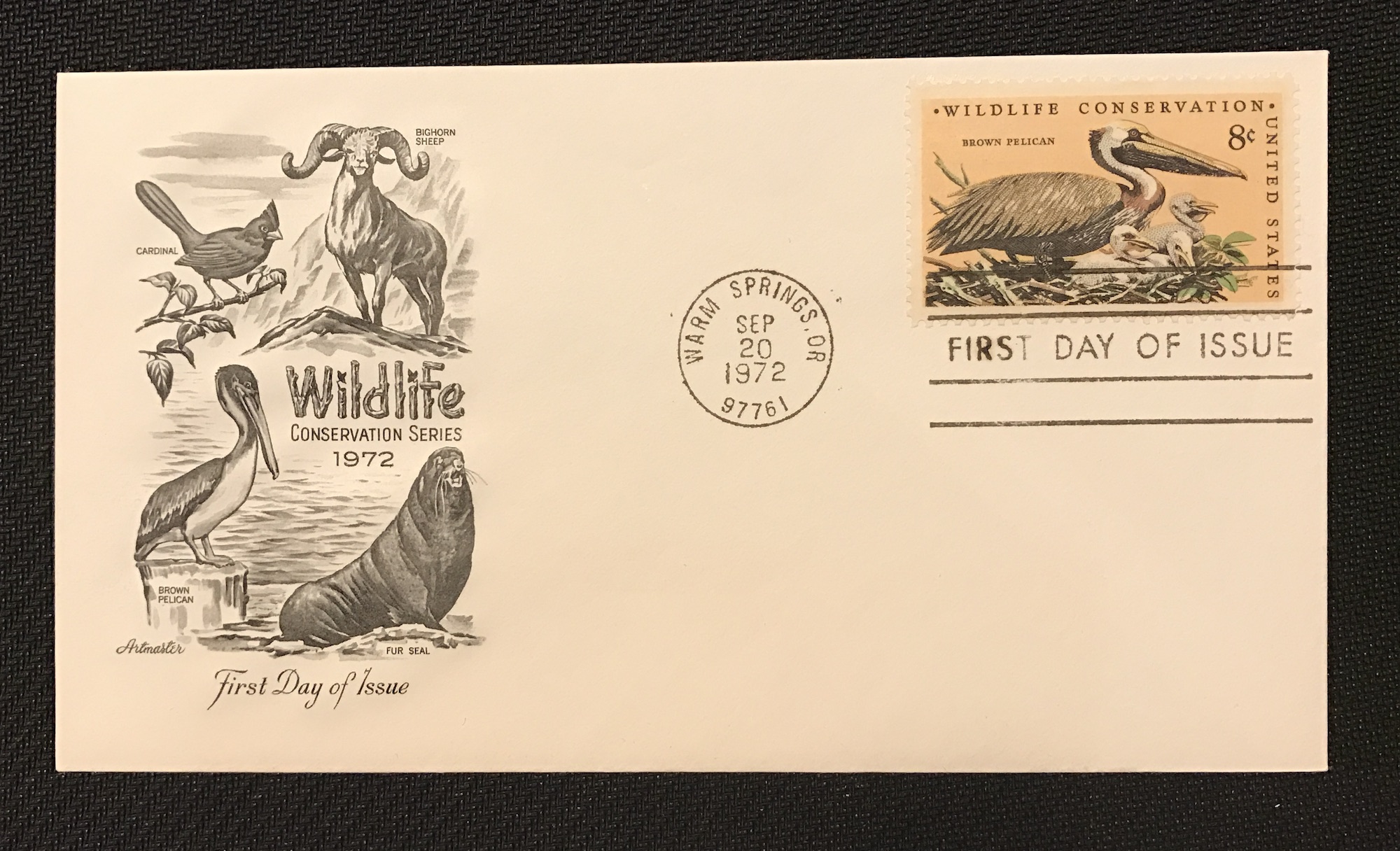
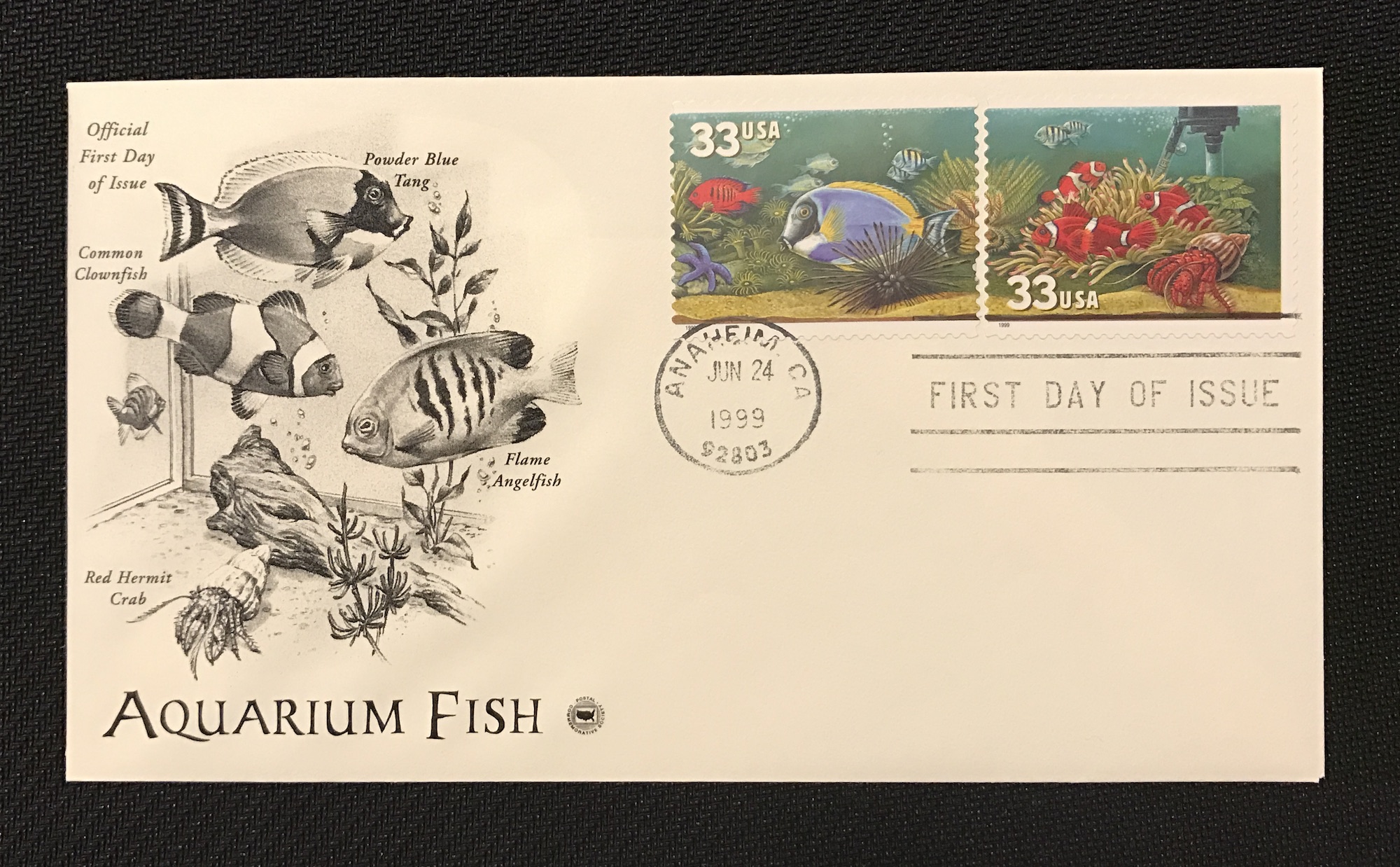
Some American examples. I bought these at the stamp museum in Washington whilst chatting to the shop girl. I don’t think they ever got many customers (I was the only one at the time) and she was very curious about Australia so I happily answered her questions as I leafed through hundreds of $2 first day covers looking for animals 🙂
I particularly like the Arctic Hare stamp. Imagine a postcard with 20 of them on the back! Overall though the above are a bit dull compared to those from other nations in my collection. However I’ll get back to the USA at the end of this post…
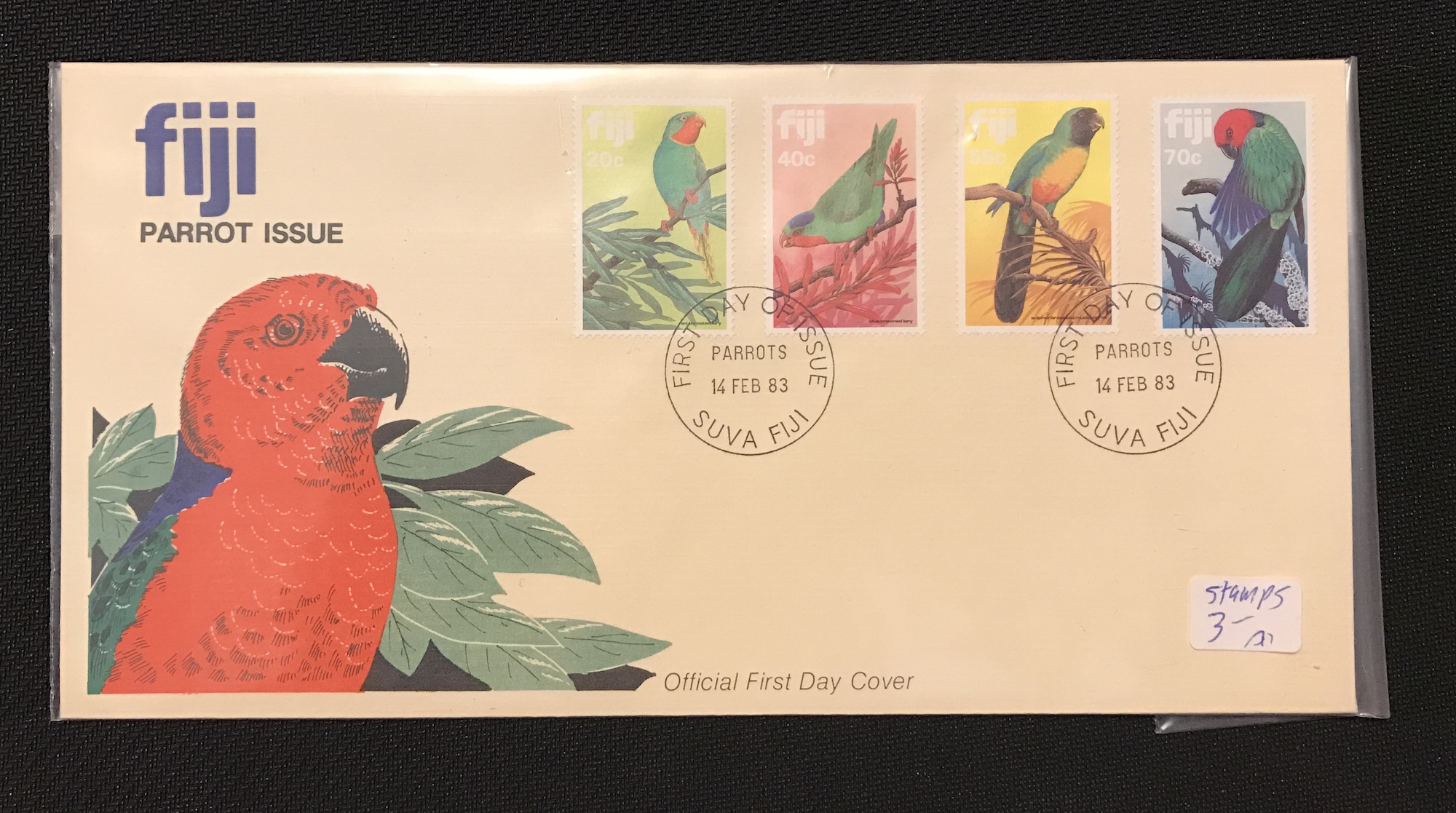
The colours and vibrancy of the above are evocative of Fiji, an island nation few in the northern hemisphere seem to have heard of but for an Australian in 1983 seemed exotic and (undoubtedly) full of parrots. What it wasn’t full of in those days though was people, with a 1970 population of less than half a million. Interesting therefore that they would produce such a lavish stamp set and have dedicated cancellation for it! Again I suspect the production of collectible stamps was done for profit, and I don’t doubt that collectors around the world would have loved an example like the above (which I bought in an antique shop in Katoomba a few years ago).
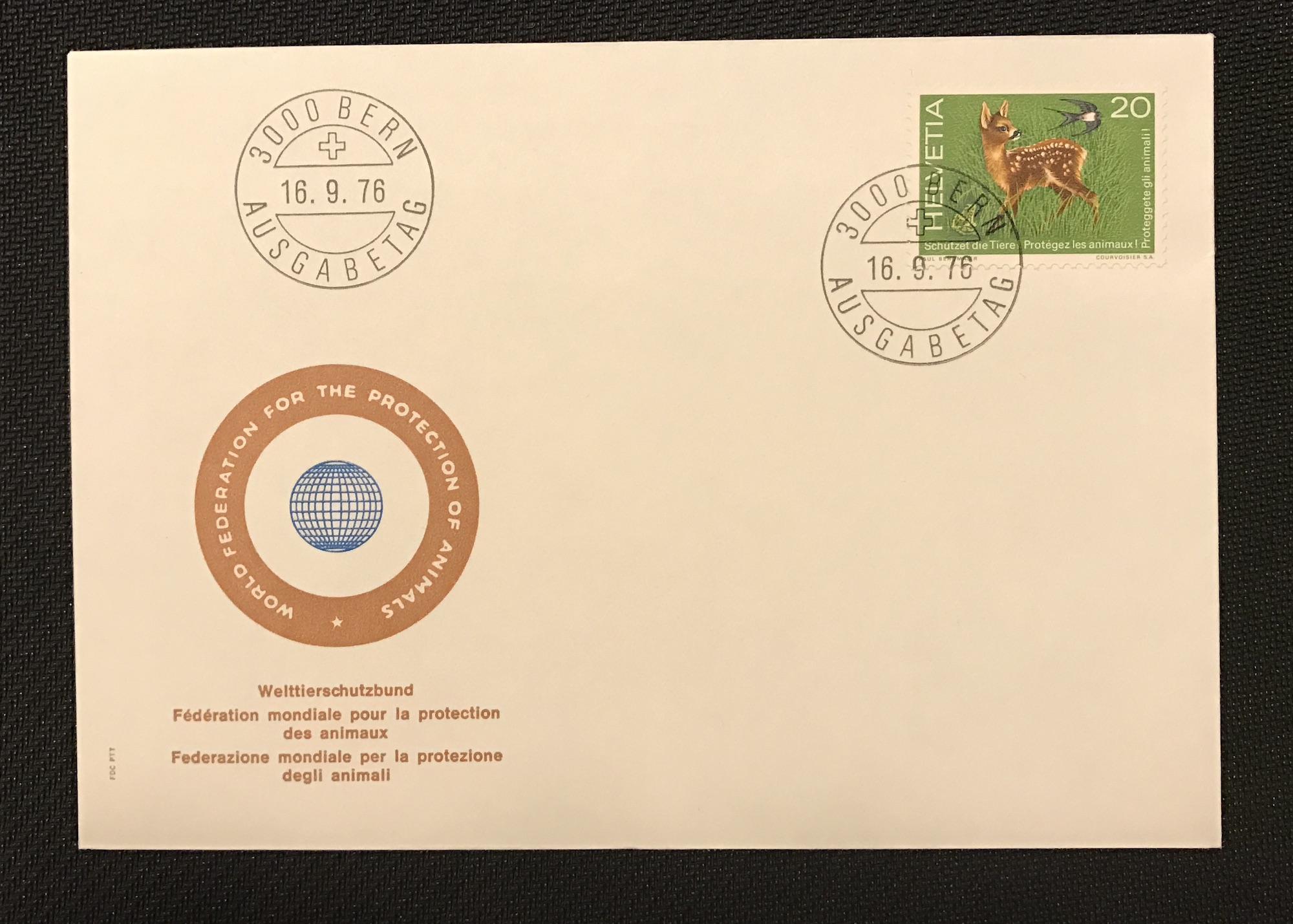
A bit of a mystery this one, in that I don’t remember where or when I bought it. It’s Swiss, issued in 1976 to commemorate animal protection, and the picture shows a deer and a swallow I believe. It’s plain and a bit severe. Maybe the best word is ‘neutral’ considering the origin.
I’ll end with two more from the US that I bought very recently in Vermont:
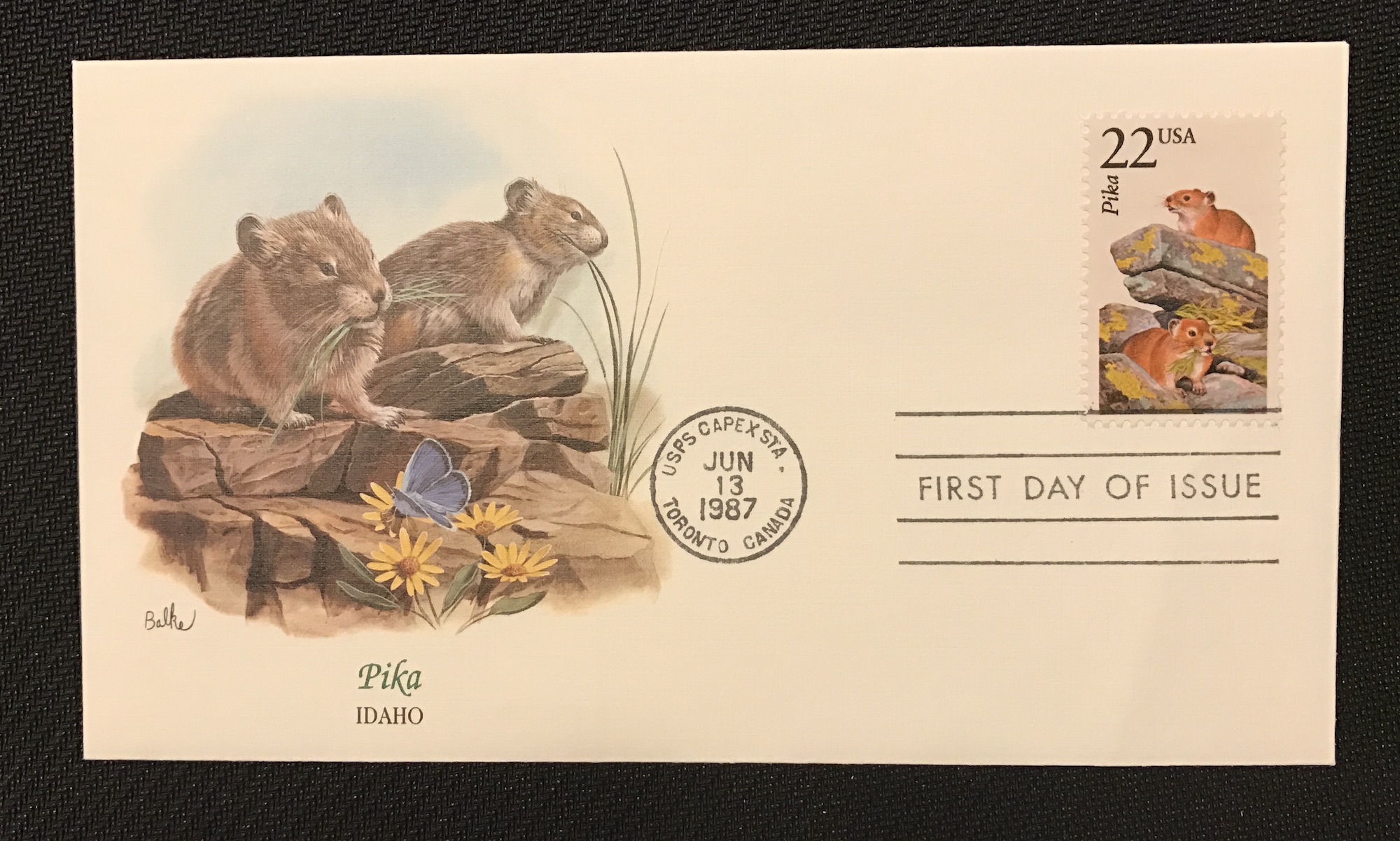
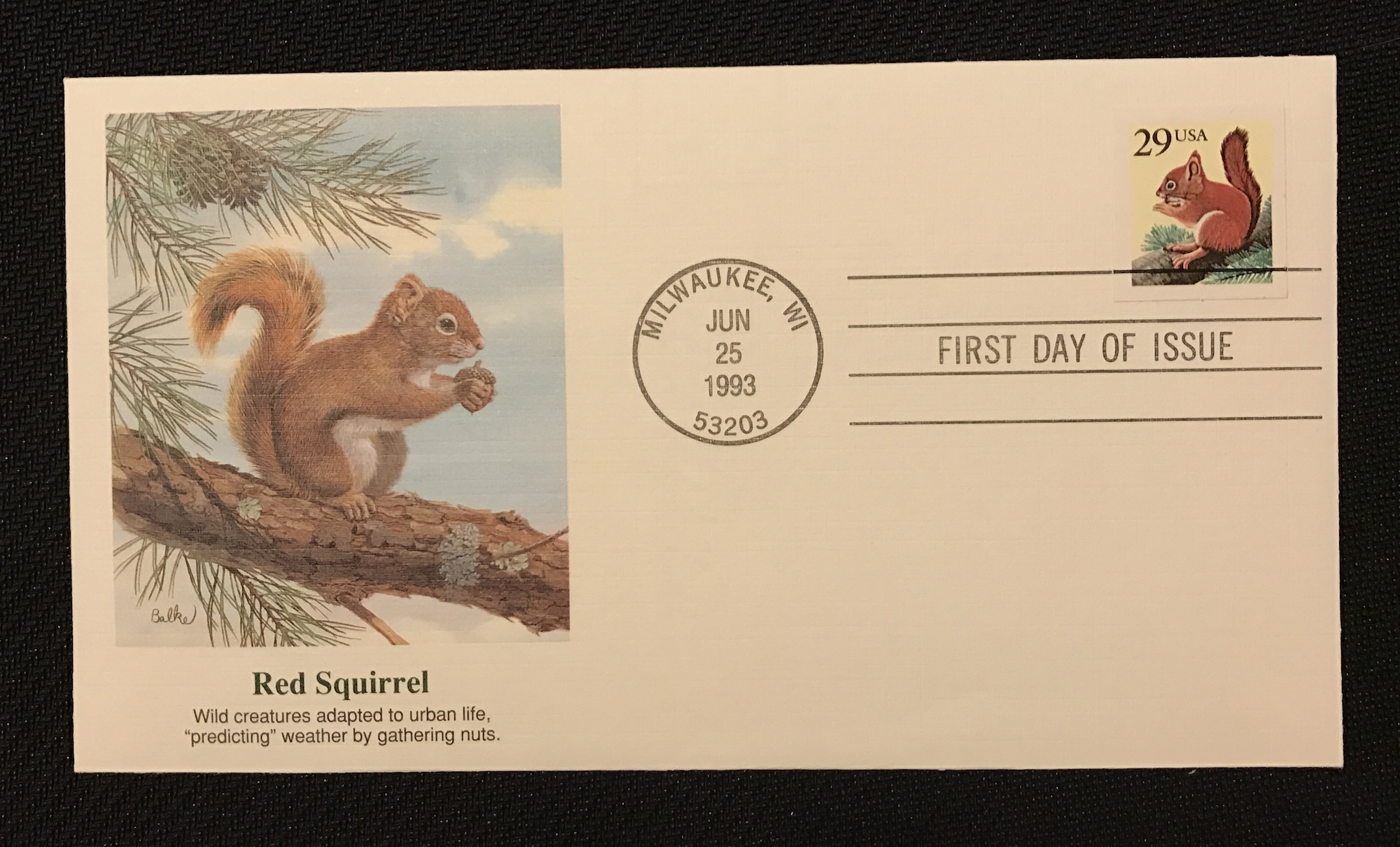
Aren’t they both great?! Putting aside for a moment the fact that a stamp was ever issued with a Pika on it, note that the top cover shows a US stamp canceled in Canada? I wonder what that means, if anything.
The last example is wonderful for a few reasons:
1) It’s a squirrel stamp
2) The beautiful art on the envelope
3) It was the first-class (domestic) stamp in issuance when I came to the USA. I remember affixing these to letters (well, mostly bill payments) for years until it was replaced in 1995. When I had the chance, I’d always buy squirrel stamps at the post office, and there’s a very real chance I sent cards/letters to some of you by putting multiples of these on them.
As I said in the intro, there’ll be many more posts like this coming up. There’s a few other themes to look forward to (yes, including ‘Zodiac’) and not everything will be first day covers either. Look forward to it!