Category: Art

The Masterpiece

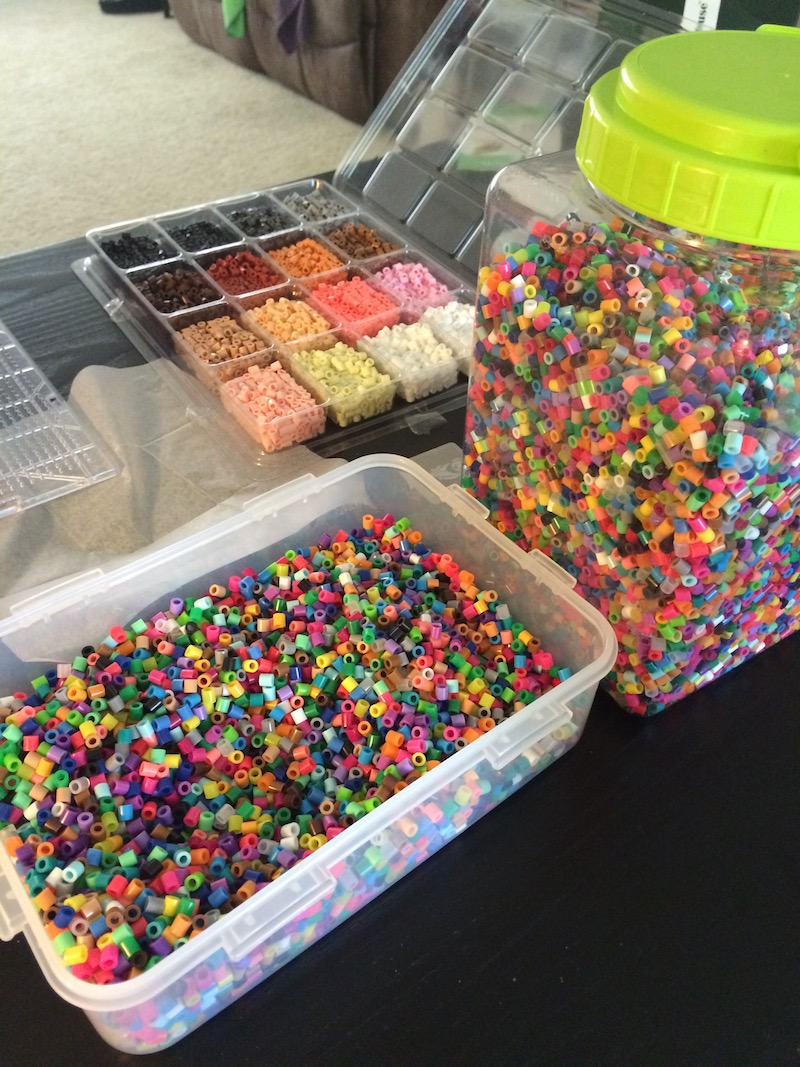
There are Perler Beads:

IMG_6882

They are tiny little plastic cylindrical beads used for crafting. You create pictures using them, and then iron the beads, which melts them together to make the picture permanent. I learned of these through the internet, and decided to buy a sizeable portion of them for a very specific project. This past Saturday I dedicated the entire day to this undertaking.

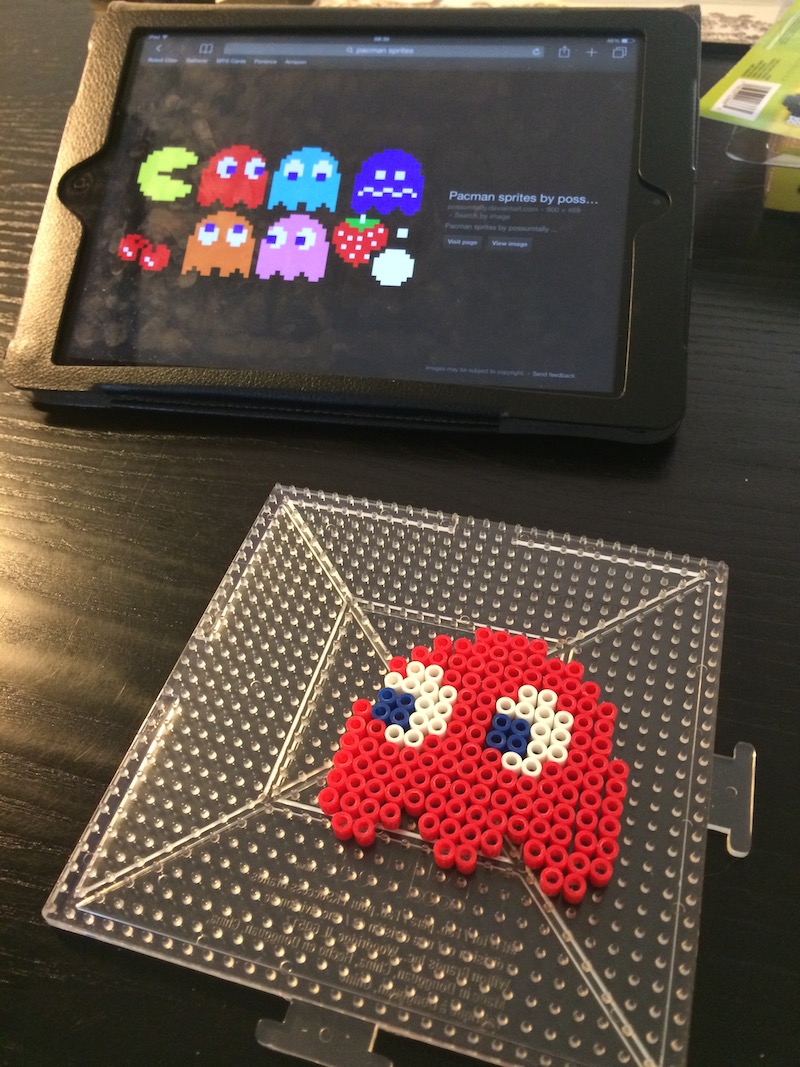
But first I started with something small, to get used to using the beads:

IMG_6878

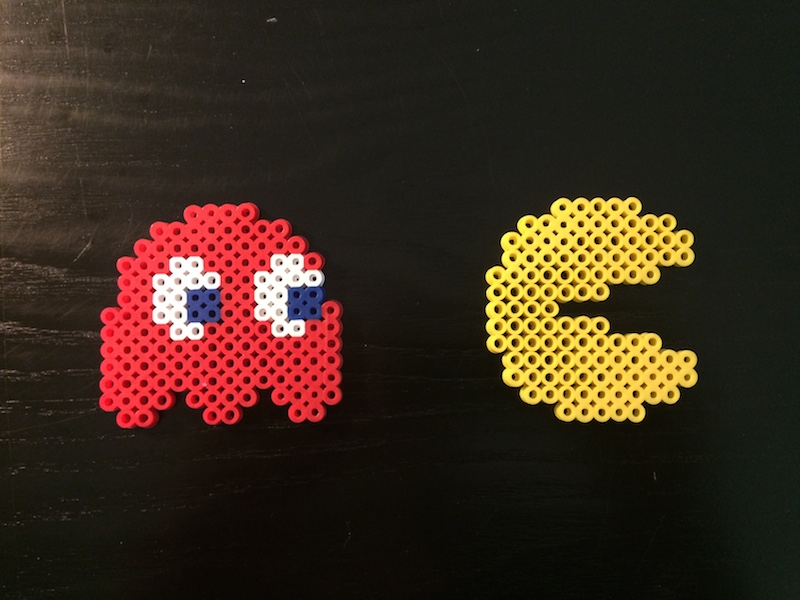
Yes sir, pixel art! Specifically a Pac Man ghost (very specifically ‘Blinky’). Of course I had to make his frenemy as well. Here they both are after the all important ironing to fuse the beads:

IMG_6881

Not bad eh? All told, the above took maybe half an hour tops.

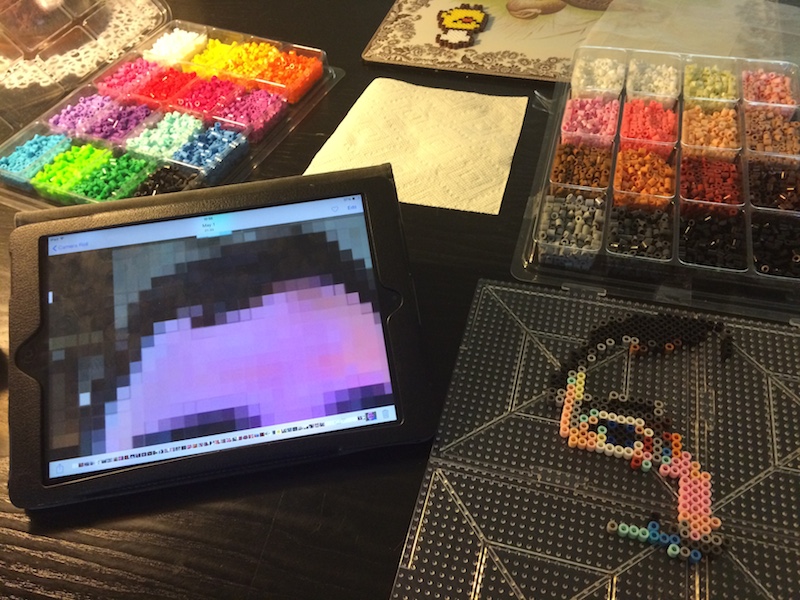
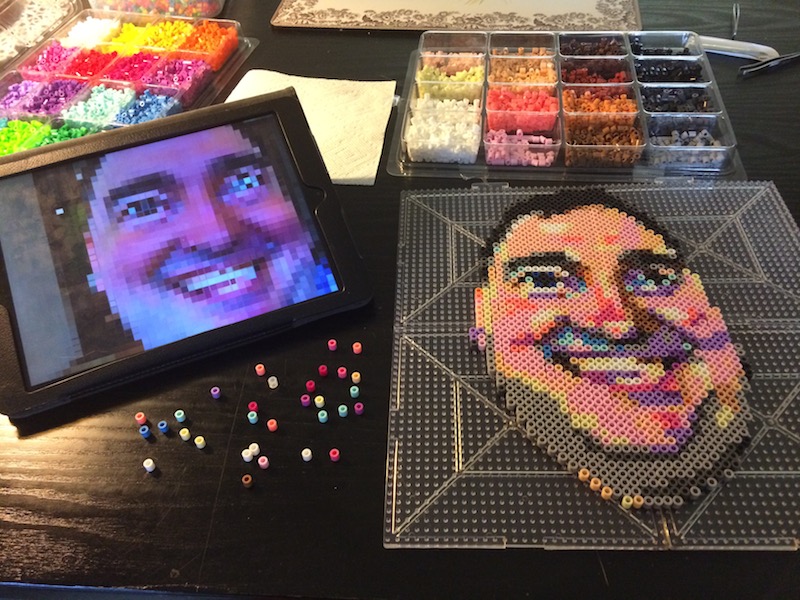
I was now a Perler Bead master, and it was time to move on to my intended project. I won’t spoil it just yet, but let’s see how quickly you can work out what I decided to make as you look through these ‘making of’ images:

IMG_6884

Hrm… interesting. I wonder what this is?

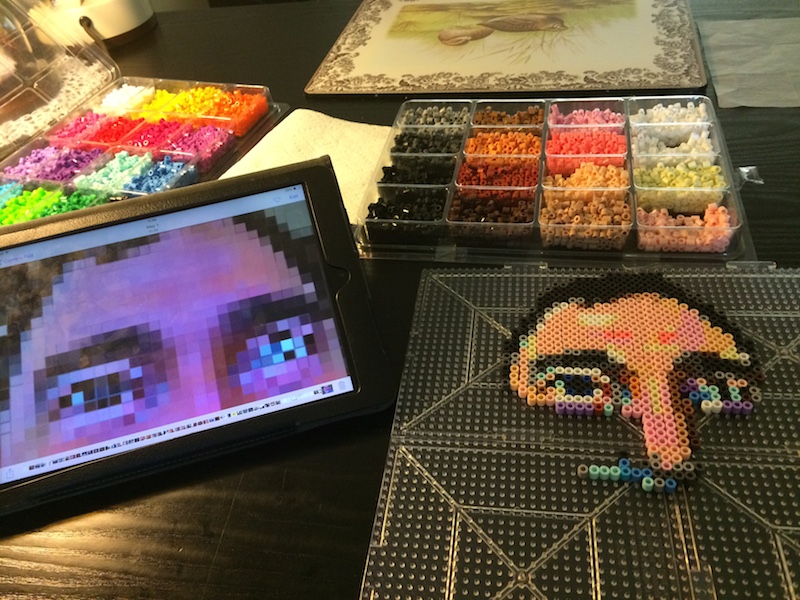
IMG_6885

Looks like a piece of classical art no?

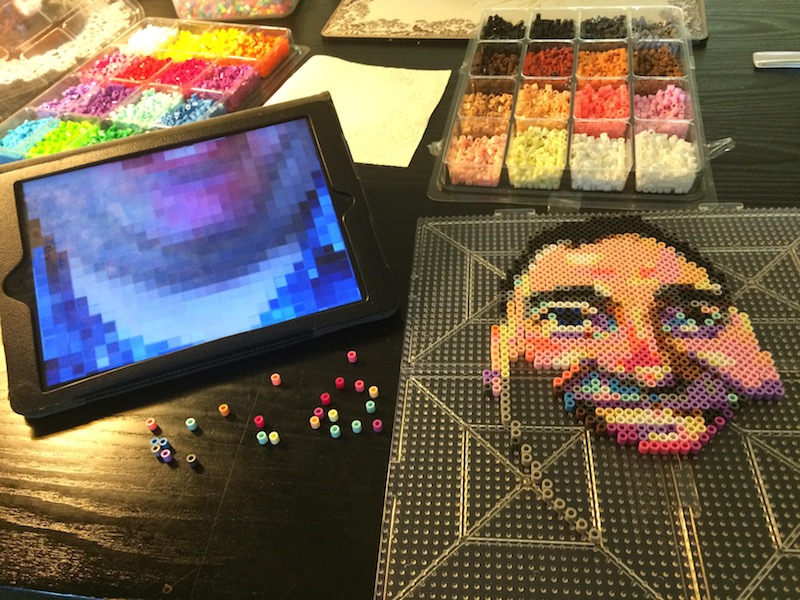
IMG_6887

Oh my god! Could it be….?

IMG_6897

Oh my god! It’s Bernard! I’ve turned his likeness into pixel art!

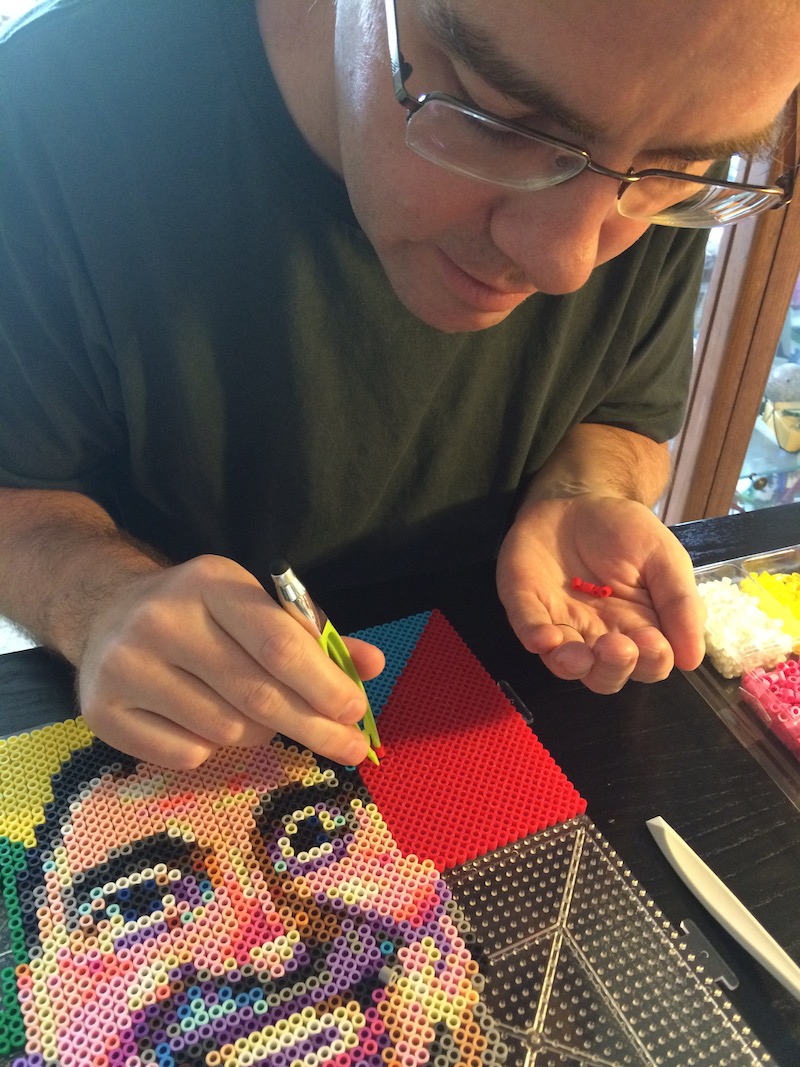
But I wasn’t finished yet. Even though I’d been placing beads for about 4 hours by this point, there was still a lot of unused space around his head. This had to be remedied. Here’s the master at work:

IMG_6901

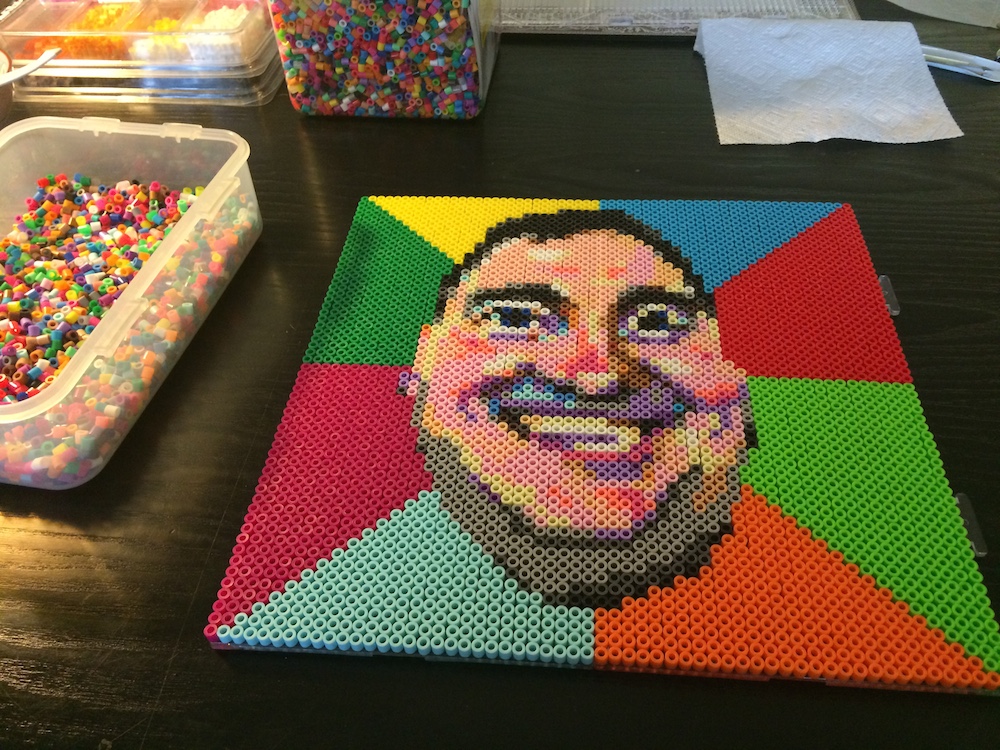
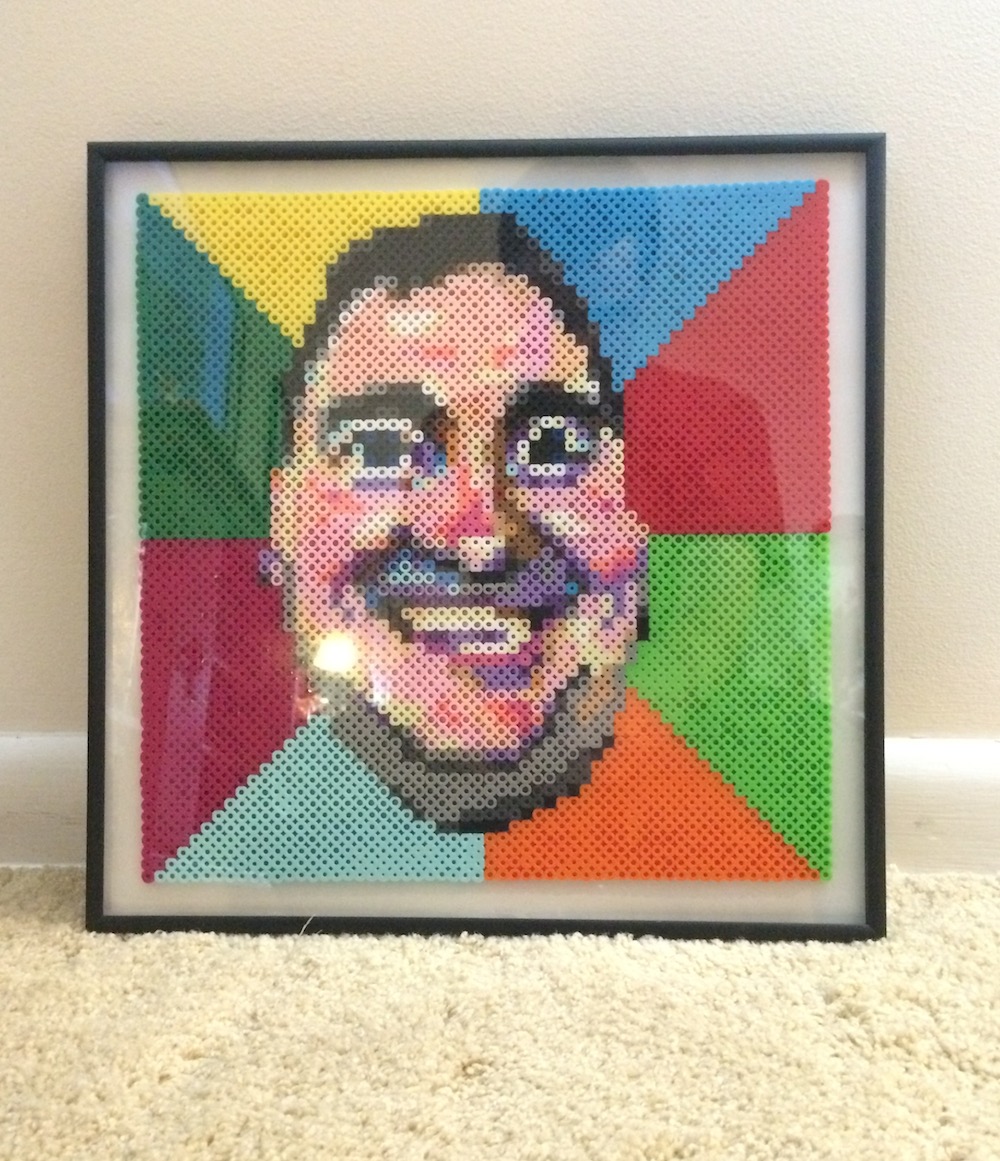
Look at that concentration! For over five and a half hours on Saturday I individually placed – using tweezers – a grand total of 3364 beads in over 23 colours to create my masterpiece. And here it is:

IMG_6906

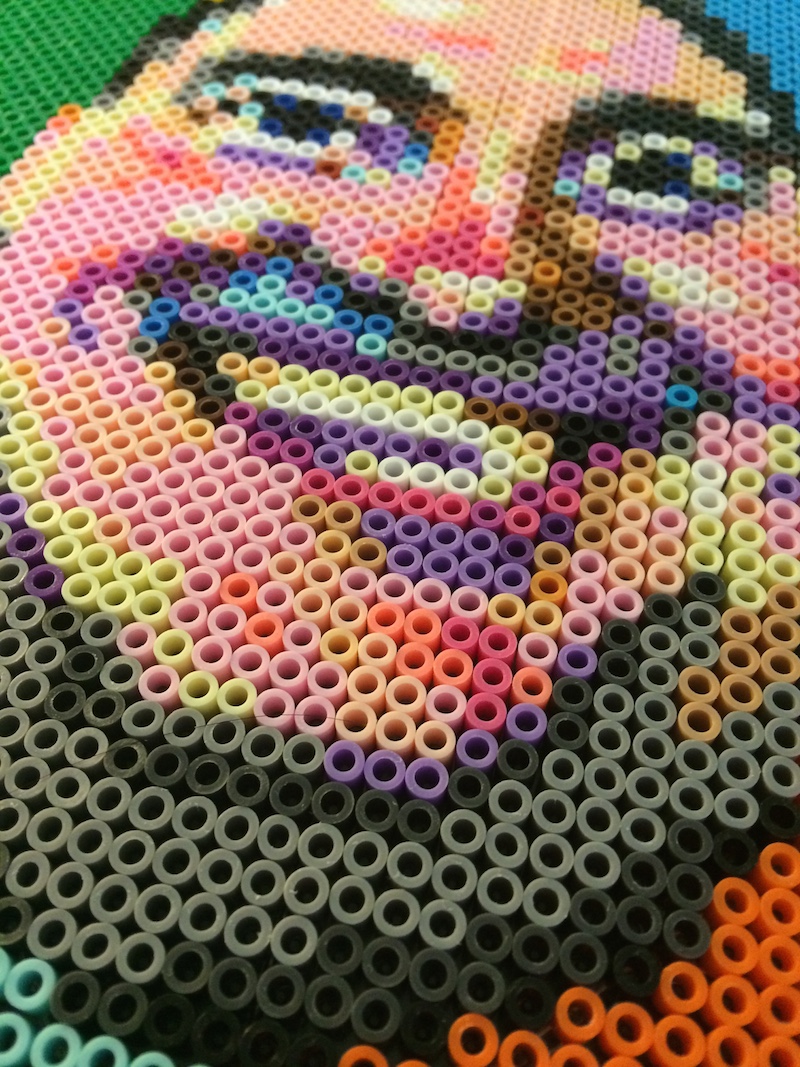
A detail clearly showing the beads:

IMG_6907

This was no small endeavour! In fact it ended up being much, much harder than I thought it was. For starters I did absolutely no pre-planning, and I certainly didn’t really consider the palette of the available beads. Instead I used a ghetto technique to resize the original photo down to 60×60 and then just used it as a guideline for bead placement. There was considerable deviating from the pixelated picture on my ipad, especially when it came down to establishing the all-important detail (such as the cheeks or nose shading).

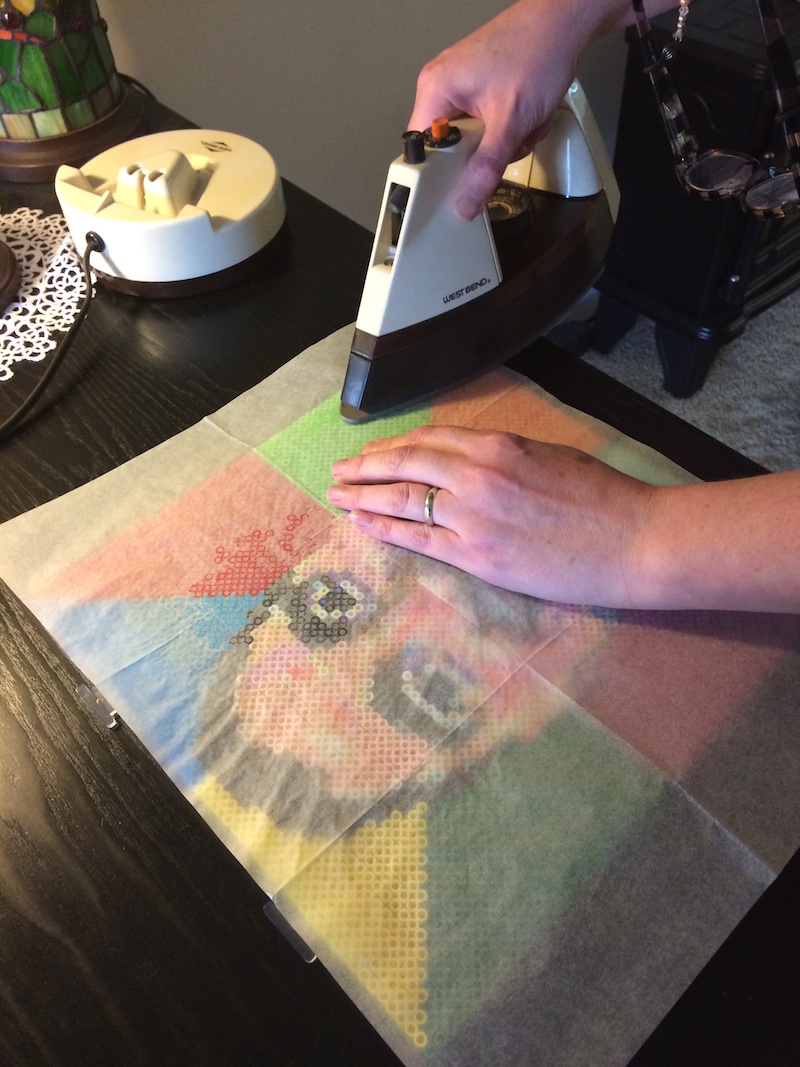
But then it transpired that placing the beads although time consuming wasn’t even the hardest part. Ironing them turned out to be much more challenging and took over 90 minutes in total (and more than a few stressful moments when it seemed like the whole thing would be ruined). The beads aren’t snapped onto the board in any way, they just sit there and can easily be dislodged with a bump:

IMG_6911

So, more than seven hours after I started, and in one sitting, I finished what can only be described as the greatest masterpiece I have ever created. And here it is:

IMG_6917

Here’s the original – and famous – photograph that inspired it:

IMG_4989

I think you’ll agree I did it justice?

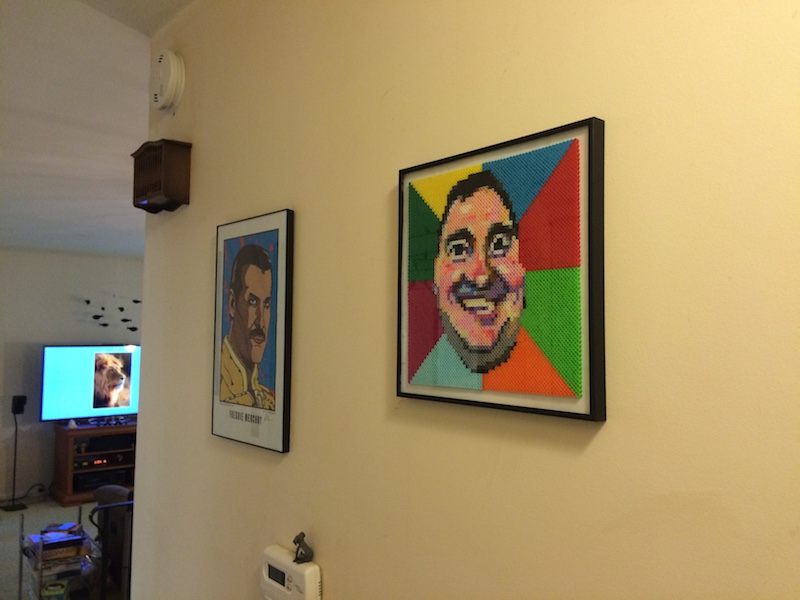
Now and forever this will be displayed proudly in our house. It’s hanging in the hall next to Freddy Mercury, and defies any passer-by to not stop and appreciated it:

IMG_6918

It has instantly become one of my prized possessions 🙂

Stamp Otaku

I like postage stamps. Always have, always will. I still buy them a lot, especially when I’m in Australia. They are also one of the reasons I love sending postcards, and I enjoy sending (or receiving!) cards with exotic or particularly pretty stamps on them. I wonder if any of my recipients notice?

Screen Shot 2015-04-28 at 8.34.57 AM

That’s a screen grab from yesterdays lecture, which was about the atomic structure. Rutherford is a real character, and I’ve always found it humorous that he’s been on so many postage stamps considering his (in)famous quote about science. Other slides in yesterdays lecture were peppered with stamps as well, and it’s actually quite easy to find stamps to use as illustrations in physics lectures.

In searching for such examples, I couldn’t help but notice that the masters of honoring their scientists on postage stamps are unquestionably the Germans. There are many and varied examples of beautiful stamps showcasing very famous scientists from German history.

Take for example this one:

stamp_hertz

What a beautiful stamp! Hertz discovered electromagnetic waves, and this stamp displays the oscillations of the electric force due to a magnetic dipole (ie. EM waves) in the background. I love that the lines are superimposed over Hertz’s portrait, as if to put the science before the man.

index

This stamp of Bessel is magnificent! The portrait is wonderful, and the fact the stamp prominently displays a plot of a ‘Bessel function’ (important mathematical tools required to solve complex partial differential equations) is just icing on the cake! How I’d love to stick this on a postcard!

Here are some other wonderful examples of Germany’s science stamps:

4d739c481e91b5aba4d2cf071e453930

300px-Hahnfch

Stamps_of_Germany_(DDR)_1977,_MiNr_2215

That last one (Gauss) is sublime! Gauss is one of the titans of mathematics, and is one of the few men to have multiple identities or equations named after him. One may imagine that they would have shown a Gaussian distribution on the stamp, but whoever designed it chose the 17-sided polygon that he created using compass and straightedge when he was only 19. I love it!

Lovely stamps these all are. The woodcut portraits add to the appeal, and the fact the stamps embrace the science only make them more appealing.

Of course Germany isn’t alone in recognizing science in their stamps. Here are a few other wonderful examples I found (and in some cases have inserted into lectures):

14444186-EGYPT-CIRCA-1995-stamp-printed-by-Egypt-shows-X-ray-of-hand-Wilhelm-Conrad-Rontgen-portrait-circa-19-Stock-Photo cbstamp stamp-fermi

bohr-stamp_1 Bulgaria 2947.300dpi

depositphotos_25194571-GREECE---CIRCA-1961-A-stamp-printed-in-Greece-from-the-Inauguration-of-Democritus-Nuclear-Research-Centre-Aghia-Paraskevi-issue-shows-ancient-Greek-philosopher-Democritus-circa-1961. article_schneider_phelan

From the top, we have Roentgen (x-ray), Babbage (computers), Fermi (atomic physics), Bohr (atomic structure), Mendelev (chemistry), Democritus (coined the word ‘atom’ in 450BC) and Ramanujan (Indian mathematics prodigy). I love them all. I wish I had them all in a big frame. I’d display it proudly in my office.

You’re all wondering “What about Einstein?” He’s on more stamps than any other scientist, and they run the entire range of design and theme, since his fame moved into celebrity as well. I think this is perhaps my favourite Einstein stamp of all those I found:

stamp-italy-centenary-of-albert-einstein-1979

It’s simple, subtle (note the background) and a lovely portrait of Einstein when he wasn’t much older than when he presented his most important theories. This stamp would look beautiful on the back of a postcard of a surfing koala or kangaroo drinking a beer 😉

Strandbeest Rhino

At the risk of turning this blog into a “look what model kit I made this week” list… I got this curious thing for my birthday the other week:

IMG_6526

It’s a model of a ‘Strandbeest’, which is a type of wind-propelled walking sculpture made by Dutch artist Theo Jansen. You can read more about his creations here. His ‘beests’ are massive and insanely complex, but this model kit reproduces a smaller version of one of them using the same principles.

Here’s what it looked like before assembly:

IMG_6528 IMG_6527

Everything looked clean and relatively simple; a nice departure from some other kits I have made recently.

IMG_6529 IMG_6530

Assembly was very quick. Each of the twelve legs have only 6 pieces that snapped together tightly with very little effort. The instructions are very clear, the pieces easy to remove from the runners and everything fits together perfectly. This is a very well engineered kit.

IMG_6531

That’s a shot of the first two legs showing the crankshaft and drive-rod mechanism. It’s very clever how everything fits together and still has a very large range of movement.

IMG_6533

That’s six legs attached. One half of the kit is complete!

IMG_6536

And there’s the finished guy! In theory, when wind turns the fan propeller on the top, a gearing mechanism will turn the crank shaft and make it walk along. It’s complex but very simple mechanically, and it only took about an hour  to assemble (with no glue or tools). But does it walk…?

Here’s the proof:

Not bad is it!

The actual rhino strandbeest was much bigger and could actually carry people inside. It weighed 3.2 tonnes, and is now a permanent (immobile) sculpture in a pond in Amsterdam. Here’s a photo that was taken the day it walked on an abandoned runway in the Netherlands:

strandbeest03

As it turns out I actually received two (different) strandbeest kits for my birthday. I think the other one will patiently wait for a while 🙂