This past year Wizardry Daphne broke into the top 50 mobile games in Japan, so I shouldn’t have been surprised on this recent trip to actually find merchandise! There were sections in both Animate and Gamers in Akihabara like this:
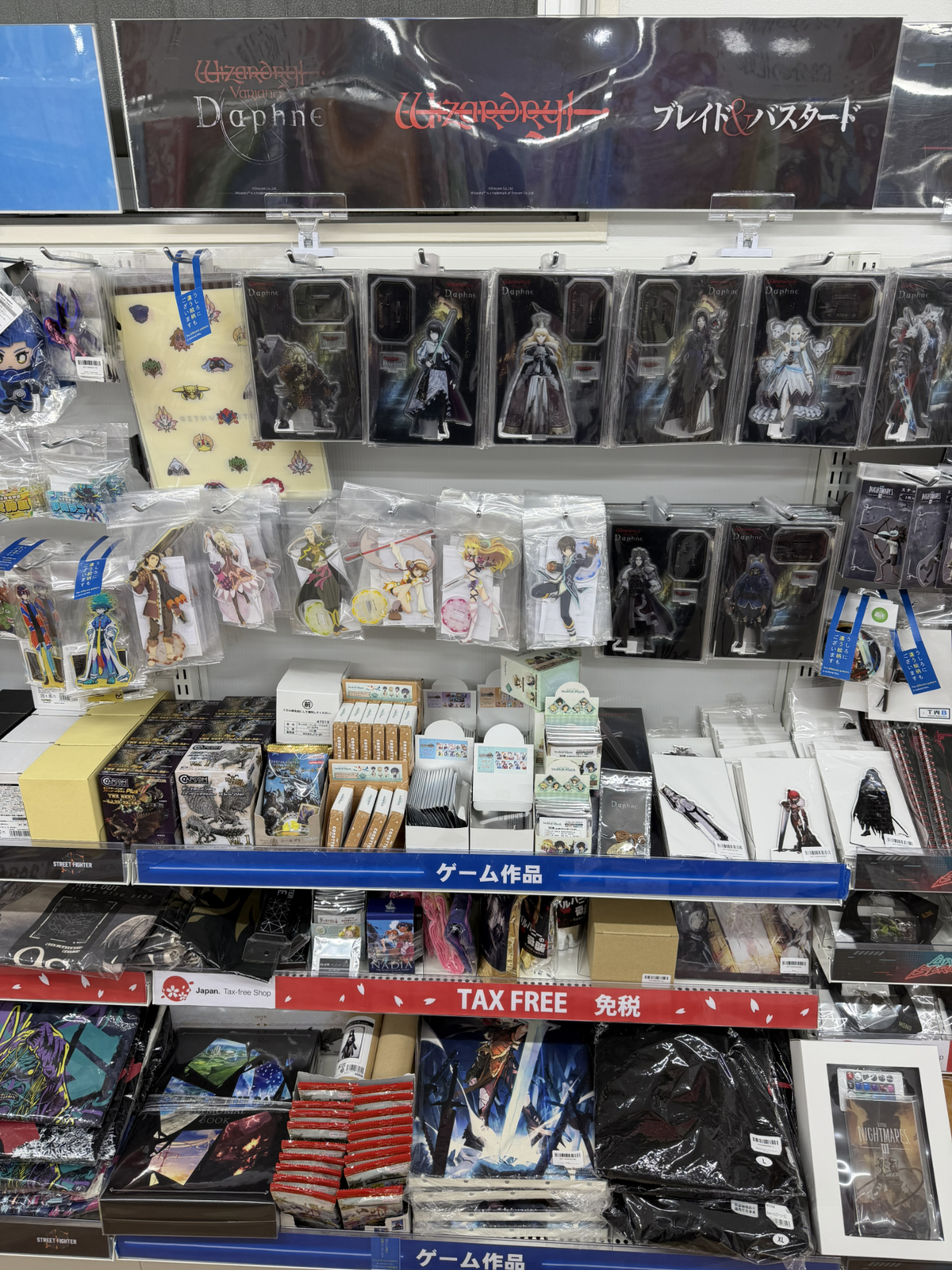
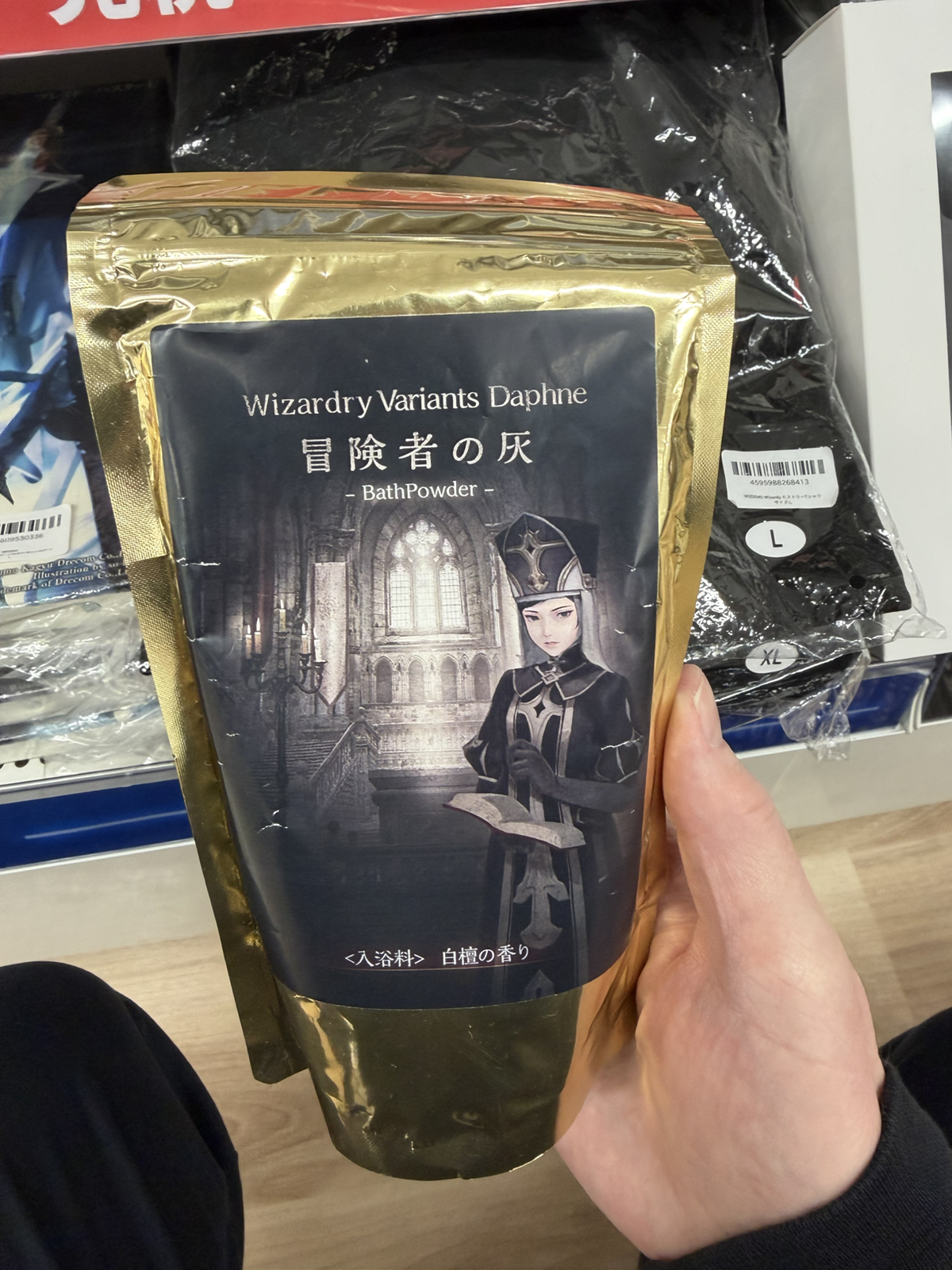
If you look closely you’ll note that not all of the above is actually Wizardry merch, but what there was a mix of Daphne and Blade & Bastard (the new series of novels and manga) items. The quality ranged from good to dubious such as this (which I obviously didn’t buy):
So what exactly did I buy? For starters, this acrylic of a character from Daphe that I had rolled (on the gacha) only a few days before:
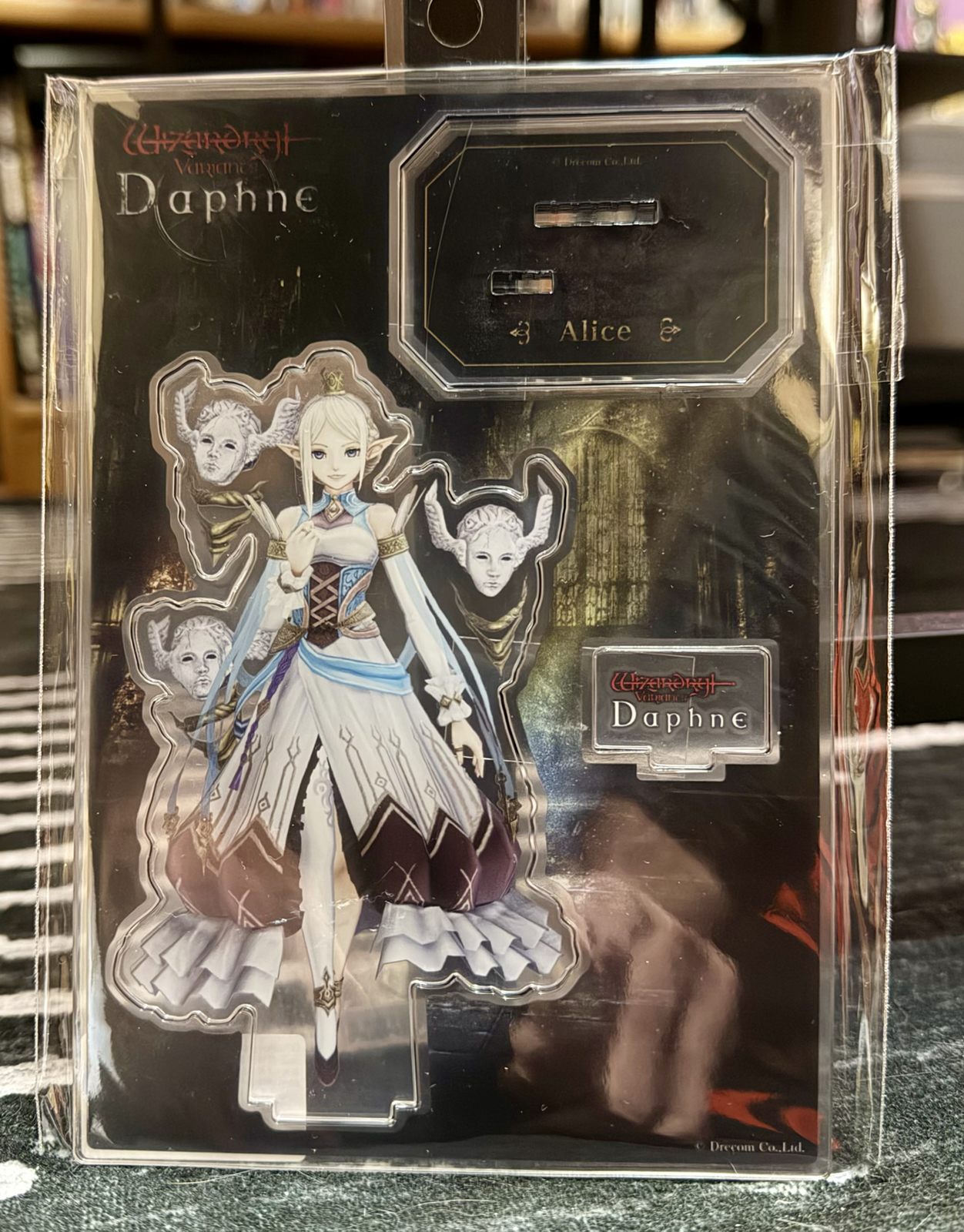
Her name is Alice and she’s an irredeemably evil cleric possessed by an ancient god. She’s also the best healer in the game right now, and immediately went into my party!
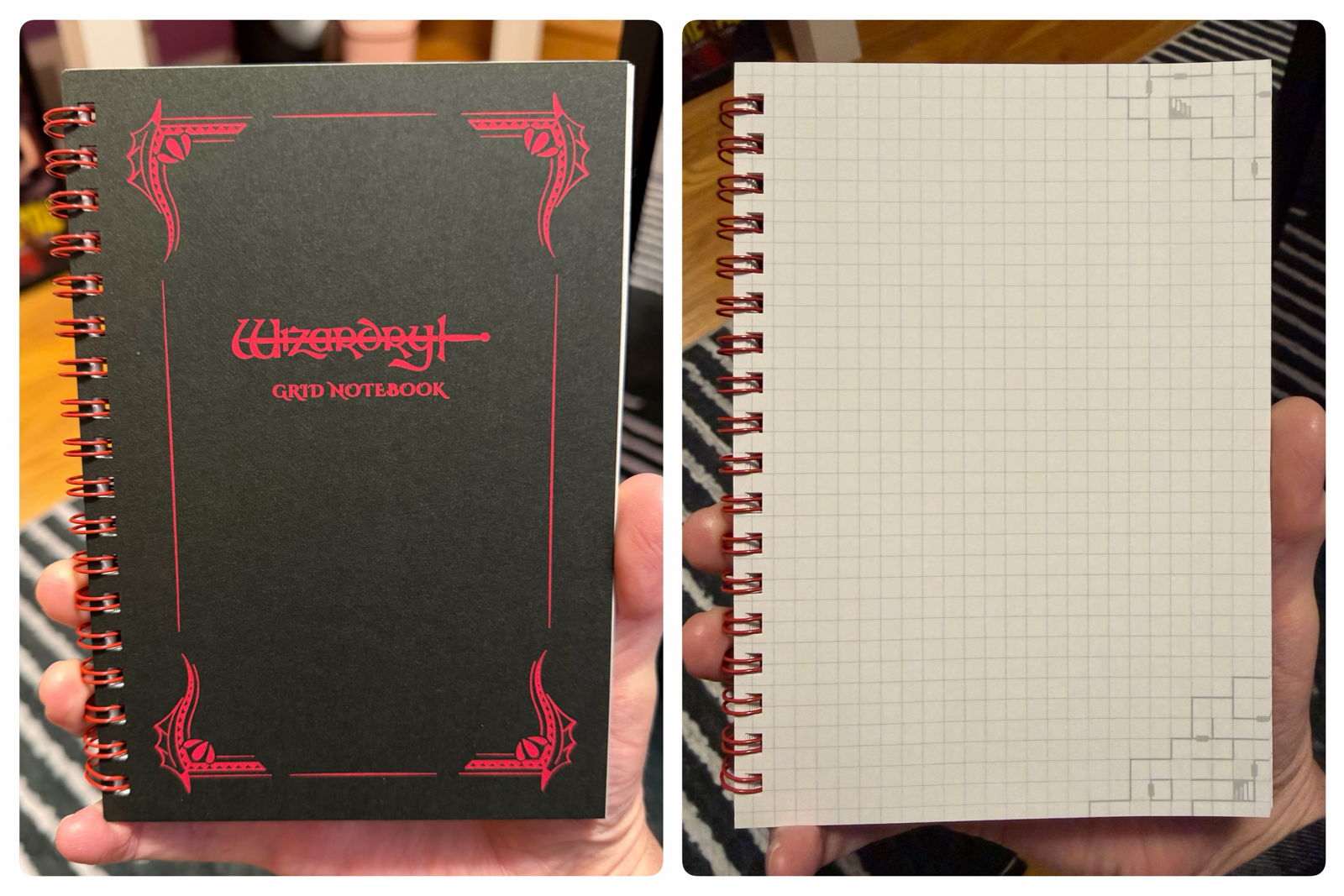
This is a small notebook designed for mapping. It’s a curio today since all modern games have automaps, but for nostalgia value alone of course I was buying this. Even better was a black t-shirt with a simple red ‘W’ on the front and this extraordinary list on the back:

That’s an amazingly thorough list of all the games, and even included some I’d never heard of. The last western-developed one was Wizardry 8 in 2001; you can see how the series has shifted entirely to Japan since.

I also bought the badge and the pillow. The pillow was a ripoff, but I wanted to get the free-with-purchase bag (in the lower left) which required a total spend over ¥7000, so it made up the difference.
Speaking of Daphne, this was release only days before our trip:

Daphne is a beautiful game with particularly good character and monster design. This is a hefty artbook and I look forward to reading it.
But as happy as I was to find the above, it paled compared to me finally obtaining one of my grails:
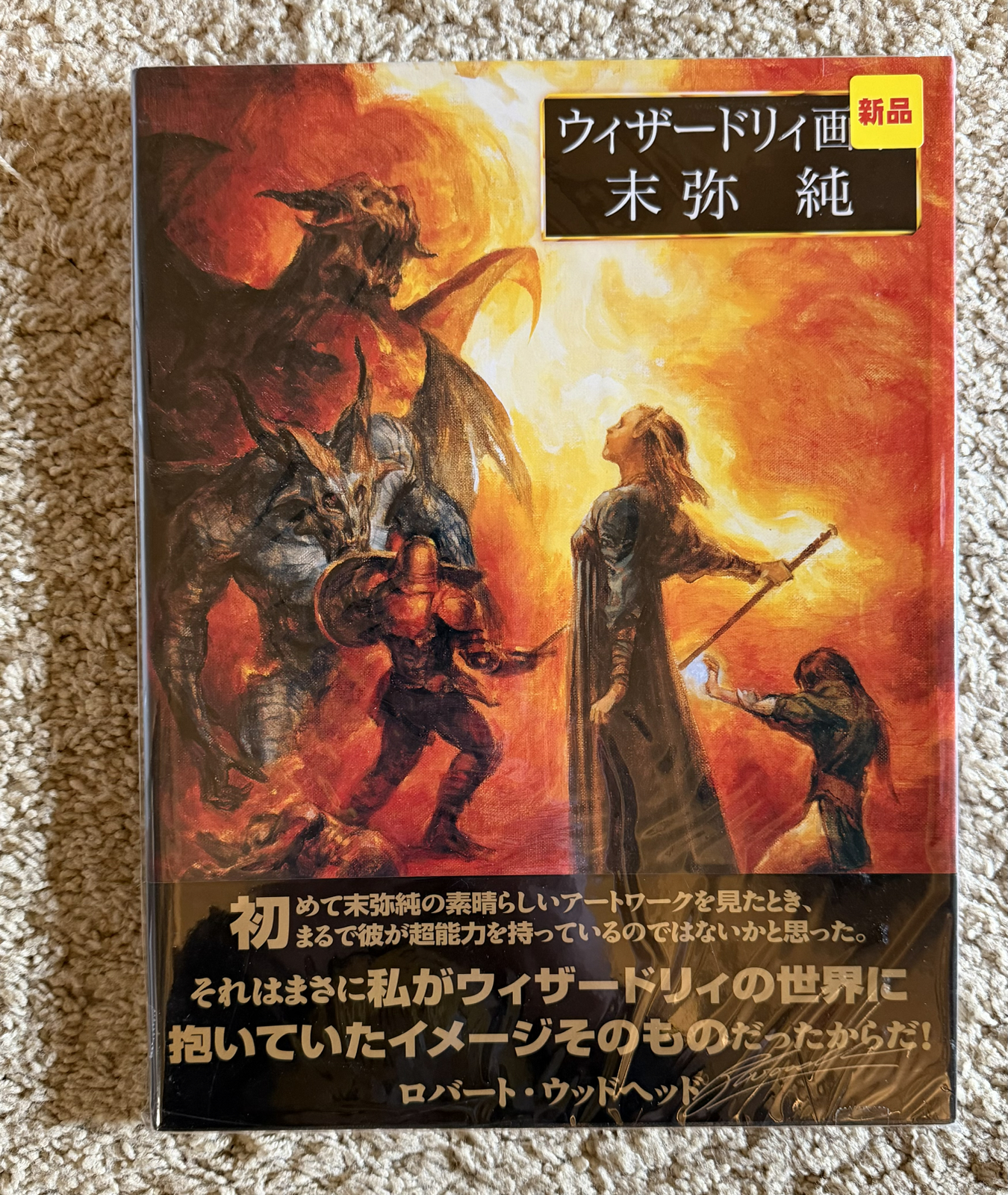
This is Jun Suemi’s legendary artbook simply titled ‘Wizardry‘. First released in 2006 it had become highly sought after and the price had risen to hundreds of dollars in recent years. Happily it was reprinted in a revised and expanded edition just a few months ago and it’s now mine!
I’d been after this for over a decade now. I’d even purchased it twice on Amazon (the second time for $250!), and both times the orders were subsequently canceled and refunded. Several years ago I held a copy in my hand in Surugaya in Osaka and didn’t buy it since at the time I was awaiting delivery of one of the orders that would be canceled, and memory of that event had haunted me ever since. I even recall looking at the book on a Japan trip way back in 2006 and I always regretted not buying it (which was probably for weight reasons).
This is an important book in many ways and I’m so very pleased I now own it. I think I’ll dedicate a blog post to it in time.
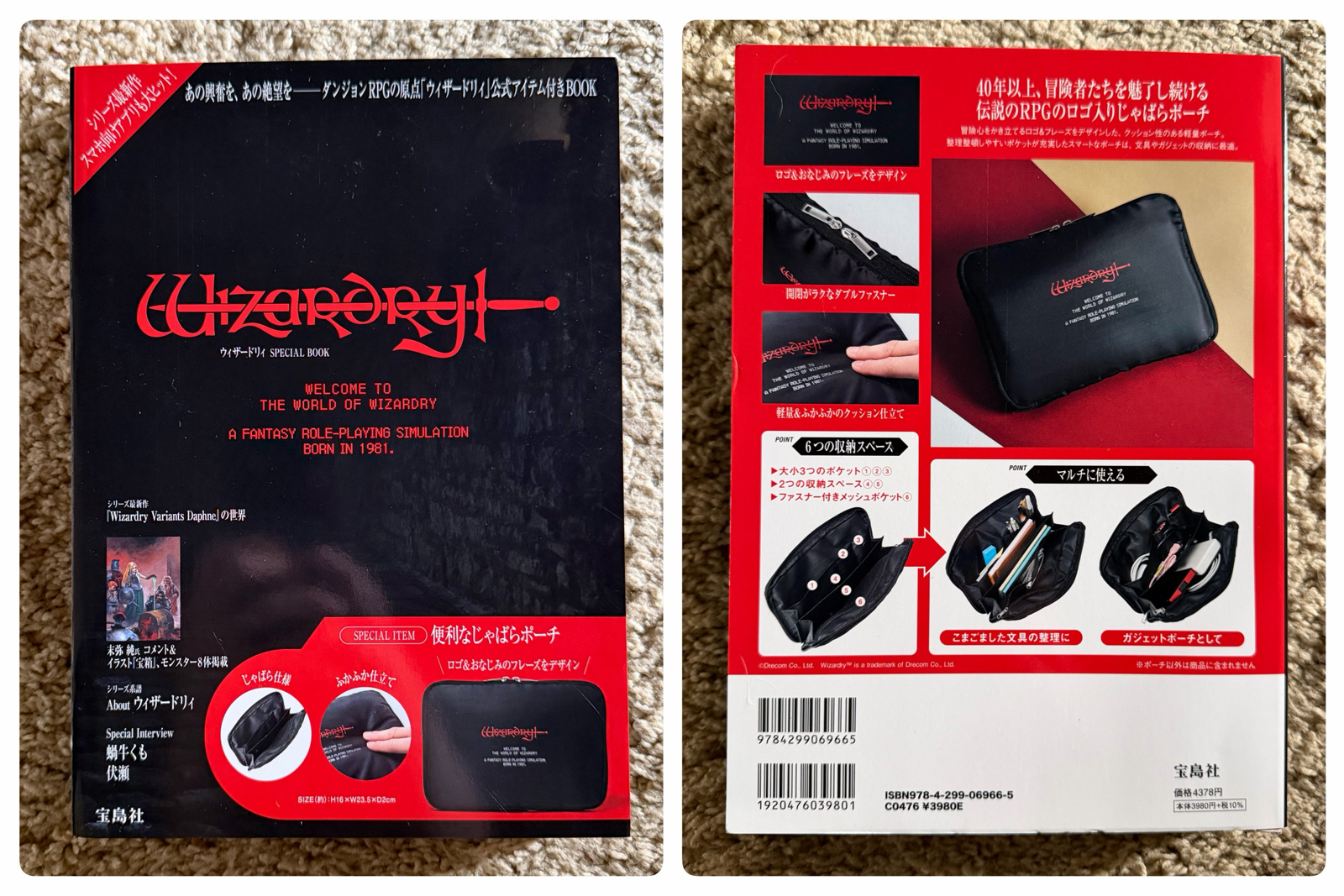
In addition to the two artbooks above, I was astonished to find this on the shelves. I don’t know the exact term for these, but in Japan newsagents and bookstores sell these mini-magazines packed with another item, usually some type of bag. This one couples a little booklet on the history of Wizardry (“the excitement and the despair”) with a pouch bearing the logo. This was fairly common since I saw it in many newsagents and bookstores. I love that Wizardry is still very much in the public conscience in Japan 🙂
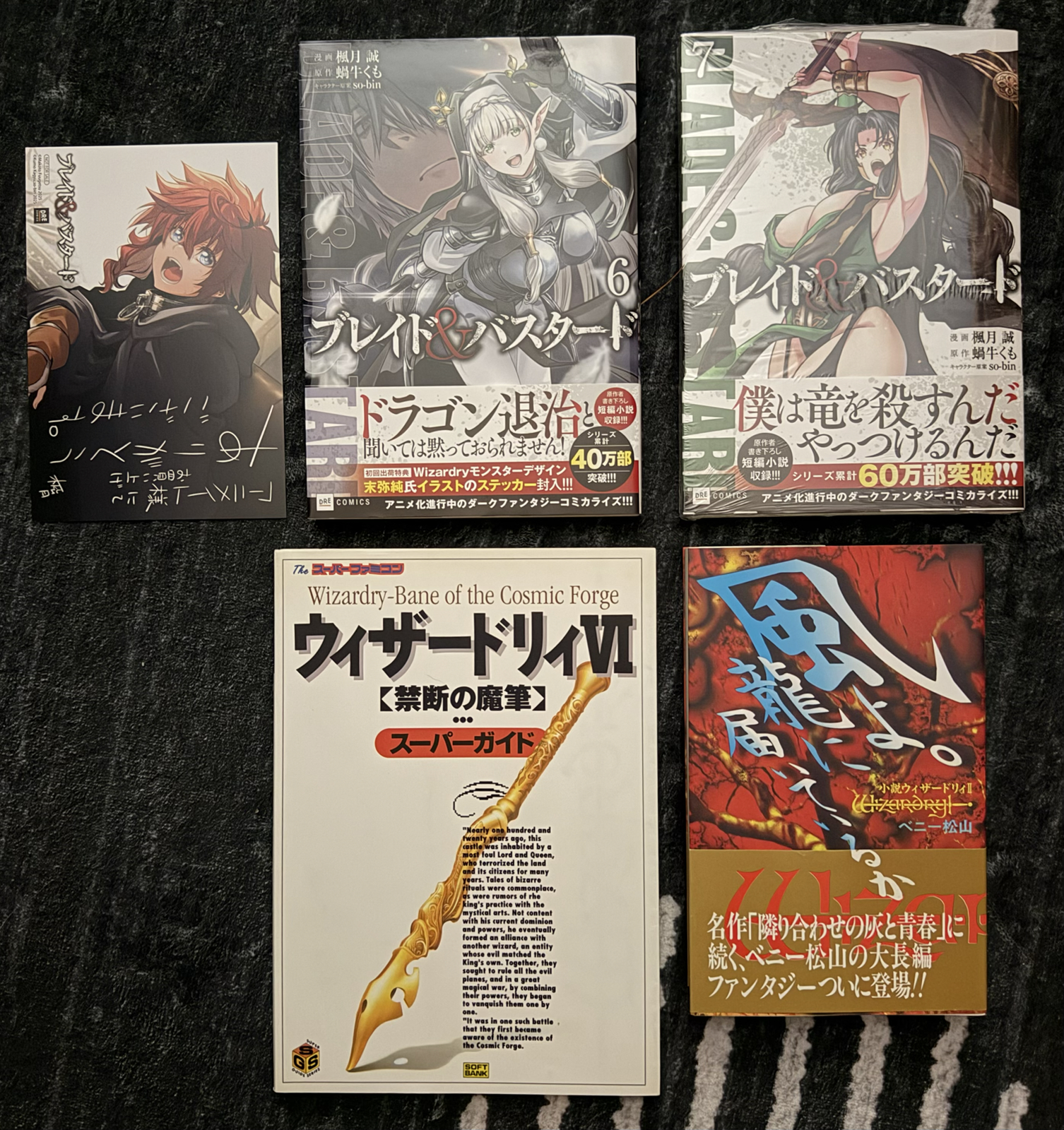
Some more books. On the top are the two most recent Japanese issues of Blade & Bastard, with the bonus postcard that came with issue 6 on the left. On the bottom left is a Wizardry 5 hint guide (for the SFC version) and a Wizardry novel entitled ‘Does the Wind Reach the Dragon’ from 1994. I own dozens of Wizardry books now but always seem to find more. How many exist?
Blade & Bastard incidentally is a novel series written by Kumo Kagyu, the creator of Goblin Slayer. I theorize that the Wizardry rights holders noticed Goblin Slayer was essentially set in the world of Wizardry so approached him to create a ‘true’ Wizardry story. I read the novels and manga adaptation of Blade & Bastard, and I’m enjoying it quite a bit. There’s even an anime forthcoming!
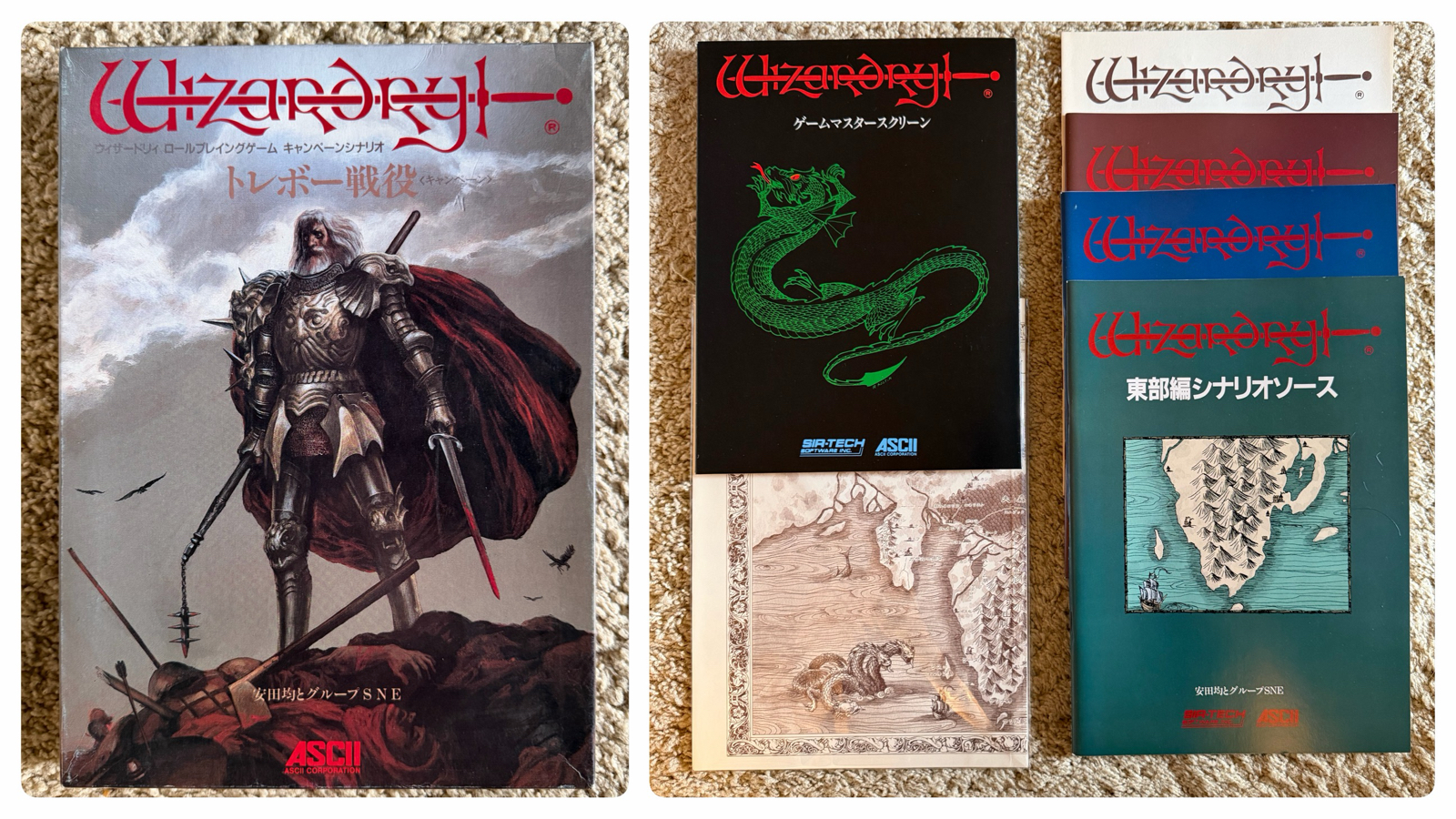
The above was the most expensive single item I purchased in Japan. It’s a hefty box set campaign for the Japanese Wizardry TRPG. With four booklets, a large selection of maps and a wonderful DM screen, this is an impressive product. I believe the cover art is Jun Suemi as well.
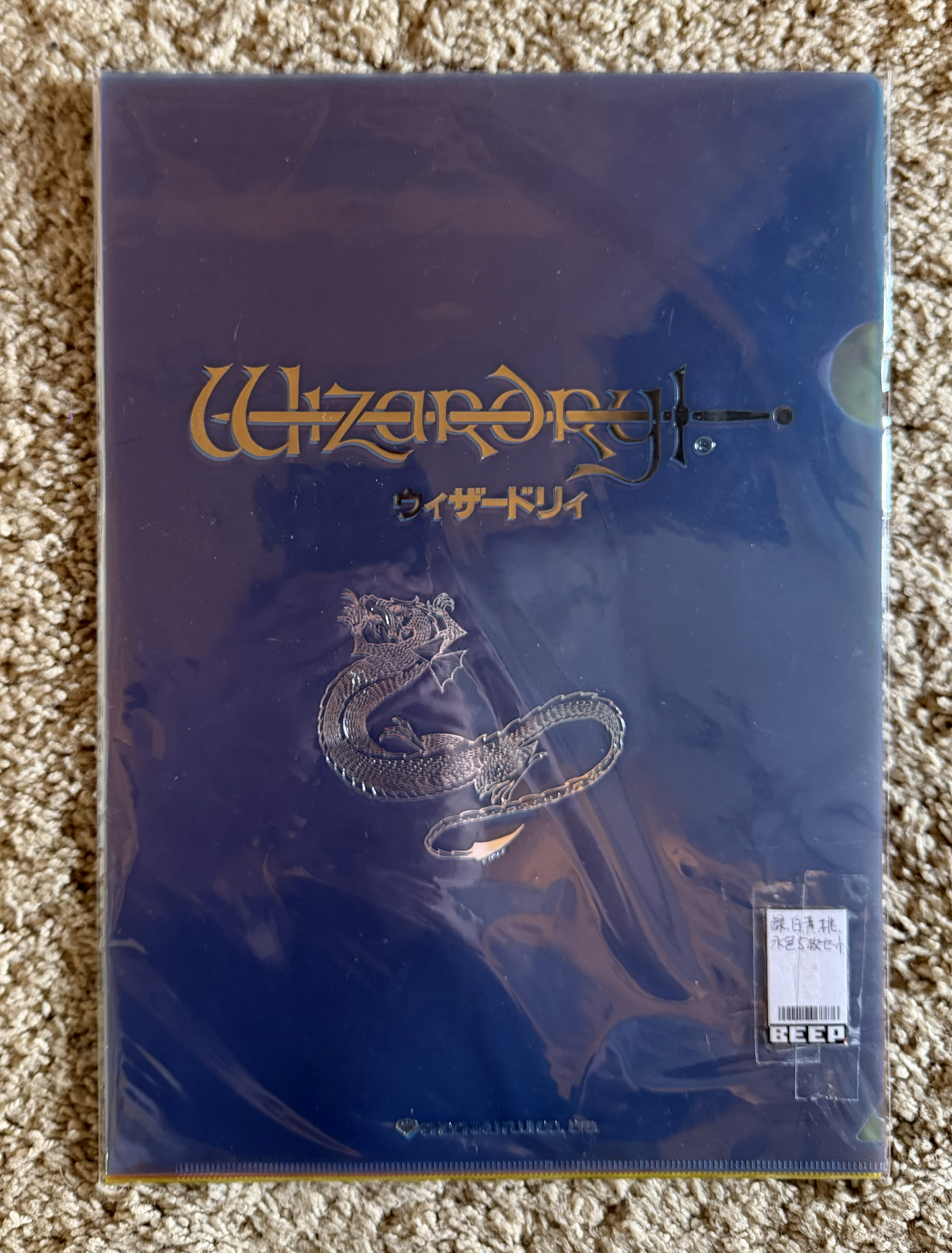
The above is a clear file. It was very expensive. Much more than you think. It was in fact so expensive that only a King or a Fool would have purchased it. There was no information about its provenance, and I assume it was promotional and is at least a decade (even decades) old now.
The truth is I fell in love at first sight and it’s now one of my favourite items in the collection 🙂
Speaking of love at first sight, I went into a tiny and somewhat dingy retro game shop in Akiba and spied these in a showcase:
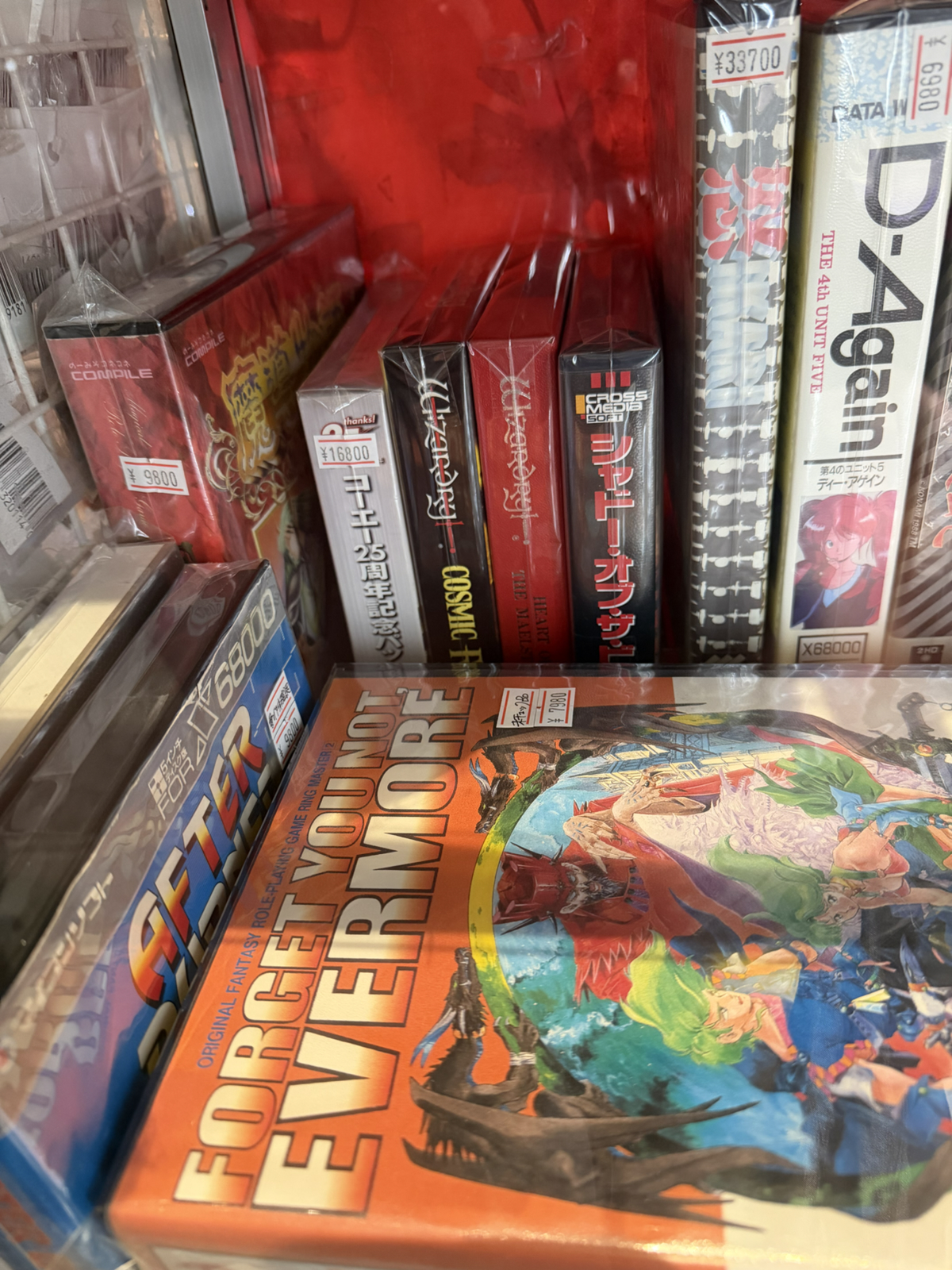
I’ve probably mentioned this before, but my Wizardry game collection is complete. I own all the games that were physically released, even to the point of having original and rereleased versions of many of them. But I don’t have all the computer versions, and I’m always on the lookout for more.
So I approached the employee – a young woman – and she gave me a weird look. I said I’d like to see something in the showcase and as she took me over she said in accented but good English “You want to see the Wizardry games don’t you?”
It was my shirt! I was wearing a Wizardry shirt which she’d noticed, and as it turns out this young lady was a Wizardry fan. This was extraordinary since she was no older than my students, and yet she quickly convinced me she was a true fan. She took me to a few other cases to show me other games they had (all of which I already owned) and she also knew about the merchandise at the other Akiba shops. She also played Daphne. My favourite quote of hers: “Ah these games can be hard on a Gen-Z like me, they’re so difficult!” (Yes, she labeled herself as a Gen-Z which surprised me.)
At any rate, these were in the showcase:

I don’t usually leave prices on items when I blog them, but this time I did and if you’re interested you can work out how much I paid. These are complete boxed versions of Wizardry 5 and 6 for the FM Towns and both are in immaculate condition. The contents of each are similar:
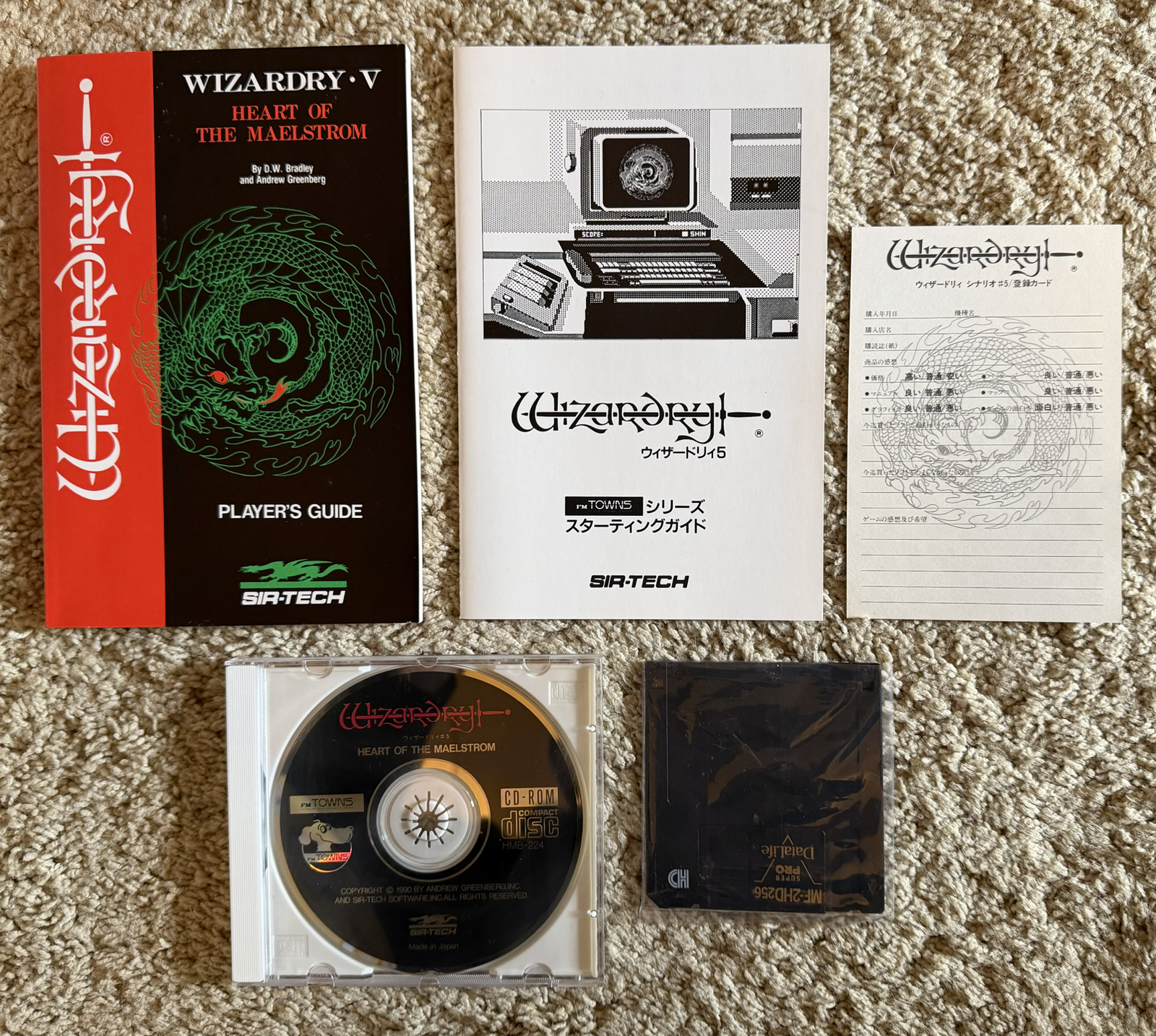
The manuals are 100+ pages, and each comes with a game CD and a 3.75″ floppy for save games. The middle book at the top is a setup guide, and that’s a customer response card (with the dragon from the cover on it) at top right. The packaging of Wizardry 5 in particular, with the embossing and metallic inks, is just beautiful:
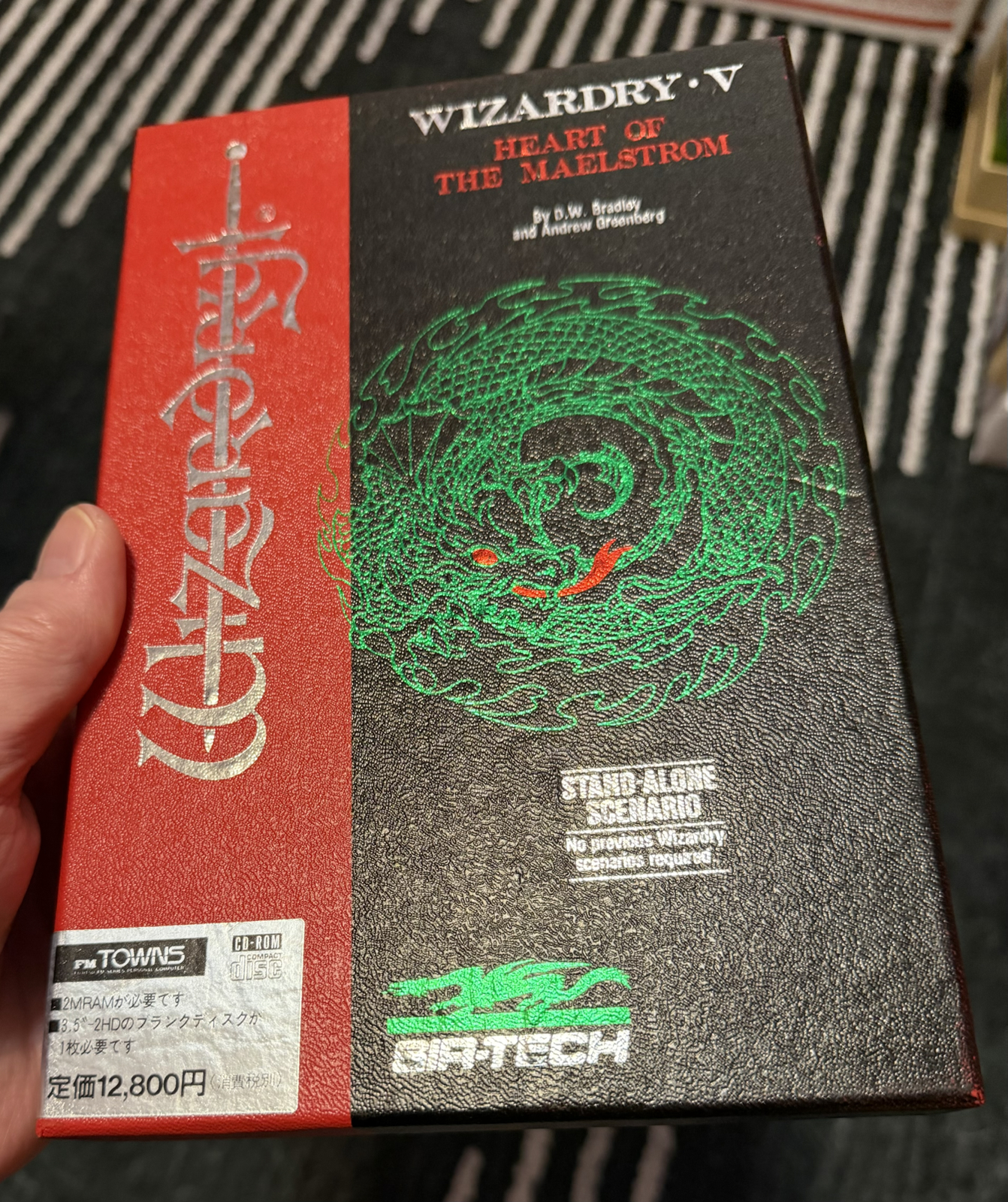
It goes without saying that these are the first FM Towns games in my collection!
As for (let’s call her) ‘Wizardry-chan’, I asked her if she had seen the clear file at Beep and she hadn’t. I showed her a photo and she zoomed in to the price and gasped. I told her I had purchased it and she was speechless and looked at me like I was either a King or a Fool. I wonder which one she decided on?