Category: Games

An Australian Ghost Story

This post is inspired by true events…

Many years ago, our family was on vacation with friends of ours. In the interests of mystery, I will refer to them only as the P-family. The vacation was a blast. We ran and we jumped and we ate lollies and we swam and the world spun merrily under our feet and all was good.

I don’t remember exactly how old I was at the time. Maybe 14 or 15?

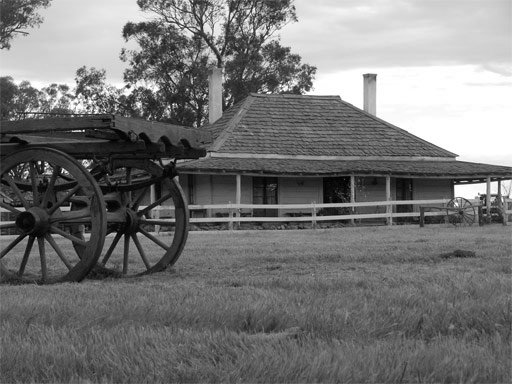
We were staying, as I recall, in an ancient Australian abode that looked a bit like this:
Oxley3

It was open and windy. One of those old homes that spiders use as a highway and that didn’t even have a light in every room. The awning had kept the sunlight out for ever, and the whole place smelled of yesterday, and of dreams unfulfilled.

Late one night, whilst the parents discussed boring-parentish topic, the kids were all in one of the pentitential bedrooms playing cards. That would have been me, my brother, and the two eldest P-kids: BP and AP. The night was not young, and the wind was howling outside. We were sleepy, as we would have been after endless hours of running and jumping and eating.

We were playing, as I recall, gin rummy. The cards were dealt, and the top card turned over. This is what is was:
0387-ella-hall

(well, not exactly that card… but read on!)

There was mutual dissatisfaction with the cards that had been dealt, and the decision was made to toss the hand and redeal. This was promptly done. Cards were collected, reshuffled, redealt and the top card was once again revealed.

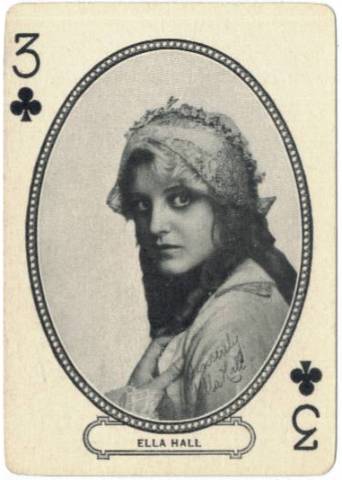
And this is what it was:
0387-ella-hall

There was unease in the room. The more craven amongst the group no doubt felt a flutter of fear in their souls, because even though we were children and couldn’t have possibly known the chance that this had occured was 0.034%, we certainly knew it was unlikely.

At this point, as I recall, the decision was made to end the game and go to bed. My memories become somewhat clouded at this point, as if some unknown agency was thwarting my recollection. Before ending the game, we mutually decided, we would deal one more hand just to reassure ourselves that it couldn’t happen a third time.

An eerie silence had descended upon the room. The air felt heavy and old. If I had been paying attention, I would have noted that the voices of our parents chatting from the living room had faded away, and that time has seemed to concentrate into that one room, specifically onto my hands holding the cards, slowly shuffling them…

There were two younger children as well. I recall the young boy (DP) was especially spineless, and gibbered a little as I carefully dealt out the cards, and placed the deck onto the floor in front of us. I couldn’t have possibly known how to calculate that the chance of a third-time repeat would be 0.00063%

An icy hand was placed on mine shortly before turning the final card. It belonged to AP, the P-girl. Her eyes implored me: “Please, don’t do it!”

But I did. Even then I had the soul of a man, and nothing as… material as a deck of playing cards could change that!

I turned the top card, and it was:
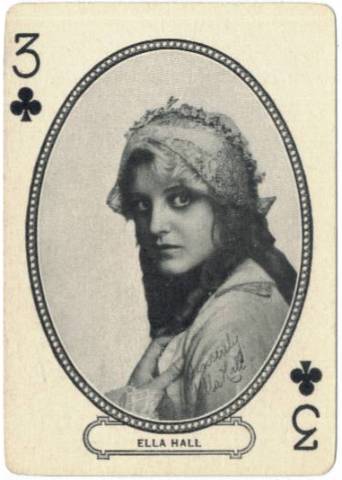
0387-ella-hall

PBM

These days, MMO – or Massive Multiplayer Online – games are ubiquitous. Twelve million people play World of Warcraft, and over 70 million play Farmville. None of this would be possible without computers and the internet, which is why games of such scale and a relatively newcomer in human history.

However, massive gaming didn’t start in 1985 (with usenet), or 1995 (with the intertubes)… it was already existent in the form of PBM’s, or Play-By-Mail games.

Play-by-mail is a type of game system where the players submit ‘orders’ to a referee who processes them and sends ‘reports’ back to each use to update them on the state of the game. Because every players turn is processed automatically, strategy plays a large element: what will you do, and in which order will you do it. Rarely do you control a single unit in a game, so you must issue orders for every character/army/spaceship you control. PBM games of virtually any genre have been run since the 1960s, but they are most often strategy wargames as this style of game lends itself to a strictly regimented, turn-based system. The number of players in a single game varies, but can be up to hundreds. Some games have fixed length (X total turns), others run indefinitely. Earlier I was reading about a fantasy wargame that ran for 5.5 years and had about 470 total players!

Here is a fantastic account of a few turns in the PBM game Lizards!

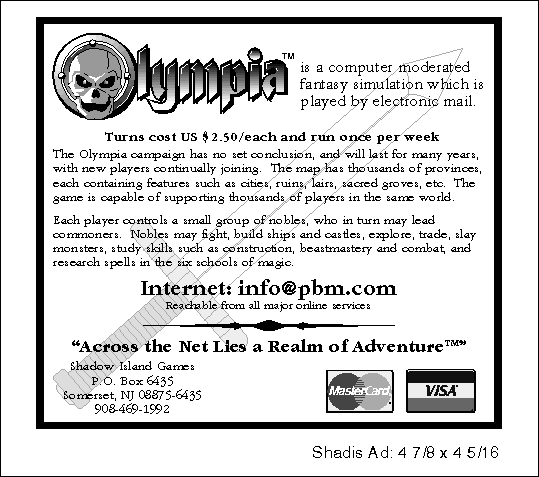
As a child I used to read the ads in the back of Dragon magazine, or the various UK gaming mags, and my imagination would run wild. The games sounded so fanciful and exotic that I could only dream of playing. The costs however were prohibitive, so I never did.

Looking through those very same Dragon magazines today the cost seems even higher than they did 25 years ago. Even today I would baulk at $2 or even $5 per turn (weekly or monthly), but imagine how high that was back then? And $20 for a rulebook? This was in the days the entire D&D box set cost $12!

olympia

Over the years the onset of the internet dealt PBM gaming a blow, but not a killing blow. Games still are still being played and being ran, but now orders are most often issued via email or custom software. True PB-snail-mail games are still run though, although these days are rare.

I have never played a true PBM game, and likely never will. However my awareness – and fascination – has never diminished. Several years ago I did preliminary design for a PB-email game that I wanted to write with my brother, and when he finally gets his act together and obtains a iOS dev kit, the first game we create will also be a PB-email variant.

So who knows, maybe one-day I’ll finally get to play-by-email myself 🙂

Fifty Boosters

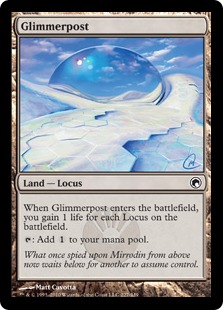
Between the pre-release, a fat pack and a box I ended up buying and opening 50 boosters of Scars Of Mirrodin. For no other reason other than I’m the sort of person who does such things, I kept track of the cards I pulled from these boosters. Here’s the tally:

glimmerpost gold

Commons
– 493 in total (obviously I miscounted somewhere…)
– an average of about 4.9 of each common in the set
– The most of any common was 10 (Scoria Elemental), the least 1 (Blade-Tribe Berserkers)

pall mem

Uncommons
153 in total (50 x 3 + 3 bonus foils)
– an average of about 2.5 of each uncommon in the set
– I did get every uncommon card
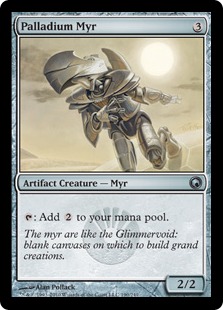
– 3 of each of Myr Galvanizer and Palladium Myr!
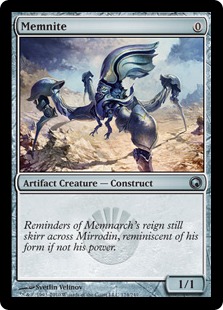
– only one Memnite 🙁

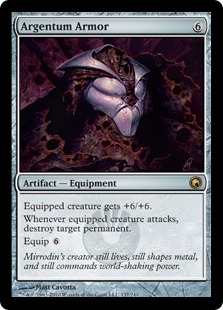
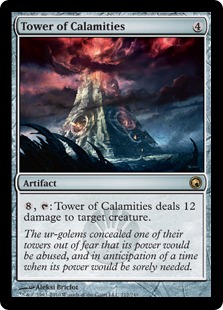
arg tow

Rares
47  in total
– an average of about 0.90 of each rare in the set
– Of the 53 different rares, I got 38 of them
– I got 3 of one rare: Shape Anew
One pack contained two (one foil) rares

koth mox

Mythic Rares
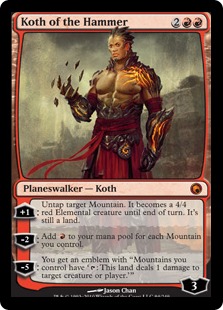
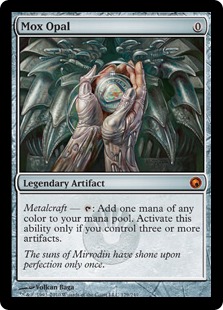
These were the ones I got: Koth Of The Hammer (x2), Geth, Lord Of The Vault, Elspeth Tirel, Mox Opal

Conclusion: collation in a box of MTG boosters is surprisingly good. I received a far greater variety of rare cards than one would expect were the packs truly randomly distributed. So in short, if you are interested in obtaining a large variety of different cards then a box seems to be the way to go.

(Addendum: after opening all my packs and failing to pull a Mindslaver I caved and purchased one online for a mere $2.99!)

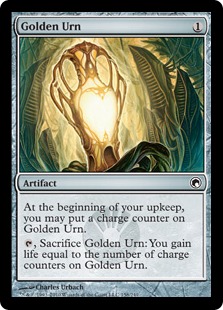
(Addendum 2: Every card in this post found its way into one of my decks. Yes, even the ‘bad’ ones like Tower Of Calamities and Golden Urn. C-c-c-c-combo!)