Category: Miscellaneous

It’s Time Again To Talk MTG

The five new Commander 2016 MTG decks came out a month ago and as I usually do, I played them against each other to get their measure. Here’s my conclusion: they are the least fun Commander decks Wizards has put out.
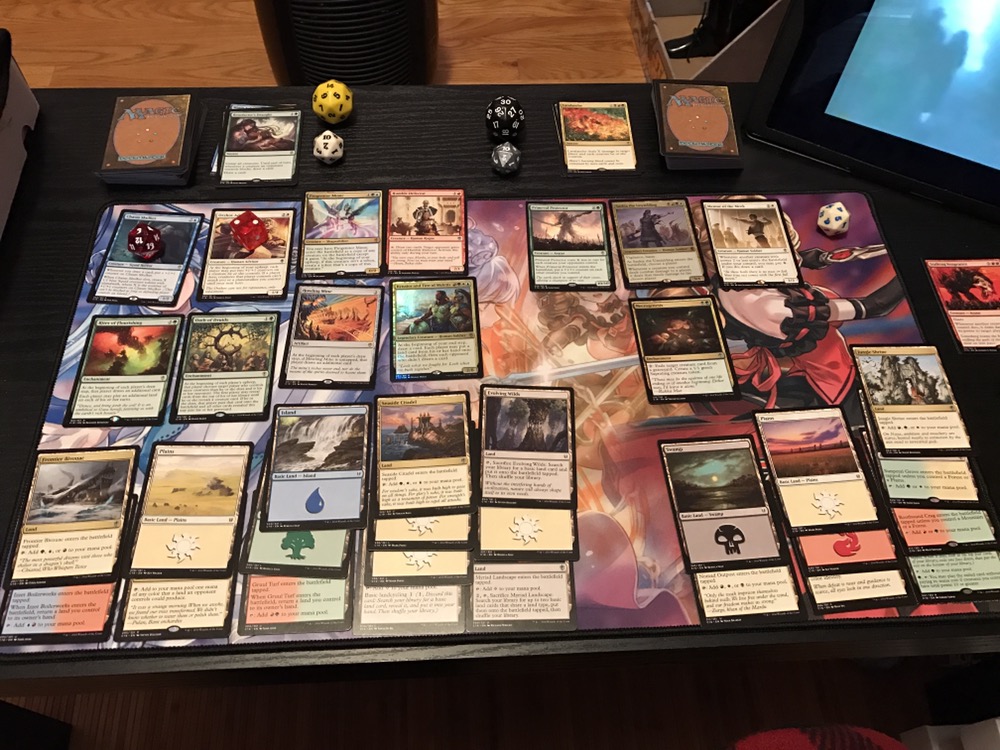
This is not to say they are bad (or even poorly designed). The problem is that as four colour decks they play very slowly, lack focus and (as you can see above) quickly become extremely complicated.

I played 10 games, matching each against the other four, and found them to be mostly well balanced. With three wins the ‘Saskia the Unyielding’ deck (BRGW) seems strongest overall (look at her her leader ability) and the weakest deck is ‘Kynaios’ who only managed one win. The other three had two wins apiece.
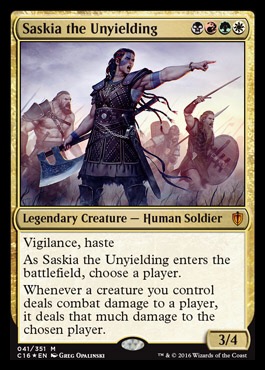
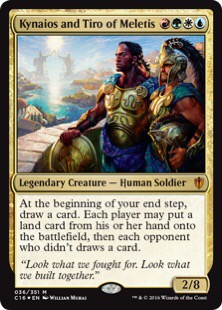
 

Of course I’ve already dismantled the decks to use the cards in other decks and as usual they are well worth it (in my opinion) just for the wealth of powerful cards they contain. While these examples were not as fun as decks themselves, I still think Commander is the best MTG product being released these days.

And while I’m on the topic… Australia 2017 is fast approaching and as always I’ve crafted a few decks for some down under card flopping. Adam’s made a bunch himself (which are no doubt evil…) and even Bernard’s making some. The competition will be intense this trip.

At the risk of revealing my cards – literally! – here’s a rundown of the three I’ll be taking with me.
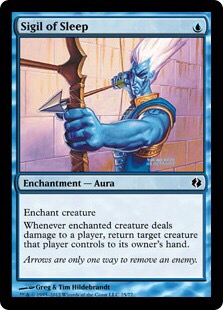
My first deck – which I call ‘Bang A Boomerang – isn’t that new, being mostly a refinement of a deck I made about five years ago. It’s a control deck based around the above with a couple of other tricks up its sleeve and is both the most successful deck in my playtests and the one that’s least fun to play. I may replace this with a mono creature deck…
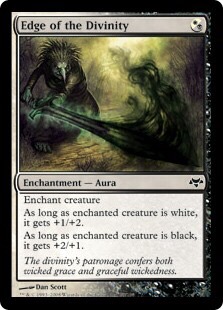
I love the bicolour enchantment cycle from Eventide and crafted an entire deck – I call ‘Deathlink’ around the one shown above. This is a very conventional creature based deck that I already know is vulnerable to the gimmicks of both A and B’s decks. While I think it’s fun to play, I’m not expecting many wins from this one in two player, but perhaps more success in multiplayer.
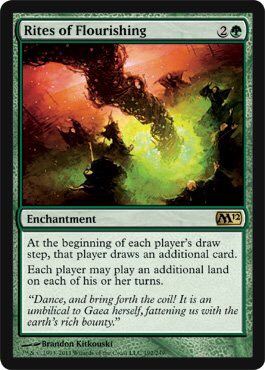
The third deck – let’s call it ‘Overload’ – was inspired by the above card, which is in one of the Commander decks. Currently in flux, this is a high concept, very unusual deck that has a very fragile win condition but should – I hope – create spectacular multiplayer games. Fingers crossed!

I can’t wait to play these. I can’t wait to see Adam’s decks. I can’t wait to lose to Bernard’s evil black deck not to mention see what his other one is. I’m pretty sure there’s some titanic flopping in the not-too-distant future…
My Collection: Wonderswan

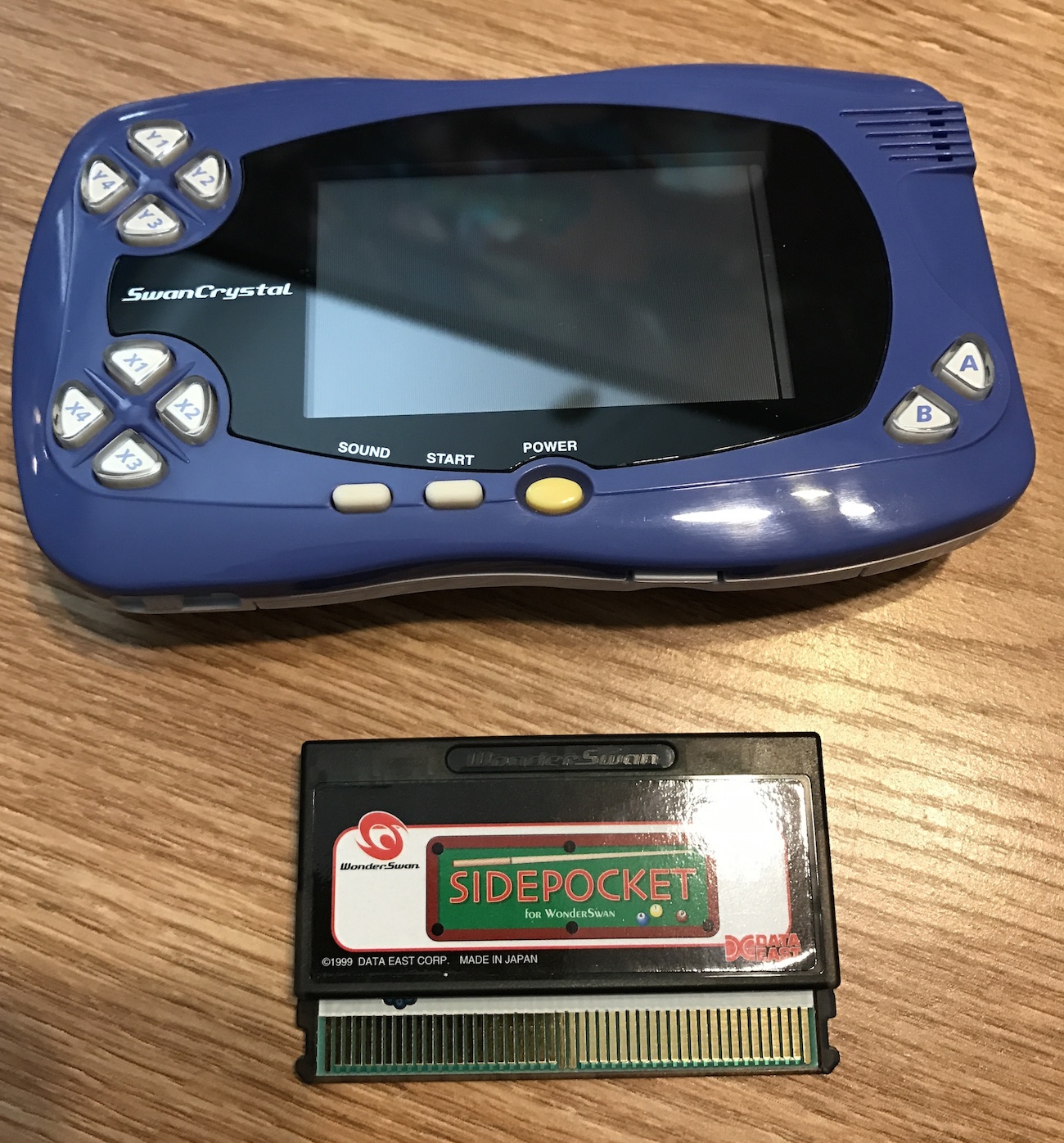
In 1999, Bandai – no doubt tempted by the oodles of cash Nintendo were raking in via their Gameboy – released their own handheld system called the Wonderswan. It was notably designed by legendary hardware engineer Gunpei Yokoi (who created the Gameboy and many other Nintendo products) and was less expensive, more powerful and had longer battery life than the Gameboy. Bandai leveraged their contacts within the anime industry to deliver a wealth of licensed games unique to the system. It was quite a success in Japan in the first couple of years, obtaining almost 10% of the portable market. Then along came the Gameboy Advance, which killed the Wonderswan almost immediately, and despite two updates in as many years, the Wonderswan was discontinued in 2003. It was never released outside of Japan.

IMG_2163

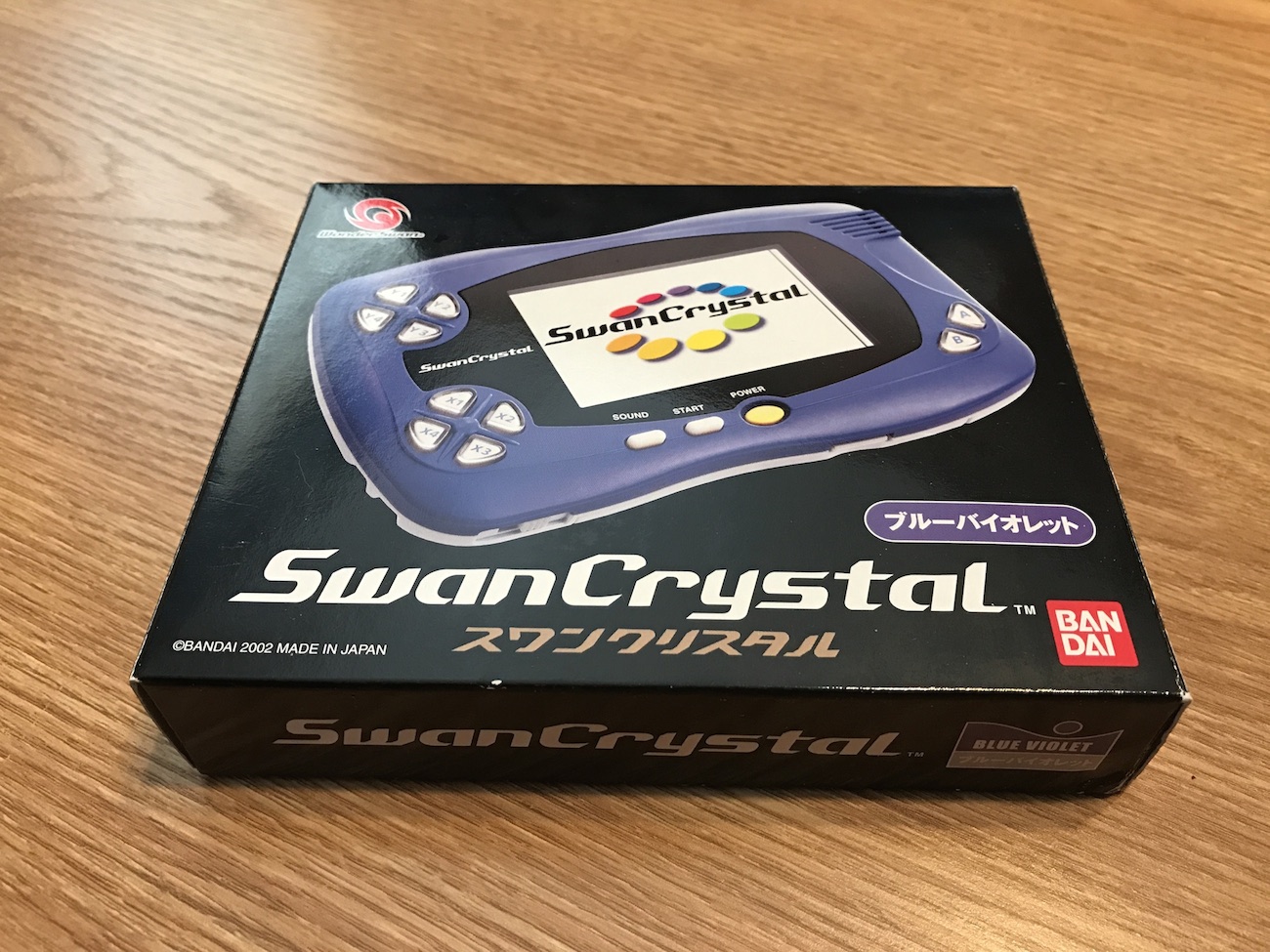
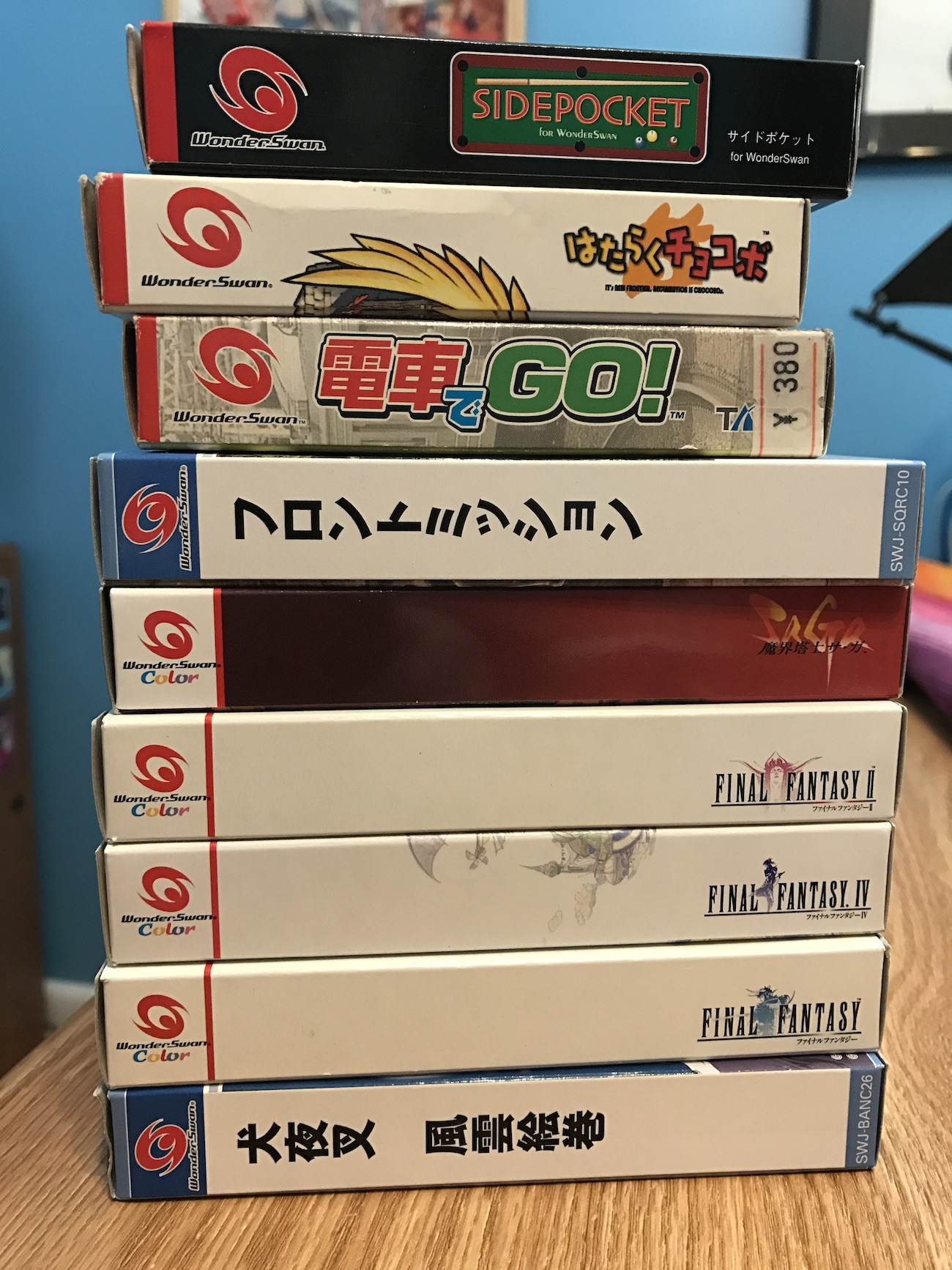
I bought mine in Japan in 2004 for Y3600, or about $31. This was the final iteration of the system, called the SwanCrystal. It boasted better battery life and a colour screen compared to the original version, but is reverse compatible with all Wonderswan games. Mine came with two games and I bought 7 more at a total cost of an additional $45 (approximately). Here are the games I bought that day:

IMG_2162

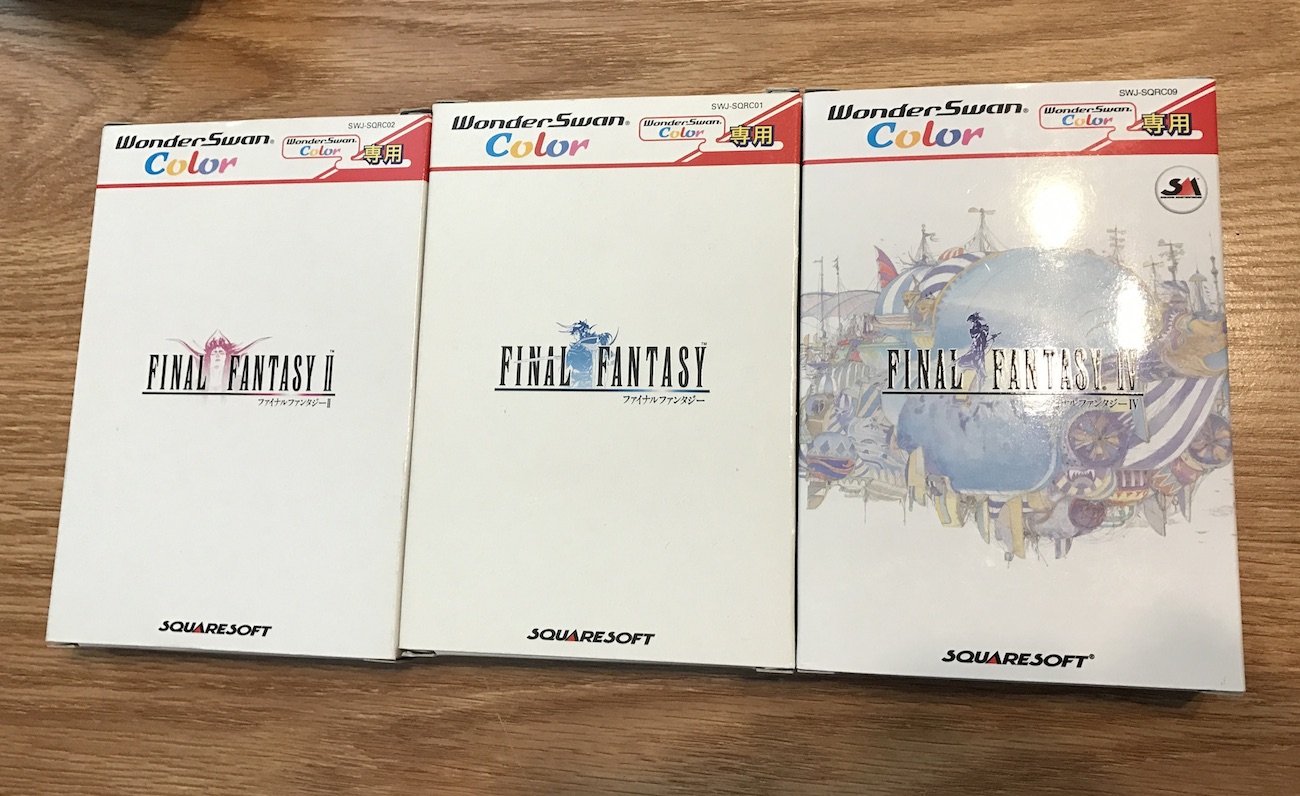
I bought it in Akihabara, on the first or second day of the trip at a branch of ‘Super Potato’ if memory serves me correctly. Of the games shown above, only Final Fantasy IV (Y1900) and Front Mission (Y1800) cost much at all – Densha de Go! was an incredible Y80 (about $0.70)!

I still have fond memories of playing the system in the inn at night during that very trip to Japan. In those days, this was extremely advanced handheld technology.

IMG_2164

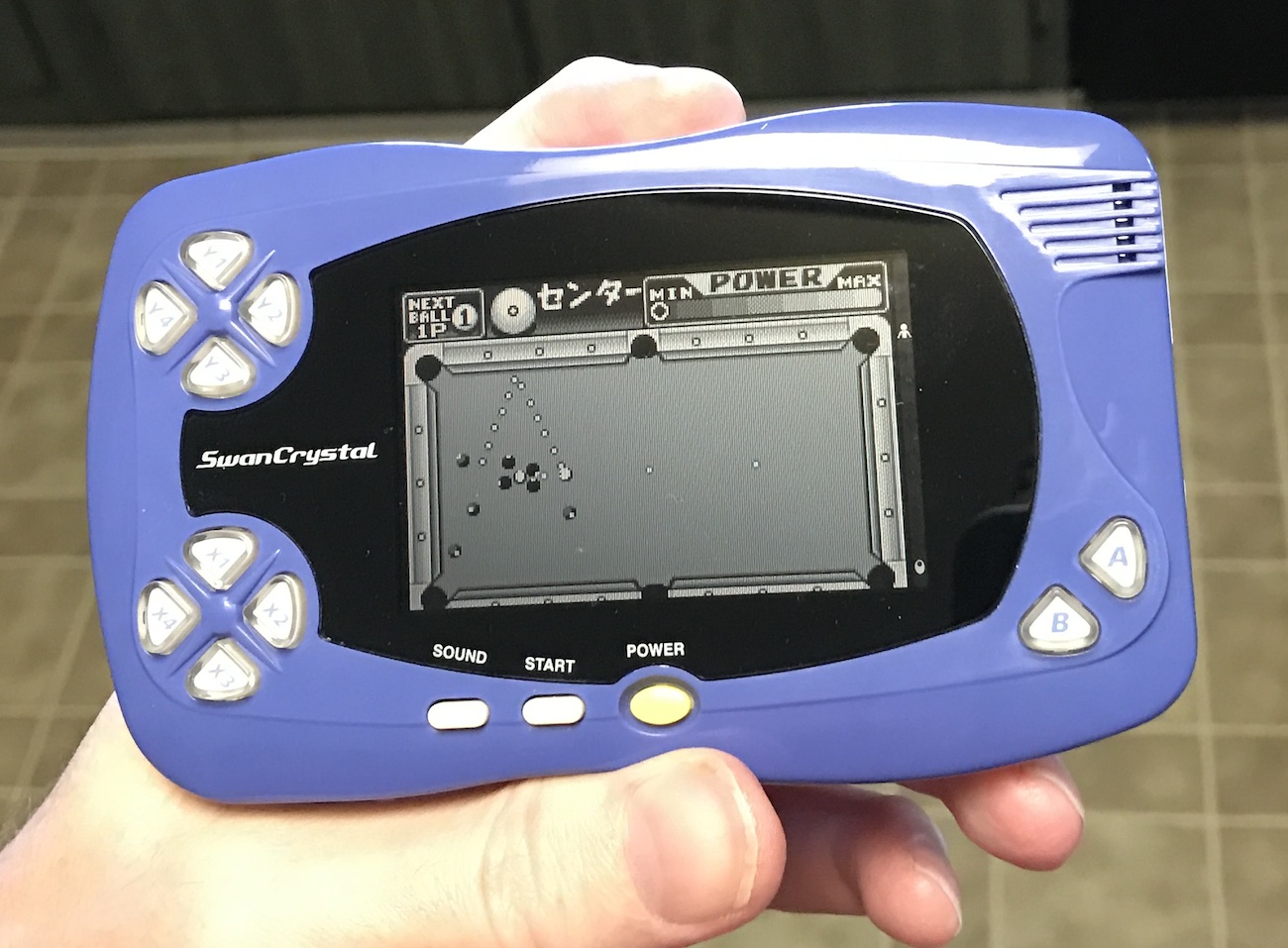
The system uses a single AA battery and has a (non backlit) 224×144 resolution colour LCD screen. It’s very reflective, which made taking photographs difficult. As you can see the cartridge-to-system ratio is enormous, and the cartridges for the WS are not just big compared to itself, but amongst the biggest handheld system cartridges I’ve ever seen. The pool game (Sidepocket) was made before the colour version came out and is B&W only. Here’s a shot of the graphics:

IMG_2172

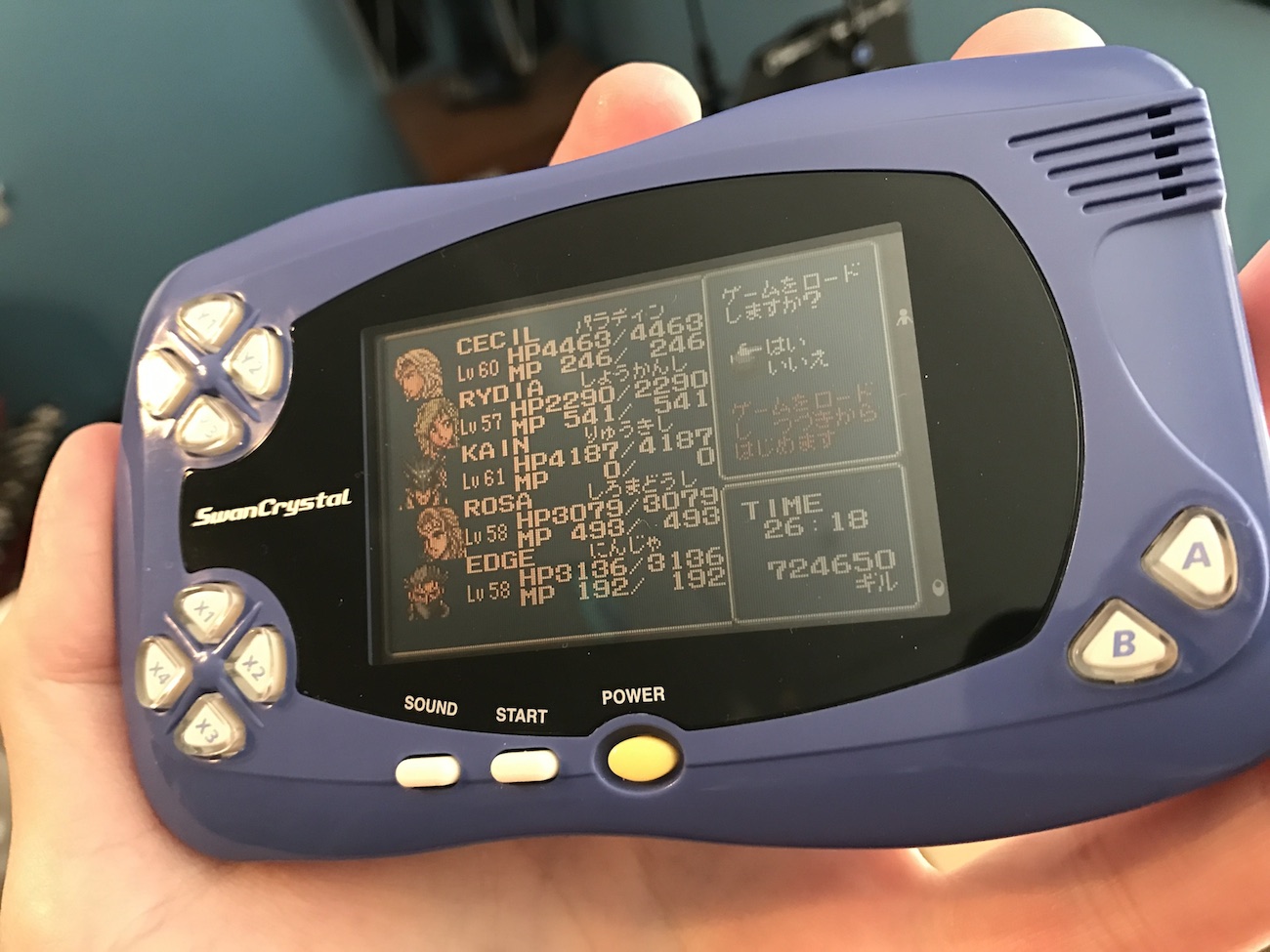
The Wonderswan feels more like a toy than it’s competitors, but delivers in the gameplay department. The screen refresh is much better than it was on the gameboy, and the graphics and sound are still impressive today. I forget the battery life but it was surprisingly long for a single AA, and I very much enjoyed playing the FF games on this system long before ports came out for the Gameboy Advance. As you can see, it took me over 28 hours to reach the end of Final Fantasy IV:

IMG_2175

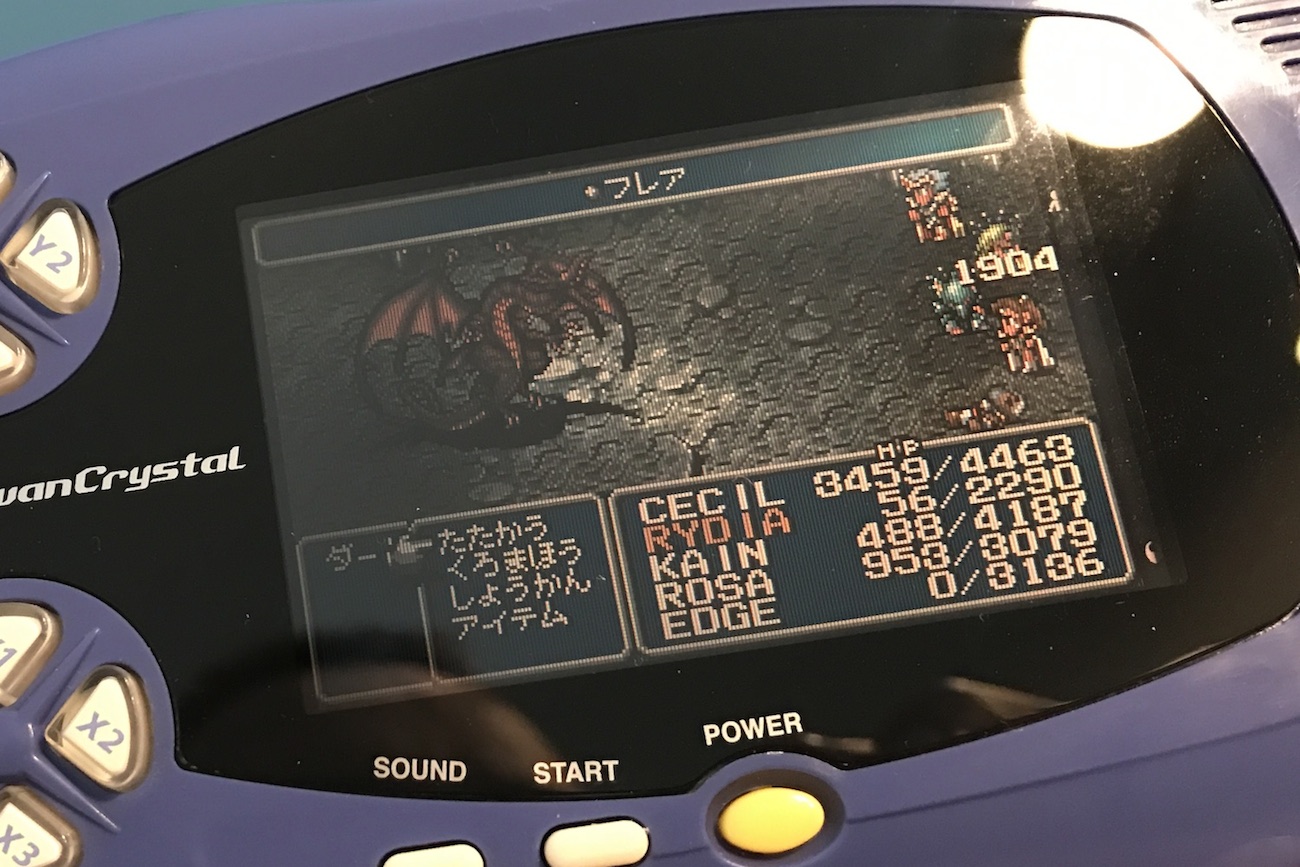
The game is of course all in Japanese (as would be virtually every game for the system) but I had played it multiple times before so that didn’t bother me. Here’s a photo of the fight against Bahamut:

IMG_2178

Note the unusual controls of the system, specifically the two d-pads on the left. This was so the games could be played either vertically or horizontally, or even by two people at once. No game I have supports vertical (or 2P) mode so I don’t know what it’s like, but the small size of the system would make holding it vertically uncomfortable for an adult.

IMG_2181

As with most retro game systems, and despite being at best a footnote and at worst unknown, the WS seems to be appreciating in value these days. A boxed SwanCrystal can be picked up for about $80+ on ebay, although apparently mine is one of the less common colours (‘blue violet’) and may cost twice that. Games range in price from a few dollars up to over $1000. And yes, that’s no mistype: go and search ebay for ‘Judgement Silversword’ to see what I mean. I just checked ebay for the ‘value’ of my games and found most of the WS Colour ones to be going for about $20-30 each (boxed).

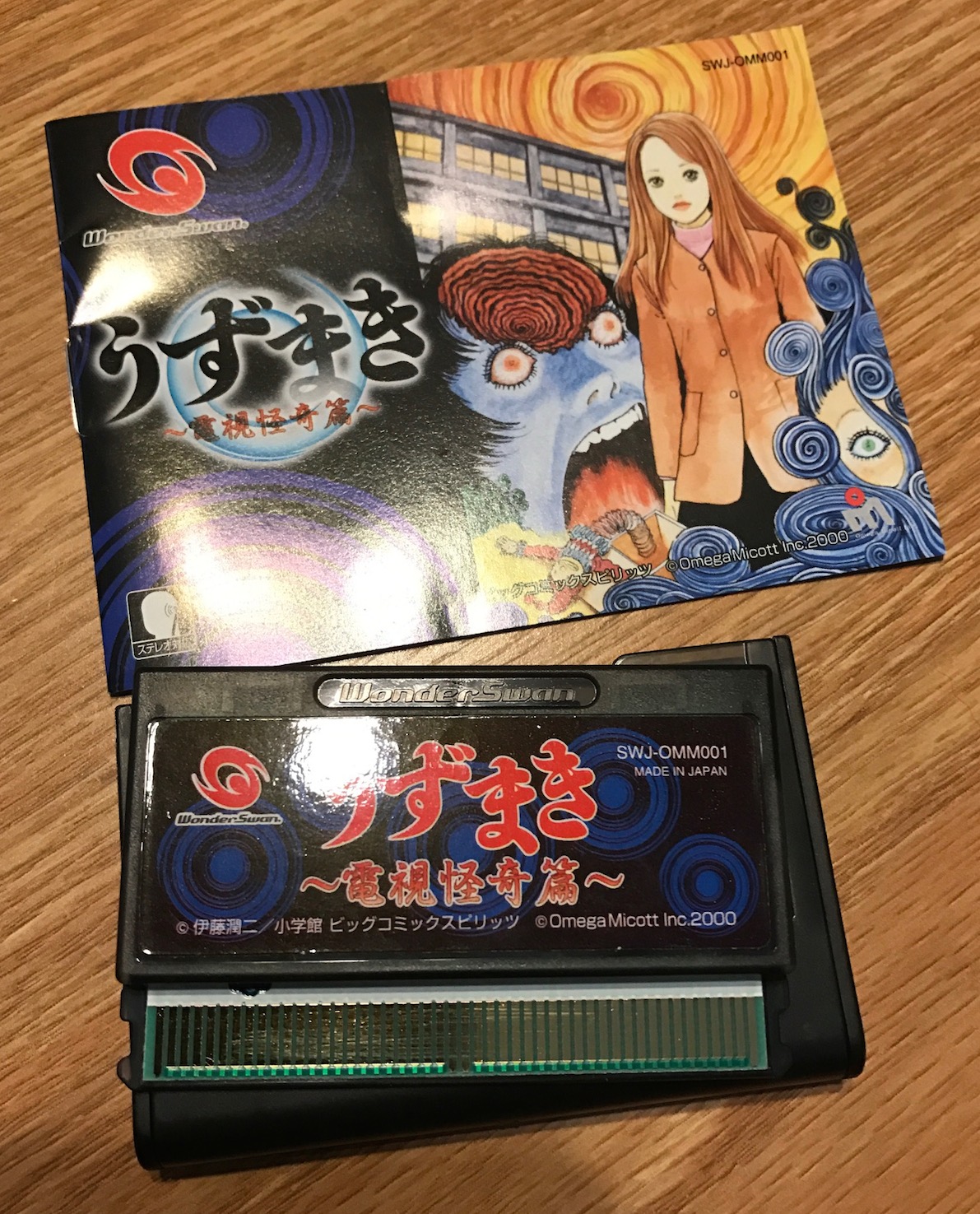
However to me my most prized game is actually this one:

IMG_2182

It’s an adventure-type game based on the Uzumaki manga by Junjo Ito. It’s B&W since it was for the basic WS, and virtually unplayable for me due to the language barrier, but I’m a big fan of the manga so I couldn’t resist buying the game ‘for the collection’ when I saw it a few years after I’d bought the WS during a later Japanese trip. Here’s a screenshot:

uzu

This game was also the reason for the one-and-only Wikipedia edit I ever made. But that’s another blog entry…

Air Powered

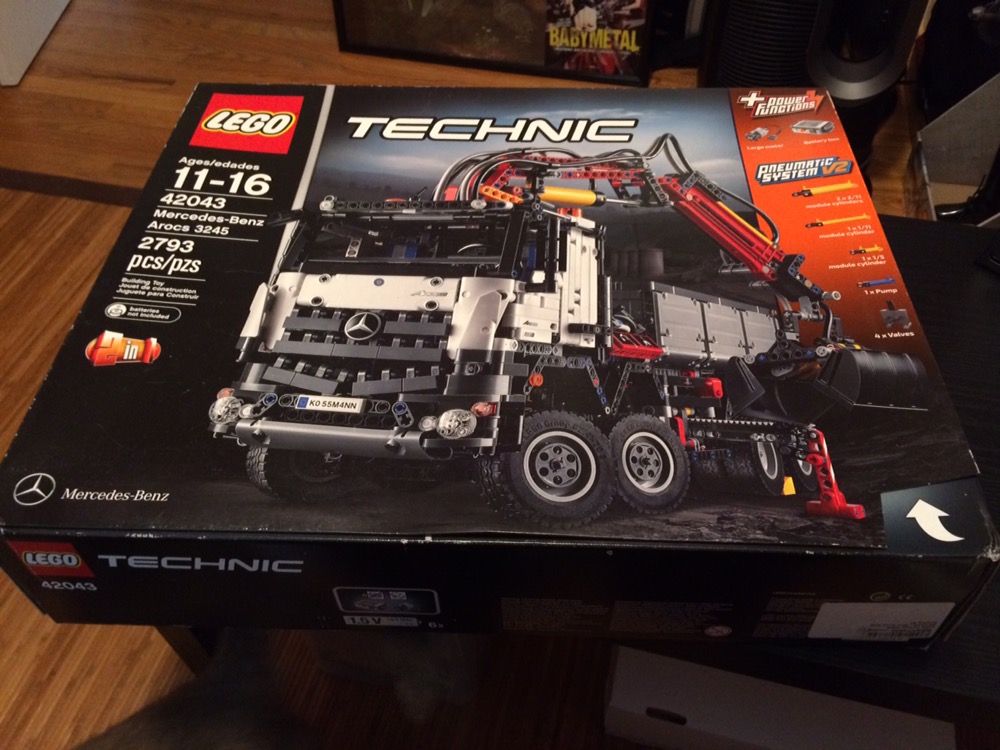
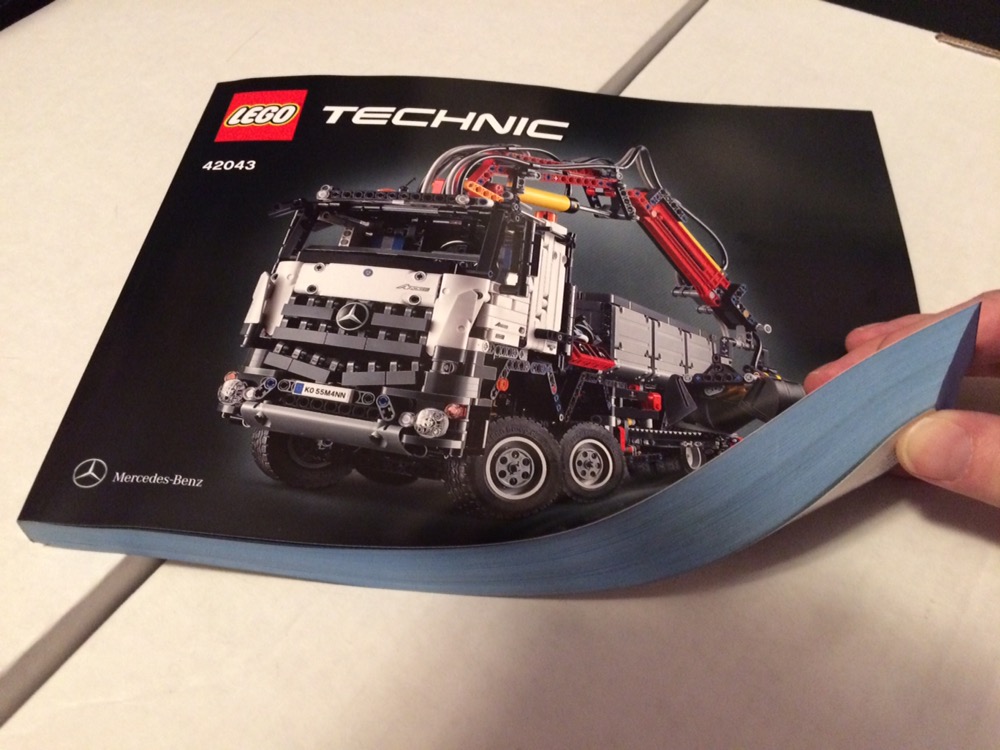
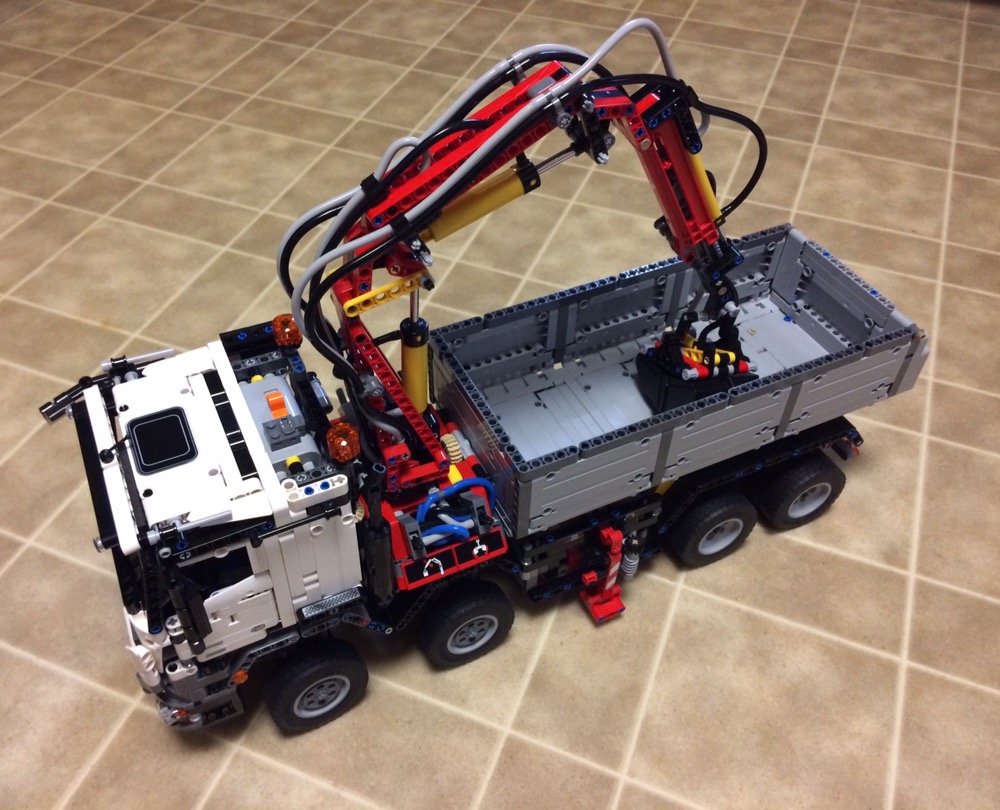
It was time to assemble the Lego kit I’d gotten for my birthday. It’s a Mercedes Benz ‘Arocs’ truck with a pneumatic crane. Even by technic standards this is a complex kit. The manual alone is over 400 pages!

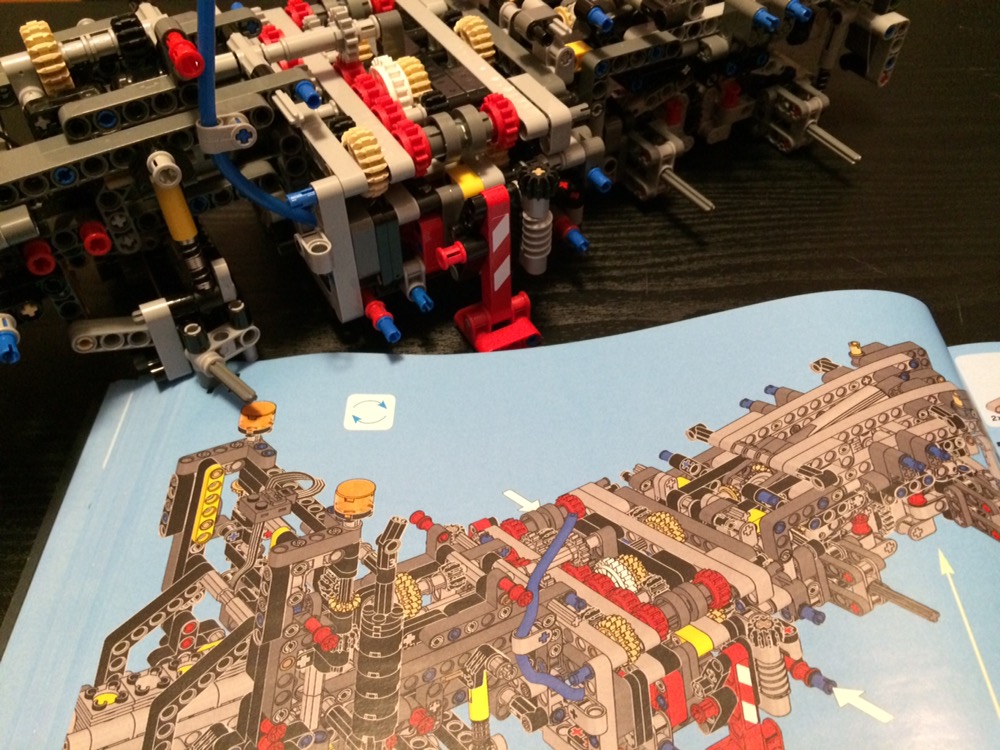
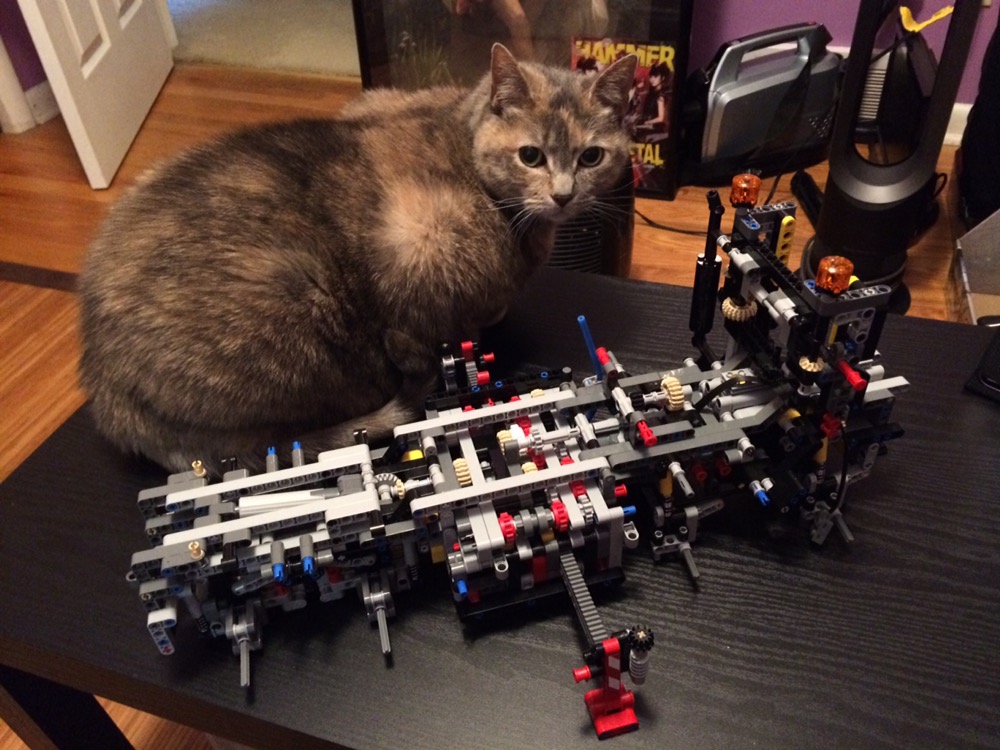
The kit is made in five broad parts: the chassis with gears, the pneumatic crane, the cab and the bed. The gearing mechanism is dazzlingly complex and requires careful assembly.

It’s also quite large. Here is the complete chassis (sans wheels) shown next to a rather large house at for scale:

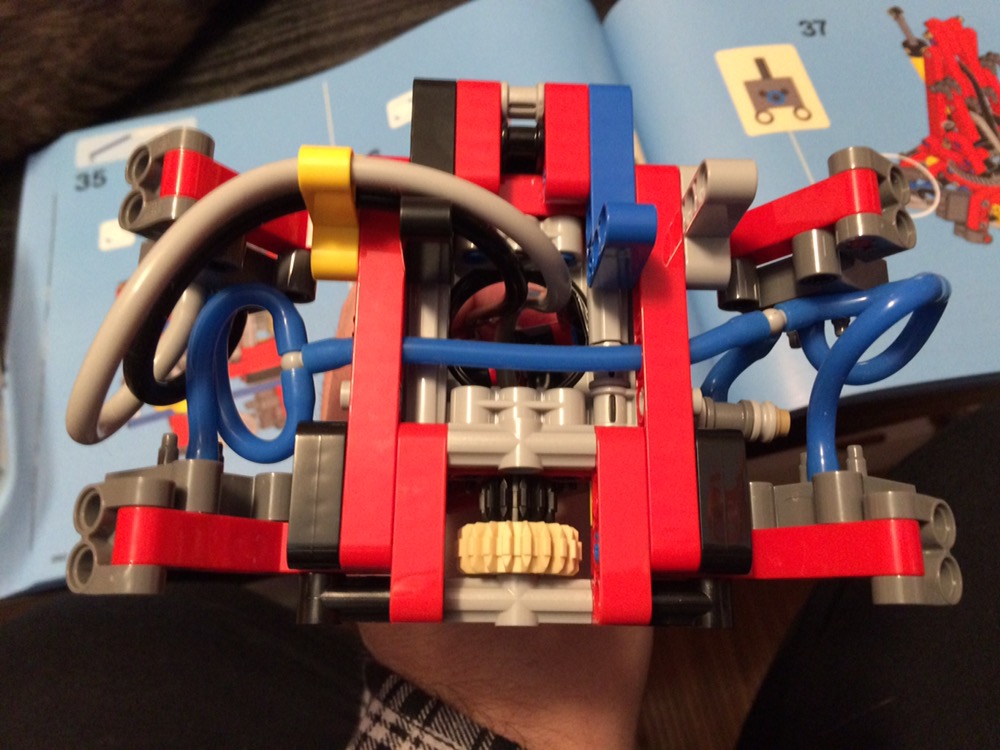
The pneumatic system is even more complicated, and we’re not trivial to assemble! Many times I thought I’d attached the wrong hose to the wrong nozzle, or feared that once I’d finished it wouldn’t work and I’d have to take it apart. For this kit, that’d be a nightmare!

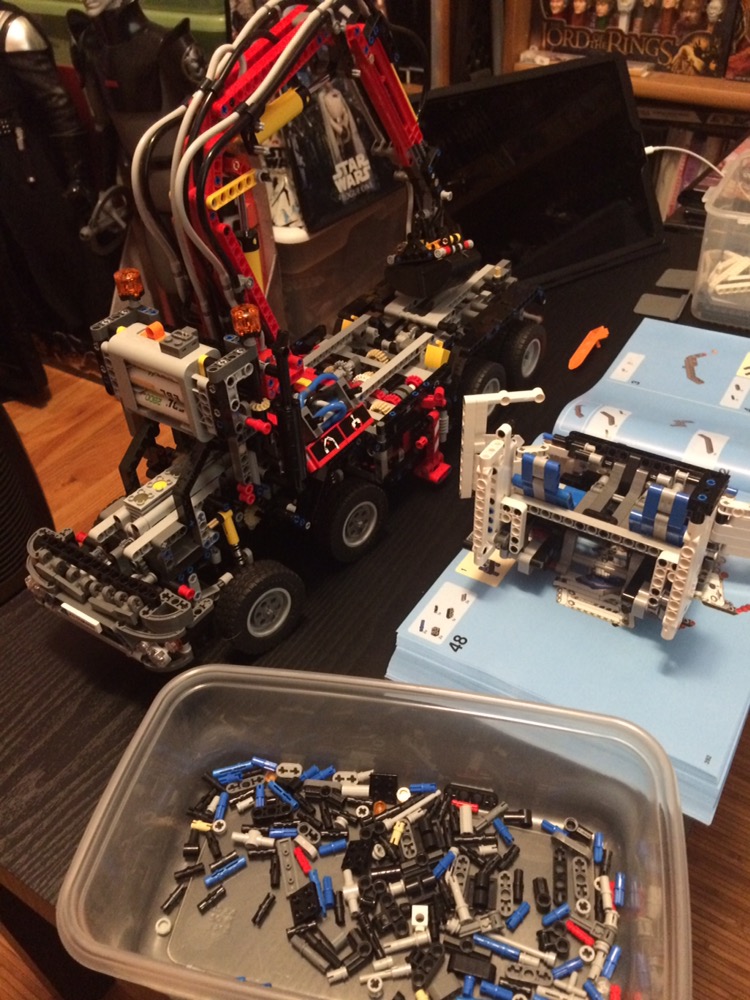
This is a real pneumatic system, which means the kit includes an electric pump that pushes air through these tubes to power pistons. It’s amazing just how much functionality they’ve worked in (four pistons and dozens of tubes) and how the kit is designed to fit all this in the crane itself. Here’s the truck 75% finished, only needing the cosmetic parts added (the cab and bed). Until this point, I’d been working for maybe 6 or 7 hours.

The remaining sections were easy by comparison, but that’s not to say they were simple. The mechanism to tilt the can forward was particularly nice. Here’s the finished kit in ‘road ready’ mode:

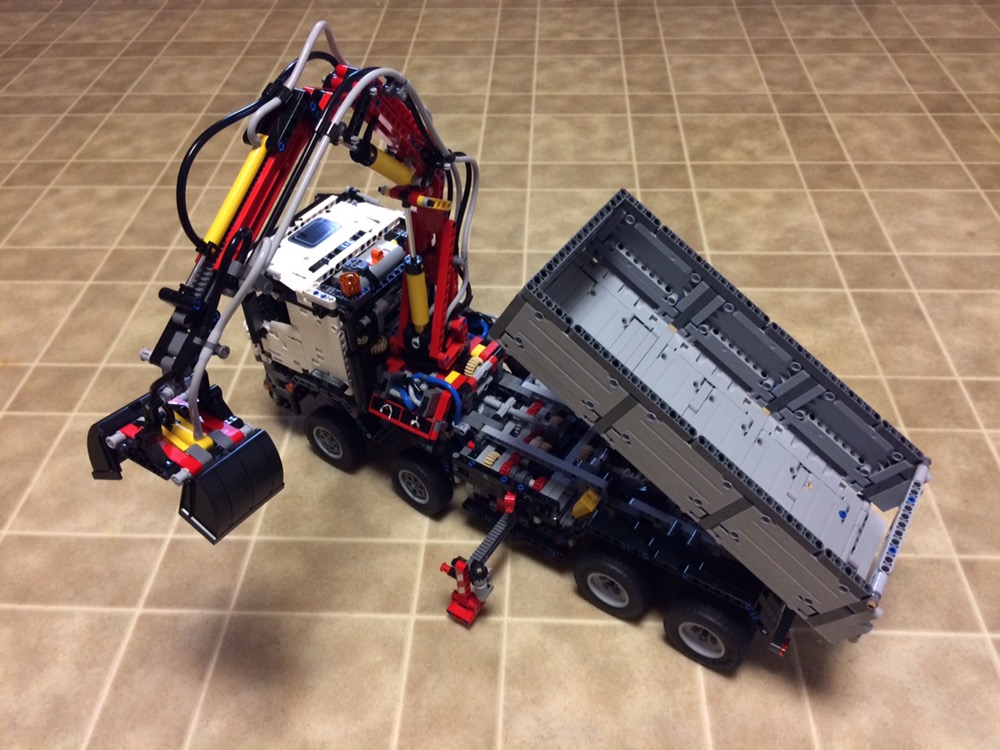
And here it is with the supports out, bed up and crane functioning:

All the functions you see above are controlled by the motor and switching system (via the astonishing gearing). I was very relieved it all worked first go 🙂

It’s a beautiful, massive, complex (and yes expensive) kit and was enormously fun to put together. Highly recommended 🙂