Back in 1984 we received a cassette tape from Germany with two different albums recorded on it. On one side was 4630 Bochum by Herbert Grönermeyer and on the other side was Forever Young by Alphaville. The Grönermeyer album was quickly forgotten, but Alphaville changed my life.
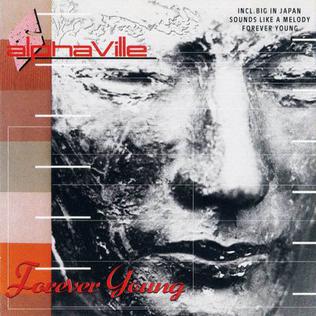
The album is a 1980s classic now, although in those days it made little inroad into English-speaking countries. I’ve listened to it so many times I can’t imagine a life in which I didn’t know the songs by heart, and the tapestries of the melodies and lyrics have been instrumental in shaping my impressions and thoughts of Germany, The Cold War, aging and the loneliness of memory. For it’s delightful (“Sounds Like A…“) melodies and dance-floor beats the lyrics are often sad and bittersweet. That spoke to me at that age like few albums before had. Forever Young was packaged nostalgia for a twelve-year old that barely knew the word, and to this day I can’t listen to it without being brought back to my early teen years.
The title song in particular is probably my favourite song of all time. If I could be anything, I’d be forever young.
Two short years later everything changed when Alphaville released their followup album, Afternoons In Utopia.
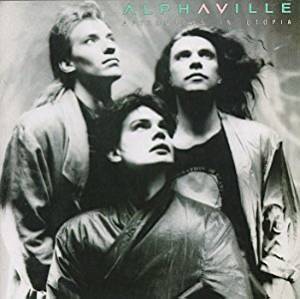
I bought this one on vinyl at Sound World in Charlestown Square the day it was released in late 1986. I only knew it was coming because of the ‘coming soon’ whiteboard behind the counter, and knowing nothing about the album aside from a name presumably expected more like Forever Young. I was blown away by what I got.
Afternoons is as close to a concept album as Alphaville has ever made, set in a future world of magic engineers and talking dolphins and exotic locales to visit and simply to enjoy life in. It starts with a limerick-riff on relativity (that didn’t make sense to me until many years later) and dives straight into an ode to Greenpeace disguised (of all things) as a fantasy story. What follows are incredible (and I mean that literally) songs about following ‘magnet mages’ for idyllic meetings with a lover in a ‘lightdome’ (“Dance With Me“), Martian easter and ‘Maomoondogs’ (“Afternoons in Utopia“) and the aforementioned talking dolphins (“Sensations“). This is a masterpiece of an album, every song iconic and memorable in it’s own way. Shortly after I bought it my love – my obsession! – with the album eclipsed virtually all others, including Forever Young. I’d proclaim my endless love for Black Celebration (by Depeche Mode) to friends, but in private listened to this more than anything else.
Even on an album where every song is a classic one song – “Lassie Come Home” – stood out. It’s a long, soft ballad with eerie lyrics, melancholic music and a achingly sad vocal. Many years later I read an interview with Marian Gold – singer, writer, musician – in which he was asked about the (weird) lyrics and basically said they meant whatever you wanted. I can’t say exactly what they mean to me, but it’s always been something special.
In these days dad went to Germany for a few weeks and – at my request – purchased for me a collection of Alphaville 7″ singles. I also wrote to Marian Gold and received a handwritten reply! It is one of the great regrets of my life I no longer own any of this, having gifted it to MMC before leaving Australia. I also remember – 31 years later – dad wrote me a letter from Germany and signed it ‘Universal Daddy’ referencing one of the songs on this album 🙂
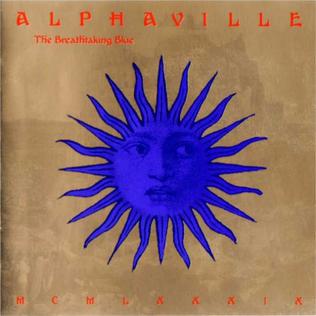
The Breathtaking Blue, released in (Australia in) late 1989, was the ‘difficult third album’. I was well into my ‘goth’ phase then, but still loving (as I have never stopped loving) ‘Afternoons’. It always was going to be an impossible album to follow up, but at the time The Breathtaking Blue fell even short of my tempered expectations. I had no idea at the time that this was because of friction in the band, but many of the songs lacked the impact of the first two albums and despite many listens weren’t growing on me.
As the years passed I would revisit this album many times though, especially in light of Dreamscapes and Crazyshow (see below), both of which included alternate takes of songs on this album or material originally cut. These days some of the tracks including the first single (“Romeos“, which features Noah Taylor in the video) and the beautiful “For A Million” are amongst my favourite Alphaville tracks.
And then I moved to America. This was, as I sad, when I gifted my collection away. I kept the CDs of course – I still loved the band – but I had to divest myself of many things I loved before I left and a big chunk of my vinyl album collection was included in that list. I immediately regretted it, but what was done was done.
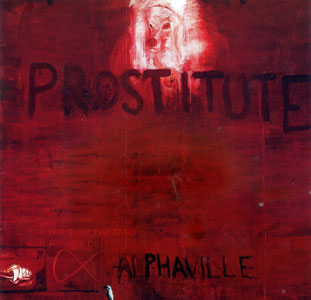
Prostitute was released in 1994. This was a difficult album for me to obtain, since it wasn’t originally released in the USA and this was pre-internet. I bought it via a phone order from a seller in Goldmine magazine and it took ages to arrive. But as soon as I listened I knew it had been worth it.
Prostitute brought with it an experimental sound – far less synth – and once again represented a marked changed from the sound of the previous album. The songs were as crafted as they had been on Afternoons, but without the spacey lyrics and sound. More conventional, slightly overproduced, but distinctly Alphaville; I loved this one almost from the very start. Standout tracks included the wistful “Ivory Tower“, the nearly-perfect “The Impossible Dream” and the celebratory “Euphoria” – which was a nod to Lassie Come Home in style and album placement. One of Alphaville’s more unusual albums, this one is perhaps more for the already-a-fan.
However… this album was a massive failure. Easily their lowest-selling album, the lack of interest was attributed to the new sound and the band (or rather Marian, because Alphaville always was mostly Marian) return to synth music for the next album.
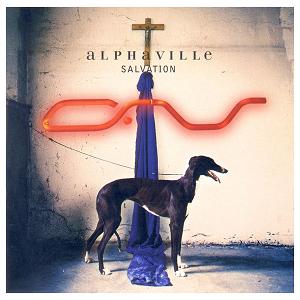
Salvation was released in 1997. This was a return to sound for the band – a return way, way back. Evocative of Forever Young in fact, with strong lyrics and sharp melodies. The drum machines and synth sounds were back in force, and Marian’s voice was as strong as ever. At the time I found the songs immediately likeable, and in fact was surprised by how good the album actually was. There are many good songs here, and standouts include “Wishful Thinking” (played at maximum volume this is mind-bending), “New Horizons” and this albums Lassie Come Home, “Pandora’s Lullaby“. One of Alphaville’s best albums.
Shortly after the release of this album the band split with their long-time record label Warner, and created their own label. What followed were two very unusual releases that were sold (in the USA) via an independent record store named A Different Drum: Dreamscapes (in 1999) and Crazyshow (2003). Both of these were extremely limited, marketed at fans, and came autographed by Marian. I of course purchased both, and with the receipt of these sets my Alphaville fandom entered the next level.
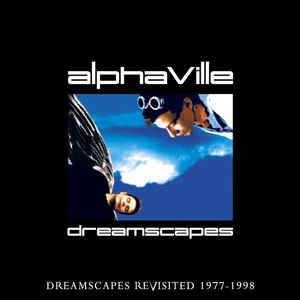
Dreamscapes (1999) was an 8-CD release limited to a few thousand copies. With 124 songs over almost ten hours of music, this is an encyclopedic collection of alternate versions, outtakes, b-sides, cover versions, remixes and many (over 40) brand new songs. This was the first place I ever heard Marian’s solo albums, or the alternate version of Forever Young, or the b-sides to singles I was never able to obtain. I devoured this set for years and in doing so imagined a world where songs like the trippy “Mysterion” had been the ‘Lassie Come Home’ of an actual album.
This cornucopia is heaven for an Alphaville fan, but for many years was unattainable. Never physically reprinted, prices for the set crept up and up on places like ebay, and it wasn’t until iTunes over a decade later that fans could once again purchase many of these songs. My set is still a treasure, and even at $400+ on ebay I’m never selling 🙂
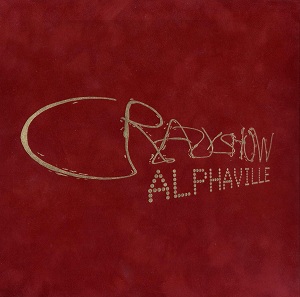
Crazyshow (2003) was the ‘sequel’ to Dreamscapes and served up (in a velvet box no less!) 4 more CDs of rarities and new material. It was expensive and even more limited than Dreamscapes (only 2500 copies!) but I got mine and once again loved it from the first play. Some of – if not the – very best Alphaville songs can be found on this release including the sublime “Return To Paradise” and (the ‘lassiest come home’ song) “On The Beach“.
The thing with both of these releases were that as much of a reward for longtime fans as they were, they were also a cause of frustration for those that couldn’t get their hands on them. There were of course reasons for this, one being the age-old saga of a band disenfranchised with record companies and struggling to go their own way, but it wasn’t perhaps ideal. Alphaville settled into a cycle of touring and playing their old songs, and – for me at least – became a band that existed (albeit beautifully) only in the past. They were touring, but never near where I lived (very rarely in the US at all!), and they certainly weren’t releasing new music.
And then came 2010…
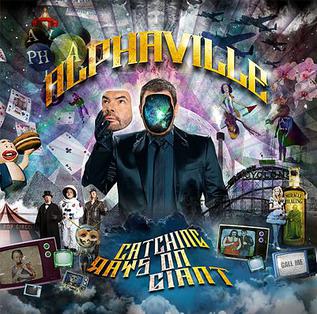
Catching Rays On Giant (2010) was 13-years in coming (not counting the limited sets) and once again represented a change in sound for the band from the exclusively synthpop sound of Salvation. The album was highly anticipated though, since Alphaville had undergone somewhat of a renaissance during the intervening years, helped by the entry into the zeitgeist of the single Forever Young (which had been covered by several big names and featured in prominent advertising) and the bands success as a touring band. It also helped that the album was good, and that Marian hadn’t lost his talents both in writing or singing. Overall the tone is lighter than before, but Marian hasn’t completely abandoned his cynicism as can be seen in songs such as “The Things I Didn’t Do” and the (carryover from Crazyshow) “Carry Your Flag“. A solid album and one of my favourites.
In the years following the band continued to tour, and (apparently) went into the studio a few times to craft a followup. Lineup changes happened and – tragically and unexpectedly – long-time band members passed away. This had the expected effect of delaying new material for a long time, and it wasn’t until earlier this year that the long-awaited seventh full Alphaville album was released.
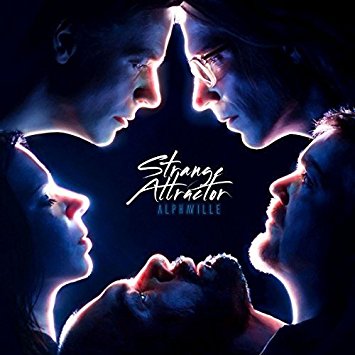
Strange Attractor (2017) was polarizing from the start. The sound was very different, and some songs sounded different enough from each other as to seem like they were different bands. You can hear the seven years and multiple line-ups that went into this one, and many of the reviews I read – both from professionals and fans – were either openly critical or measured in their praise.
I myself would say this is their weakest album overall, and perhaps the first Alphaville album that contains songs I’d happily push the skip button past. And yet this is ironically also one of their strongest albums due to two specific songs. The first is “A Handful Of Darkness“, a beautiful ballad that brings us back to 198X in both performance and delivery and seems is as ‘Alphavillian’ a song as one could hope for. The second is the Lassie Come Home of the album, the mighty, mighty “Beyond The Laughing Sky“.
Alphaville sings a lot about death, about memories of those that have passed, and about the desire for them to have never left. Beyond The Laughing Sky is as powerful a song as Marian has ever written on this theme, and I can only imagine that the deaths of two of his closest friends during the intervening years made it all-the-more personal. His deliver is incredible, the lyrics are heartbreaking, and this song – the last on the album – is for me so perfect it could easily have been the last, and maybe even best, song the band would ever release.
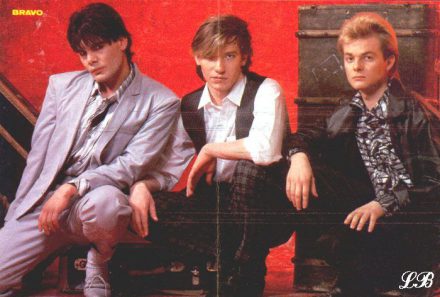
But it won’t be, because even at 63 Marian isn’t giving up yet. He’s already working on a new album (called Thunder Baby) which I imagine won’t be out until 202X and – if the past is any indication – will once again herald a new sound for the band. What that sound will be I wouldn’t begin to guess, but as with everything else they’ve released for the last 31 years I’ll be there to listen the day it is released.