Category: Otaku

LEGO NES

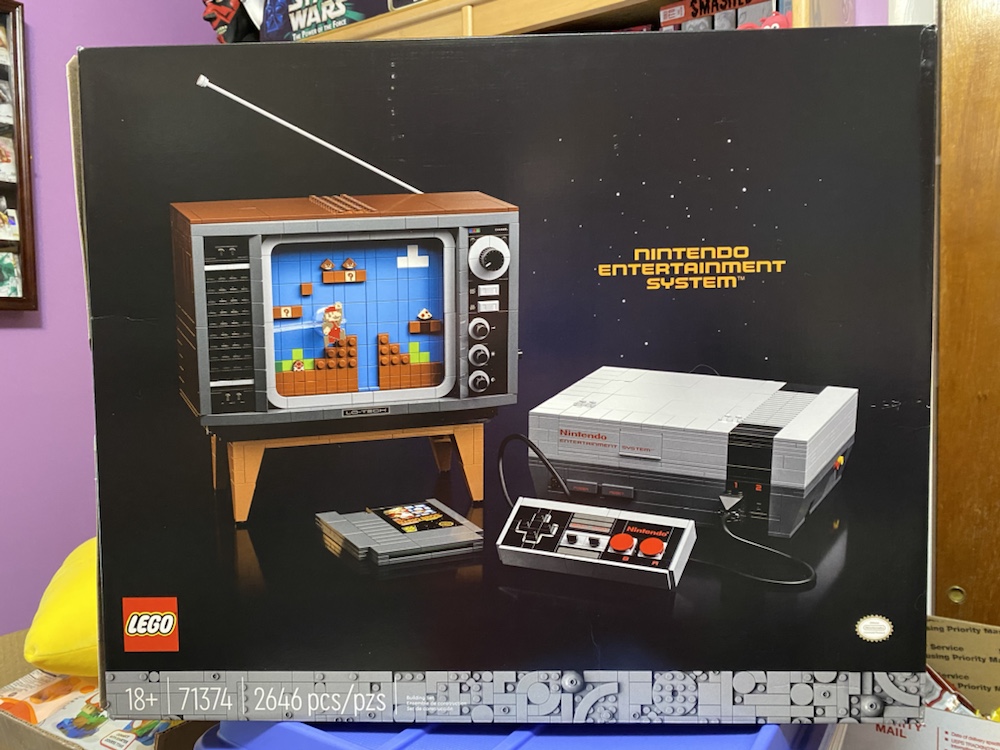
Earlier this year LEGO released a set of the Nintendo Entertainment System (NES) and I bought it online within moments of it being listed.

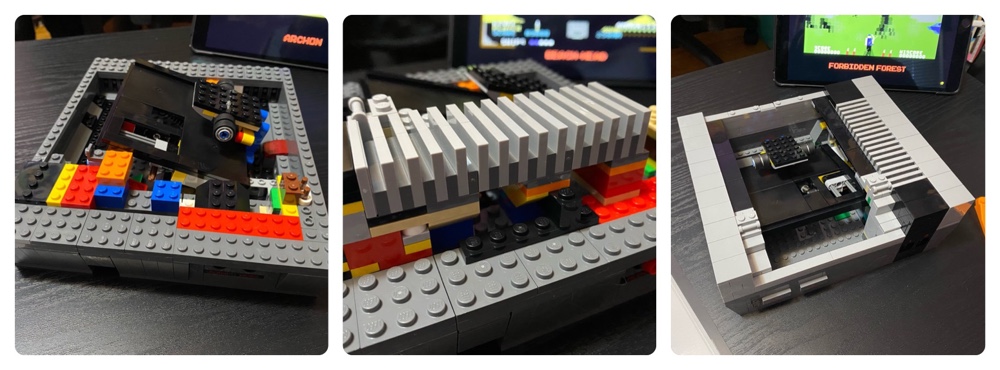
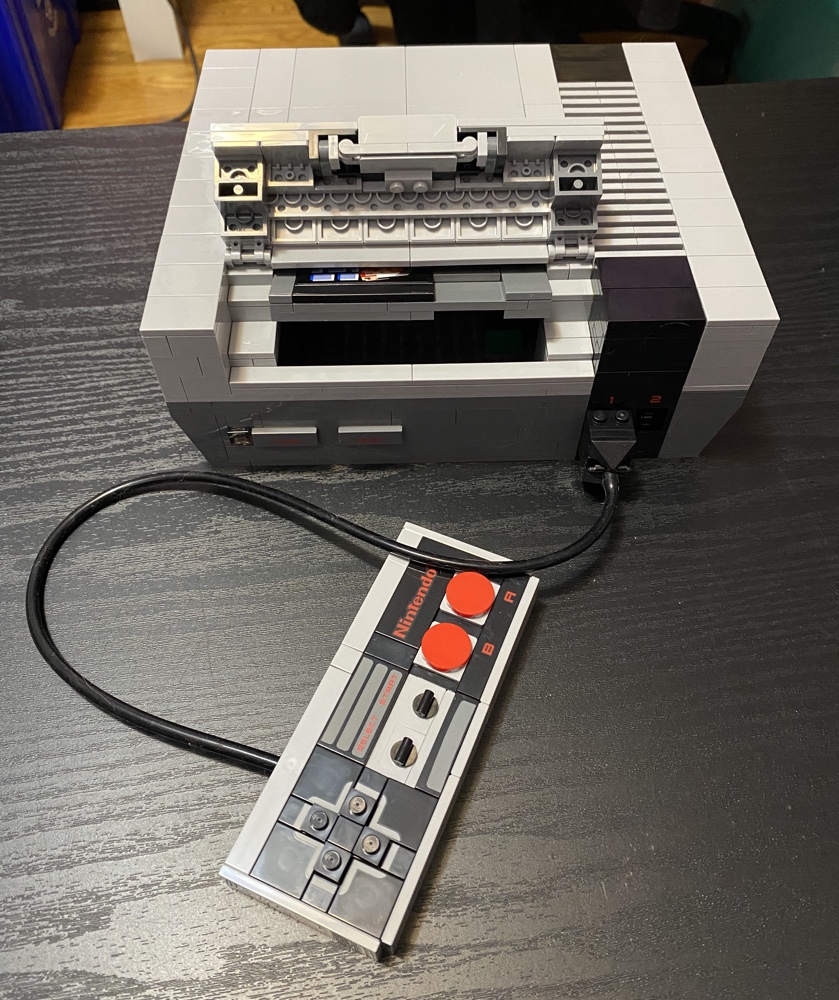
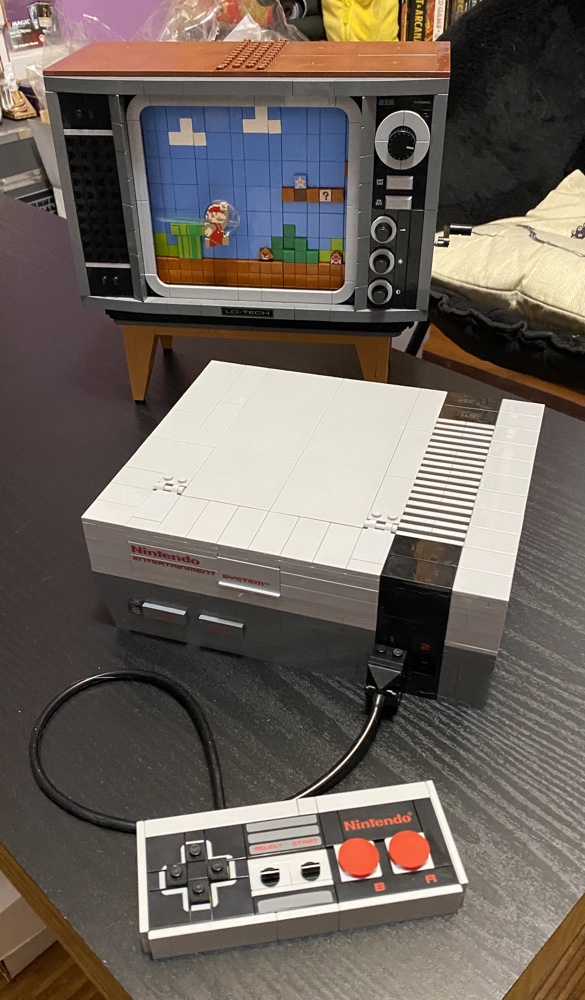
It builds in two parts, the console and the TV. I built the console first. It was a fairly easy build, but the engineering is impressive (amazing even) since it has a working cartridge tray (which locks into place) and the model reproduces to uncanny detail every aspect of an actual NES including all the plugs and sockets.

Here it is finished. You can see the (LEGO) Super Mario Brothers cartridge in the tray.

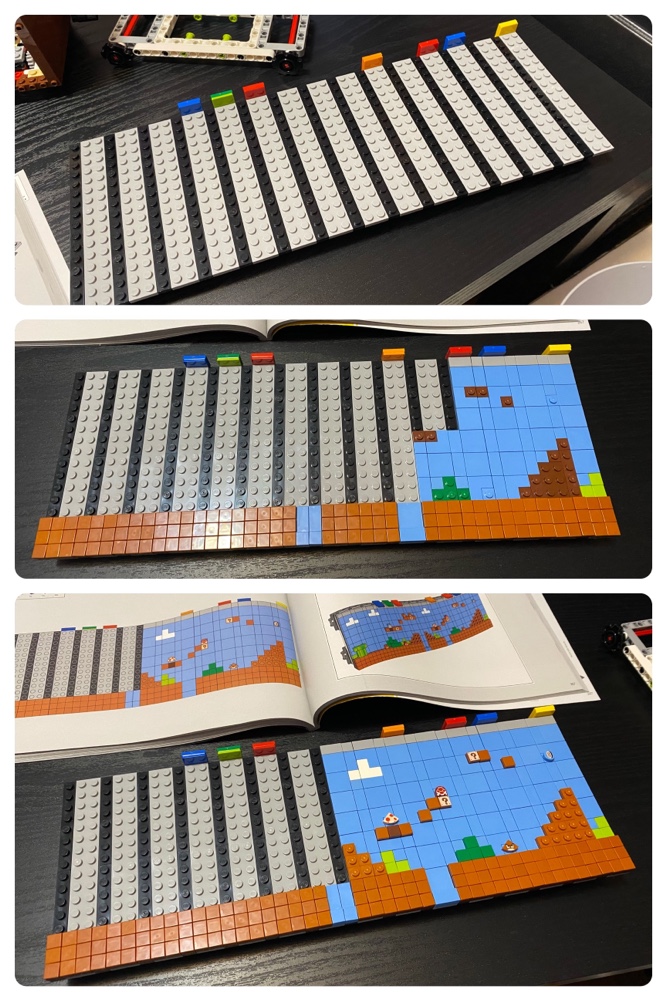
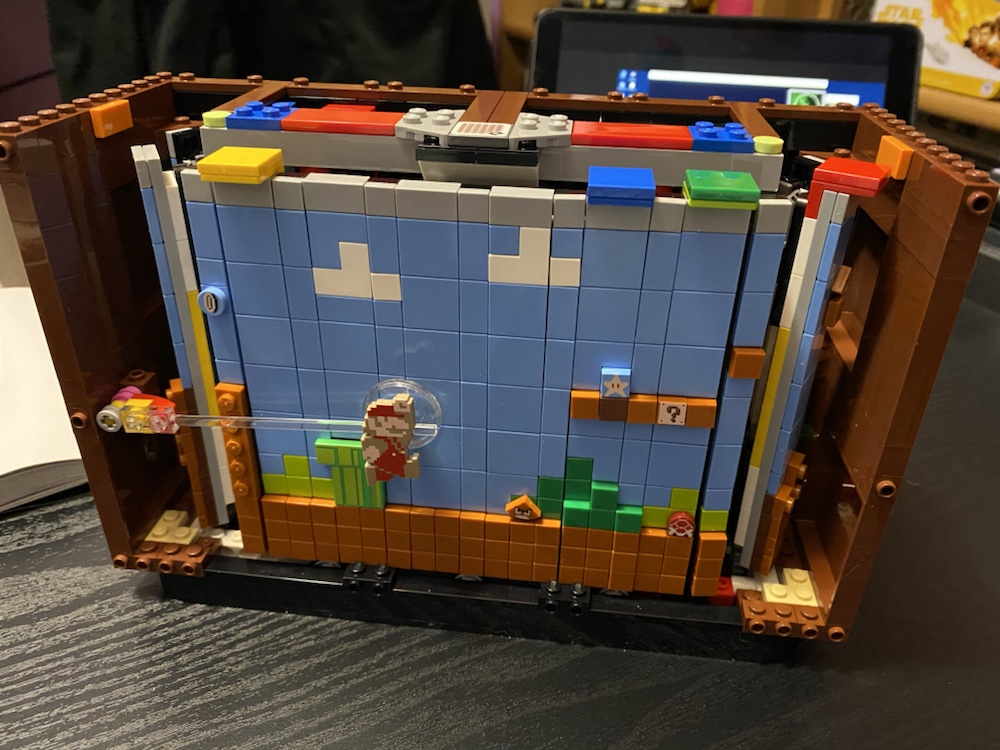
Next game the TV. While I would have been perfectly happy had the set been the console alone, the inclusion of the TV takes it to another level since they actually include a scrolling playfield to simulate the game itself.

This works by creating a belt mounted on tracks, which then turns via a crank mounted on the side. This works seamlessly and smoothly and is just another example of how clever LEGO engineers have become.

Here’s the TV interior with the scrolling belt attached:

This was a great kit to build, and for old school gamers such as myself the nostalgia value is through the roof. This is easily my favourite LEGO kit to date, and one I’ll likely keep assembled and on display for a very long time.

Space Invaders

Space Invaders may not have been the very first video game, but it’s probably the most historic. It took the world by storm and led to an industry that by 2018 had surpassed the movies. I’ve written before how I still remember first playing it about 40 years ago, and to this day the game retains a place in my heart.

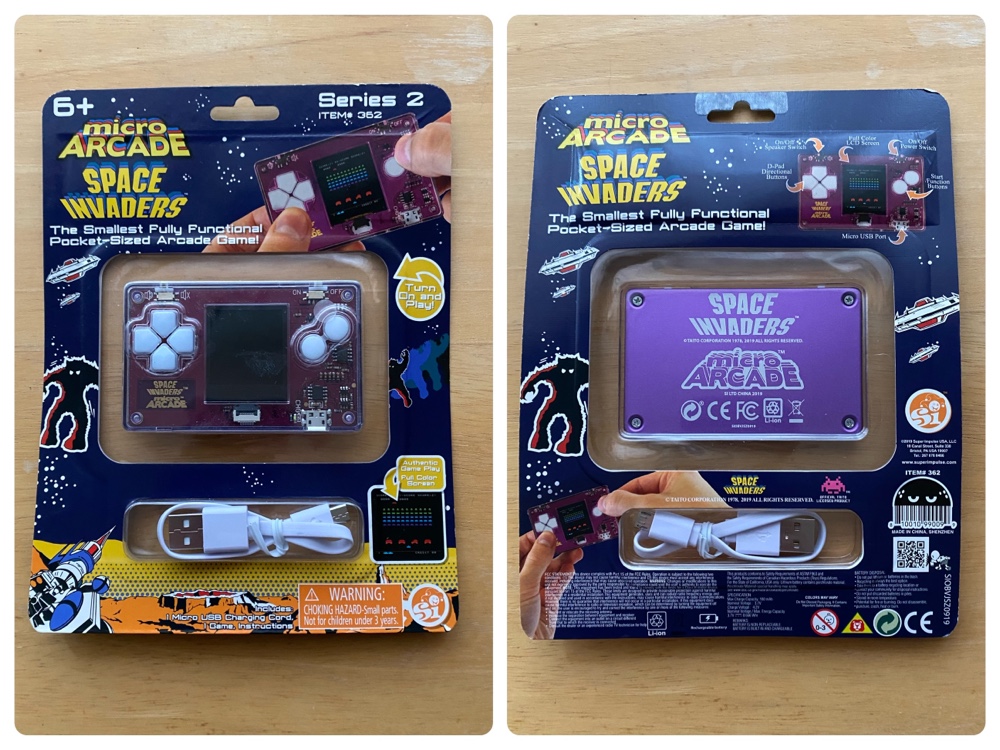
So when I saw the line of Micro Arcade handheld games it was a no-brainer which one I would buy.

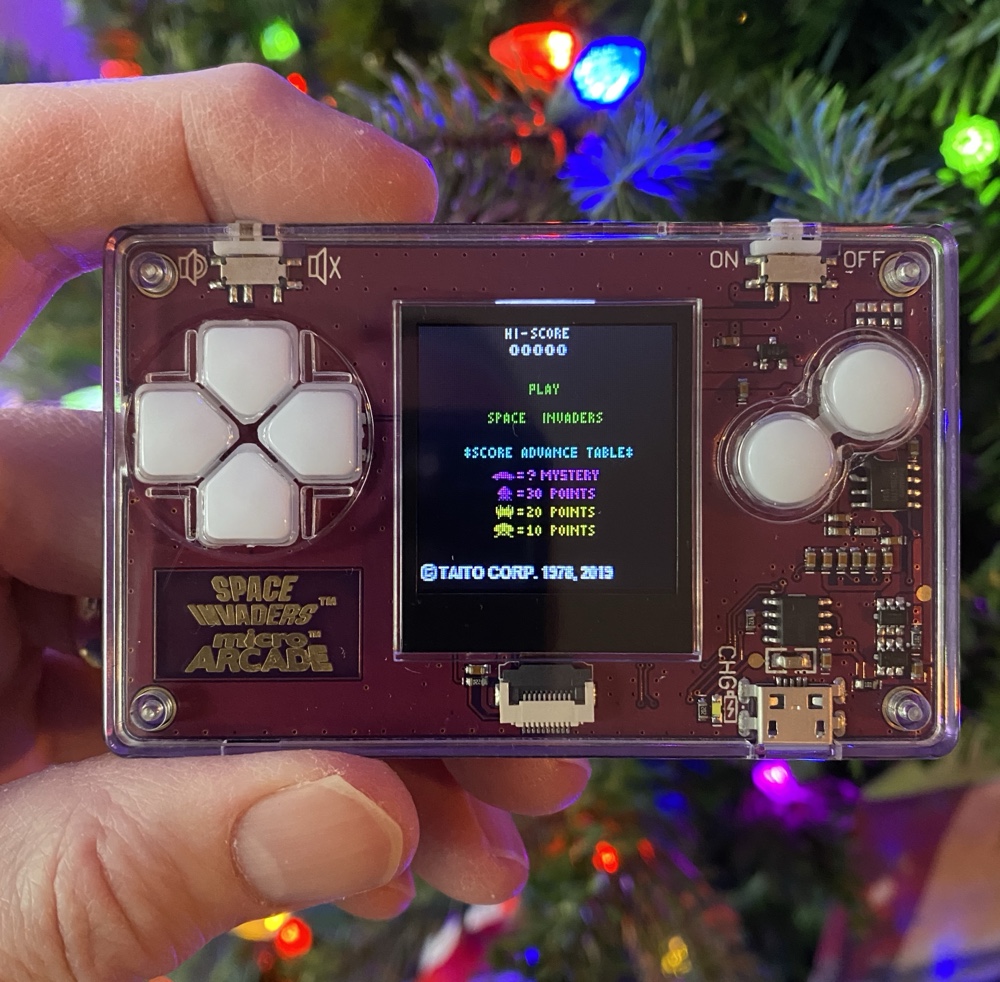
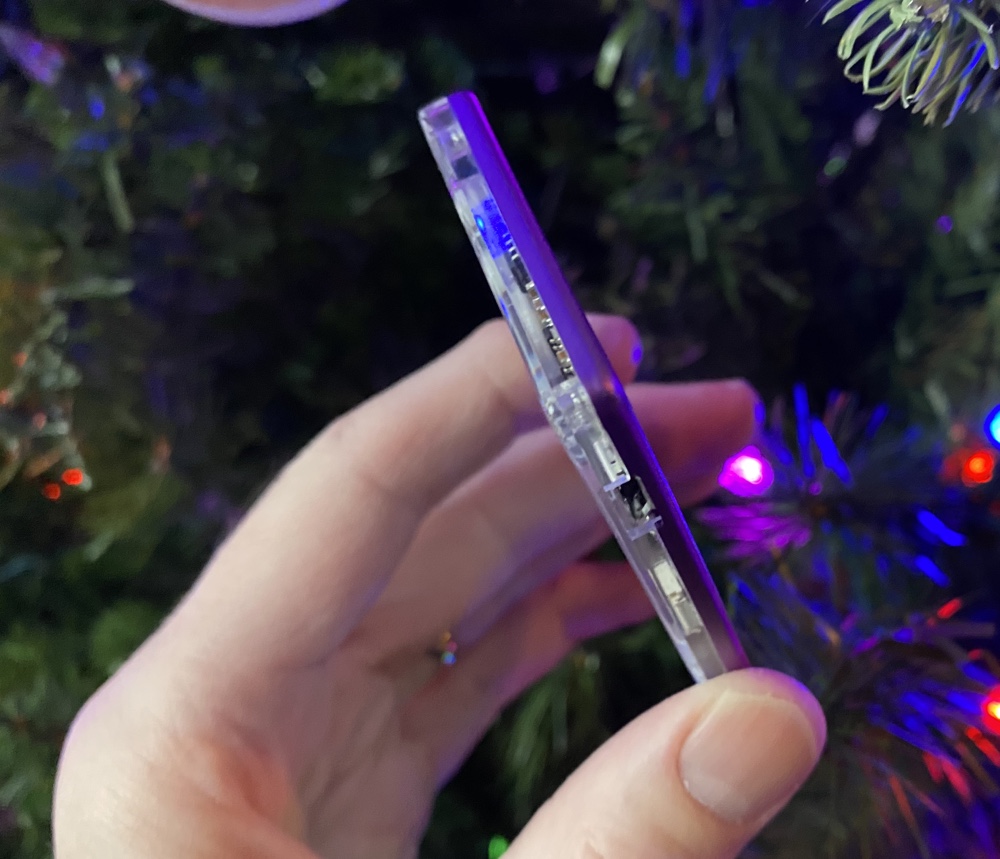
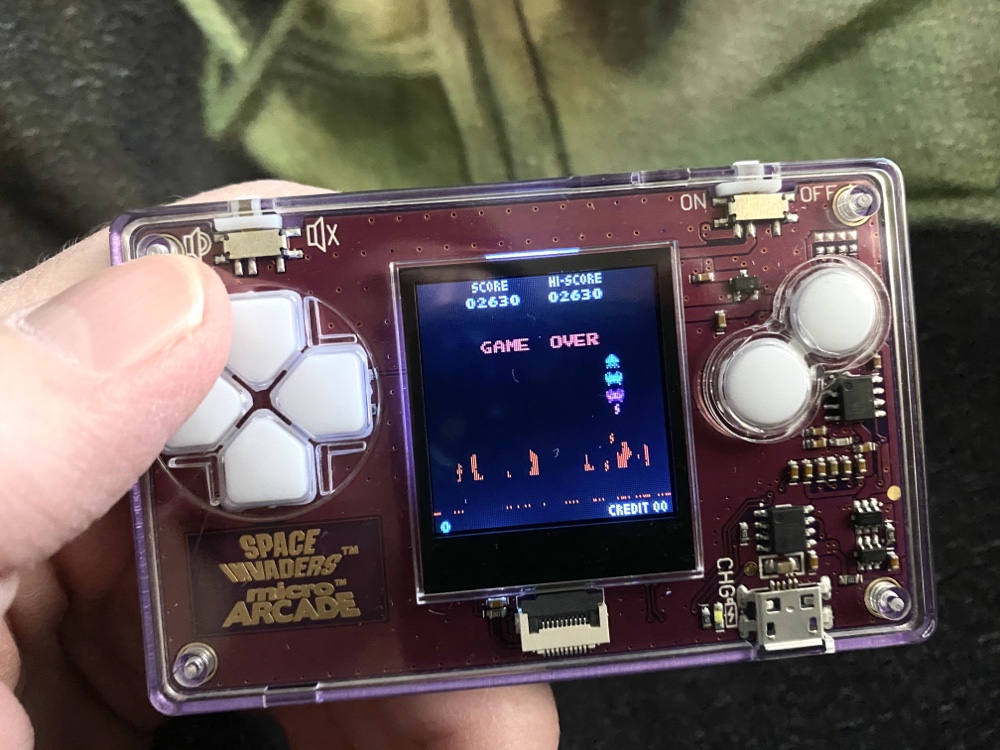
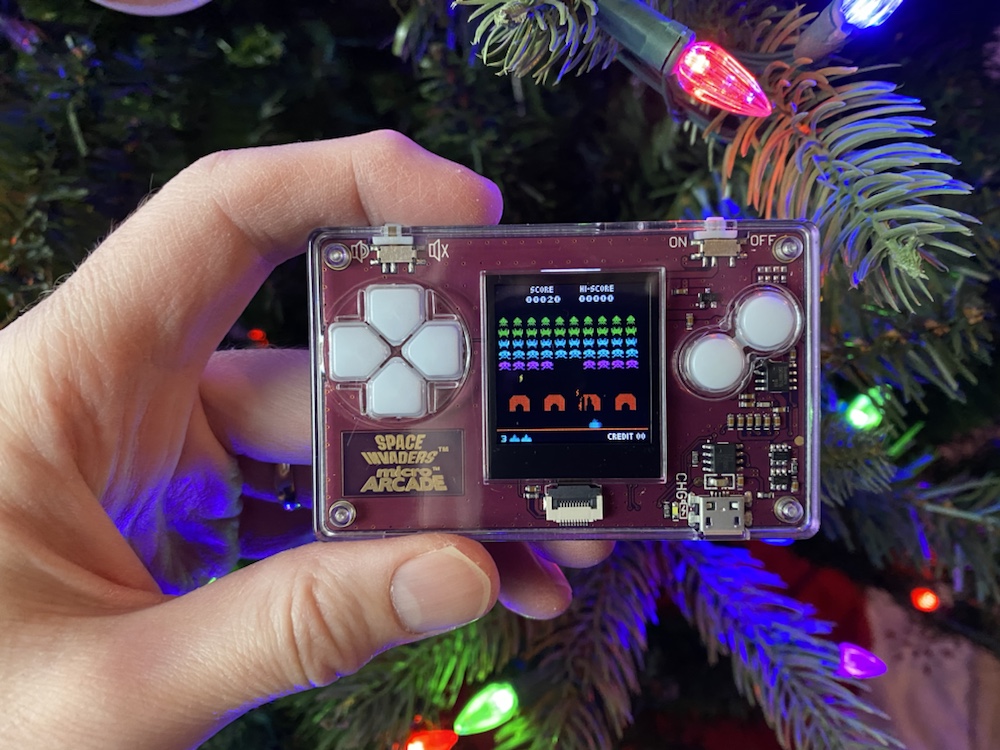
These are tiny little game systems about the size of a credit card. I believe the same basic hardware is used for the entire range of games which is why this one has two buttons and a four way controller (space invaders only uses left, right and one fire button). The design is very nice: it’s a solid little unit with good buttons and a nifty clear front so you can see the PCB. It contains a rechargeable battery and has separate on/off and sound switches.

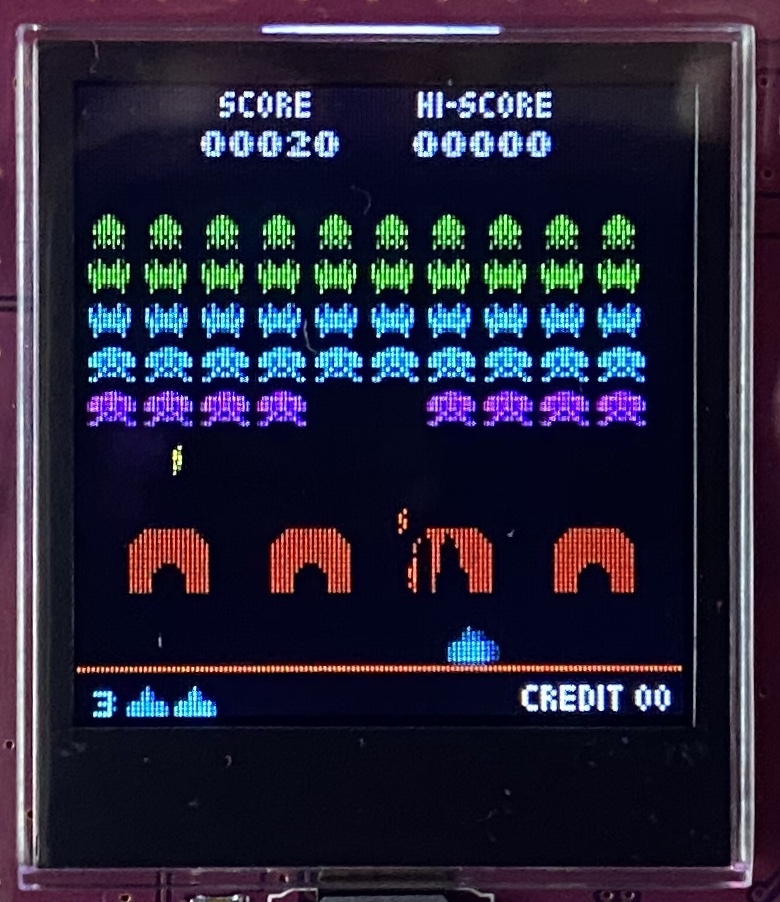
The screen is impressive for its tiny size (less than 1 square inch) and the pixels are clearer than they look in this photo. You can see the game simulates the cellophane stripes that added colour to the original monochrome arcade game, which is a nice touch.

It is of course a rewrite of space invaders and not the original code. It controls and plays the same but is fiendishly difficult with very fast enemy shots. Unfortunately the iconic sound and music of the original is not reproduced (this is a major omission) but what is here is good enough. It also doesn’t save high scores when turned off.

All things considered, for the low price ($15) this is much better than I thought it would be and while it’s probably ‘one for the collection’ I’m intrigued enough by the tech to consider buying one of the more complex games they have released.

It’s also notable how advanced this device is especially for such a low price. If you could take this back to 1979 and give it to little me I would have thought it was magic. Imagine the technology the children of today will be using when they’re my age!

Mushroom Stamps

I had fun with those Dinosaur stamps a few months back, and decided to dip my toes back into the world of ‘topical collecting’. So I made an order at a stamp shop for a few inexpensive packets of stamps in various categories, and over the next few months I’ll go through them here on the blog.

Let’s start right now with… mushroom stamps!
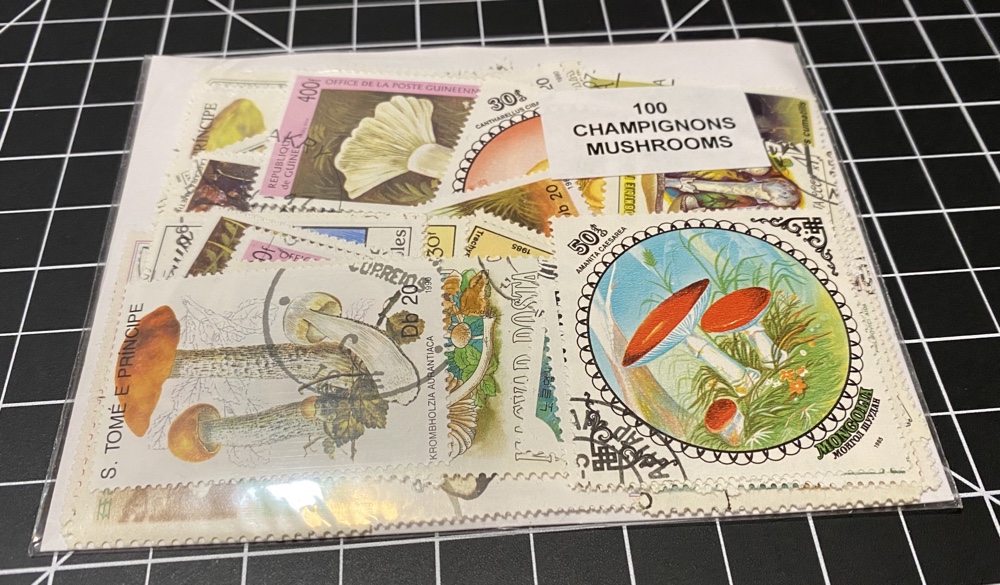
100 stamps cost me about $5. I chose mushrooms because they were cheap and I was amused that they existed as a category (“Why mushrooms?”). It wasn’t clear if the packet was 100 unique stamps or whether there would be doubles. Let’s see:
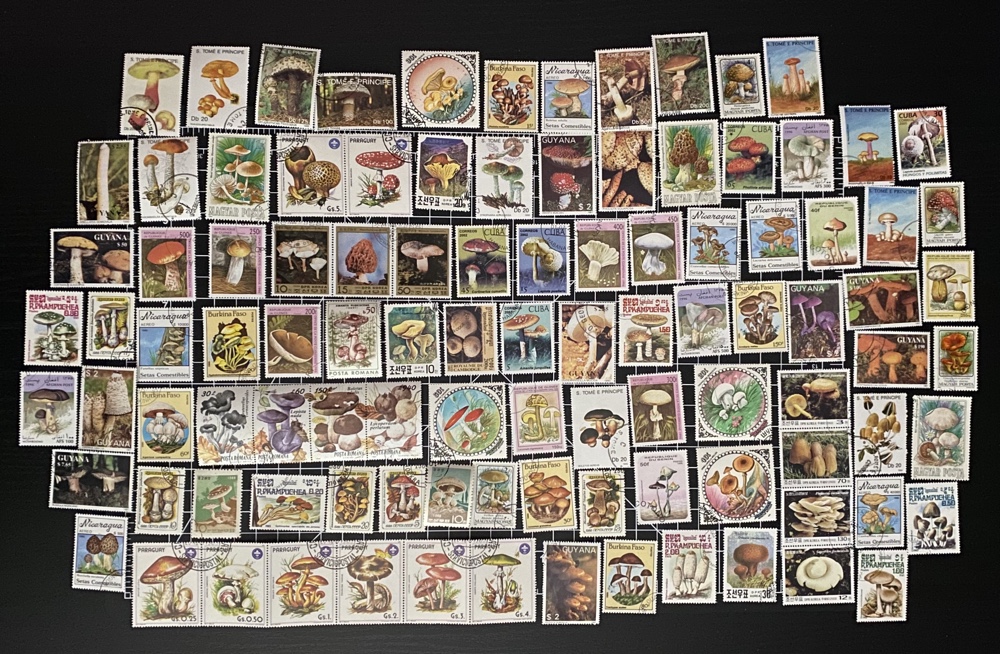
There were no doubles! In total there were 104 unique stamps from 14 countries: Mongolia, Afghanistan, Benin, Paraguay, Romania, Burkana Faso, North Korea, São Tomé and Principe, Kampuchea (Cambodia), Guyana, Guinea, Nicaragua, Hungary and the Soviet Union (Russia). The country from which I had the most was North Korea, with 12 stamps.
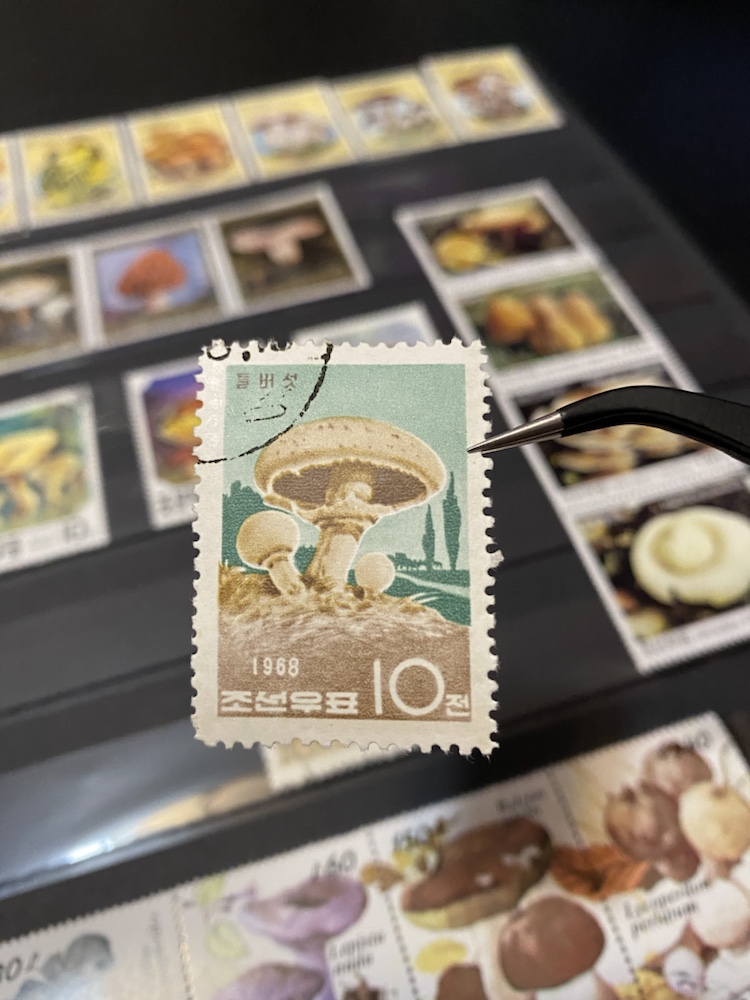
The stamps spanned 28 years from 1968 to 2006. The above example is one of the two oldest stamps and is North Korean. It’s also one of only a small handful that have been actually used, since (as with the dinosaur stamps) almost all of these are CTO stamps made for collectors and machine canceled. Most are therefore still gummed.
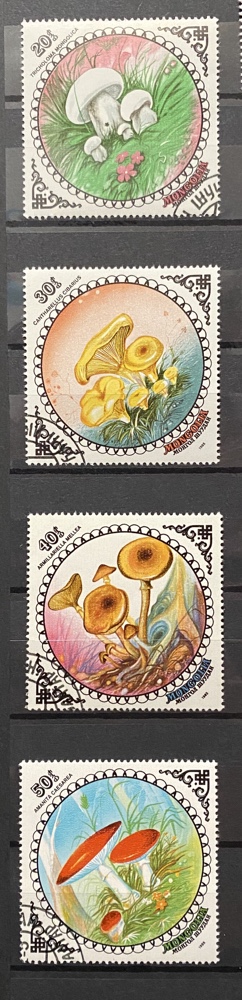
There’s a bewildering variety! The above (from Mongolia in 1985) are diagonally printed and very large and some of the prettiest in the packet.
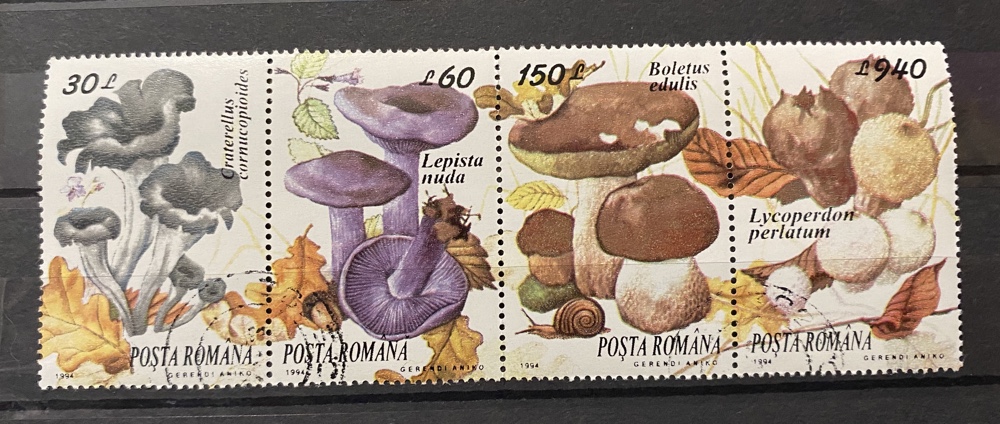
Quite a few were still attached, like these Romanian ones from 1985. Most were illustrations, but there were some photographic stamps as well.
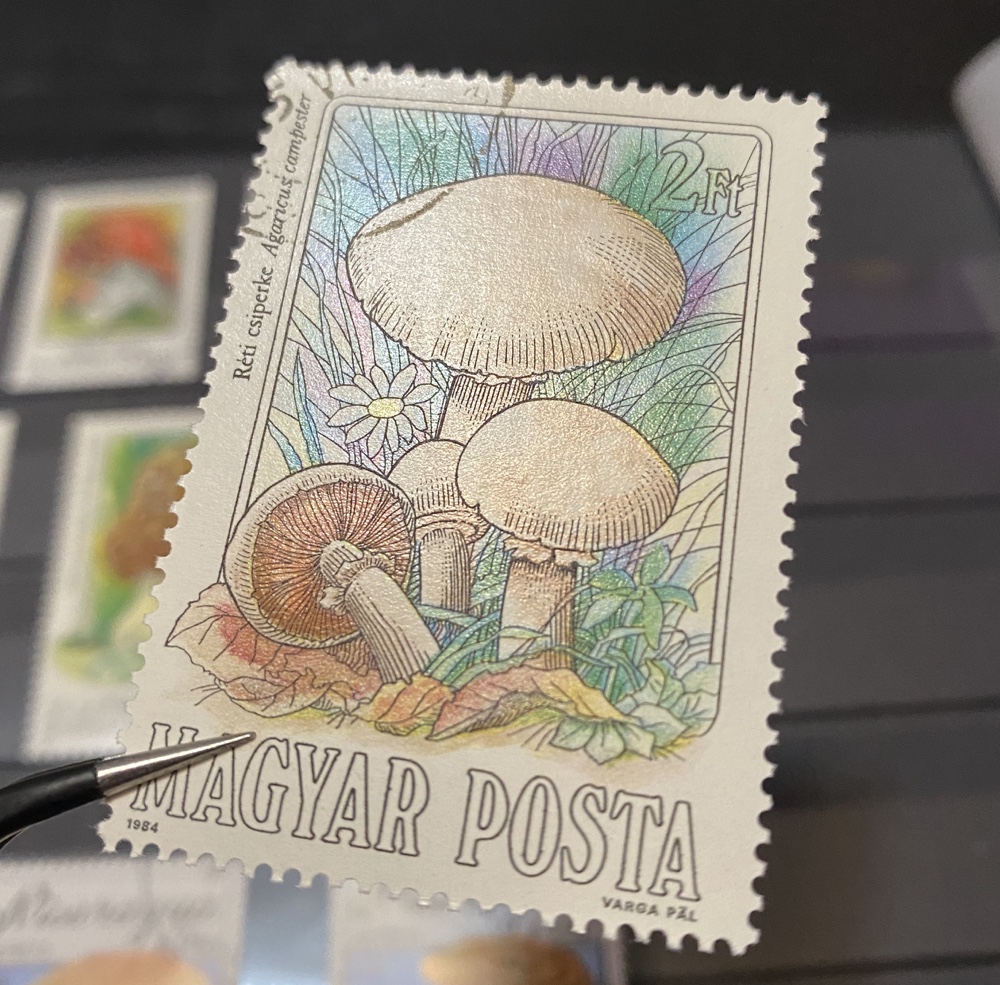
My favourites are probably the stamps from Hungary. Not only do they feature lovely line art, but they are actually textured and the ink seems slightly iridescent. This series contains stamps in two sizes as well, and these bigger ones must have looked lovely on a letter back in 1984!

Incidentally just because these are (mostly) CTO stamps doesn’t mean they weren’t also used for mail. Researching these stamps I found examples of some of them that had gone through the post, so unlike most of the dinosaur stamps it’s likely some of these were used by postal customers when they were released.
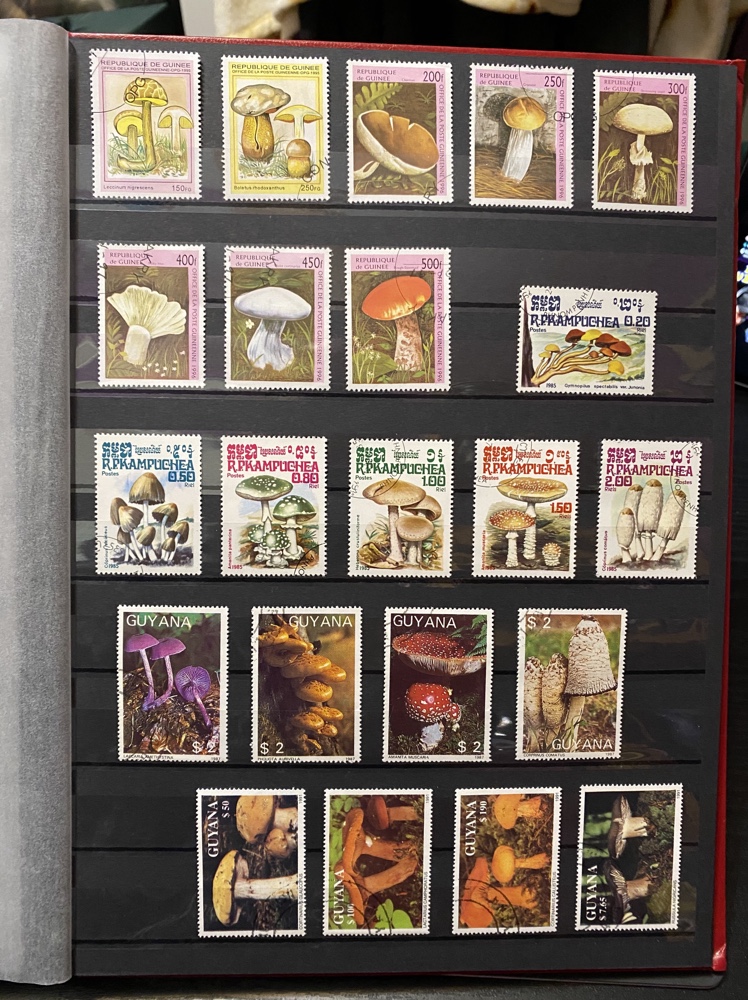
So why so many mushroom stamps?!? I’ve learned this is one of the most popular categories for topical stamps, and a catalogue printed only few months ago lists 6144 unique mushroom stamps! So my 104 is only 1.7% of those that exist. It’s a good thing I hate mushrooms else I may be tempted to chase them all 🙂

And so they’ve gone into my album, which still has lots of space left to fill. It’s a good thing I have several packets left to open…