Category: Stamps

World Postcard Day

October 1 is World Postcard Day! This is a celebration of the joy of postcards, and to commemorate the day you should send at least one postcard!

So – this Thursday – grab a postcard and start writing. It doesn’t matter what you write, so write anything! If you’re short of ideas, here are a few:
– Your favorite animal, food, movie, song etc.
– Your goals for the future, or historical achievement you’re very proud of
– Your favorite memory from before the year 2000
– A joke, poem, limerick or lyric

The stamps are important too. Go for variety if you can, or if you’re sending domestically and only need one stamp try for an unusual or pretty one (this means no simple flags if you’re in the US!).

Send the card to anyone, as long as it’s me. Better yet, send more than one to family and friends. Be sure to mention World Postcard Day. And try to get it in the mail on October 1st 🙂

Speaking of cards, this is as good a time as any for a Postcrossing update.
I’ve now received 248 cards and sent about 260. I check my postbox every 2 weeks or so and they keep coming even during the pandemic. The average time for a card to arrive is longer now (in some cases excessively) but so far I haven’t had any of the cards I sent not arrive.

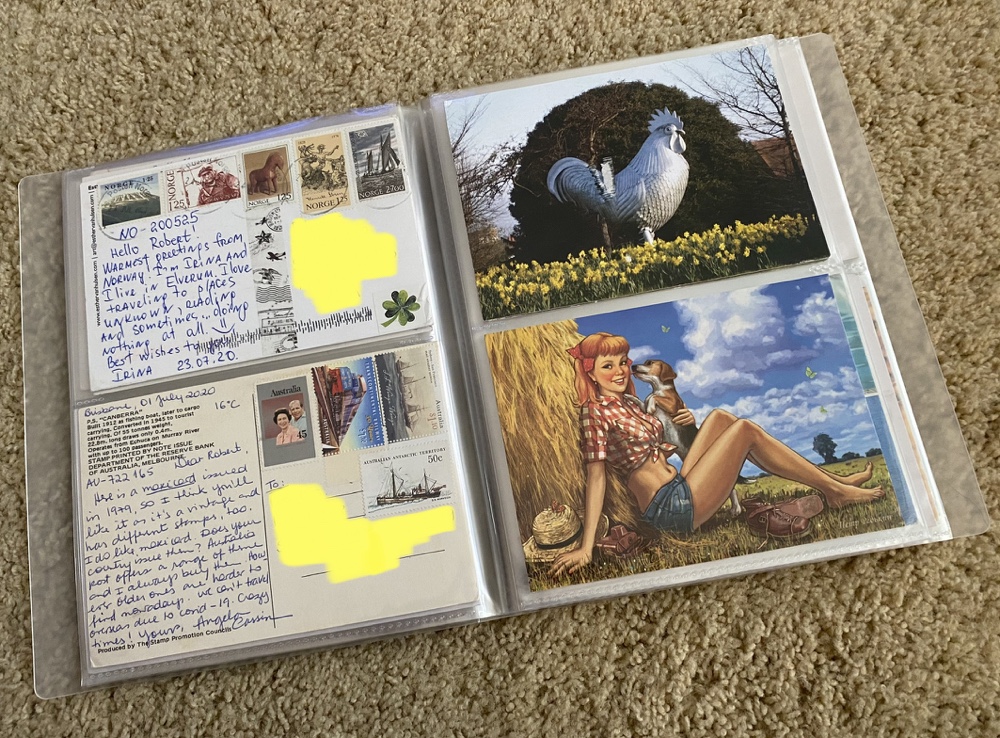
I’ve got a mini-album I use to showcase the favorites I have received, either due to the card, the stamps or the message. I’ve almost filled it and will have to buy another album before too long.
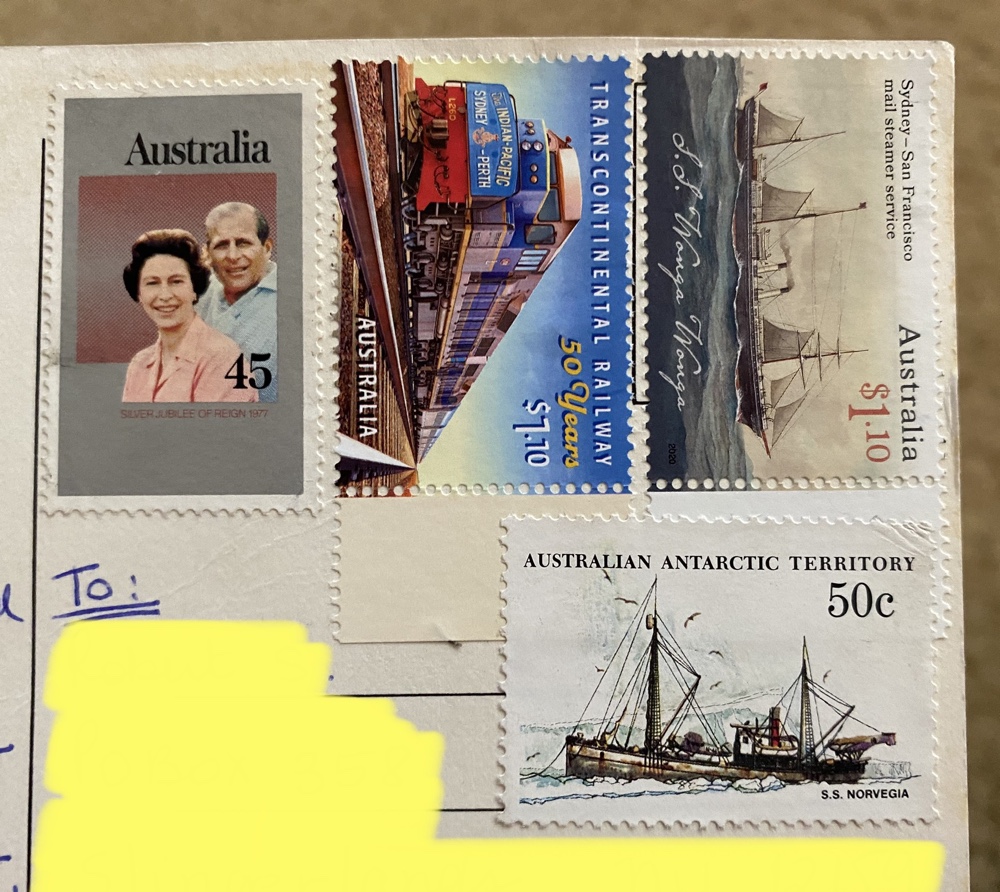
That’s on the back of an Australian card I received where the sender used vintage stamps. I was quite impressed that they used a $0.45 silver jubilee stamp from 1977! Most stamps are good forever, and it would be fun to buy some older US stamps and do the same one day.
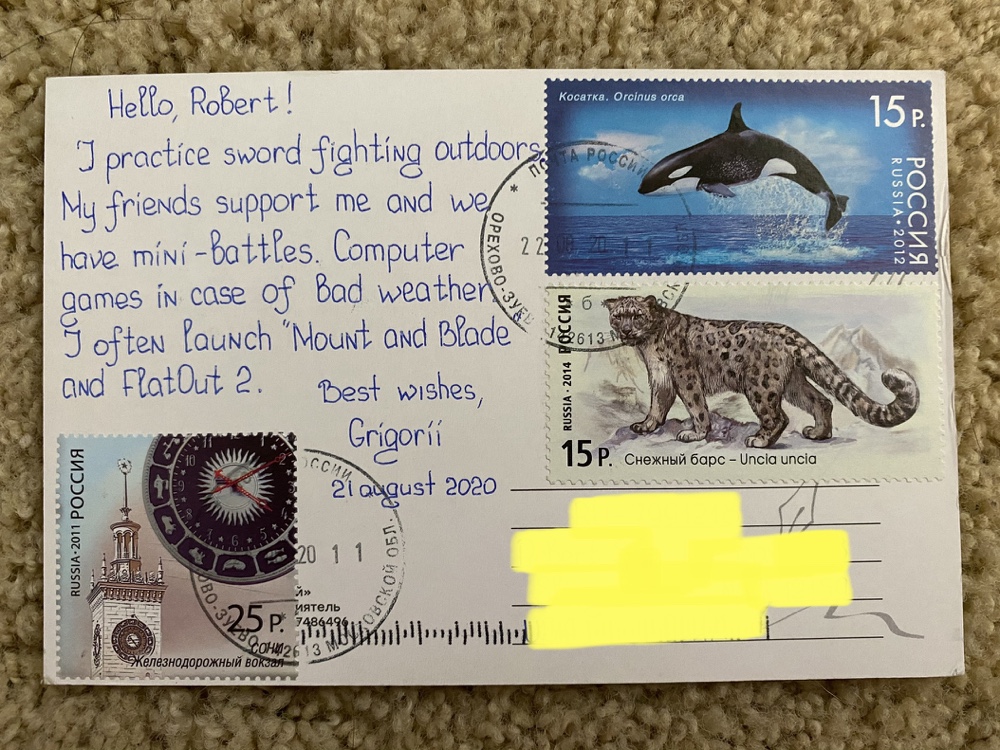
I’m showing off the above due to the astonishing penmanship of Grigorii. Also Russian stamps are always very big and very pretty, and there seems to be an endless variety of them. Not every card is lettered this well, and I’ve receive some I could barely read at all!
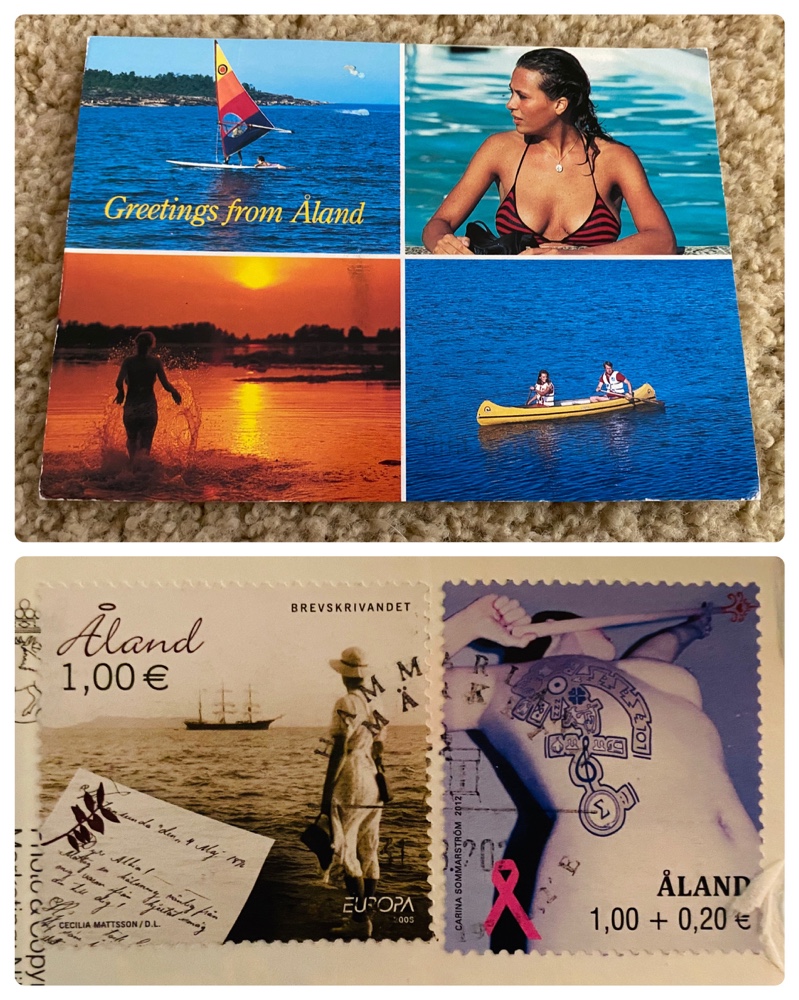
The above is the most extraordinary card I’ve received so far, from the Aland Islands off the coast of Finland. There’s very few Postcrossers living there so it’s unlikely I’ll ever get another and receiving this was a genuine treat.

I’ve sent to 41 countries and received from 42. Russia, China and Germany are far ahead on the list of sent and received countries, and I still haven’t received anything from South America. I think I’m loving Postcrossing even more now due to the pandemic, and no matter where the card is from I love seeing it in my mailbox.

But of course the best cards are from those we know. Given we can’t travel now you may think there’s no good reason to send one, which is why World Postcard Day is so timely this year. Please consider sending some, but even if you don’t watch your mailbox since you know I won’t let the day pass without sending a bunch myself 🙂
Bag of Stamps (part two)

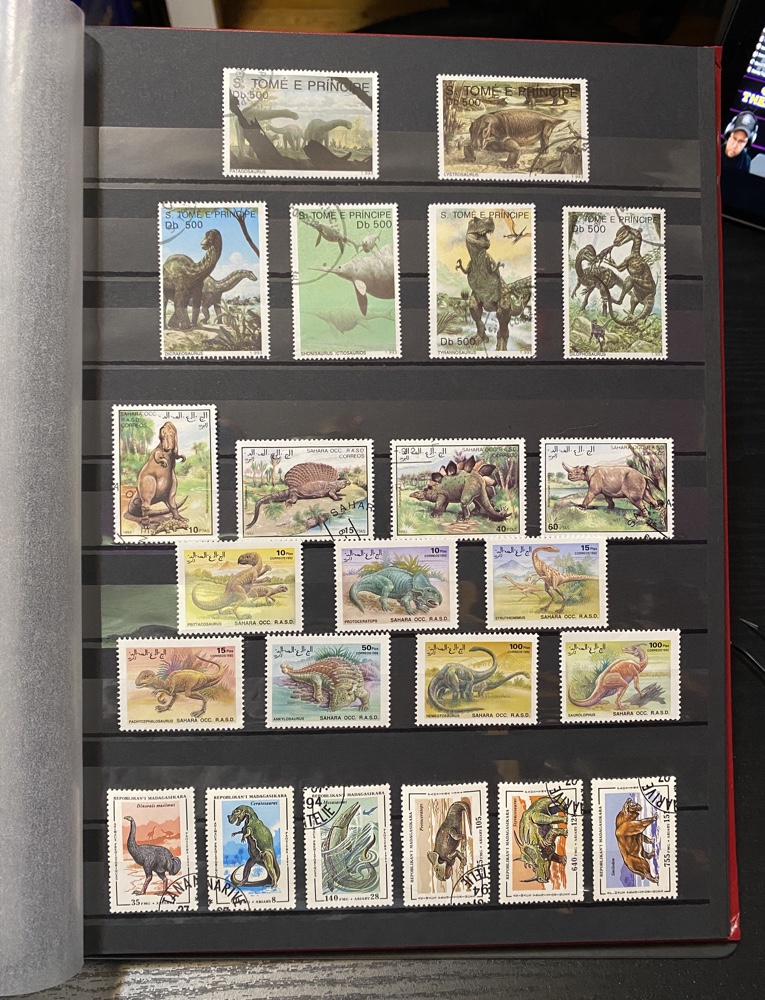
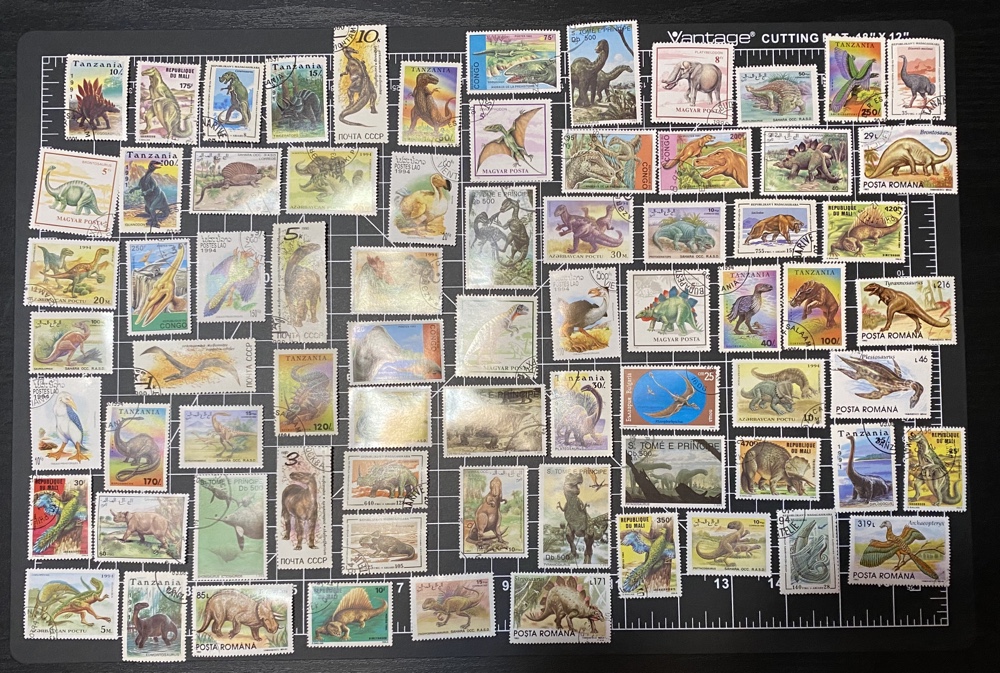
You’ve been waiting all week, and so have I! With no further ado, here are the contents of the dinosaur stamp envelope:

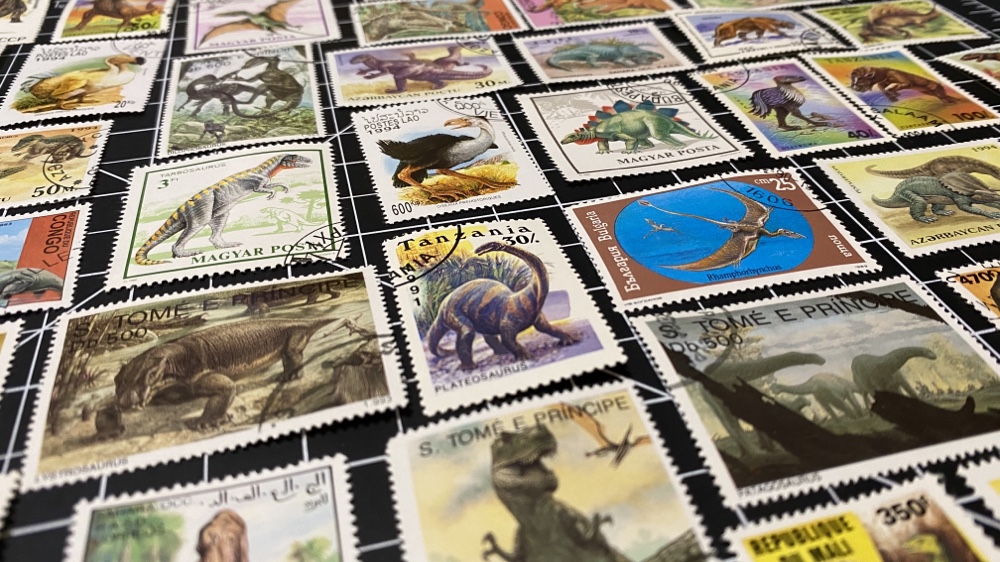
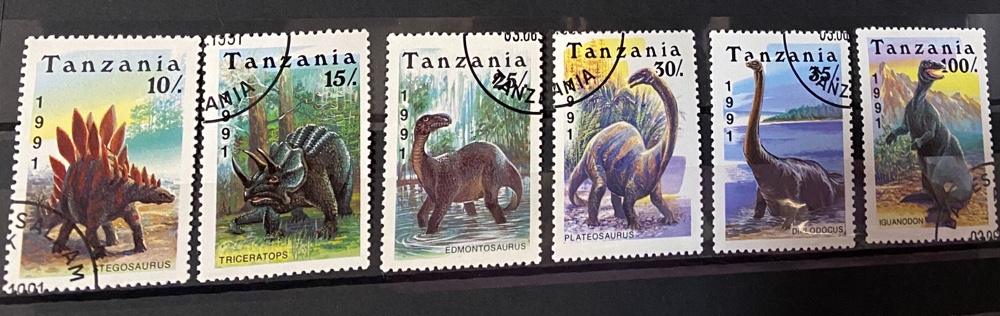
The bag was supposed to contain fifty but had Eighty-two unique stamps (and one double)! In total 13 countries are represented (the number of stamps are listed after): Bulgaria (1), USSR (4), Republic of Congo (5), Hungary (5), Laos (4), Mali (7), Azerbaijan (6), Guyana (9), Romania (6), Tanzania (12), São Tomé (6), Western Sahara (11), Madagascar (6).

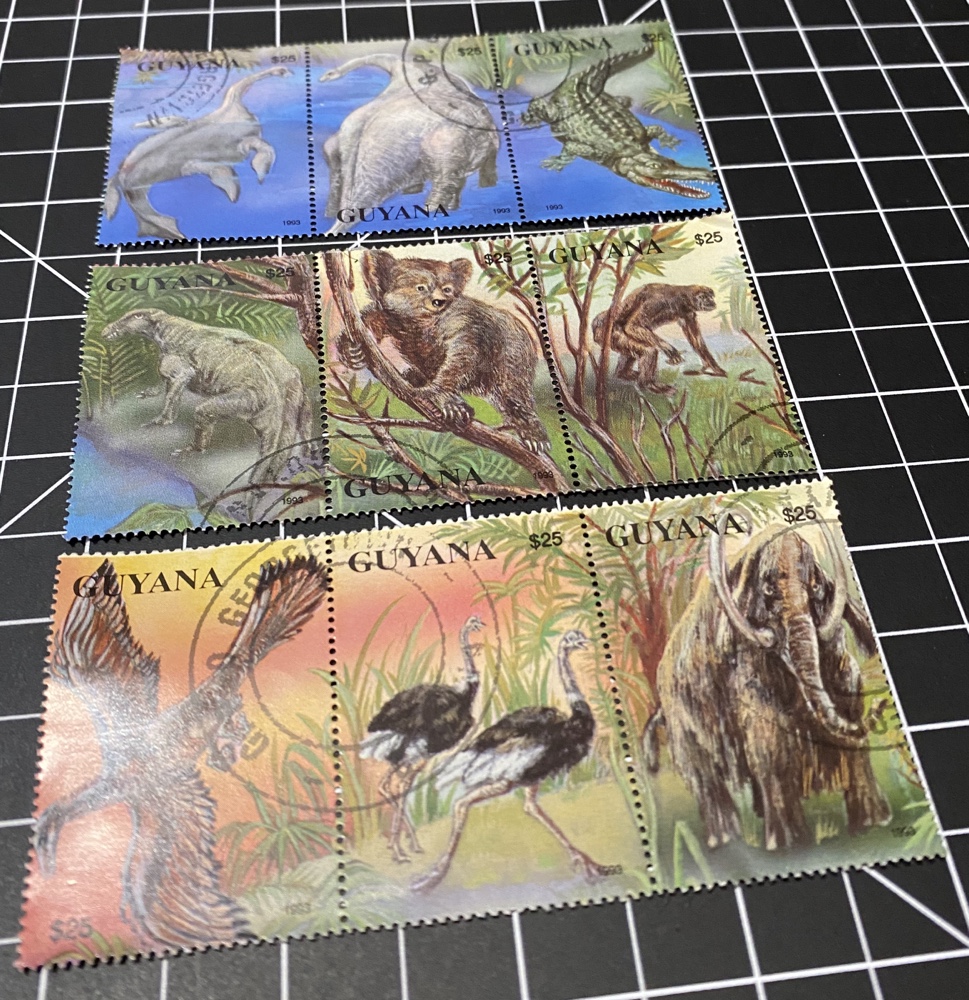
The above nine are very large and were issued by the South American country of Guyana in the early 1990s. Apparently they show ‘prehistoric creatures’ that once lived in the country… but isn’t that a koala?!?

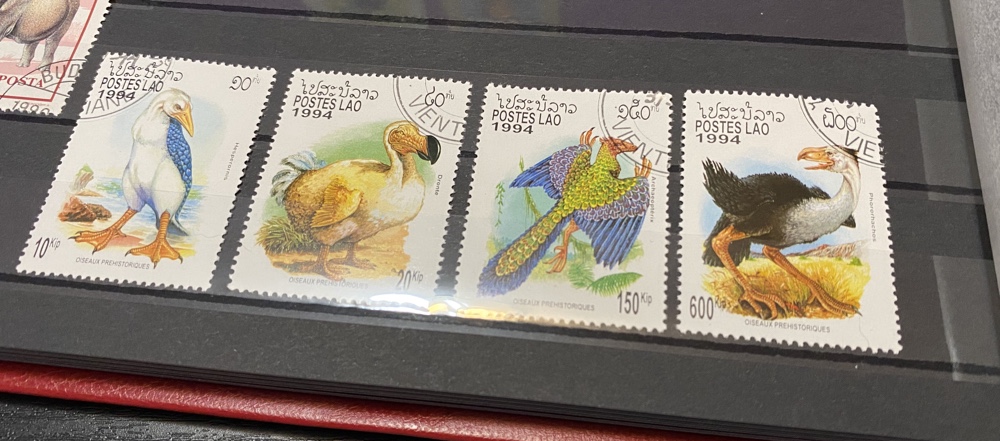
Here’s some (presumably?) extinct birds on a series from Laos from 1994. The art on these is very pretty.

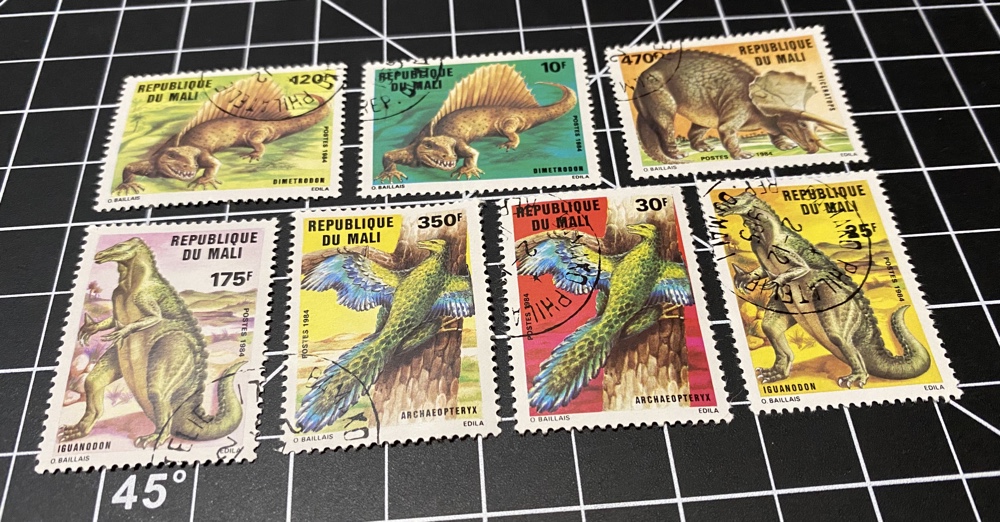
And here are seven dinosaur stamps from Mali, from 1984. Curiously most of the art is reused on different-denomination stamps.

One thing every one of these stamps has in common is that they are unused. And yet you’ll notice almost all of them are canceled with postmarks. This is because these are all CTO (cancel-to-order) stamps, which are topical stamps printed for the collectors market. The stamps are canceled (by machine) at the printers and then sold in bulk to resellers as a way to raise revenue for the countries that print them. CTOs like these are apparently much more common in countries without robust postal services, and still exist today.

Researching these I learned that dinosaurs are a very popular theme within stamp collecting with almost 4000 stamps issued across the years by almost every country. The first stamp showing an actual dinosaur was released by China in 1958, and they continue to be popular today with an example being the recent lenticular T-Rex set issued in the USA. I even already had a few myself, that I blogged about a few years ago.

All these stamps – and all the other loose ones that were in the bag or that I already owned – are now in a fancy new binder I bought myself since last weekend. It’s a good way to store them, and there’s loads of empty space left if I ever happen to get my hands on more stamps in the future…

To end this two-part series, I have to say that this bag of stamps that I thought was a risky buy even at $8 ended up being a lot of fun to sort through and research! I hope you enjoyed looking through them with me 🙂

Bag of Stamps (part one)

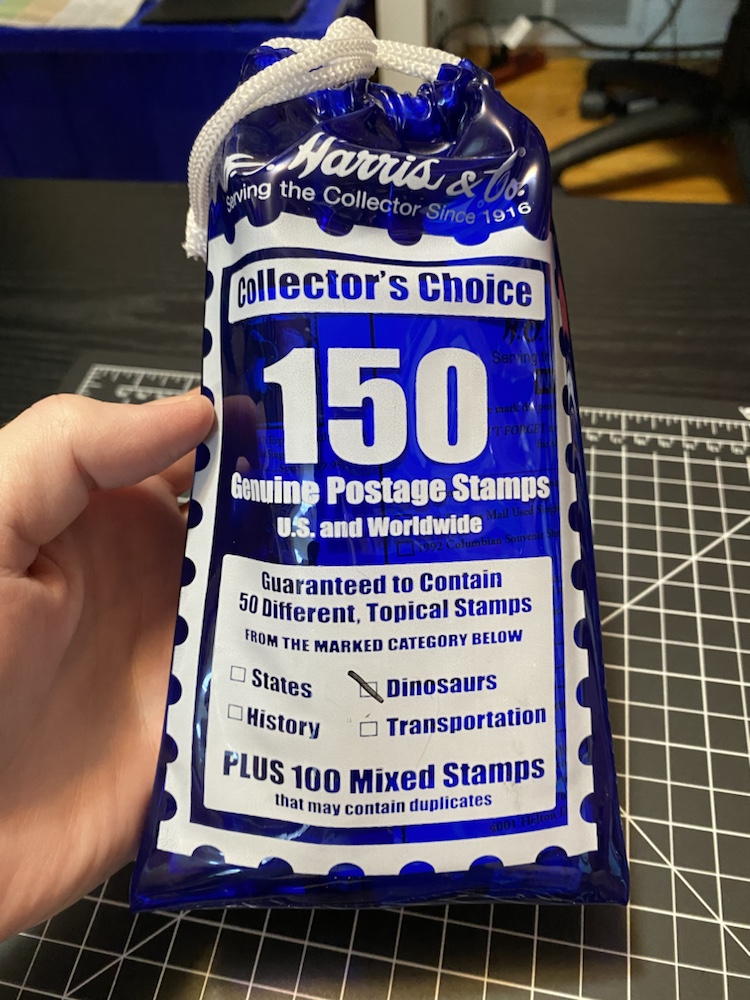
While in a craft store looking for storage items, I came upon this:

150 stamps, 50 of which were guaranteed to be different dinosaur stamps! It was only $8 and I couldn’t resist the dino-temptation so it quickly became mine.

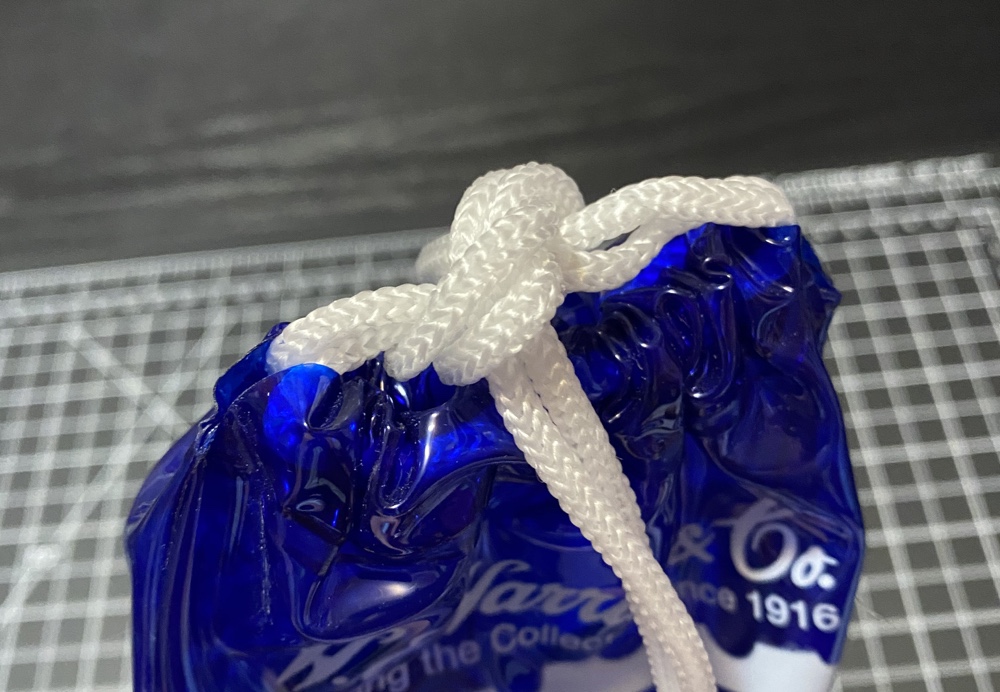
A quick comment on the packaging before I open it. It’s a plastic bag, drawstringed closed and heat-treated to stay closed. A most unusual way to sell stamps I though, and hardly tamper proof. It gave the whole package a distinct air of amateurism… but it was only $8 🙂

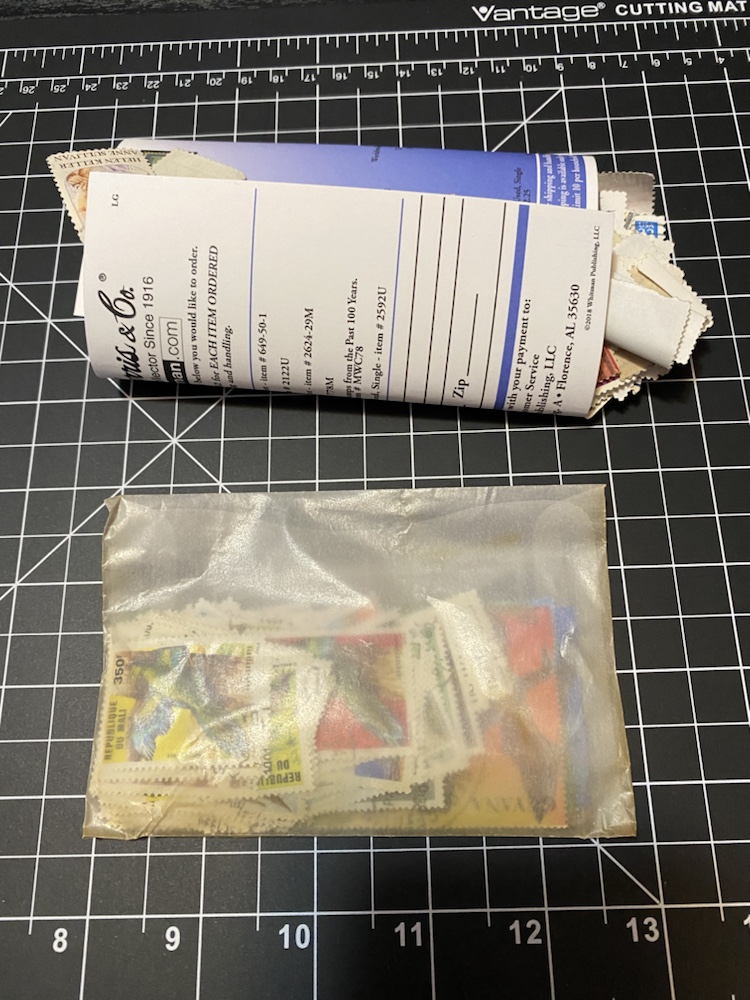
Here’s the contents: a yellowing envelope full of dinosaur stamps, and a jumble of other stamps folded up in a thin cardboard flyer advertising other products by the same company. Putting aside the dinovelope, I started by examining the ‘mixed’ stamps.

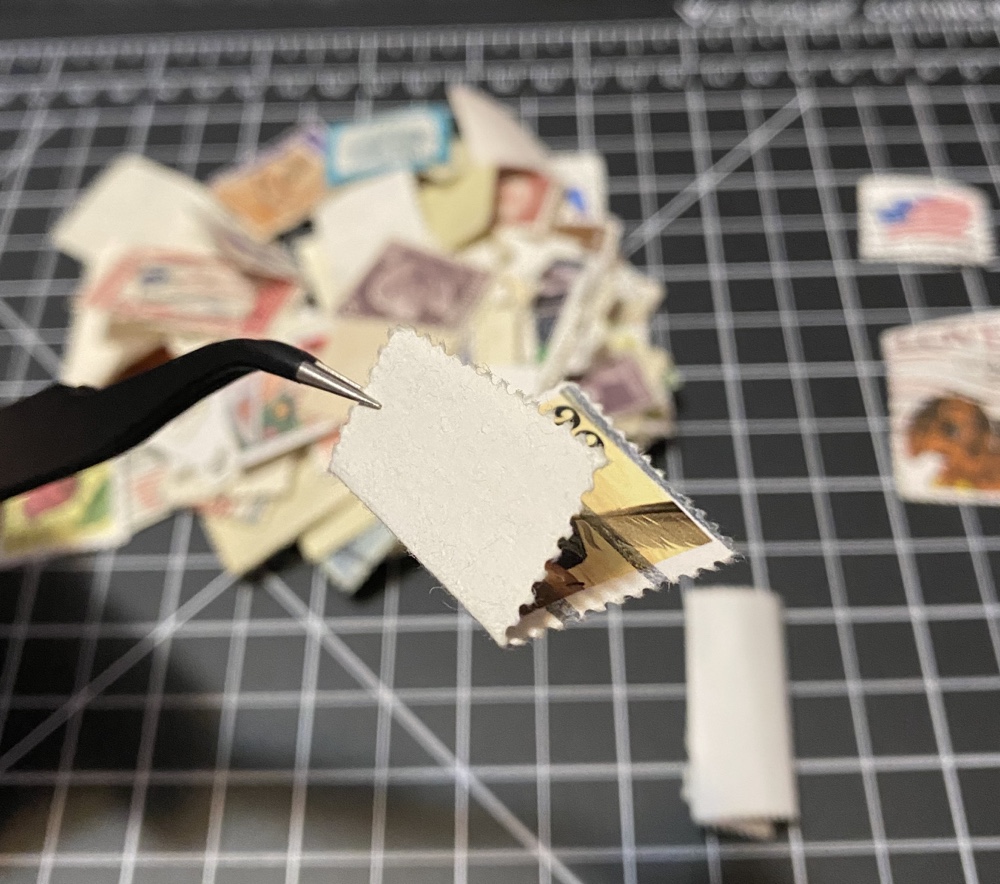
As can be seen here, every expense was spared keeping the stamps in pristine condition, and quite a few were folded like this one. I started separating them and sorting them.

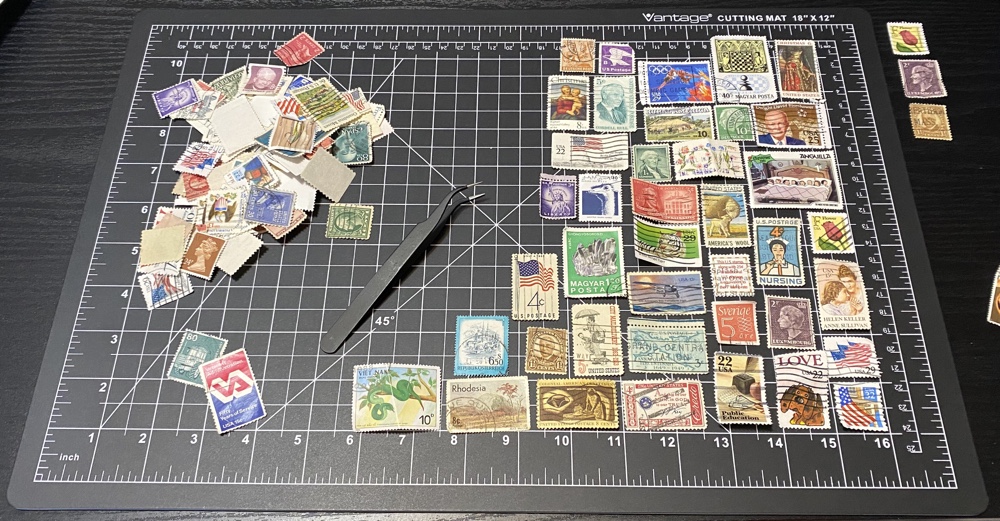
As you saw the packaging says (in small print at the bottom) that some of the 100 ‘mixed’ stamps may be duplicates, and in truth I expected most of them to be. I was quite surprised as I sorted them all to find the number of duplicates to be small. I was also happy to see a lot of international stamps, and became quite distracted as I sorted, closely examining each stamp as I picked it out of the pile.

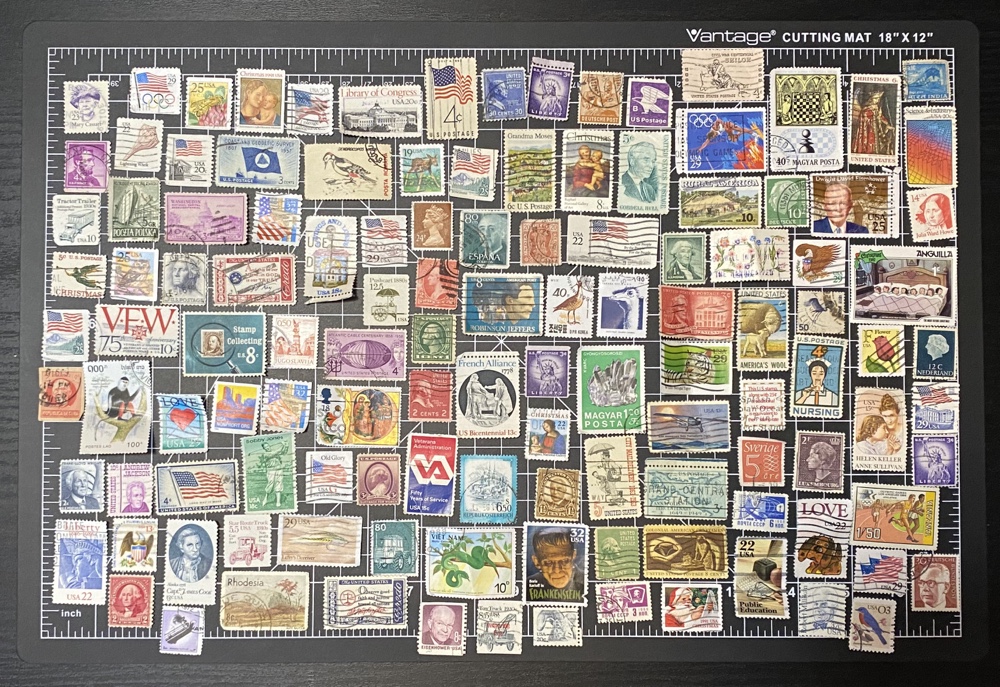
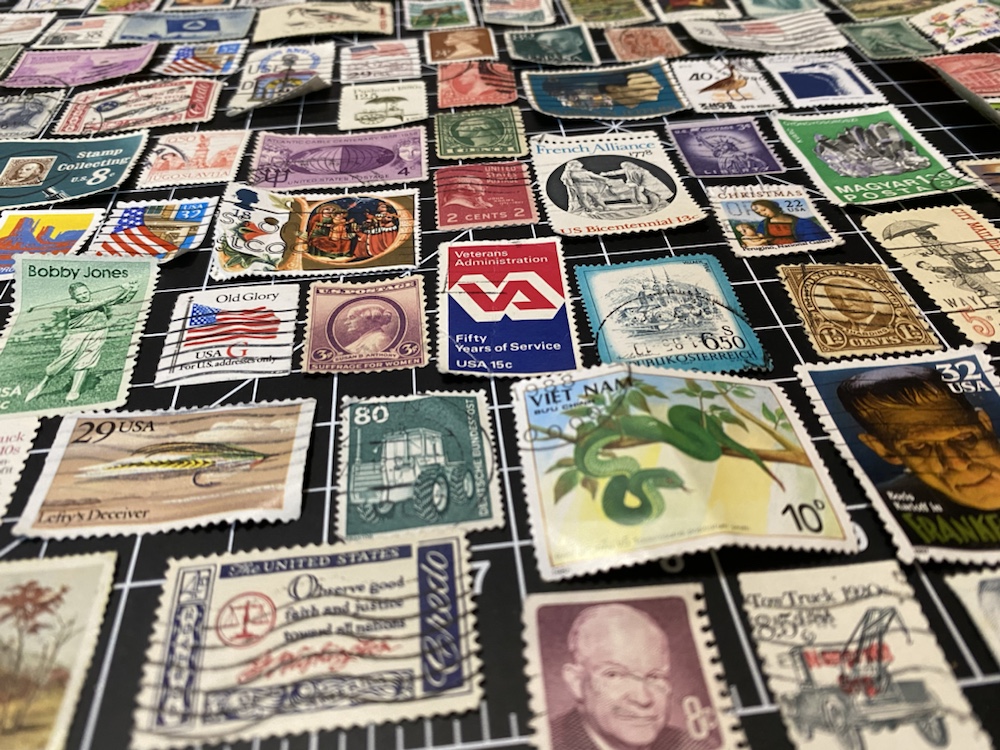
There’s all the ‘mixed’ stamps! In total, there are 121 unique stamps, and a further 29 doubles (of 18 stamps). So for starters the package contained not 100, but 150 stamps! (Can you see the doubles I missed in the above photo?)

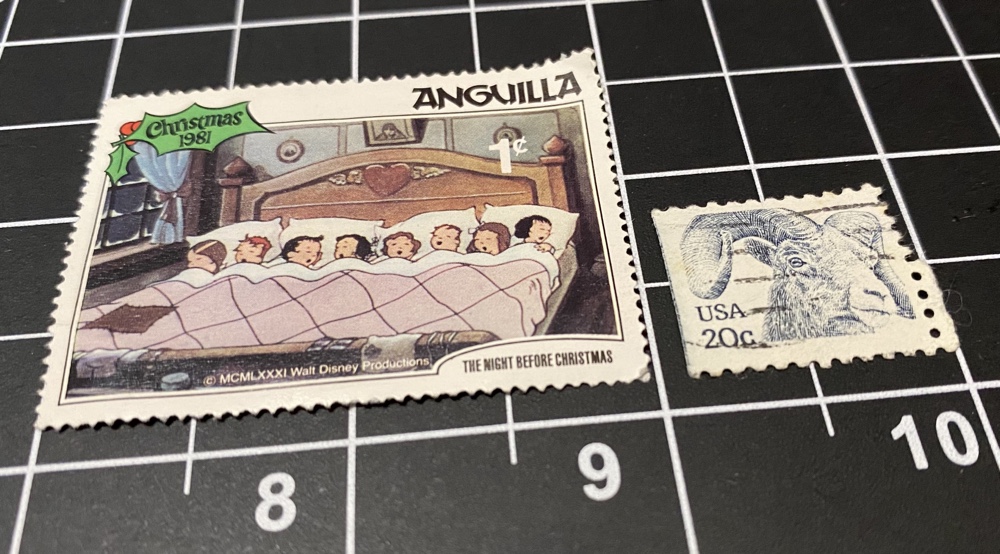
Those are the largest and smallest stamps, with the Anguilla one being about 2 by 1.5 inches. I’m not sure this is remotely important, but I always note stamp size since I’m always thinking about sticking them on postcards 🙂

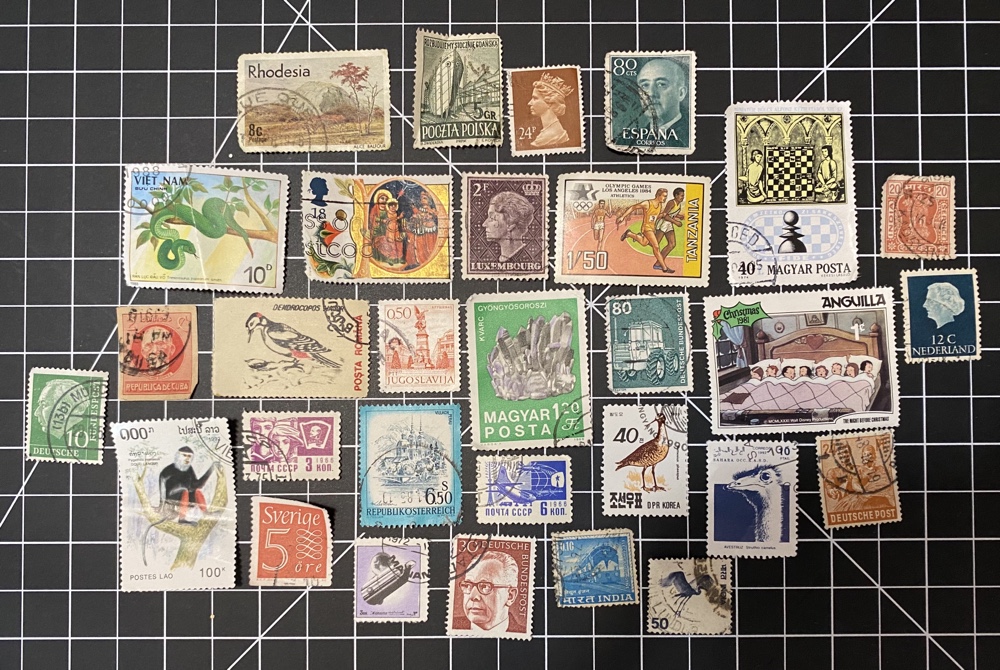
Here I have separated out all the international stamps. There’s 30 in total with no duplicates, from the following 22 countries: Cuba, Sweden, Vietnam, Yugoslavia, Romania, Poland, Luxembourg, Spain, The Netherlands, England, India, Hungary, Germany, North Korea, Austria, Russia, Tanzania, Anguilla, Laos, Rhodesia, Western Sahara and Manama.

A few of these raised an eyebrow, so I did some research and learned a few interesting facts!

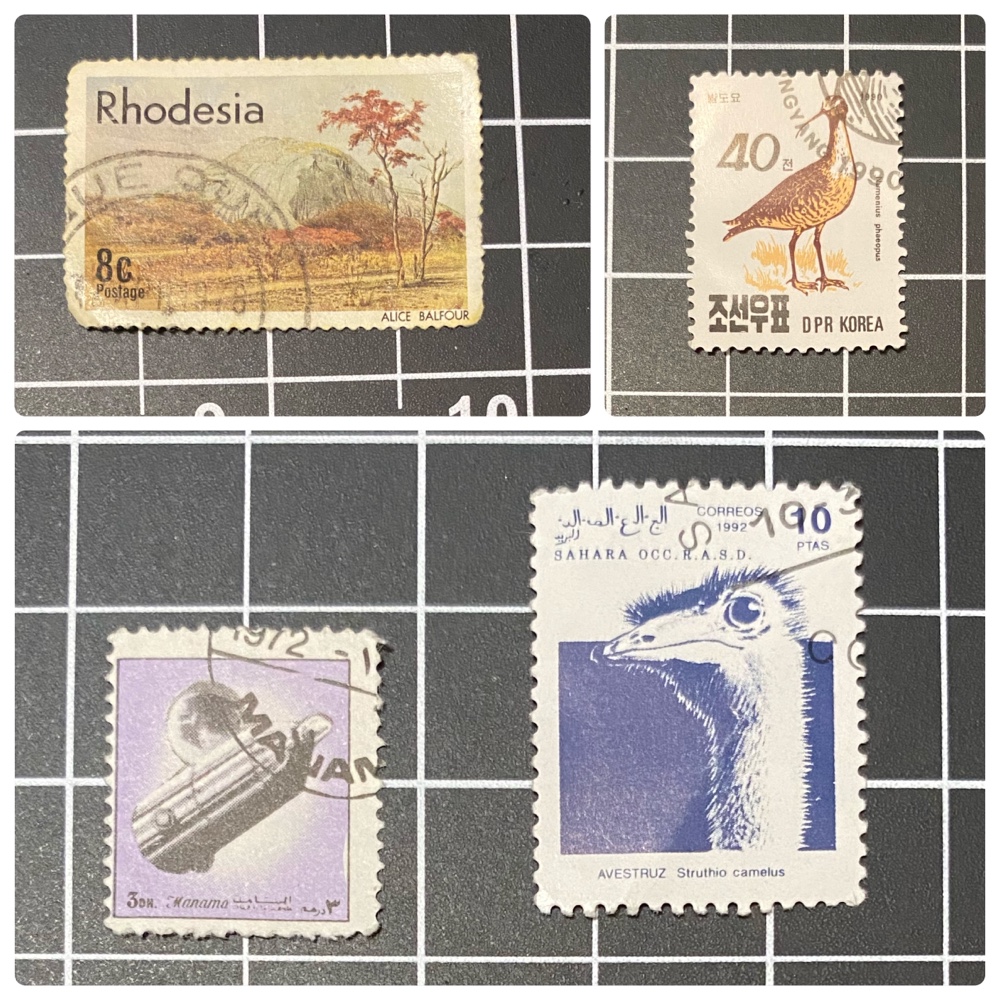
Rhodesia, as you know, is no longer a country. So that’s a stamp (and in fact my only stamp from a no-longer-extant country. It’s in wretched condition, but it’s over 50 years old as well.

The DPRK stamp is from North Korea. This may seem unusual but North Korea issues an extraordinary amount of stamps: more even than South Korea! The stamps are mostly propaganda (including some infamous ones depicting war with the USA) but there are a lot of animal and topical stamps as well. The main reason is to make money selling them to stamp collectors.

The Manama and Western Sahara stamps are what are called ‘Cinderella’ stamps, which are those issued by non-postal authorities. Manama is part of UAE today, but in the 60s was little more than a desert oasis that issued ‘stamps’ to sell to collectors despite not even having a postal service. Western Sahara is the same, although they have some more claim to sovereignty since they are a disputed region of Morocco. But still, their stamps are not usable for postage. (The North Korea and Anguilla stamps are arguably Cinderellas as well.)

The things you learn from stamps!

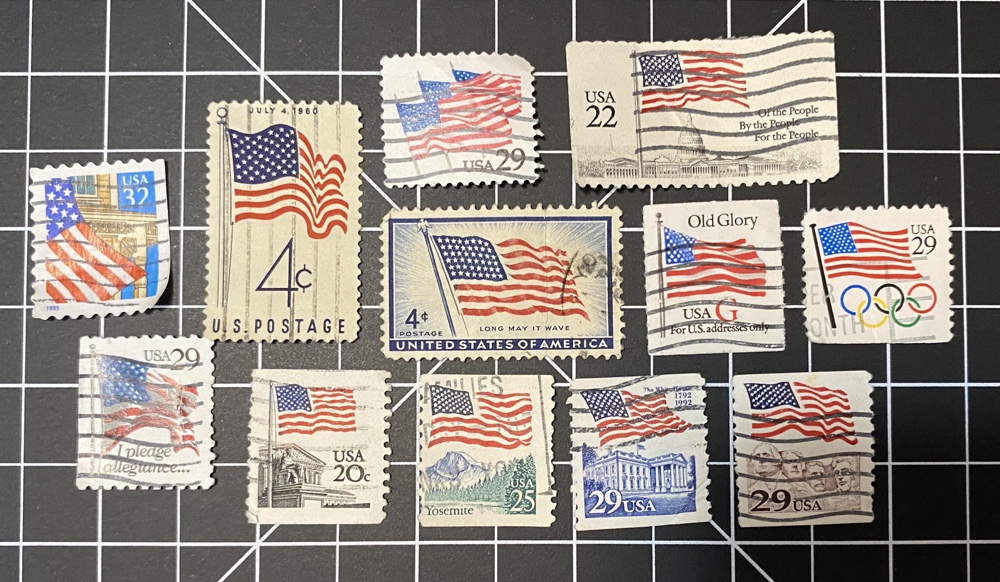
The most common ‘theme’ was unsurprisingly US flags, since the USA always has one in circulation. I like the series at the bottom, which showcase famous sights with the flag. The 4c in the middle is very pretty!

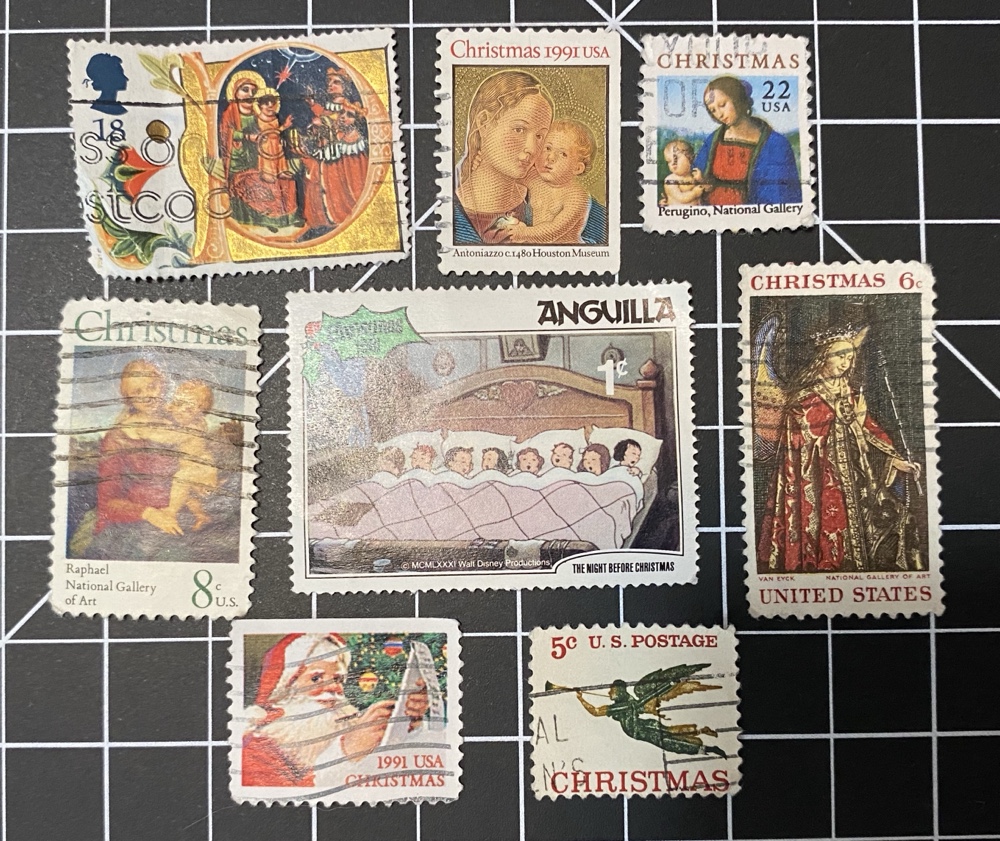
Flags aside Christmas stamps were common, with eight in total from 3 countries. The UK one – though folded and damaged – was printed with flashy gold ink and is very pretty.

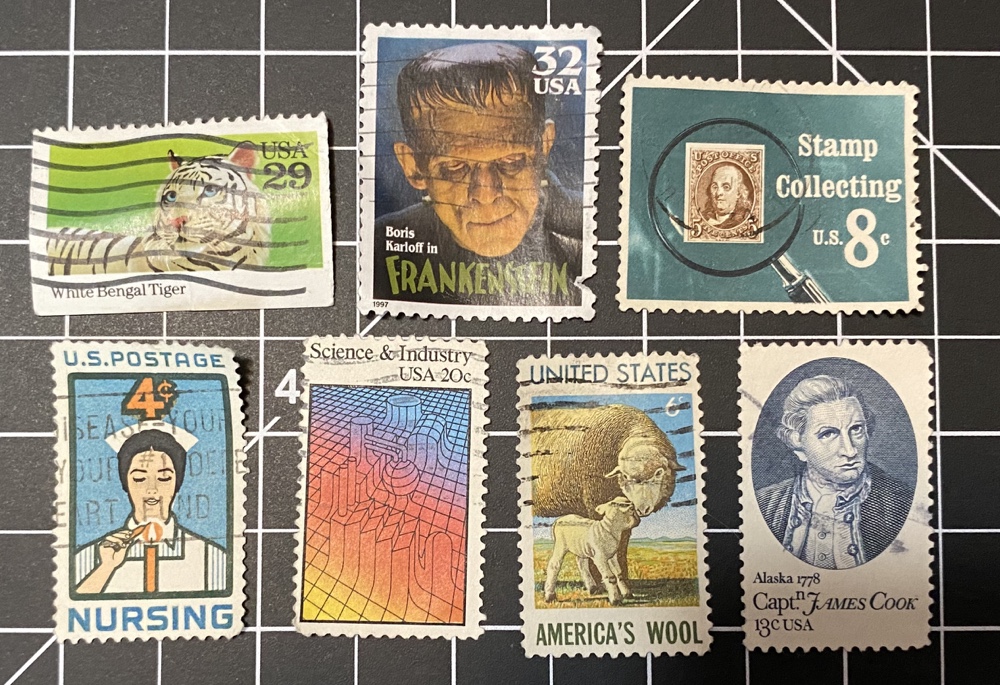
America issues a lot of attractive stamps today, but looking at this group it’s clearly been the case for a long time. The wireframe science stamp is a favourite, and I’d love to put those Frankenstein stamps on some postcards!

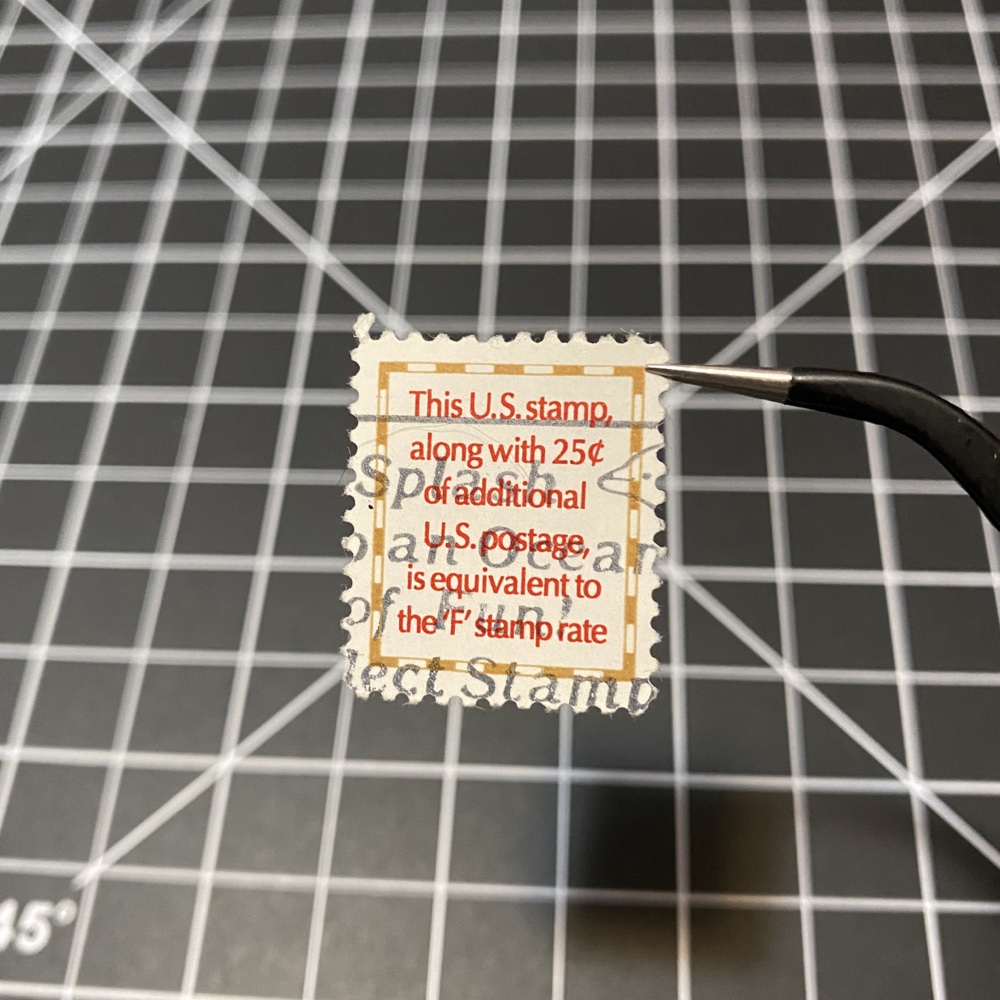
This guy stood out for obvious reasons. So many words and it doesn’t even mention the cost of the stamp itself! It’s a 4c stamp issued in 1991 when postage increase from 21c to 25c. Ugly as hell, but curious (since 4c stamps existed then and still do today).

Now I’m sure most of these stamps are common trash to a serious collector, but for someone with no ‘collection’ (such as myself) it’s a good selection and absolutely worth $8 in my opinion. Based on the mixed stamps alone, I was happy with his stamp bag.

But what about the 50 unique dinosaur stamps? Alas this entry has been too long already; let’s save the contents of that enticing yellow dinovelope for next weekend! (And no, I haven’t opened it yet so I’m waiting too!)

See you then 🙂