Category: Time

My Collection: NES

I owned an NES way back in prehistory (ie. ‘The Australia Era’) and – at the time – played to death all the classics like Super Mario Brothers, Zelda 1 and 2 and Metroid. A couple of years after arriving here in the US, with the SNES in decline and the Playstation and Saturn already released I bought my second NES. It was September 24, 1995 to be exact, cost me $49.99, and I also spent an additional $90.50 buying up a library of 15 games.

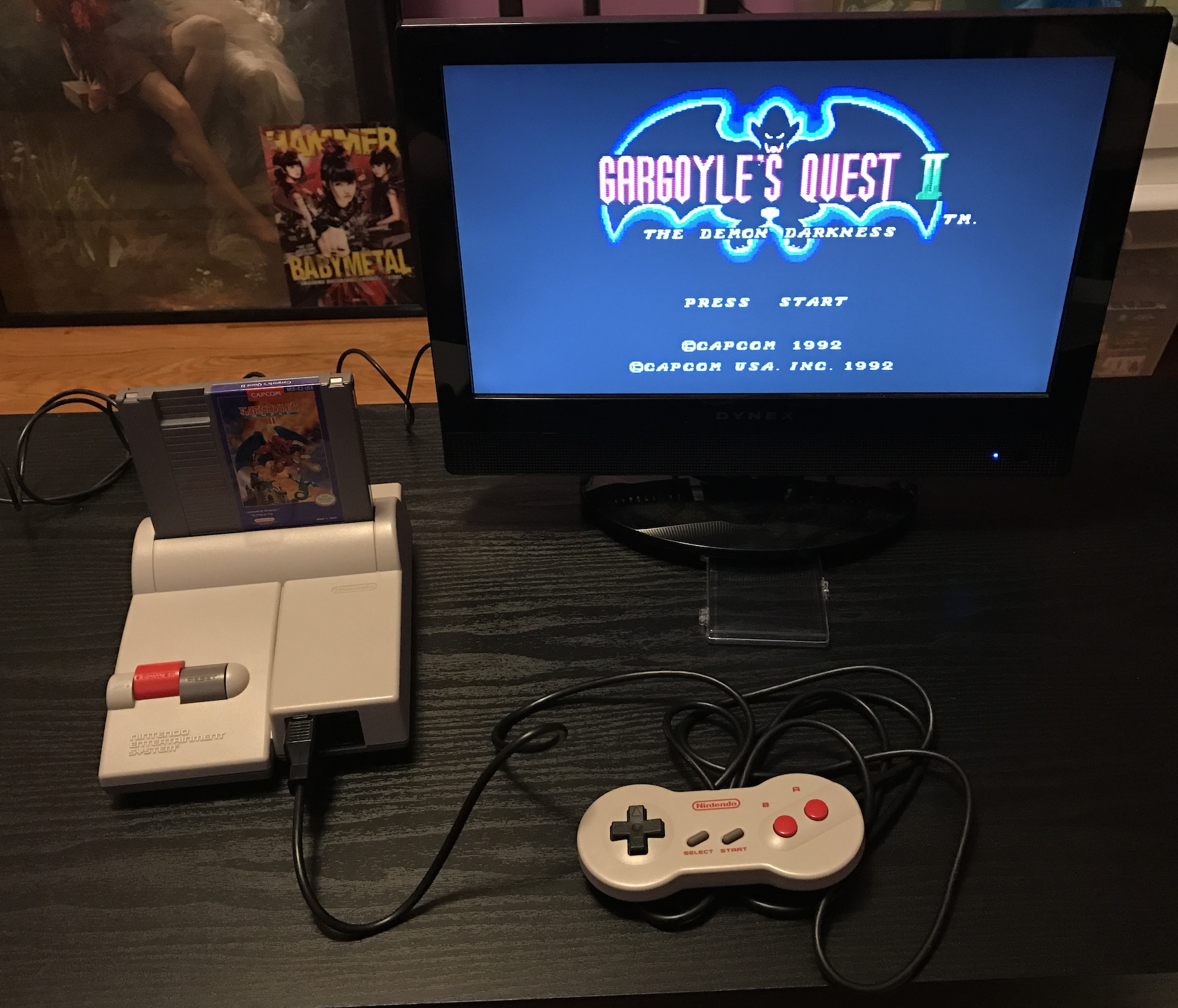
I unpacked the NES from deep storage last weekend for a whirl and was pleasantly surprised to find that it still worked, that I actually had a TV that I could connect it to (a non-trivial exercise in this day of HDMI-only ports) and that – most incredibly – the batteries on every single game still worked!

The NES was released way back in 1983, and discontinued in the USA in 1995. I actually bought mine in a fire-sale after it had been discontinued, and therefore mine is the last version of the console ever manufactured. It’s amusing to me that I owned both the first and last versions, and wish I still had the one I bought back in 1987 (when it was first released in Australia).

After the initial flurry of purchased in September 1995, I bought the odd game here and there over the next six months and then stopped. I remember playing it avidly during this time, and the save files on my games support this, with most of the RPGs having maximum-level parties saved. But I suspect somewhere during 1996 I packed it into storage and moved on to the 16-bit CD-based machines.

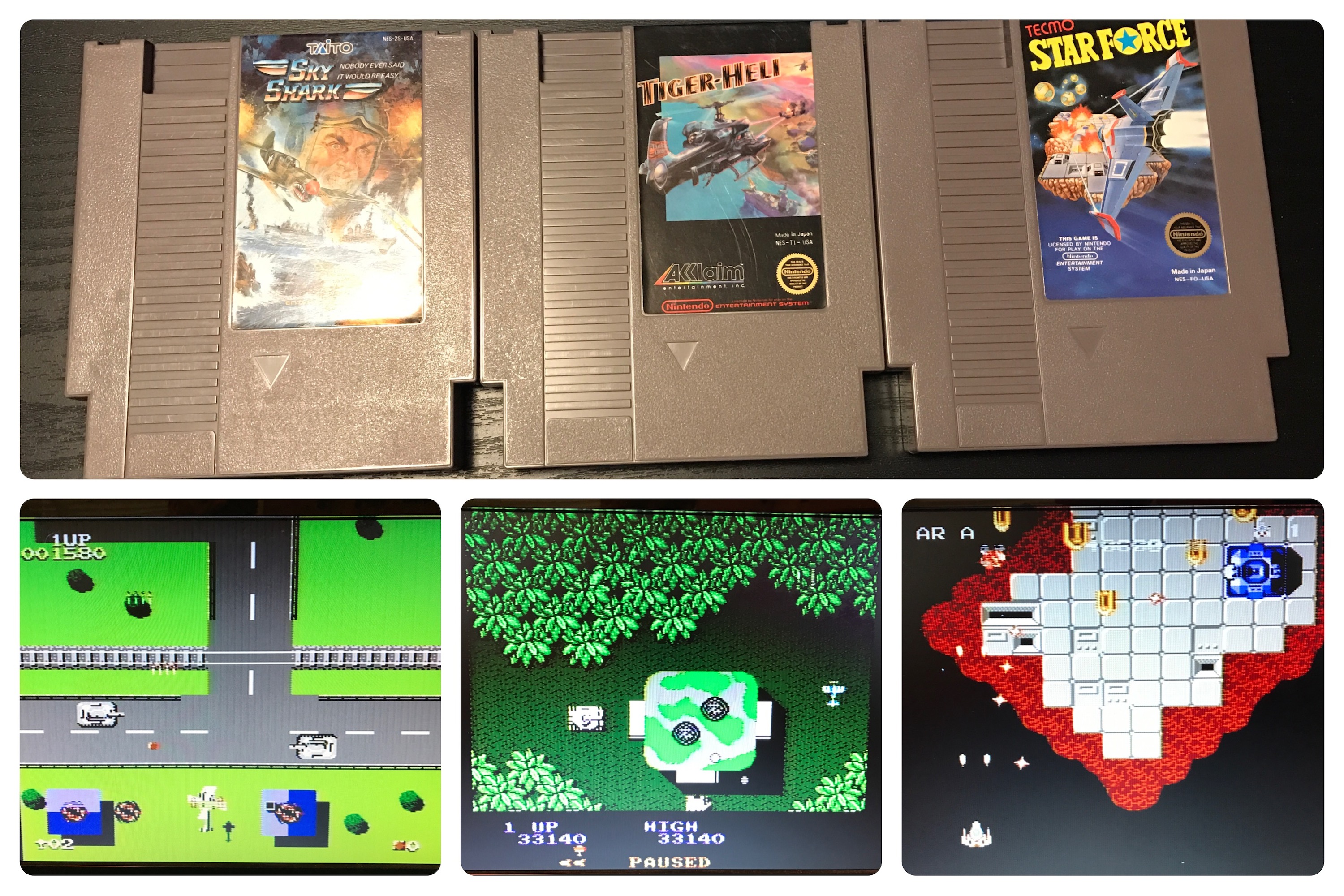
With the unusual exception of Christmas 2002 (on which day someone gave me Ultima 2 NES for a gift!?) I hadn’t purchased any new games until a couple of weeks ago, when I got these guys for $5 apiece:

This was mostly because I watch lots of retro gaming online, and wanted to try out some shooters on the NES. These three are all ports of fondly-remembered arcade games and are brutally difficult on the NES. I was laughing out loud as I was in some cases getting game overs within a minute of starting, and remembering how such difficulty was the norm rather than the exception in those days 🙂

Then I dug out the RPGs…

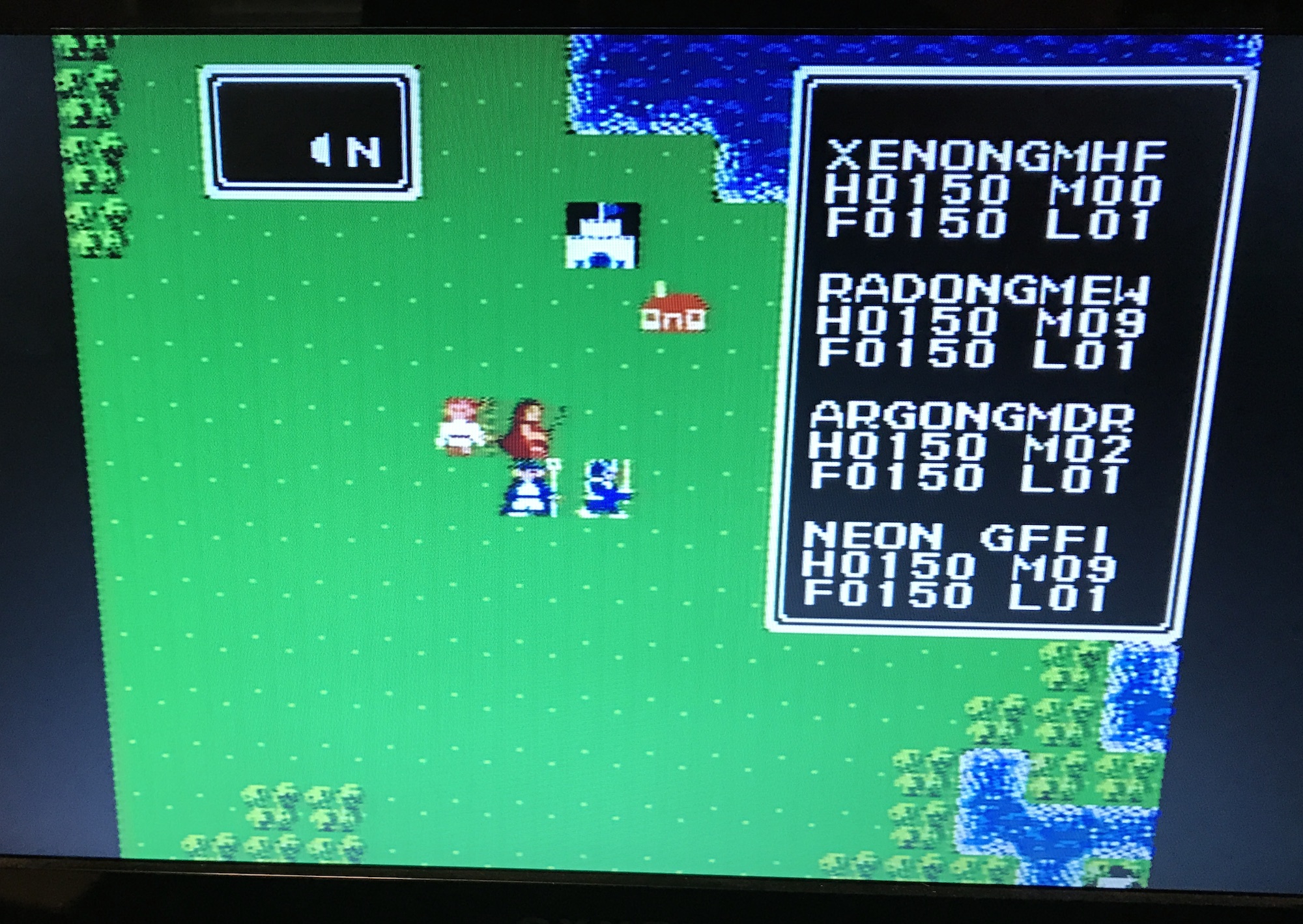
That’s my actual party in Ultima 2, strangely named after the noble gasses! The game is a reasonably faithful port of the old PC classic but runs so slowly as to be almost unplayable by todays standards. I found this to be true for almost all of the ‘CRPG-type’ games (such as Bards Tale, Ultima, Wizardry etc.) and since the games can’t be accelerated when played on original hardware I doubt they hold much appeal today.

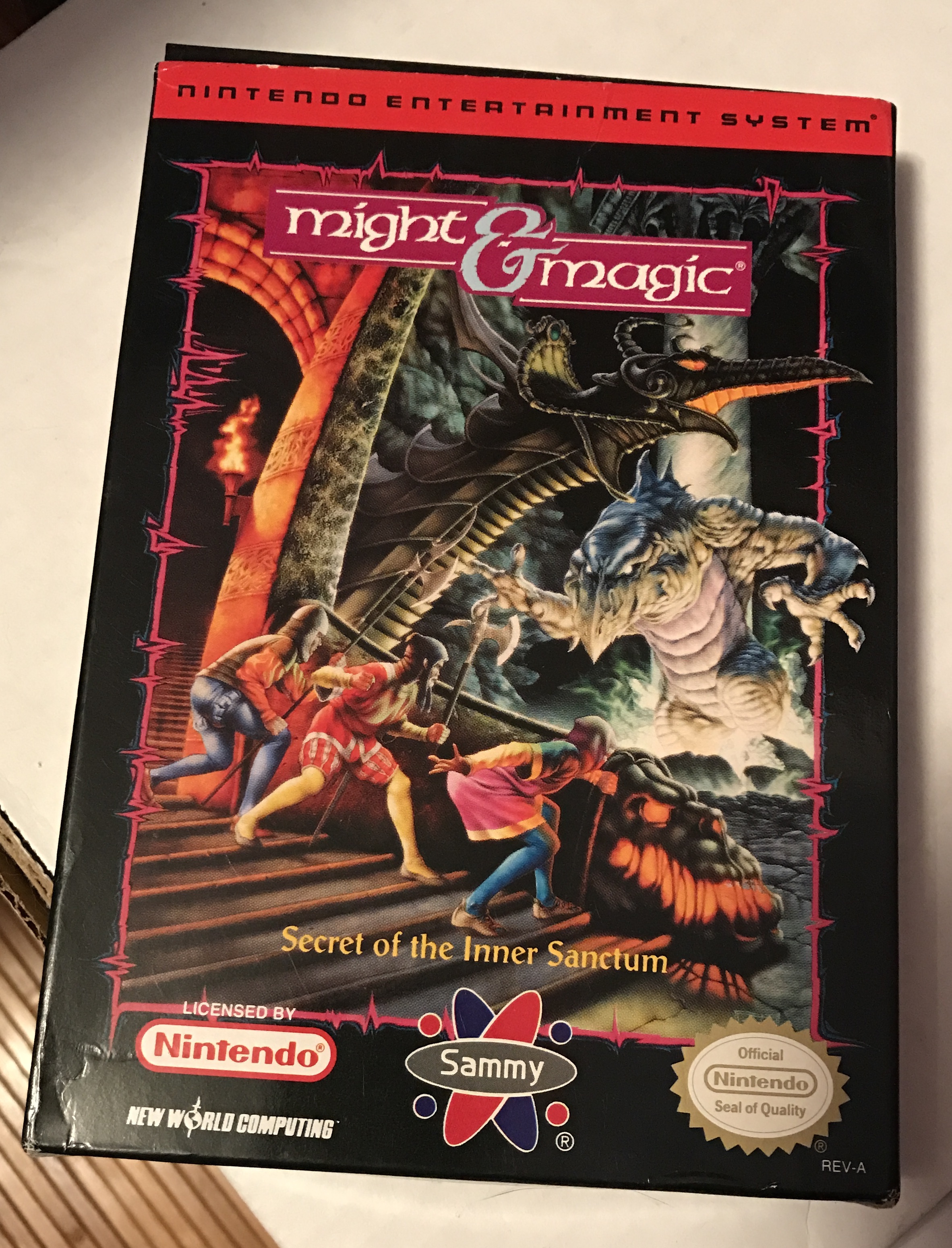
There are however certain exceptions, such as this still-playable and wonderfully-packaged Japanese installment in the Might and Magic series:

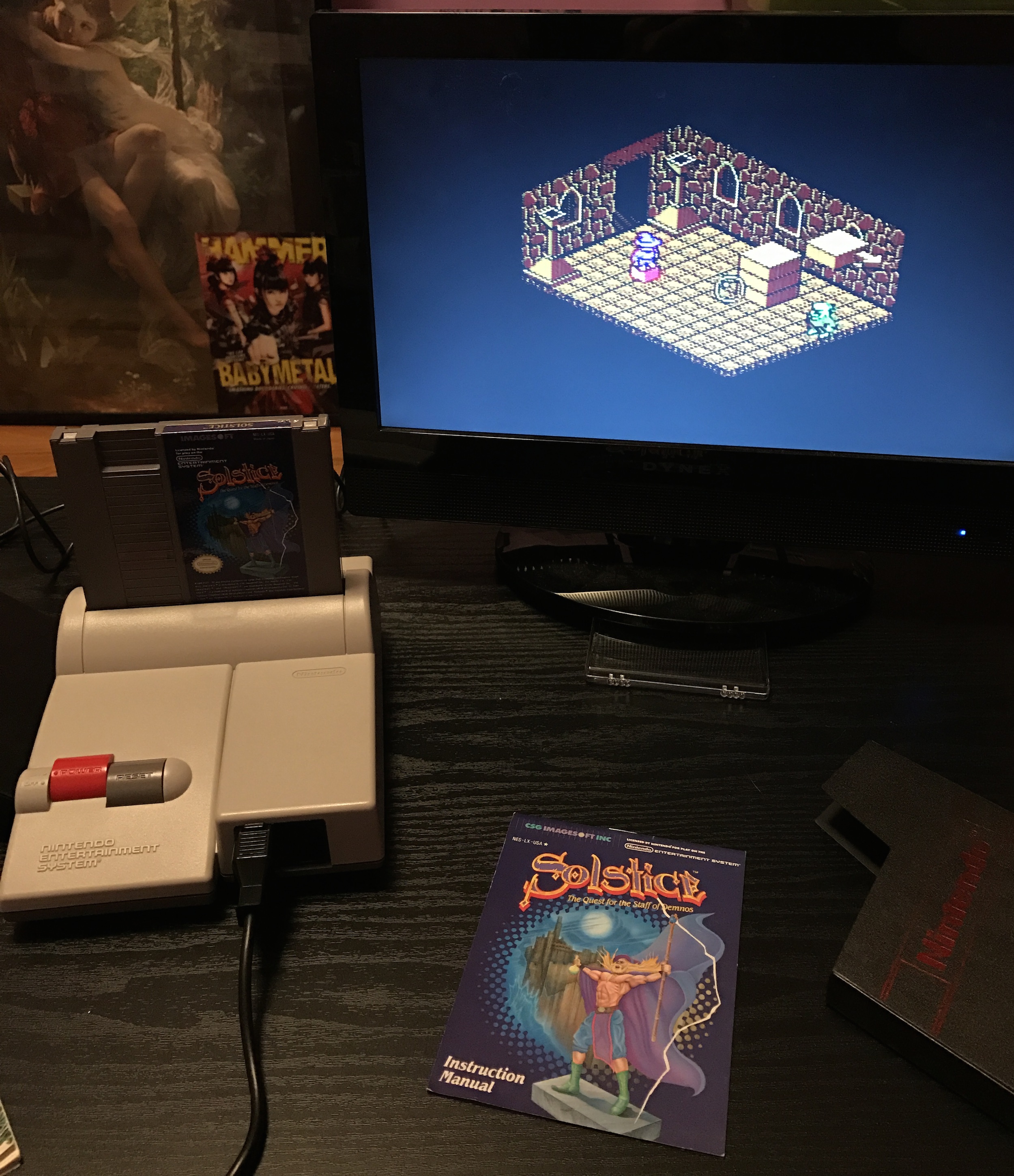
Or Solstice, a game that has become a bit of a cult-classic among certain aging ‘isometric‘ fans 😉

This latter one is ludicrously difficult, and yet I recall spending hours upon hours playing it way back when!

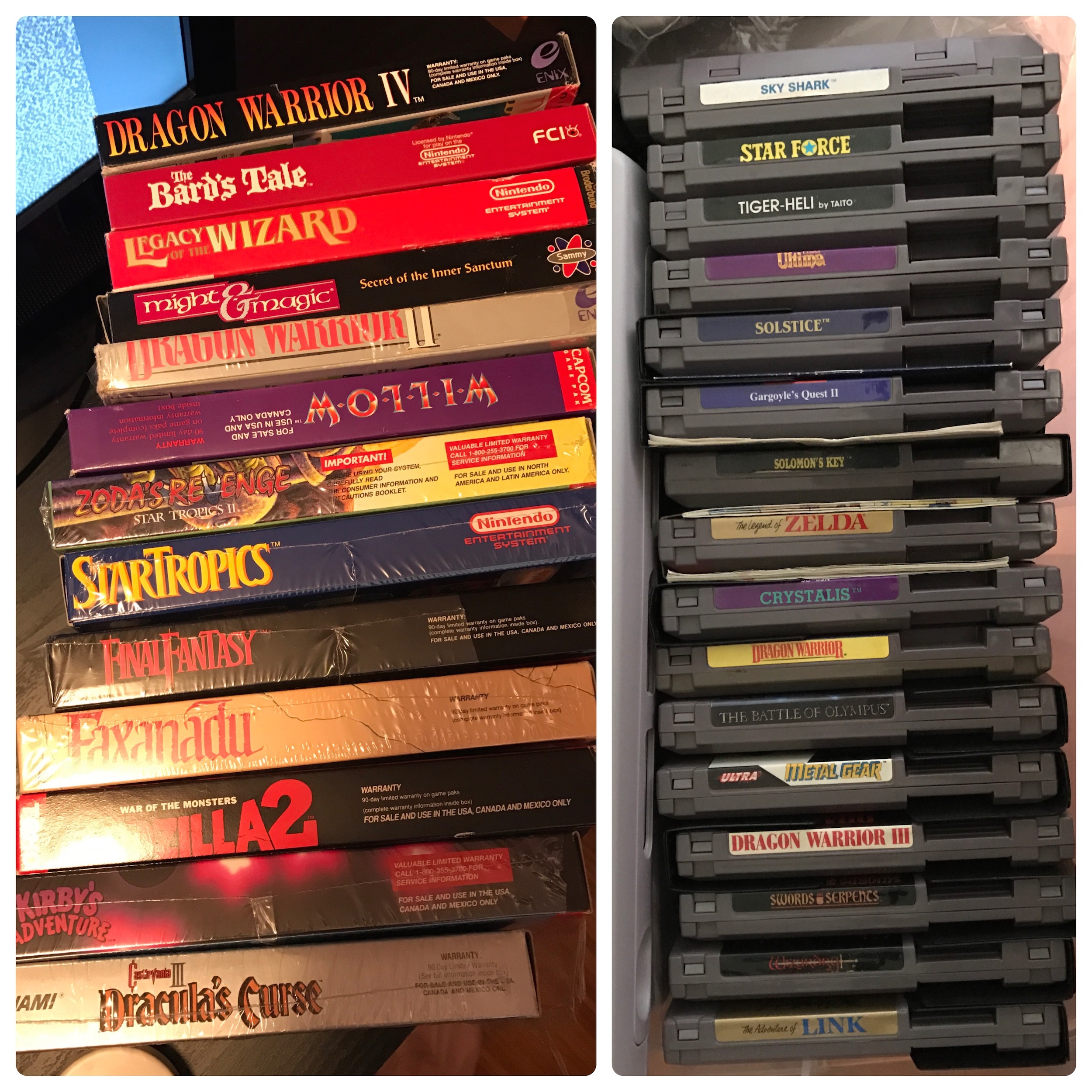
Here’s a photo of most of my NES library:

Almost everything in the above photo cost me $5, with a few (DW4, Startropics 2, FF1) costing $10-15. About half of the boxed games were new (you can still see the plastic wrap on many) and include all the manuals, maps etc. Needless to say these are in pristine condition. Even many of the used games came with most of the inclusions as well, and everything in the photo still works and (if applicable) has a working battery.

As with much of my game collection a lot of this material has gained value over the years. While I didn’t exhaustively check, Castlevania 3 as an example cost me $5 new (the price tag was still on the wrapper!) and now would fetch twenty times that.  Amusingly my most ‘valuable’ game may be Godzilla 2 (which was also purchased new): boxed copies on ebay sell for over $200!

If you’re wondering about the major gaps in my collection – SMB, Metroid etc. – I have ports of them on other systems so never felt the need to get them for the NES. As you can see I prioritized RPGs, and as such ended up building a collection worth a nice amount these days. But I’ve got no plans on selling it, and back into storage it will all go.

By the way if you have any requests for the next one of these posts let me know. There’s a great many systems left to cover (basically I own everything since the NES excluding the 360 and XBox1) and I do plan on getting to them all eventually.

Bonus Game Included (on c-side)!

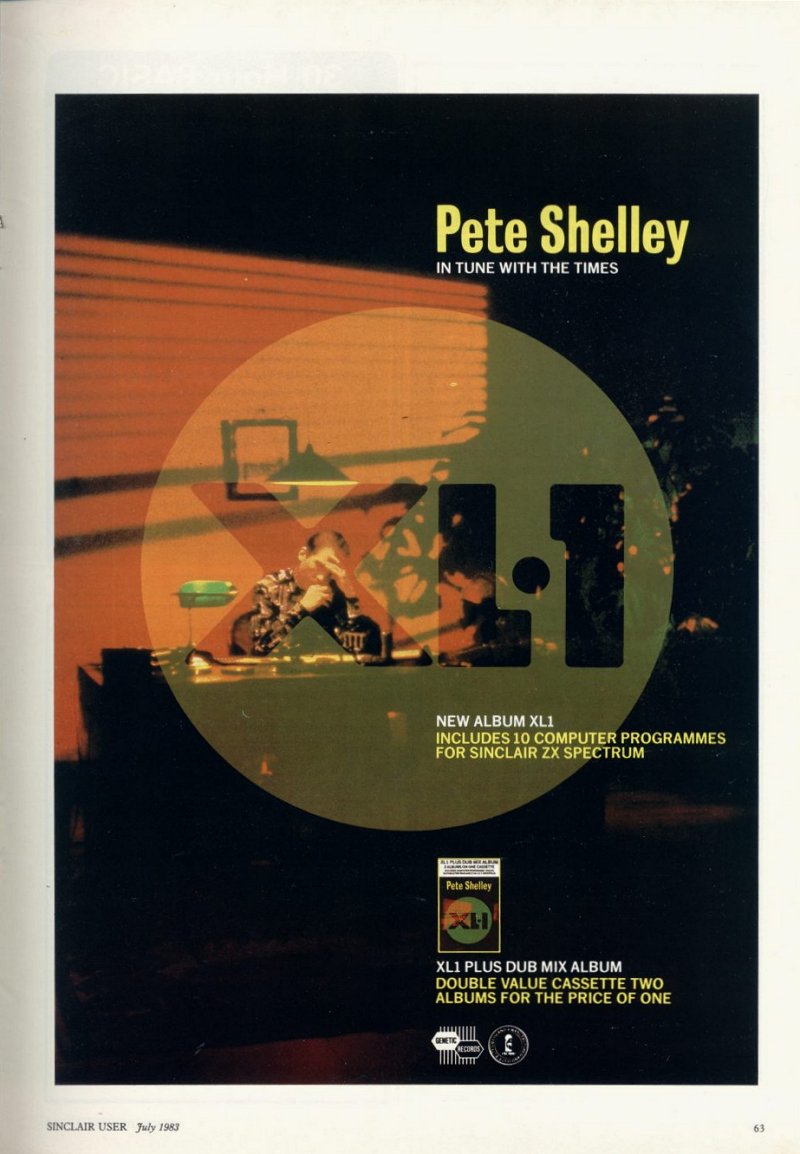
Back in 1983, Pete Shelley (ex-Buzzcocks) released his second solo LP called XL1. Despite having great success with his first album, mostly due to the hit single Homosapien, this followup wasn’t very successful. And yet it was a bit of a landmark album for a very unusual reason:  the album came with a piece of ZX Spectrum computer software.

For those unaware, games were often distributed on tape in those days. Rather than using digital media, computers often input data via an audio signal, which therefore meant using cassettes or (much less commonly) vinyl records to distribute software. This was the heyday of the 8-bit games industry, and more cassettes containing software were being sold than containing music. It was a natural idea for a band to include software on a record… but Pete Shelley was the first to do it.

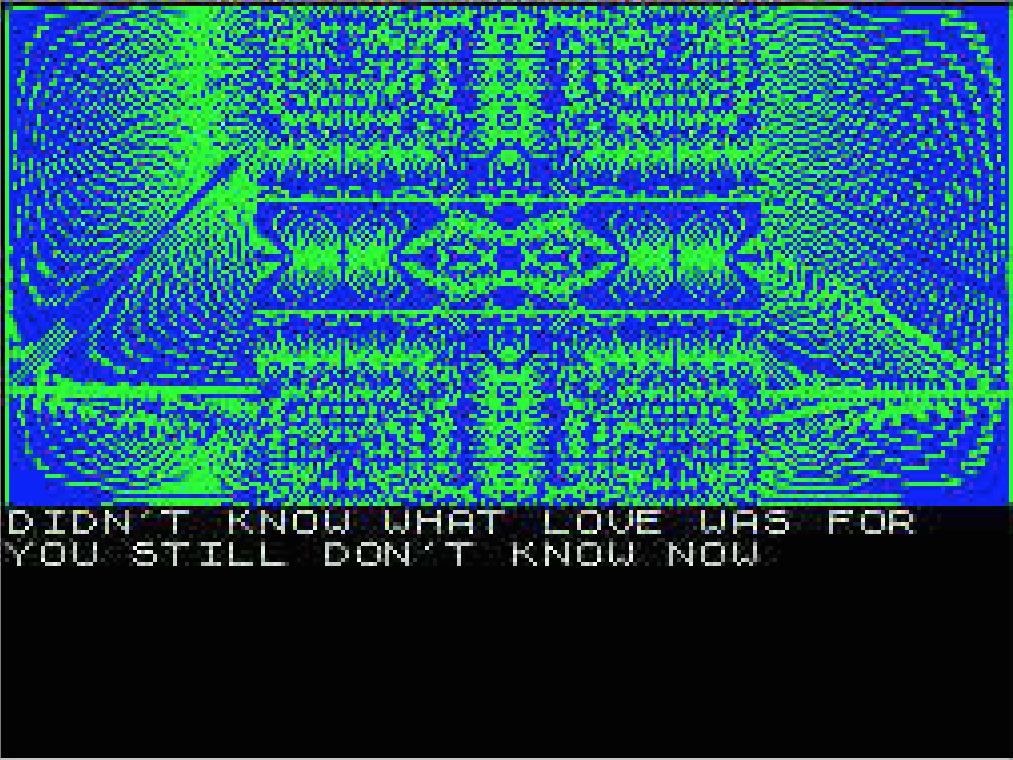
While the program was nothing more than a visualizer, it may have been the very first visualizer! The idea was you’d load it up on your spectrum and start it playing at the same time as the record, and then watch the pretty visuals play out on the screen while you sang along with the lyrics. Here’s the whole thing on Youtube (remember the software itself was silent):

Here is a fascinating account of the production of the software by the guy that made it. I particularly like how they put out a lock-groove on the vinyl version to save speakers (and ears!) since the raw audio of the code is just screeching white noise. Amusingly, in researching this post i found a forum post where someone described returning the cassette to swap it for the version without the game since he hated having to fast-forward through the screeching sound of the software every time he listened to the album 🙂

I can’t find any reports on whether this was a success, or even made a ripple in the games/music industry. I’m sure it was a novelty, but I wonder how many Pete Shelley fans made use of this even in those days? Either way it hardly set a precedent, and I know of no other examples of a band including visualizers on their albums…

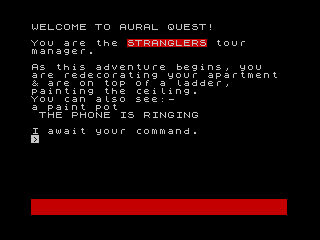
In the early 1980s text adventures were a big deal, and successful enough that there was even a ‘do it yourself’ program called The Quill that allowed anyone to make their own game. One such person that did was Dave Greenfield, member of the band The Stranglers. He wrote a game called Aural Quest that was included at the end of side two of the (cassette only) versions of their 1984 album Aural Sculpture:

It’s a long-ish game (for a text adventure) in which you play the manager of the band as they tour around the world (starting in the UK, via Europe to Tokyo and eventually Brisbane) and get into misadventures. It was apparently quite challenging and since it was mostly ignored by the gaming press in those days players must have had a terrible time beating it without assistance. Here’s a video of a playthrough:

As best I can tell, this was the first and quite possibly only game actually included on an officially released album. Certainly it was the only game released on an album in audio format; if software was ever included these days it would be as a digital file on the CD. (Let’s ignore for the fact that even CDs are mostly dead…)

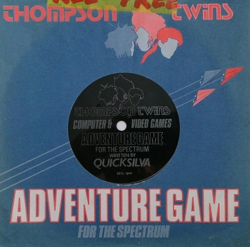
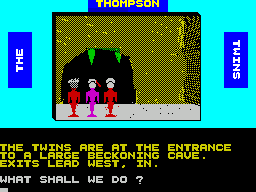
As a last curiosity, how about the Thompson Twins game? They were a synthpop band from the early 1980s, and in 1984 a ZX Spectrum game based on their single Doctor Doctor was released on flexi-disc only as a promo attached to a computer games magazine:

The game was a graphic-adventure, quite short and apparently quite bad. It lives on via emulation and you can see a full playthrough of the c64 version on Youtube:

This release is remarkable for many reasons:
– The fact that it was ever made in the first place
– The fact that it was only distributed as a free magazine promotional item
– The fact that it was distributed on vinyl disc rather than cassette

This last fact is notable: users would have had to record the disc onto cassette first before being able to load it into their computers. This wouldn’t have been difficult, but is just an unnecessary step and is probably what led to flexidisc software distribution never catching on! (Wikipedia has a good article on this game including the development, and additional research suggests the oft-delayed c64 disc version is extremely rare these days.)

I was a Thompson Twins fan in those days. I would have played this! I suspect the flexi was stripped from magazine covers in Oz though, and I can barely believe any Australian readers sent off for the c64 disc? Adam… did you?

And that’s that. I became curious about the idea of 8-bit band-related software-on-albums a while ago and this post has been percolating for some time. But despite my attempts this is all I can find. There were of course unofficial items (such as  Jethro Tull and Beatles adventures written on The Quill) and actual games based on bands (Frankie Goes To Hollywood) but none of these were distributed by the band or on vinyl record.

However… there was another unusual method of software distribution in the 1980s, in some ways even stranger than including code on vinyl albums. Maybe that’ll become a future post…

It’s Time To Address The Paranormal

I’ve had a lot of discussions recently with my students and coworkers on the topic of the paranormal, and I’m intrigued by how many of them believe in the existence of such matters. While most people are skeptical, others have simultaneously expressed belief in very specific things (mermaids, psychics) and a small few don’t deny anything. One student yesterday told me “I believe in everything!”

For the most part I simply ask and am happy to hear their responses without commenting. I think they know I don’t believe in any most of it, since often they pose questions asking me why ‘things’ can’t exist (as opposed to whether I believe them or not). But enough people have asked me about these topics I thought it was time to address it all here.

So here we go, in no particular order…

Ghosts aren’t real, period. There is absolutely no evidence for them, there never has been, and there never will be. There is no theoretical basis for their existence, and they occupy no part of the world that we don’t understand. Ghosts are – have always been – a figment created by human fear of death and the afterlife. Wouldn’t it be nice if our dearly departed weren’t gone after all? Of all the topics in this blog, ghosts are the most widely believed with about a third of westerners thinking they are real (and about a fifth of believers claiming to have seen one).

So if ghosts aren’t real but millions of people believe they have seen (or felt) one – including an intelligent, well-educated coworker of mine – what is the explanation? There are a few, but my favourite is the tendency for the brain to find patterns where none exist. Very few people have ever reported seeing ghosts clearly in broad daylight when they were wide awake and calm. They are more likely seen at night or in very poor light, when the viewer is alone and in a state of heightened tension. Suggestible if you will, like the haunted card deck.

Cryptids (excluding bigfoot) might be real. A cryptid is an unknown animal (although some expand the definition to include sentient creatures) and while the most famous examples include lake monsters, bigfoot (see next), chupacabra and ‘Beasts of Exmoor’ there are also much more fantastic (not to mention unlikely) examples such as Ningen, Bunyips and the Congo river dinosaur Mokele-mbembe (allegedly filmed by a Japanese expedition in 1988).

Though it pains me to say it, most of these don’t exist. I say this because as a youth I was slightly obsessed with cryptids, and to this day have several volumes on the topic on a shelf in this very room. My particular forte was ‘sea monsters’ but despite sightings going back centuries none have ever been found, nor has any real evidence been located. Likewise for the other famous cryptids, most of which have been ‘seen’ far less than lake monsters.

And yet this is not a topic that can be easily dismissed. For years gigantic squids were the stuff of legend, but we now know they absolutely exist. These are the largest examples of ‘unknown’ creatures being recently discovered, but every year we find more and more hiding in dark corners of the world. Might there be a colony of large cats living in the wilds of England? Possibly.

The weird ones though, such as werewolves, unicorns, dragons and ‘cloud creatures’ that live permanently in the upper atmosphere are exactly as they seem: creatures of myth and legend. The most open-minded (some may say optimistic) cryptozoologists may entertain the possibilities of some of these being real (or at least based on real animals) but I remain firmly skeptical.

Bigfoot (also known as Sasquatch, Yowie, Yeti, Yeren etc.) isn’t real. Centuries of searching for these man-apes has produced no actual evidence short of dubious footprint casts and hair swatches that when tested have always been identified as known animals (such as elk or bears).

Most belief in bigfoot stems from the famous 1967 ‘Patterson-Gimlim’ film that has now been exposed as a hoax. In the years since there have been a few other notable claims of bigfoot’s authenticity, but none held up under scrutiny and all have since been confirmed as hoaxes. In fact almost ever single ‘sighting’ is quickly determined to be fake, and the very few that may have involved someone seeing an unidentified creature are almost always bears or other large woodland creatures.

And yet the myth continues. ‘Bigfoot hunters’ exist, sightings continue and (some) people believe. There is an overwhelming amount of scientific evidence and theory contradicting the existence of this guy, but as long as money can be made on hoaxes or TV shows about searching the legend will continue.

After all, aren’t we now living in a ‘post truth’ world?

UFOs and Aliens are a tricky subject. One certainly exists, the other probably doesn’t.

It’s been about 60 years since UFOs entered the public consciousness, but reports of unidentified objects in the sky have been around for centuries, long predating the invention of manned flight. It was in the middle of the 20th century that the mania took off though, and for a while there it must have seemed possible that an actual alien landing on Earth was imminent.

I’ve written about UFOs before since I find the topic intriguing, I’ve never seen one, and I believe those that have are experiencing the same sort of phenomenon that explains ghost sightings, and yet I think the possibility exists that they could exist. Here’s why:

  1. There’s nothing supernatural about them. If we put our minds to it, we humans could build a craft that could traverse interstellar distances.
  2. If we could build such a craft and survive the journey to another planet I’m convinced we would.
  3. This is the most compelling proof: Aliens certainly exist

I’ll get to that last point in a bit, but first more on the second. Just this week NASA announced the possible existence of life-supporting planets about 40 light-years from Earth. Suppose we built a craft that could safely traverse that distance. Using the known laws of physics – in particular with regards to energy  and relativity – it is very, very unlikely we could get to that planet in anything less than thousands of years (and likely far longer). So if we wanted to send our own UFOs to them, no-one could survive the trip. ‘Generational’ craft (that support communities that breed in space) are hardly a possibility given the social and technological obstacles, and suspended animation is science fantasy.

And yet, I am 100% sure that life on other planets exists. The universe is so impossibly – possibly infinitely! – large that Earth is just one tiny planet in one tiny corner of one tiny room. There are trillions upon trillions of other planets like ours out there and it is absurd to think that life evolved only on this one. It is equally ridiculous to suppose we are the most advanced life in the universe, which is to say if we ever could build interstellar craft than ‘someone’ else already has.

But those distances! Those energy requirements! The light speed constraint!

Yes aliens exist. Yes they may be able to build spaceships so advanced we perceive them as magical. But can they actually get here and have people actually seen them? I won’t say for sure, but it seems extremely unlikely.

I could go on, and discuss topics such as time travel, espers, fairies, crop circles and many more but I’ve covered the big ones and I think you could anticipate my thoughts on the others.

While it’s fun to believe – and in fact I want to believe – I’ve become a very rational man and simply don’t. What I do enjoy is the belief of others, so if you are convinced your home is haunted or you saw an alien on a windswept beach one evening then please, please, don’t let anyone tell you it didn’t happen. Memories like this are what makes us unique, and it would be a shame for anyone to ever take them away.