I left my hotel before 6 am this morning. I had a place to be and a long trek to get there. My destination was Nokogiriyama, a mountain on the coast of the southeast side of Tokyo Bay.
I’d wanted to visit for years, but it was either too hot, too cold or too wet on previous trips. Today the god of day trips smiled on me (in more ways than one perhaps, as will become clear) and I seized my chance!
It took two trains and a taxi – and over two hours – to reach the port of Kurihama, about 50 km south of Tokyo. Waiting for me there was this:
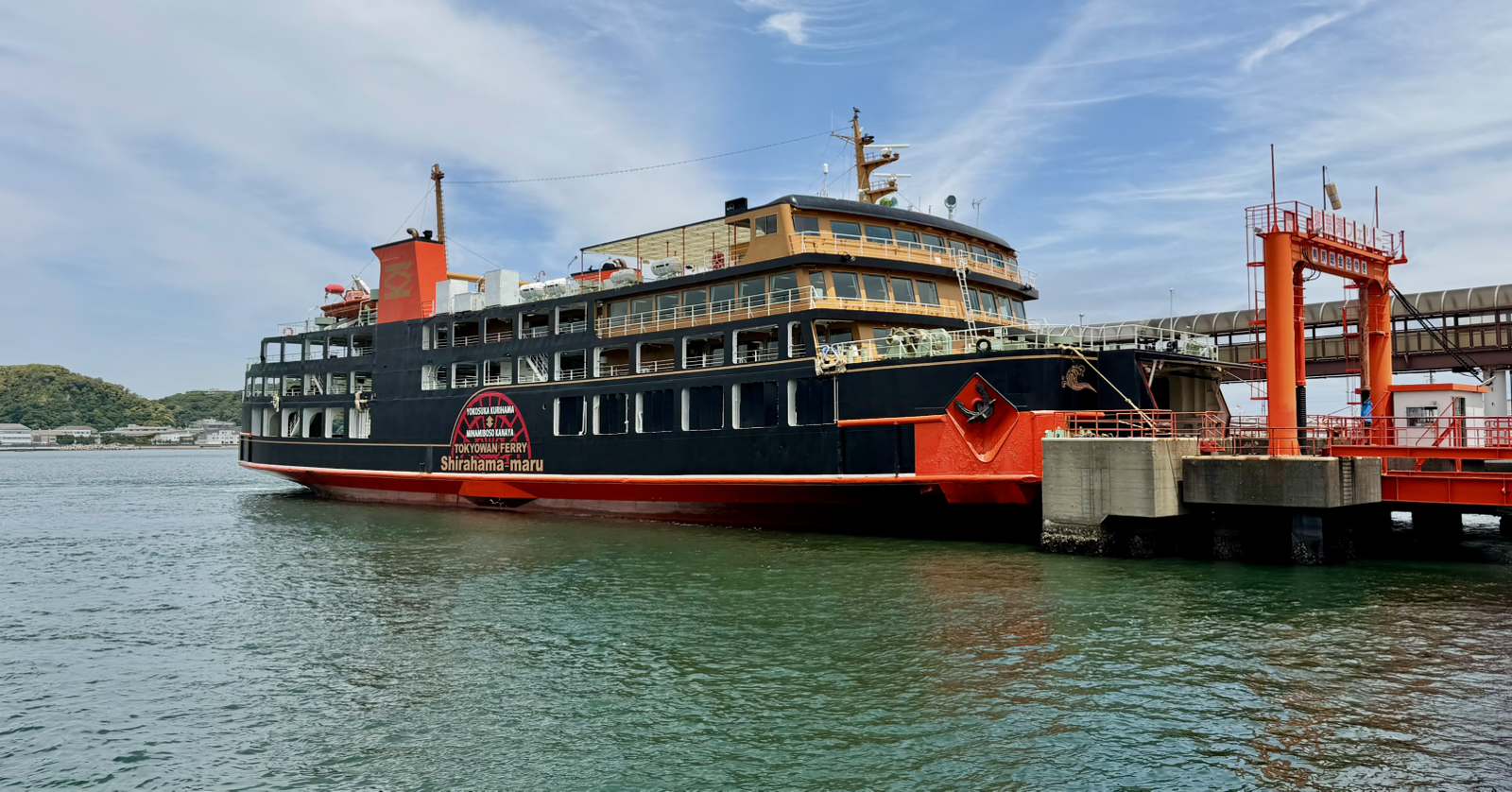
That’s the Shiruhama Maru, one of the two Ferris ran by the Tokyowan Ferry company. They do hourly crossings of the bay, each of which takes about 40 minutes. These are car ferries and quite large, and there’s seating for hundreds on board. It was very inexpensive: a return ticket only cost me ¥1100 (under $7).
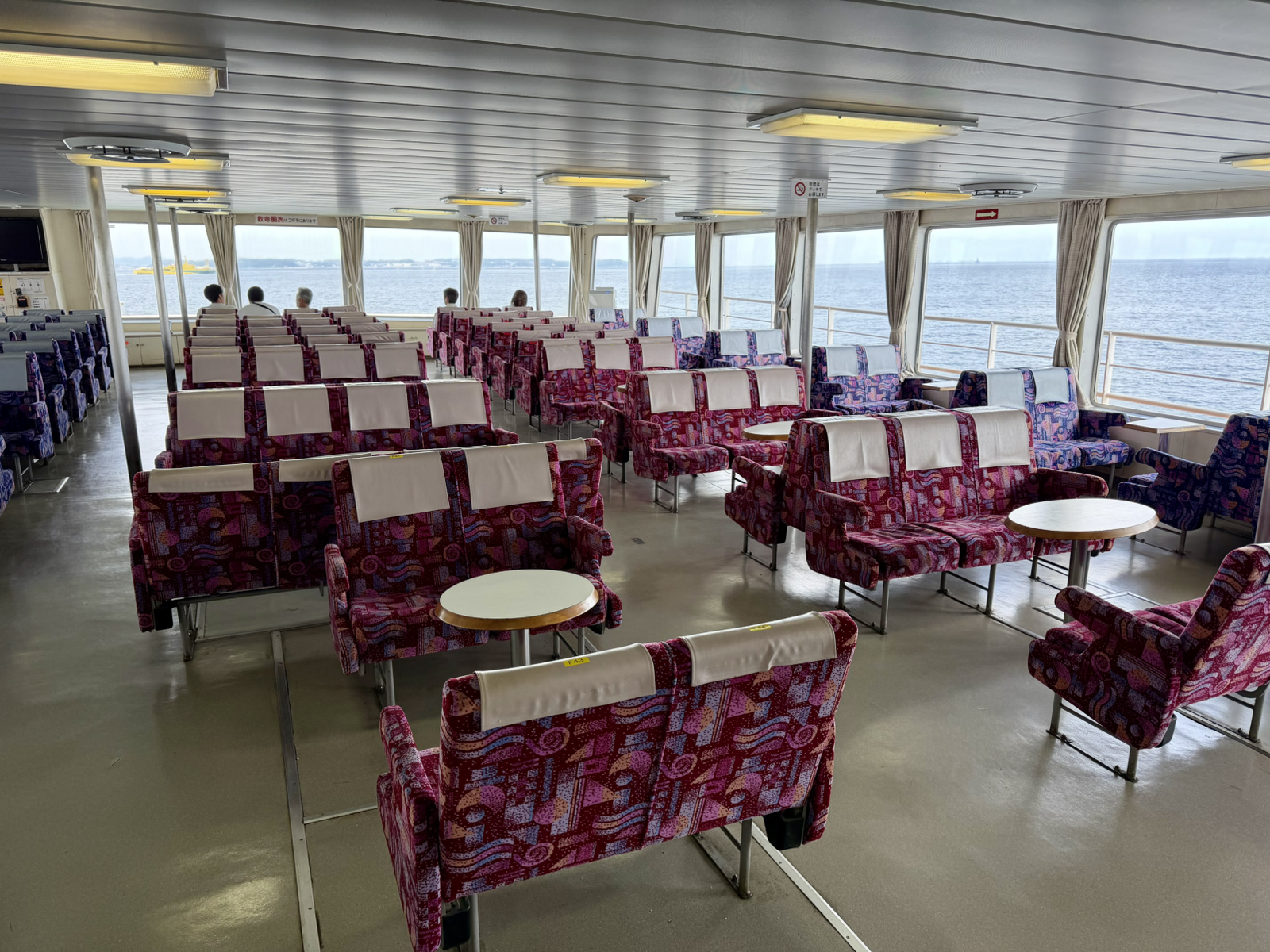
That’s one of the seating areas. There’s five levels on the ship, the lowest for vehicles and the top being open air. While I was boarding I saw a lot of bikers riding on together, so there must have been some event on the other side.
Incidentally I could have also gotten to the mountain by taking (three) trains around the bay clockwise, but don’t you agree a ferry crossing is more fun?
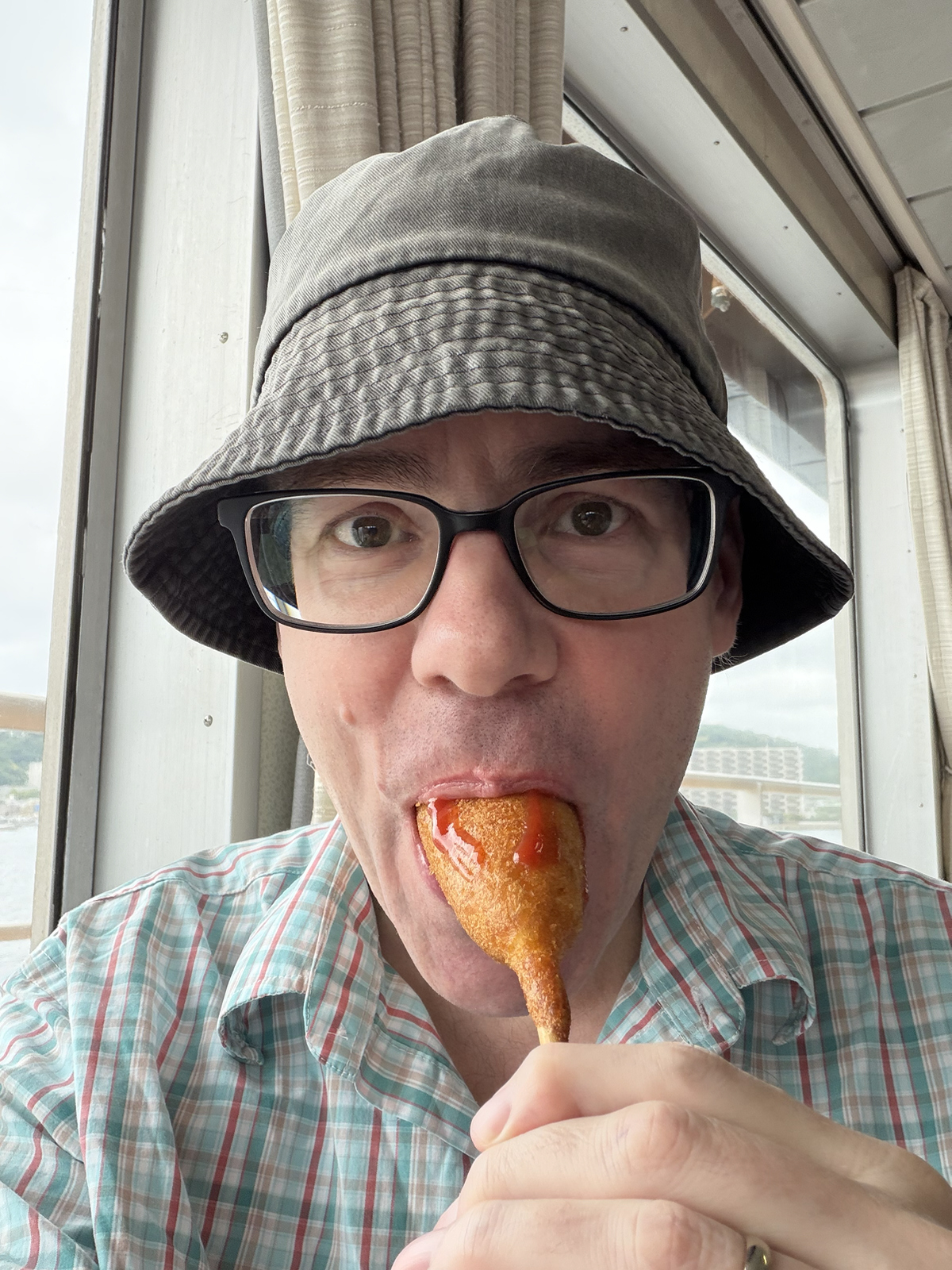
Even before we set out I bought a pluto pup corn dog and ate it in two bites. There was no concern of me bringing it back up from seasickness because I’m widely known as a salty sea dog. But had I known what I was in for I would have purchased and eaten all the corn dogs!
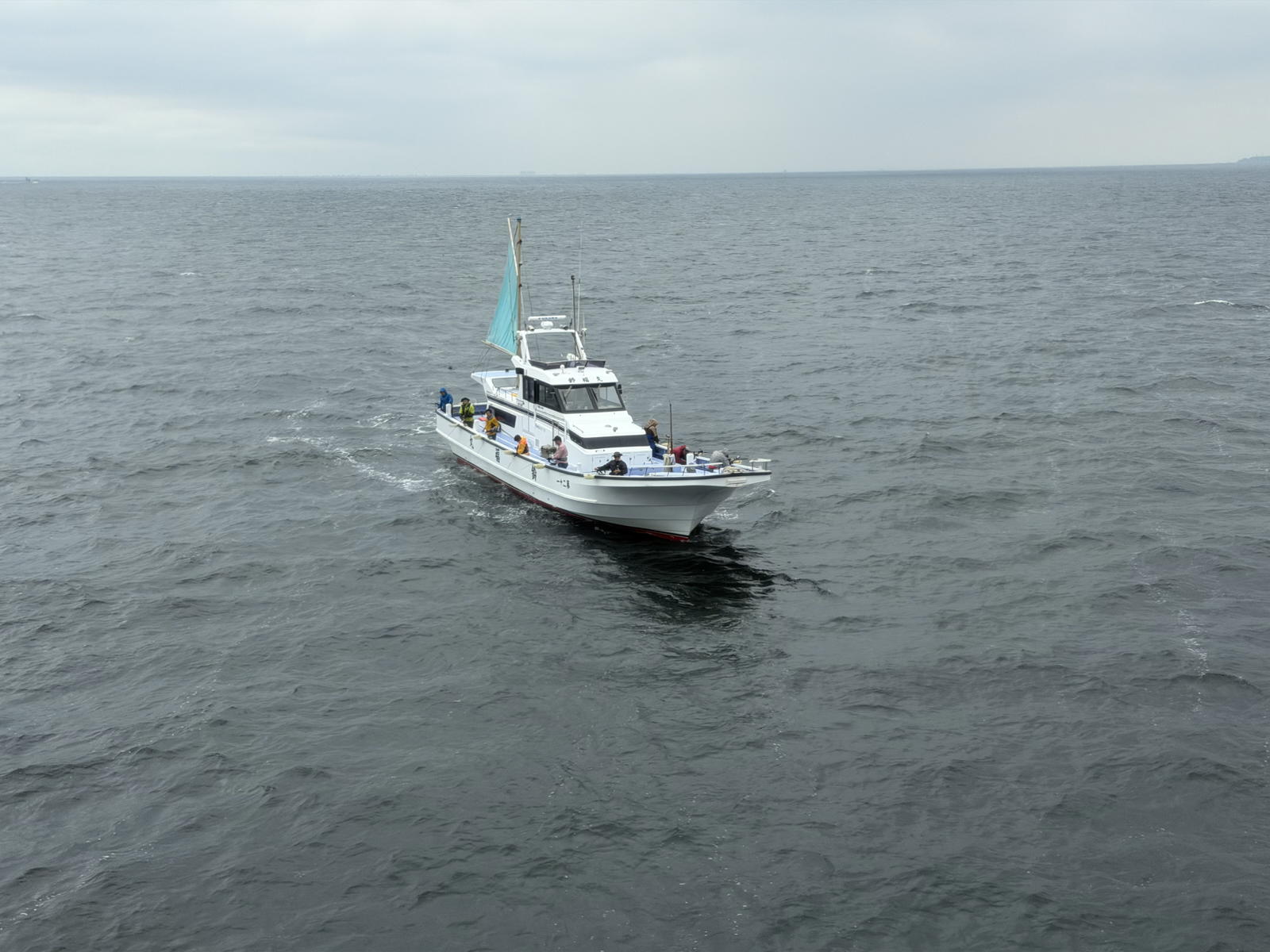
The bay crossing was wonderful. There’s a lot of traffic including many nearly identical small boats like the one above. Most of these had a half dozen or more men fishing off the sides so I assume that’s what they’re for, but I don’t know if there leisure or commercial.
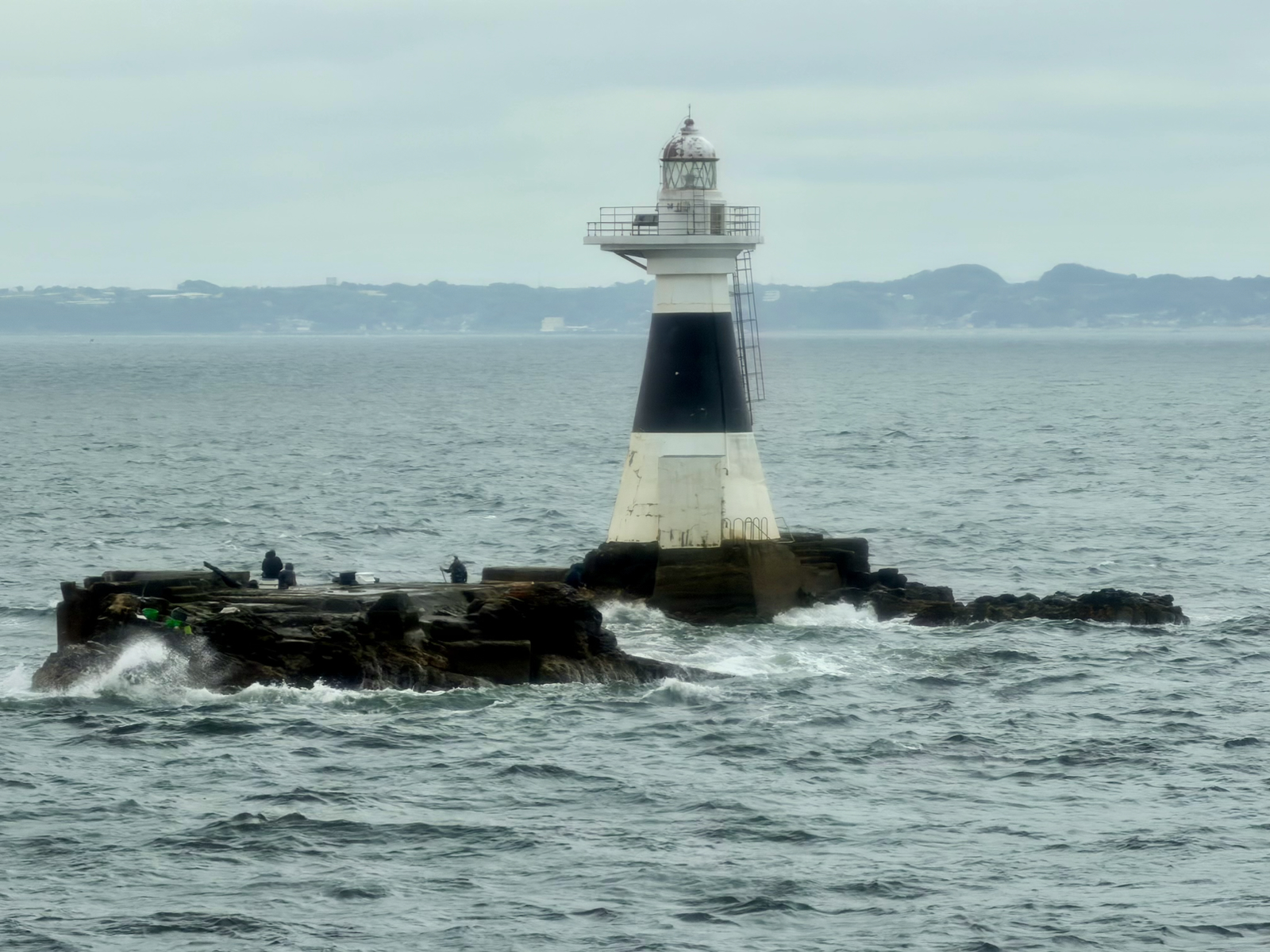
We passed a lighthouse with a barren rock adjacent. To my amazement there were fisherman on the rock! There was no sign of any boats, and it was still early (about 8 am) so I wonder how they got there and what time?
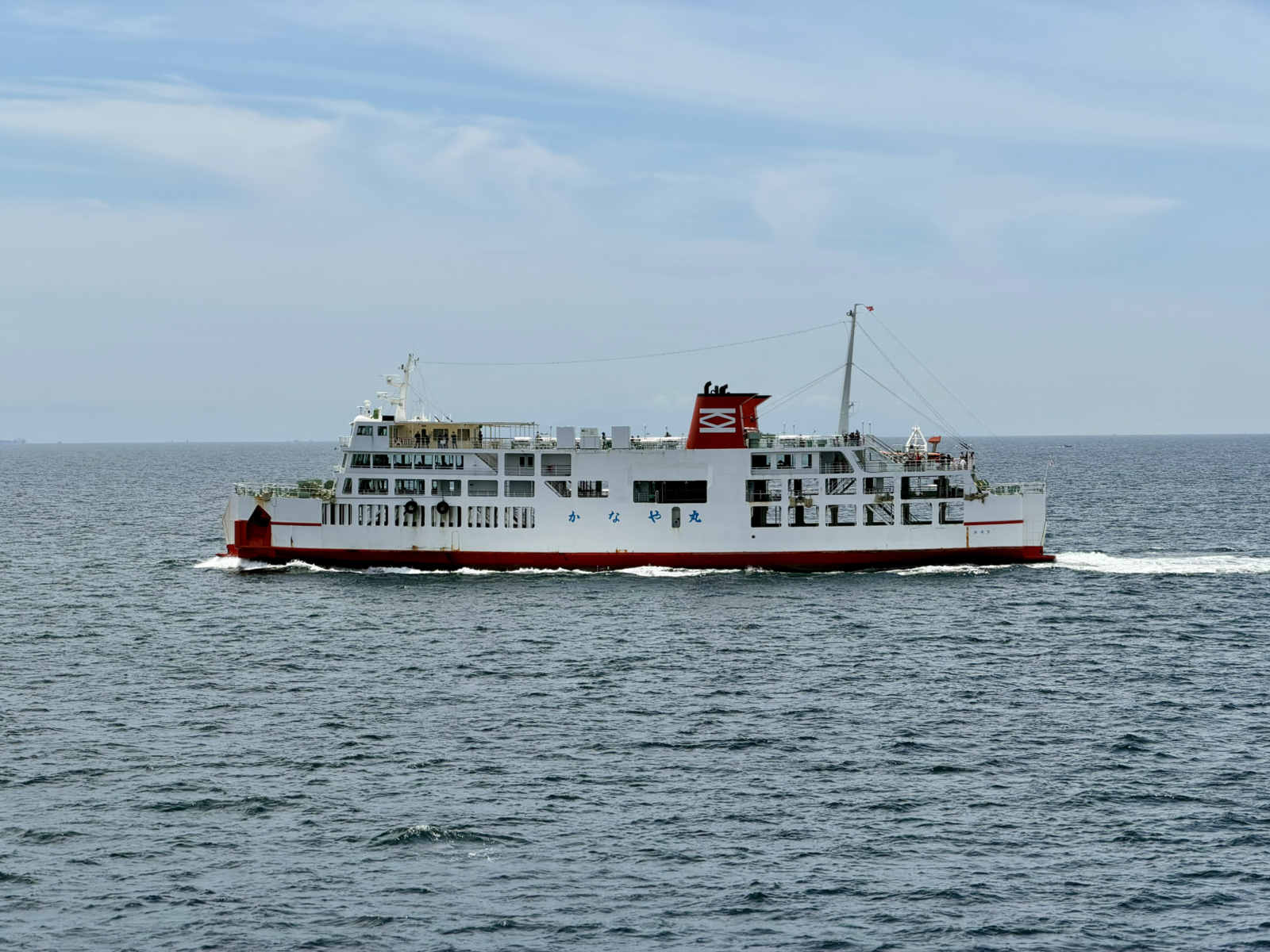
There’s the other ferry heading in the opposite direction. They keep a good distance between the boats: I zoomed in a lot for this photo.
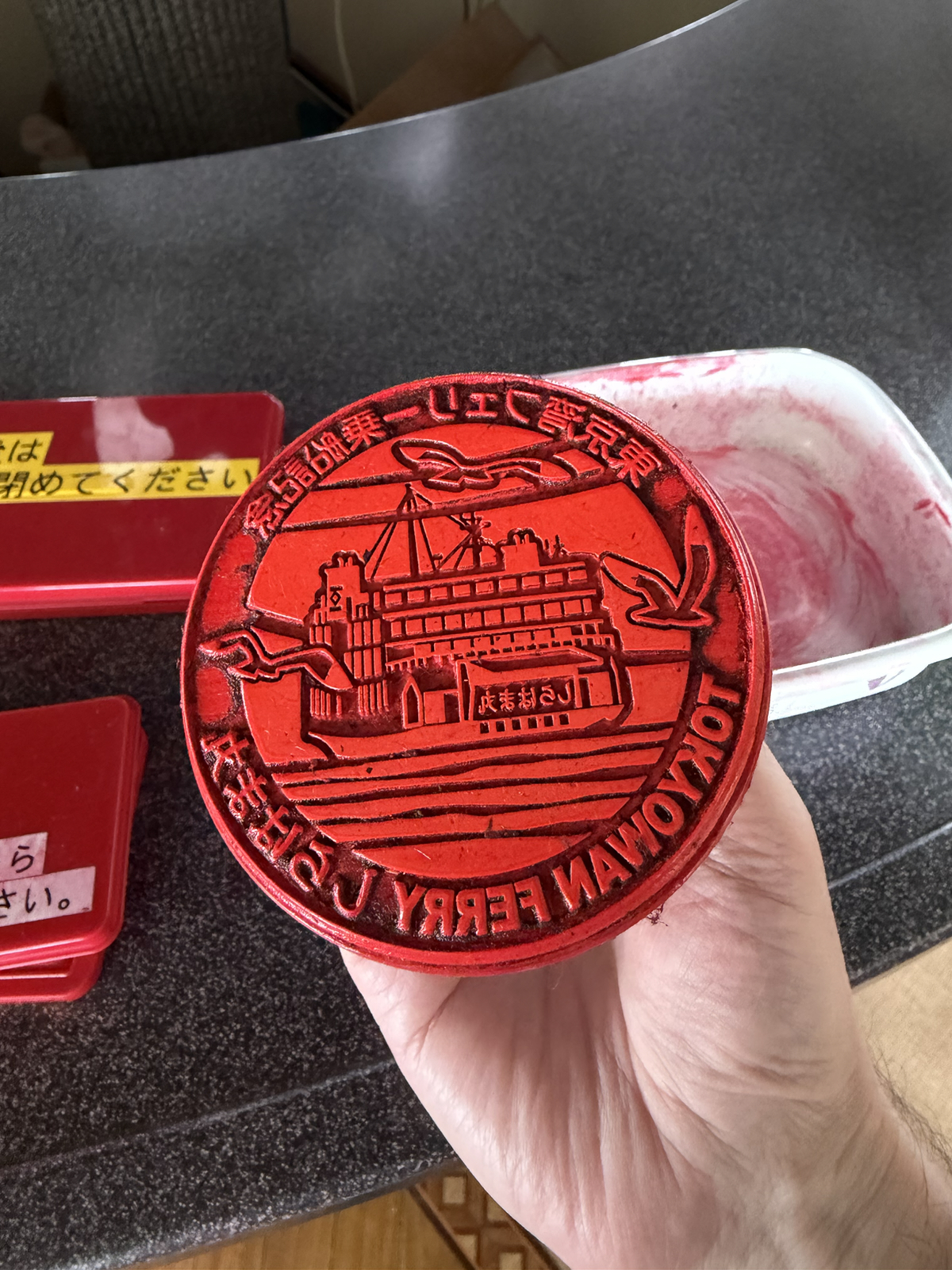
The boat had different stamps at each terminal and onboard. Some of you may get one on a postcard…
After docking at Kanaya port I walked about fifteen minutes to a ropeway station. There’s several ways to get to the top of Nokogiriyama including hiking and driving but I naturally chose the ropeway, even though I feared it was a bit of a copout. What little I knew…
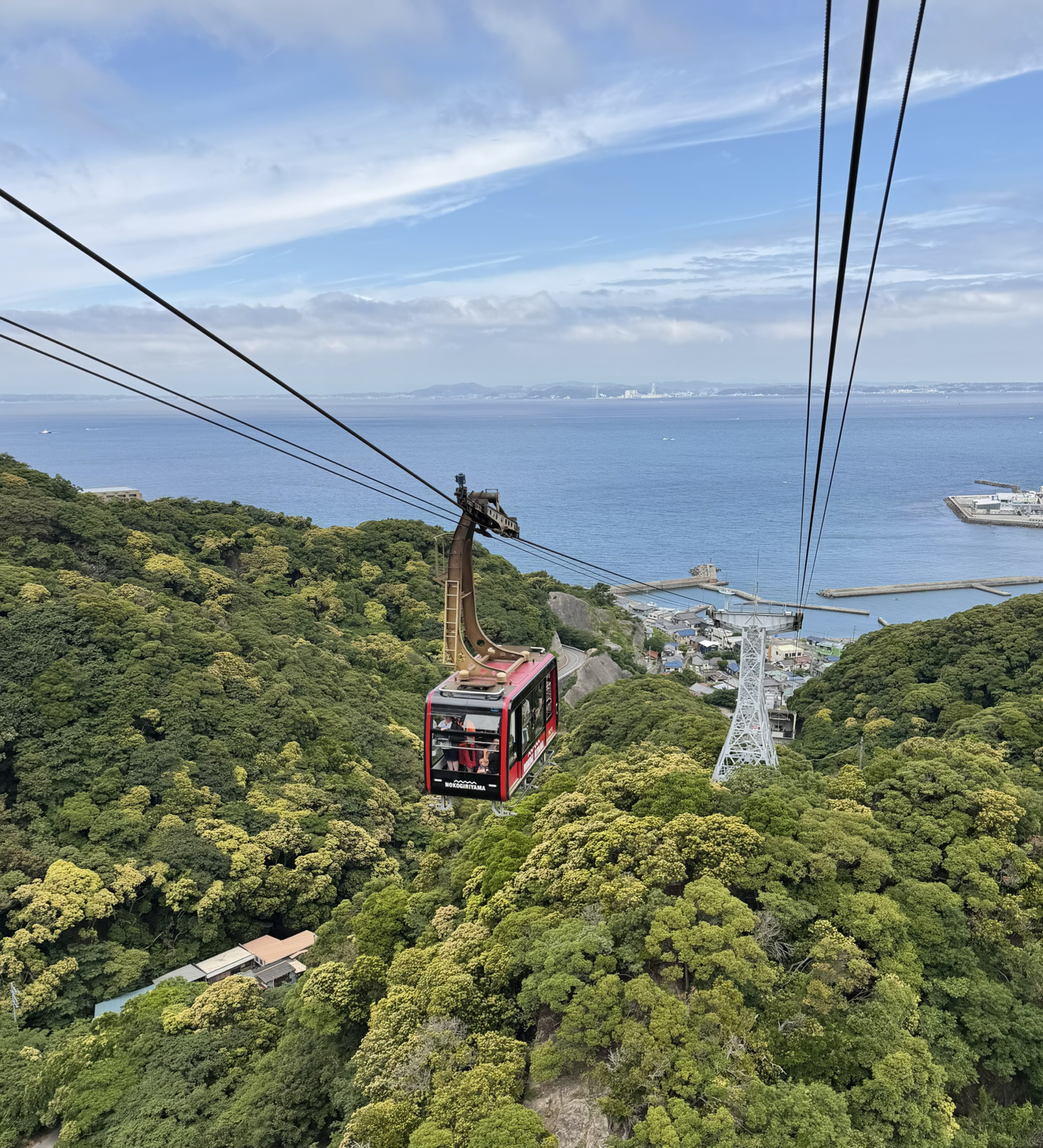
The ropeway was great, especially since the weather was beautiful and visibility was great. Looking toward the bare rock of the mountain itself, large geometric sections were missing. This is evidence of old quarries from hundreds of years ago, but the cuts in the stone are so large as to seem the work of giants.
What little research I had done on the mountain said to bring a coat since it would be several degrees colder at the top (due to wind) and I came prepared. Once again… reality would be quite different!
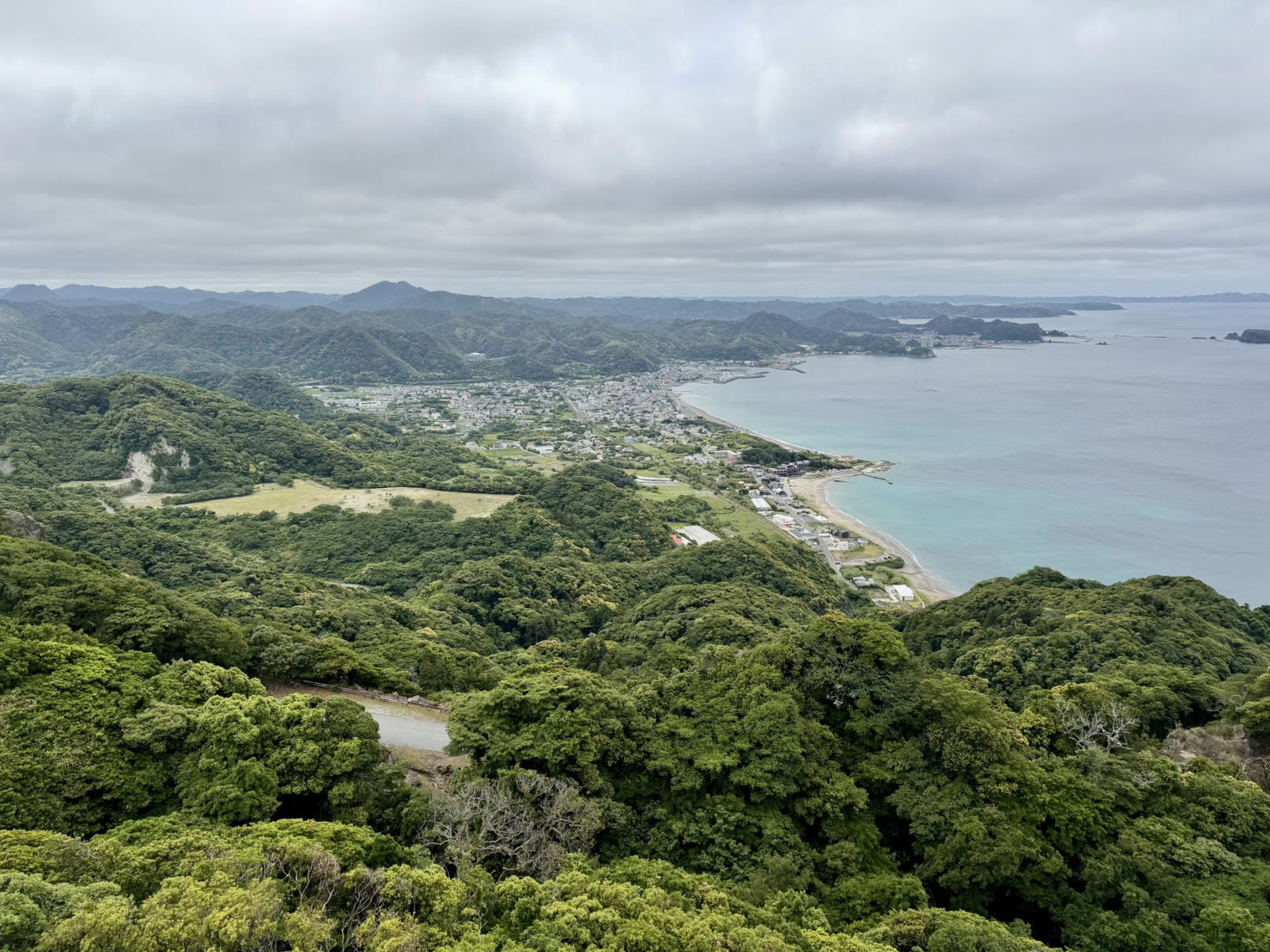
The ropeway station has lookouts built on top with expansive views in almost every direction. The above is me looking east at the town of Hota. Unlike what I’d read there was no wind, and indeed the sun was starting to burn off the morning clouds and it felt warmer than it had down on the water.
The mountain is famous not only for its picturesque views but also for several Buddha statues. These are part of a temple complex a short walk from the ropeway station, which I headed towards.
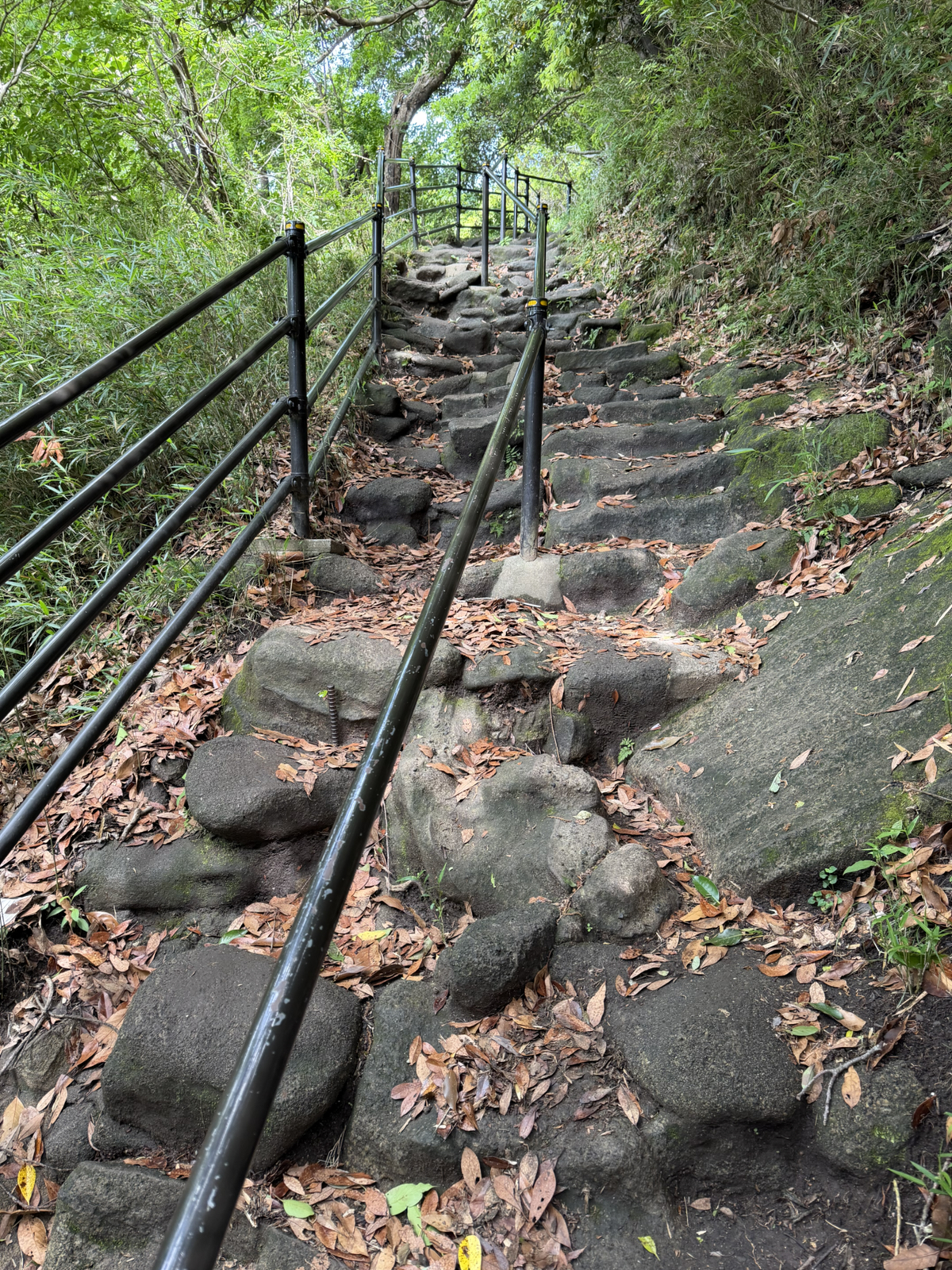
This walk was uneven and traversed unworked rock steps. Climbing down these was no small feat, and almost before the ropeway station was out of view the windbreaker I’d donned was off. When I reached the entrance to the temple complex I was sweating and a bit exhausted.
And my hell had only just begun.
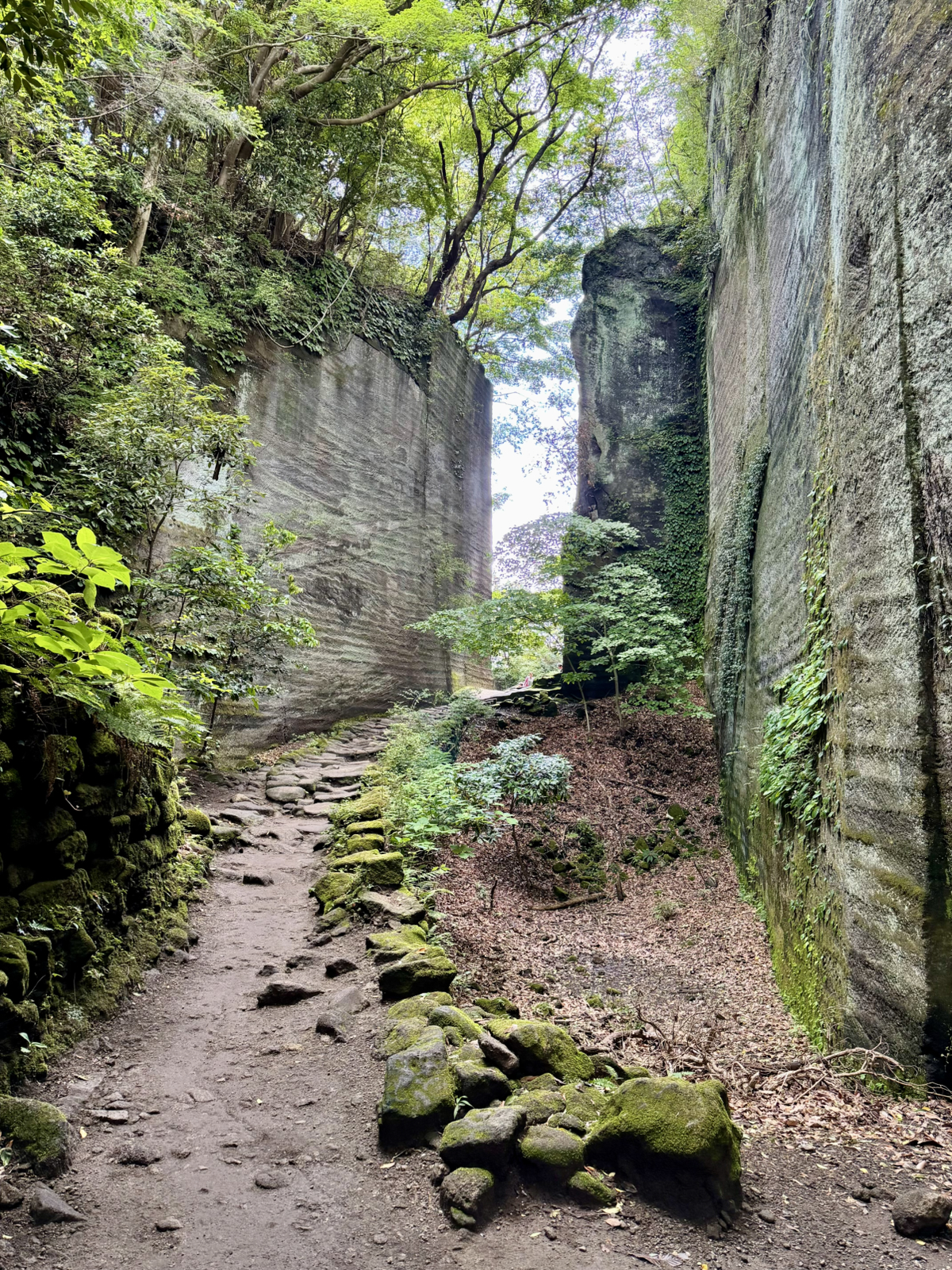
After paying the entrance fee (¥700) you’re free to explore the several paths between the attractions in any way you wish. A quick glance at the map suggested I do it roughly clockwise, and almost immediately I came upon the above.
The worked stone is the remains of what was once a quarry (over 250 years ago) but today these cyclopean walls are the perfect avenue for what lies just out of view:
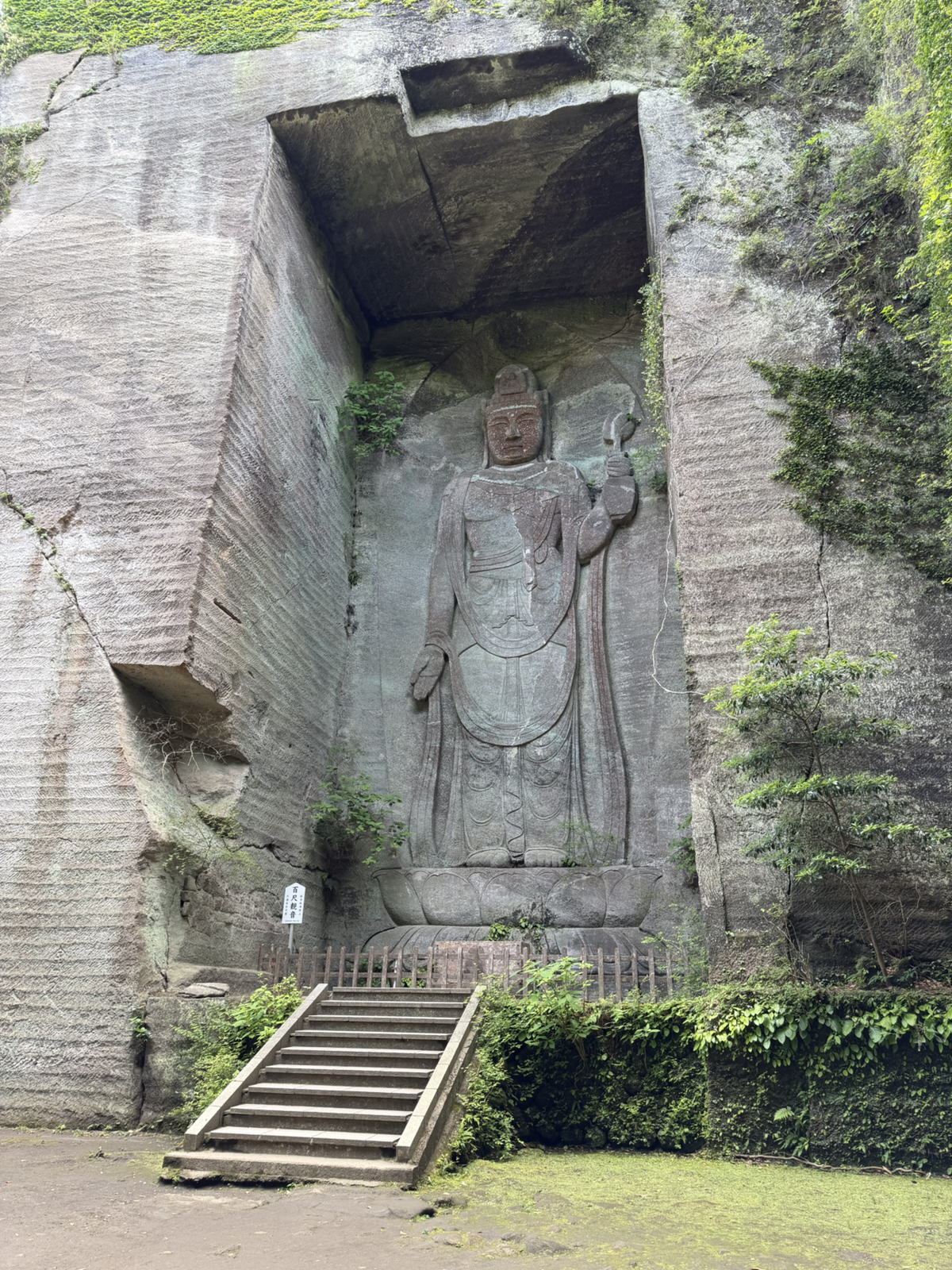
That’s a 100-foot tall relief of Kannon carved into the wall. For scale, the sign at the top of the steps was taller than me! Standing here alone as I did this morning was quite a humbling experience.
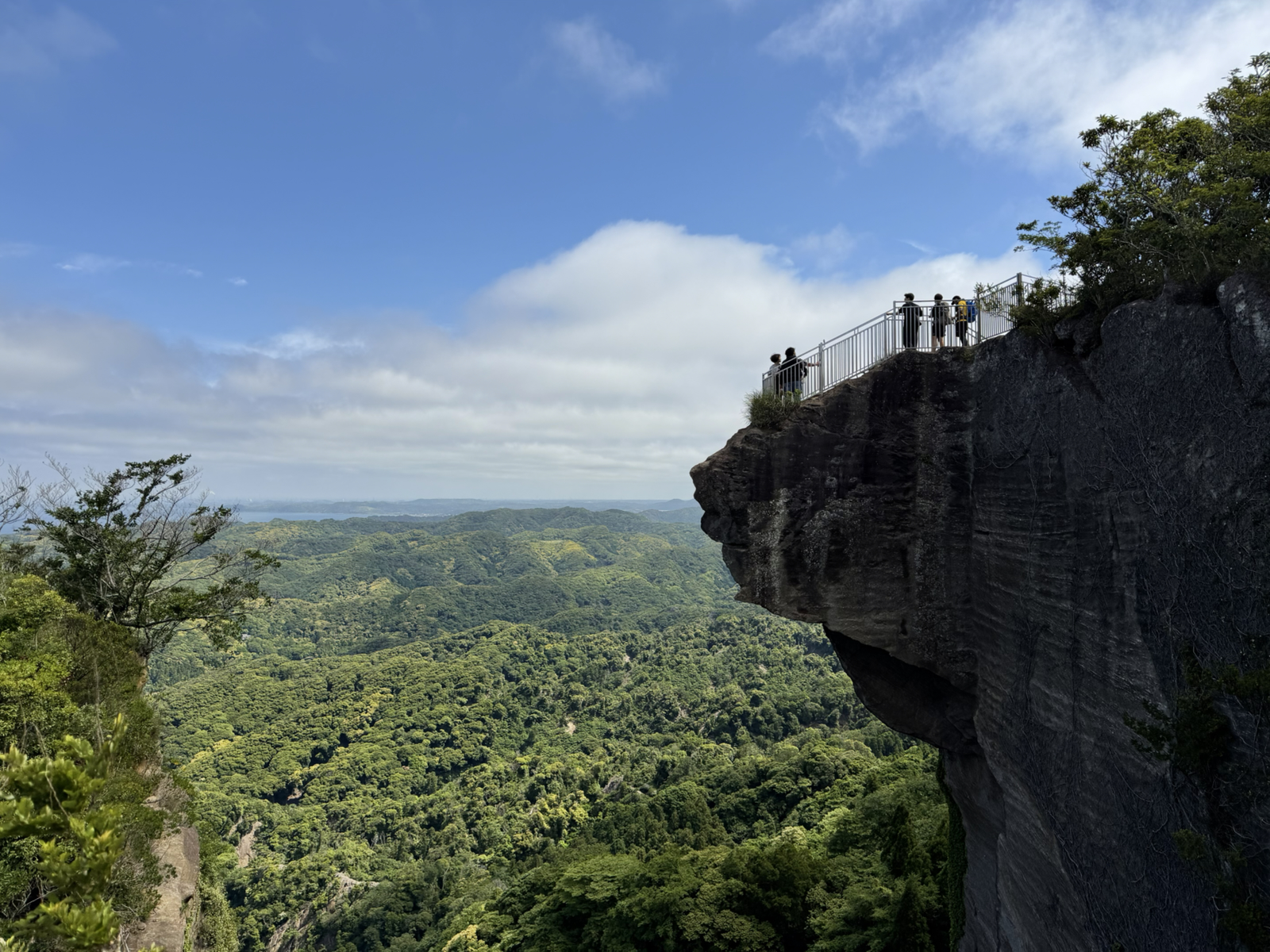
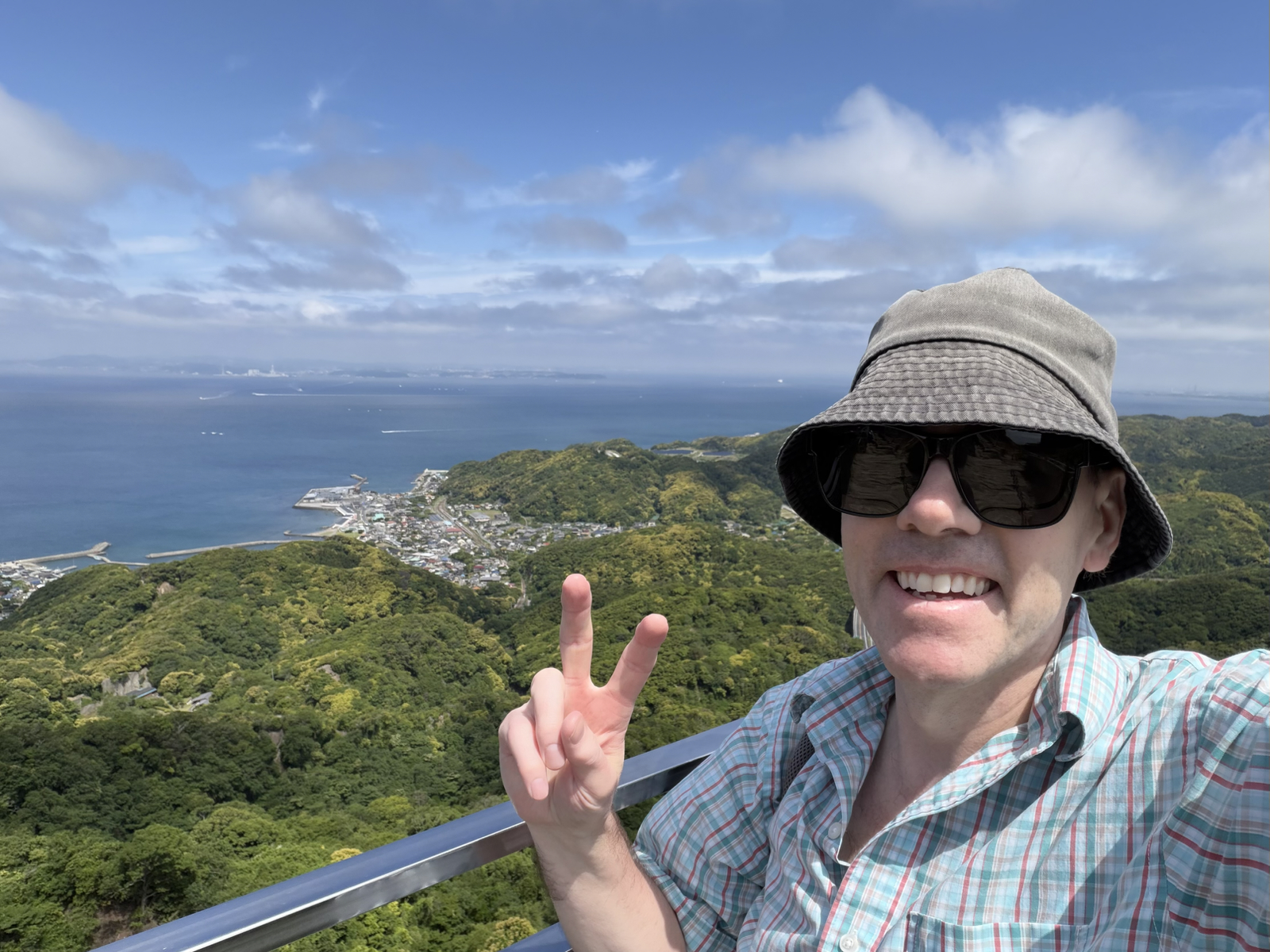
A bit further on was the ‘hell lookout’ which is at the very tip of an overhang hundreds of feet above the forest below (the mountain itself is about 1050 feet tall). Here’s me at that spot:
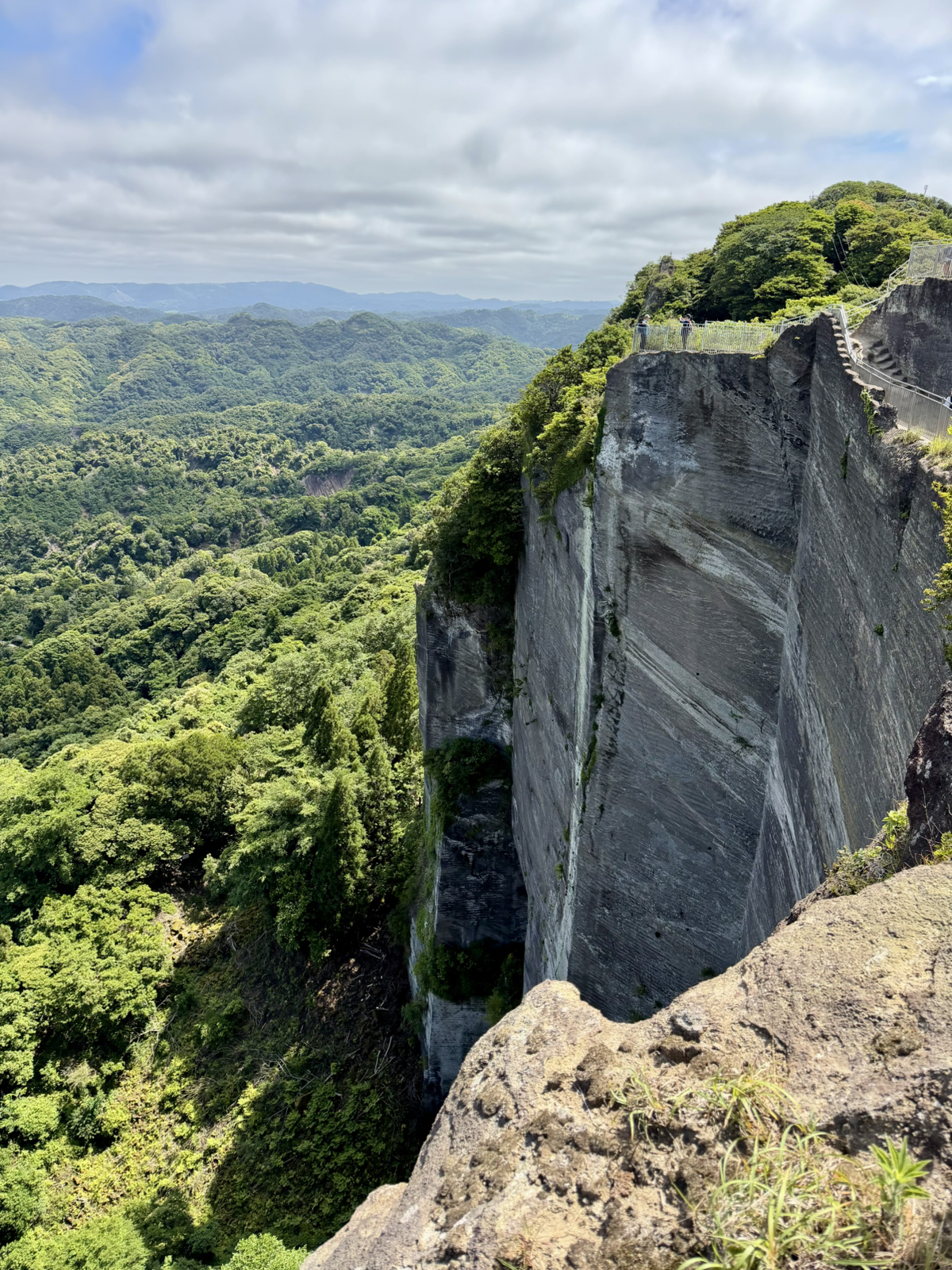
While I was there I noticed a second lookout just a bit further on, and I took a photo which I think does a better job of showing the sheer drop. For scale look at the two people in the top right:
It was now time to head to the giant buddha statue. I’d only been on the mountain maybe a half hour at this point and I was hot and sweaty and somewhat exhausted from the stairs. But if the few flights I’d climbed had been difficult, what was in store for me was just hell.
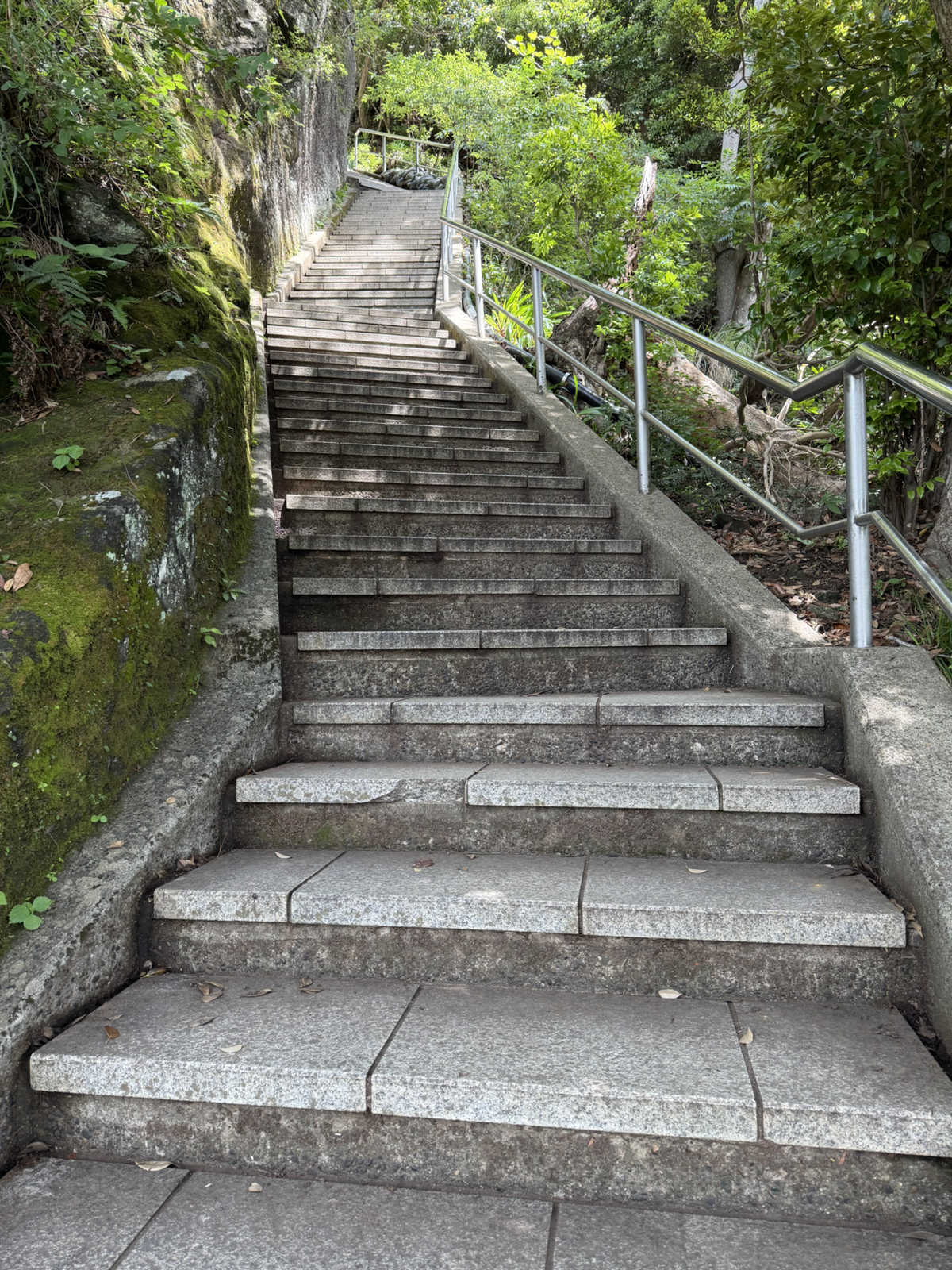
There’s so many stairs, well hidden by the trees and the curves of the mountain. Every flight was worse than the previous and there always seemed to be another:
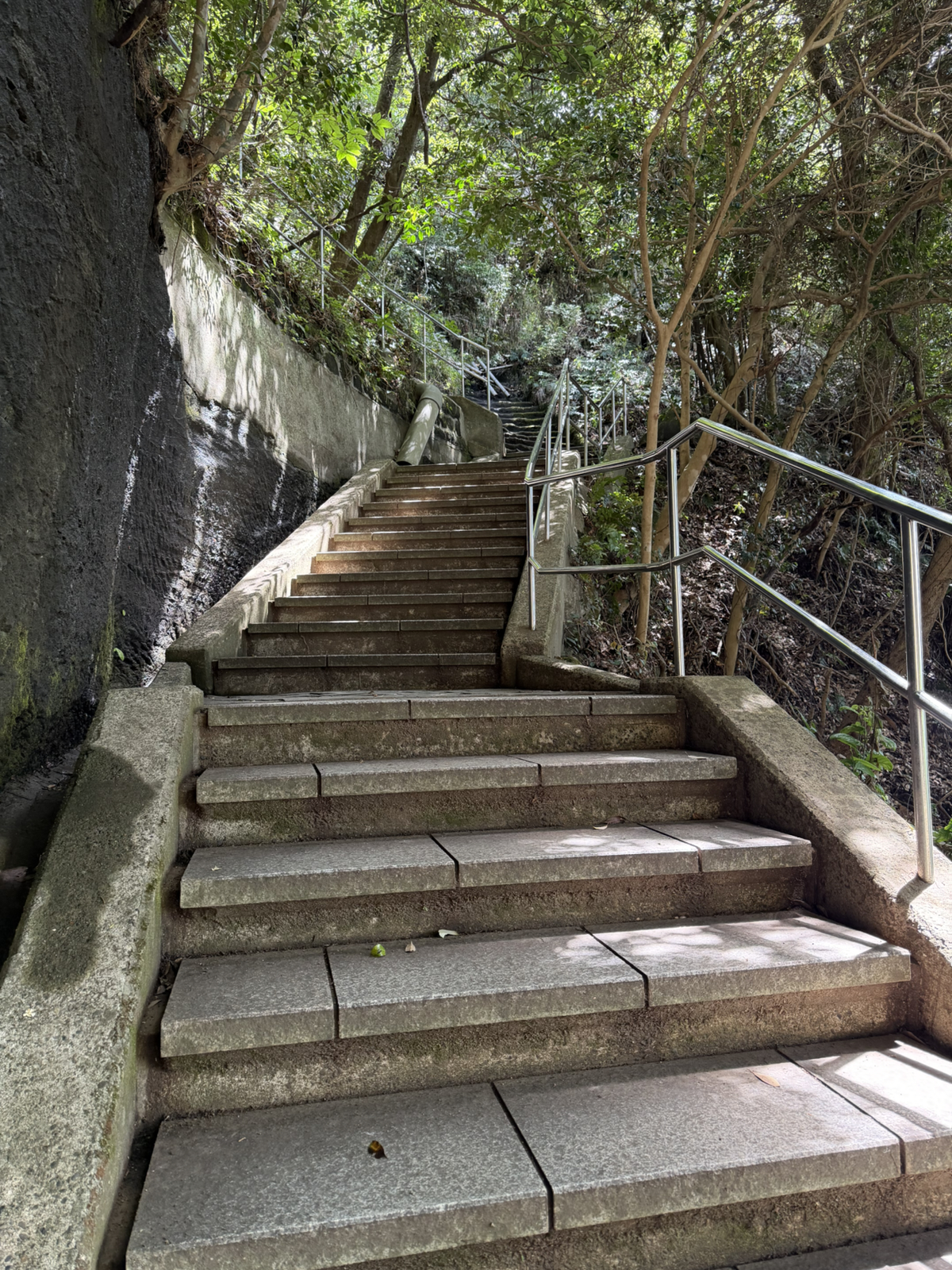
Some went up, some went down. In end the it hardly mattered because both were equally tiring. There wasn’t a lot of people on the mountain this morning but those that I saw were as defeated by the stairs as I was.
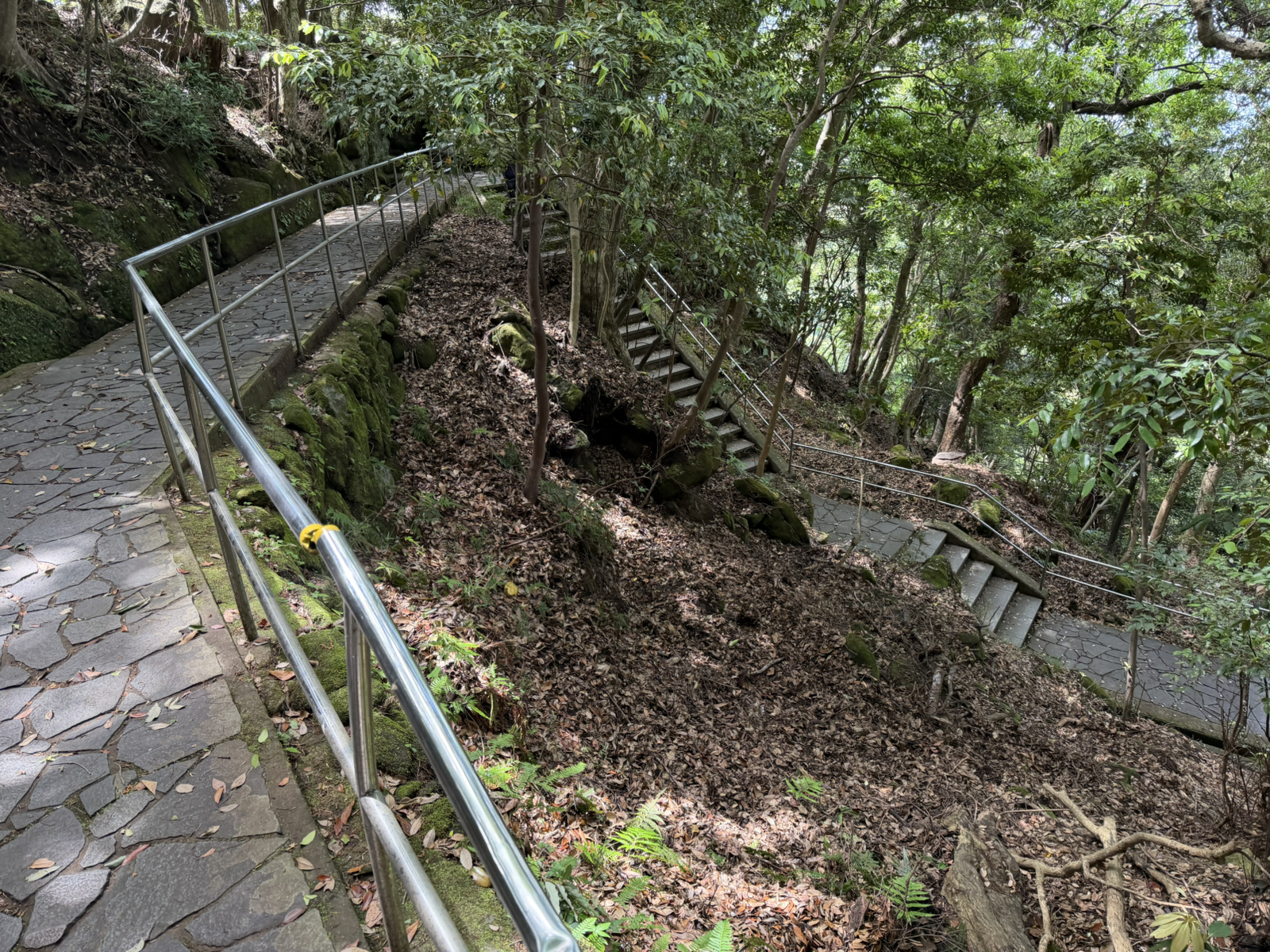
In total, I climbed (either up or down) somewhere above 1800 stairs today. This is about three times the number of stairs I climbed when I went to the Eiffel Tower, and 80% more stairs than at Yamadera last year, a climb which nearly finished me.
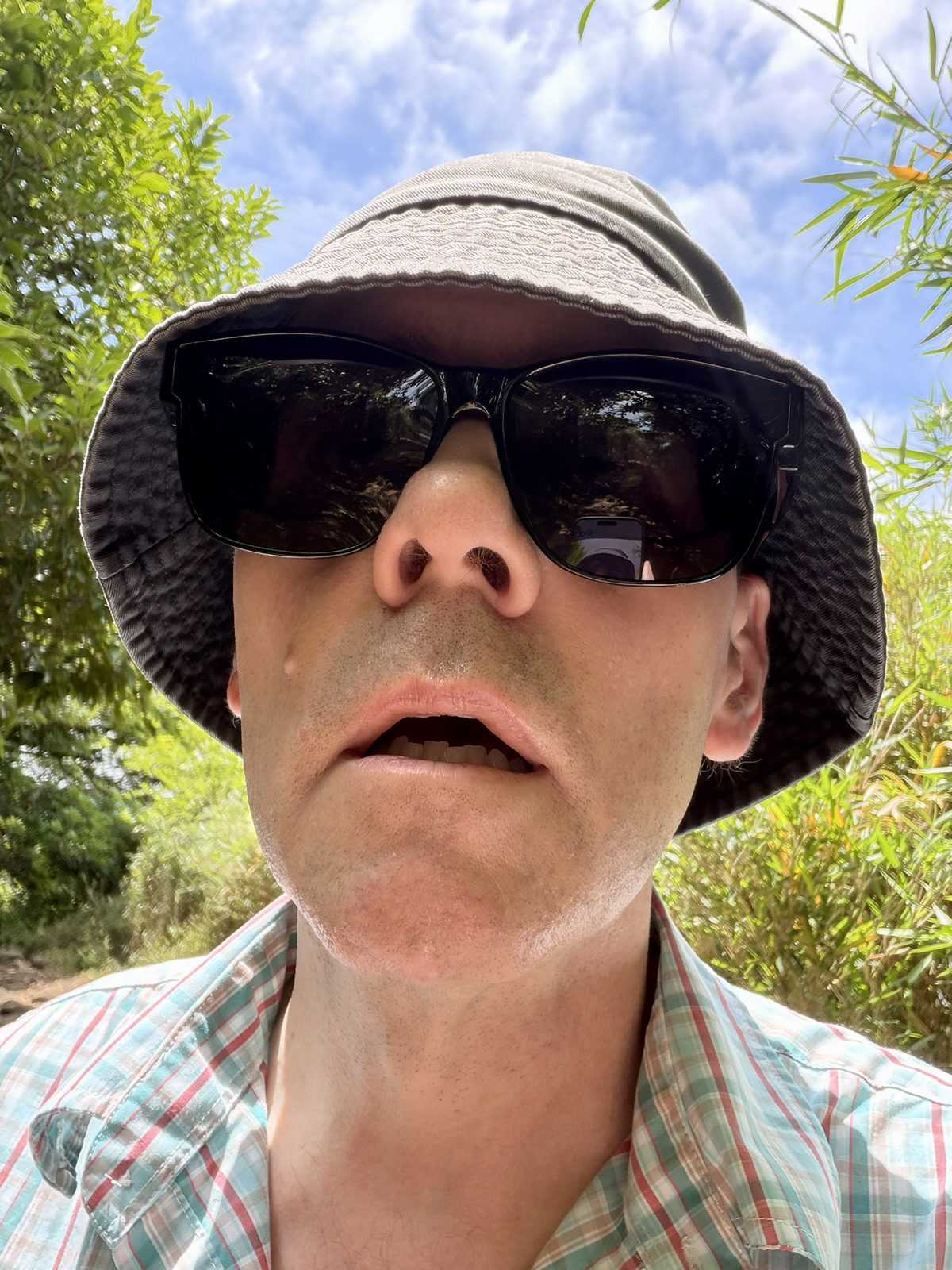
Indeed, this was the most exhausting thing I’ve ever done. There were times when I had to break for minutes at a time halfway up a flight, and I even considered sitting but didn’t because I feared I wouldn’t be able to stand again.
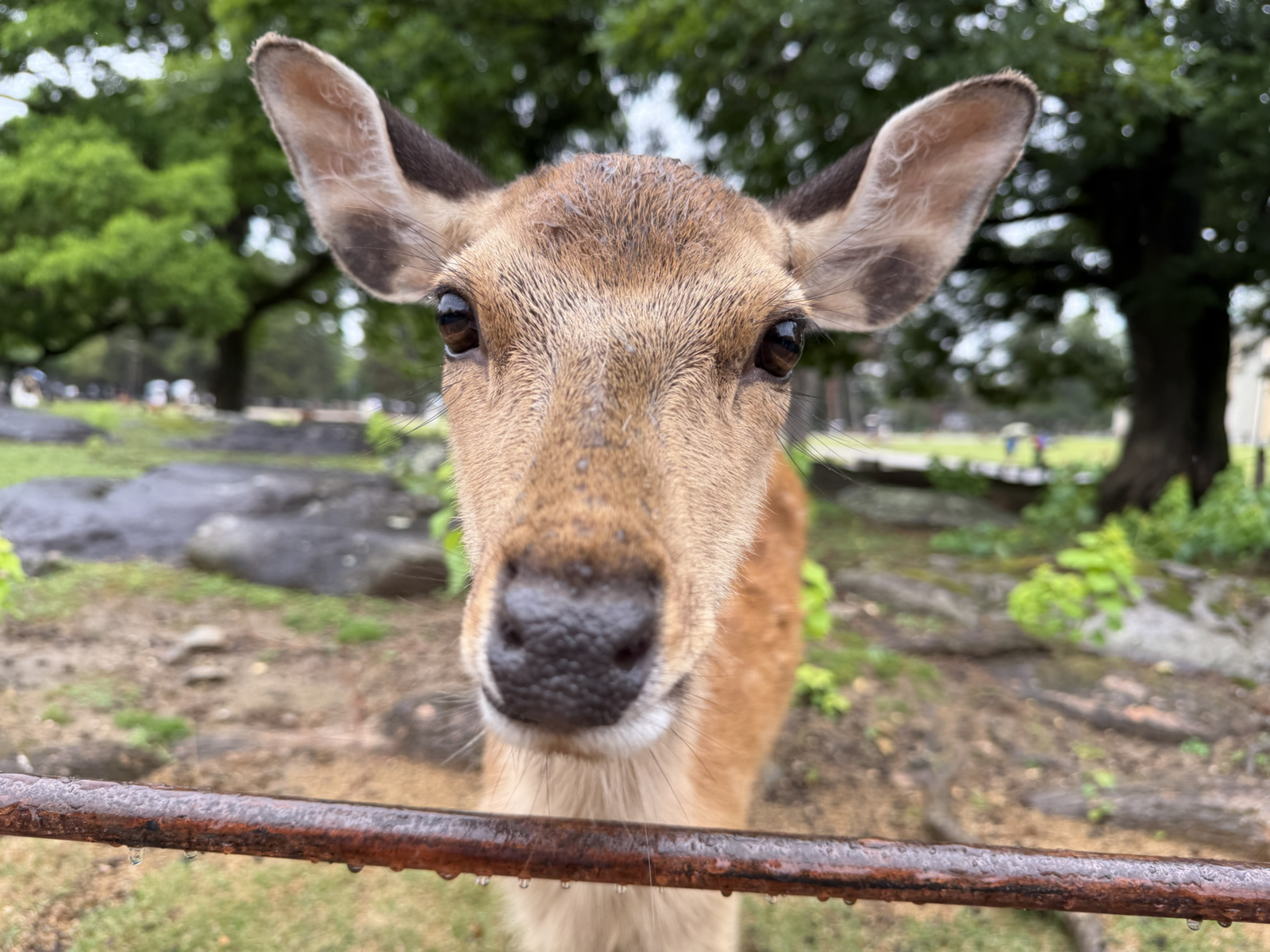
One time I paused, gasping for breath, and two tiny muntjac deer ran across the path in front of me! They weren’t much bigger than dogs and disappeared into the forest before I could grab my phone. By then it had become hot (about 25C/80F) and the humidity was evil and I had no idea how many more stairs I had left to navigate.
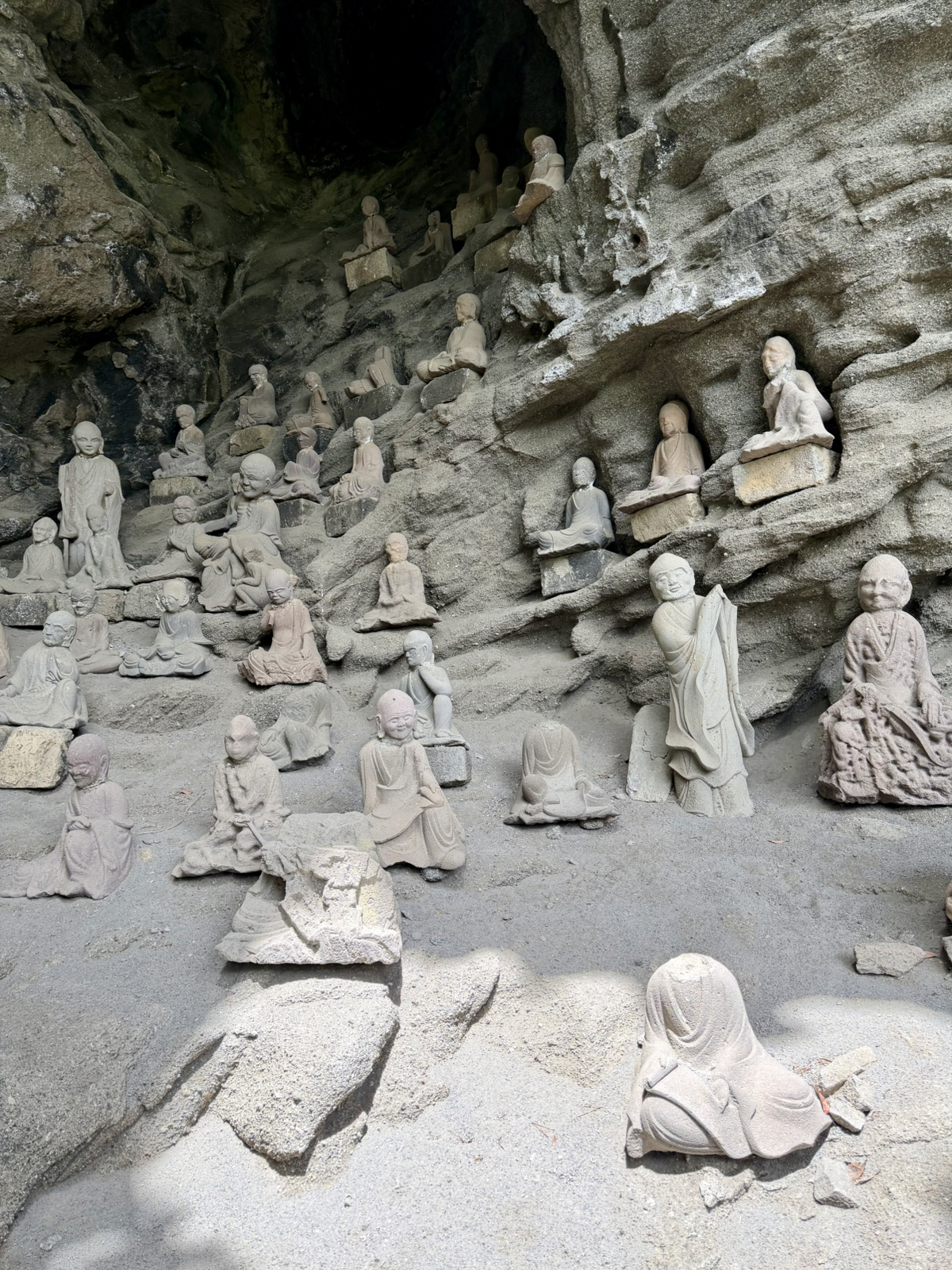
Every now and then I passed a collection of these small statues. There are about 1500 of them in the mountain, and represent souls who reached nirvana. They were carved over 200 years ago and many vandalized during times of religious persecution in Japanese history.
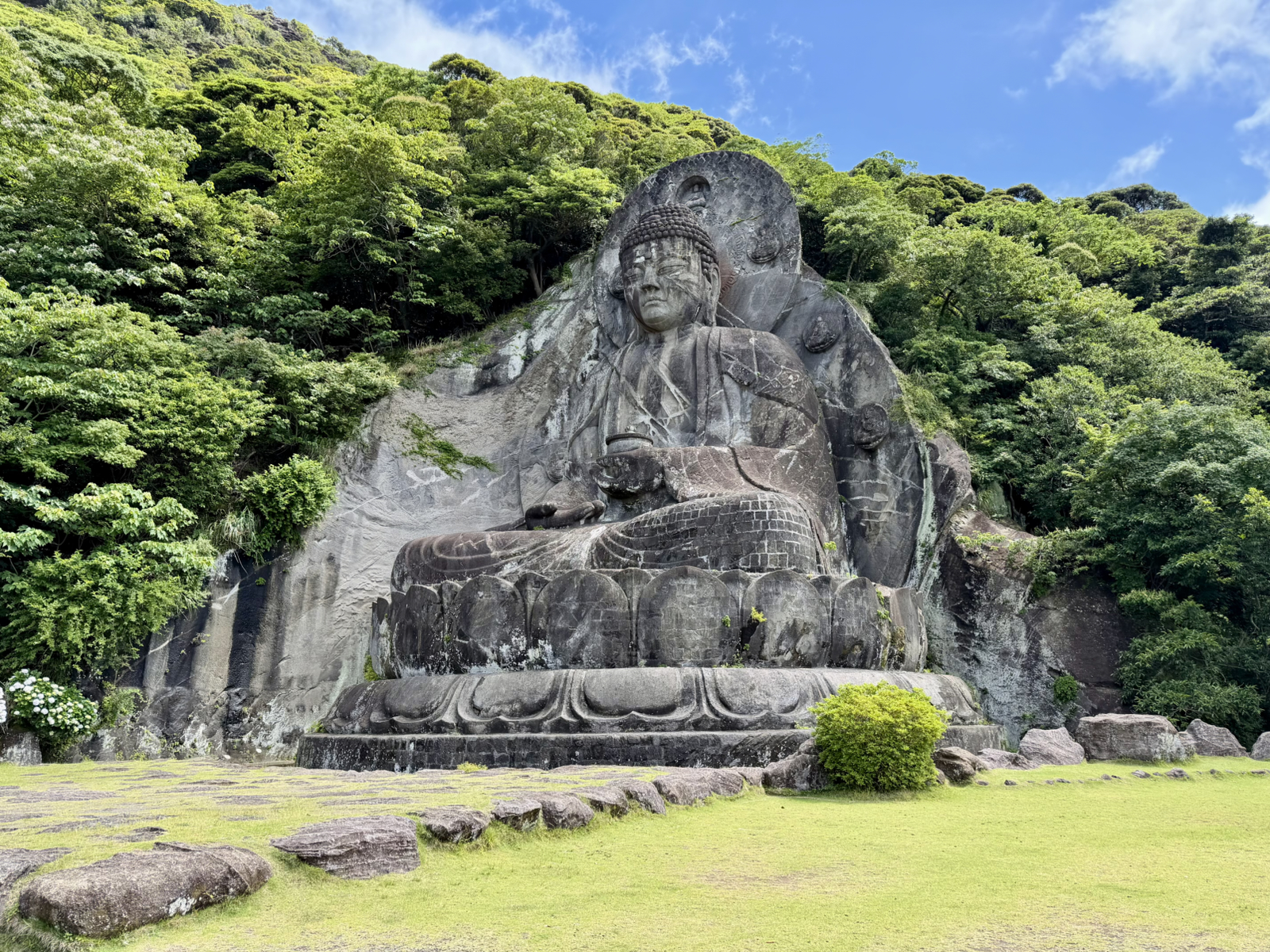
And then I reached the giant (over 100 feet) Buddha! I had him entirely to myself but didn’t linger since I was so exhausted. The only toilet on the mountain is near this guy, but in a cruel twist you have to go down (and then up) another punishing flight of stairs to reach it!
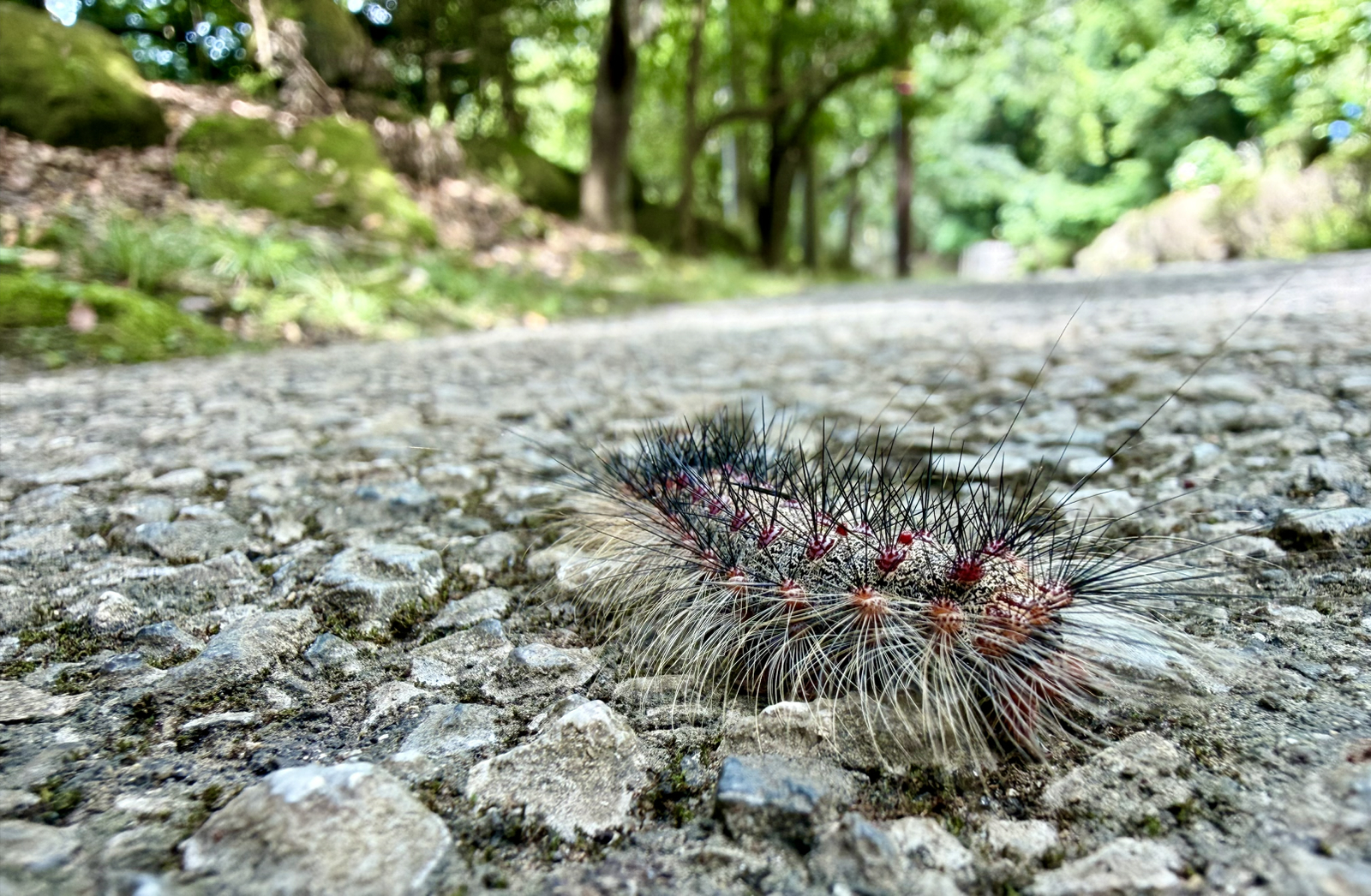
I staggered back to the ropeway, dragging myself up interminable staircases. I stopped to admire this fellow hurrying across the path, and briefly considered if he was poisonous and stung me it may have been a merciful release. I was beyond ruined at this point, and knew that despite the wonderful views and serene surroundings I would never return here because once in a lifetime is enough for all these stairs!
When I got to the ropeway I almost fell into the carriage, hitting my head as I did. The operator asked if I was alright, and I gestured and whispered yes because I didn’t know how to say in Japan the pain in my head hardly mattered because I was more or less already dead anyway.
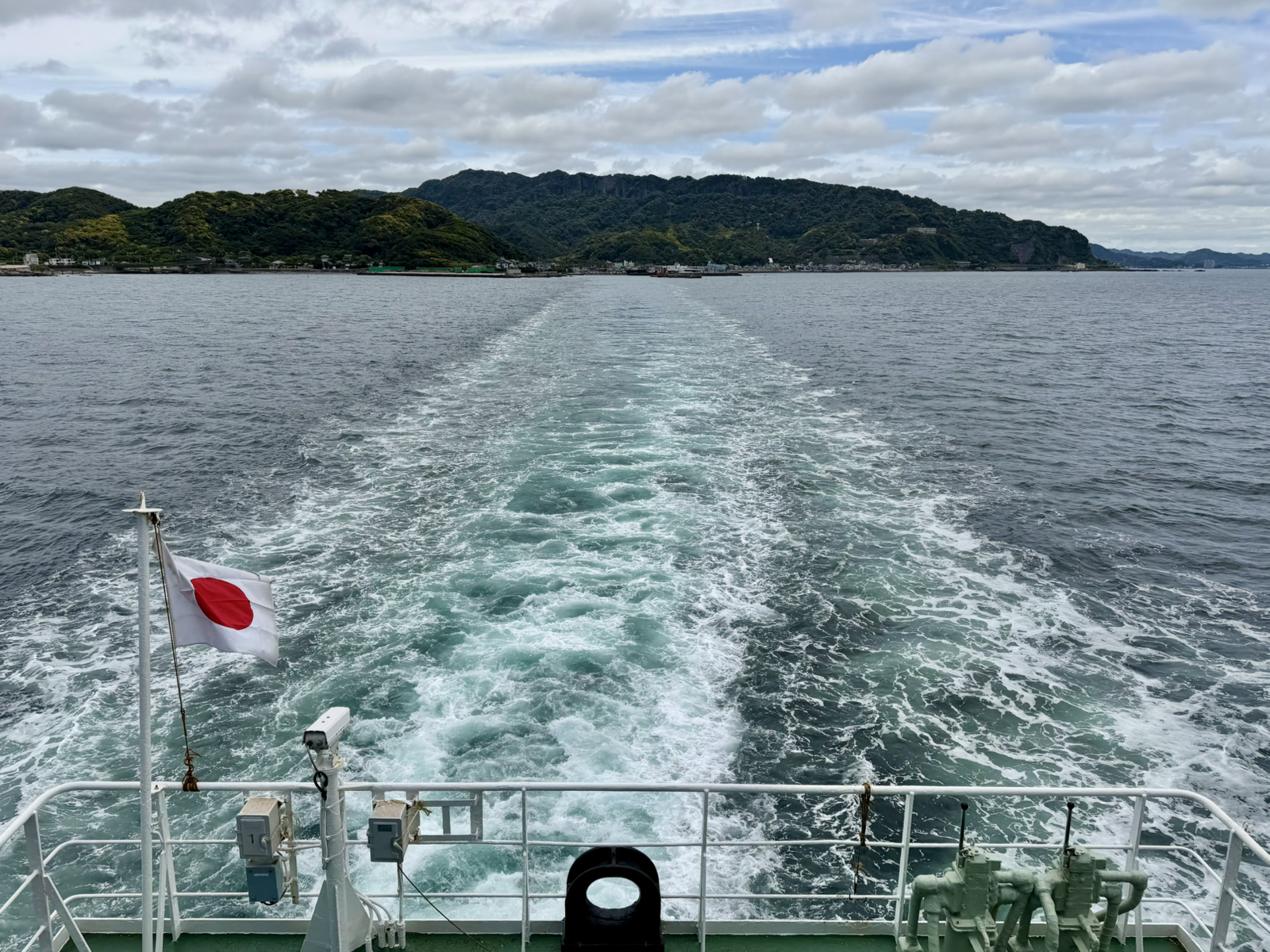
I rode the ferry back, then two trains and by mid afternoon was back in Akihabara. The sea air was good for my old bones and I recovered quickly, and even now many hours later I’ve almost forgotten the exertion. I’m very glad I went to Nokogiriyama today, and I hope the photos give you some idea of the heaven and hell I experienced 🙂
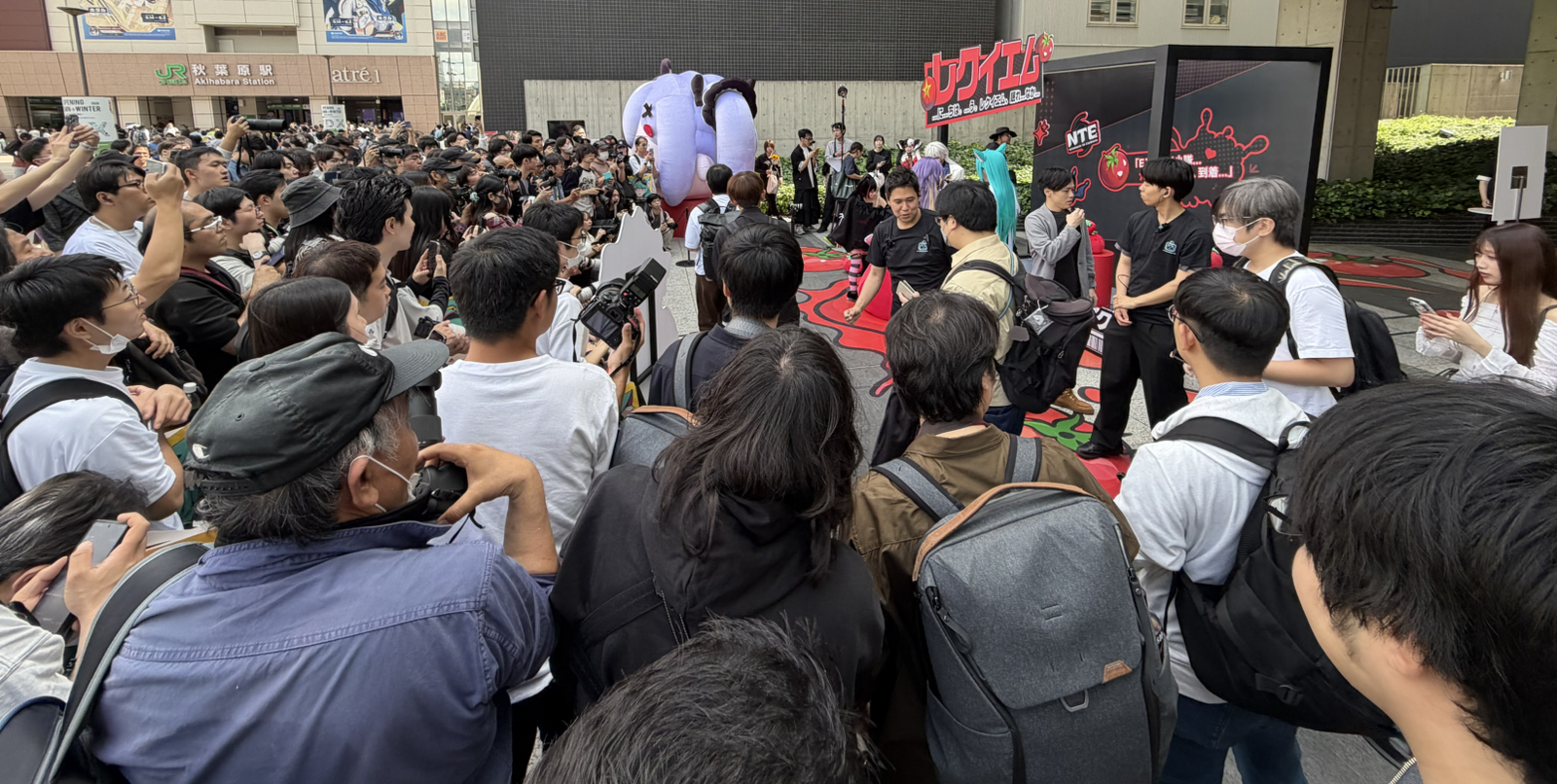
It turns out I had picked the right day to get away from Akihabara, since it was bonkers with people today. In fact this may have been the busiest I’ve ever seen it! There were two free events going on (Good Smile Fest 2026 and a launch party for the mobile game Neverness to Everness) and people turned out in droves to participate.
There seemed to be many parts to the NTE launch event, and the above photo shows some cosplay. The girls are surrounded by a wall of people photographing them, and to the right was a (long!) line of other people (all guys) who were being given 60 second chances to take photos from right in front of the girls. It was crazy and popular and well organized and I’m sure there’s thousands of photos of the girls online already.
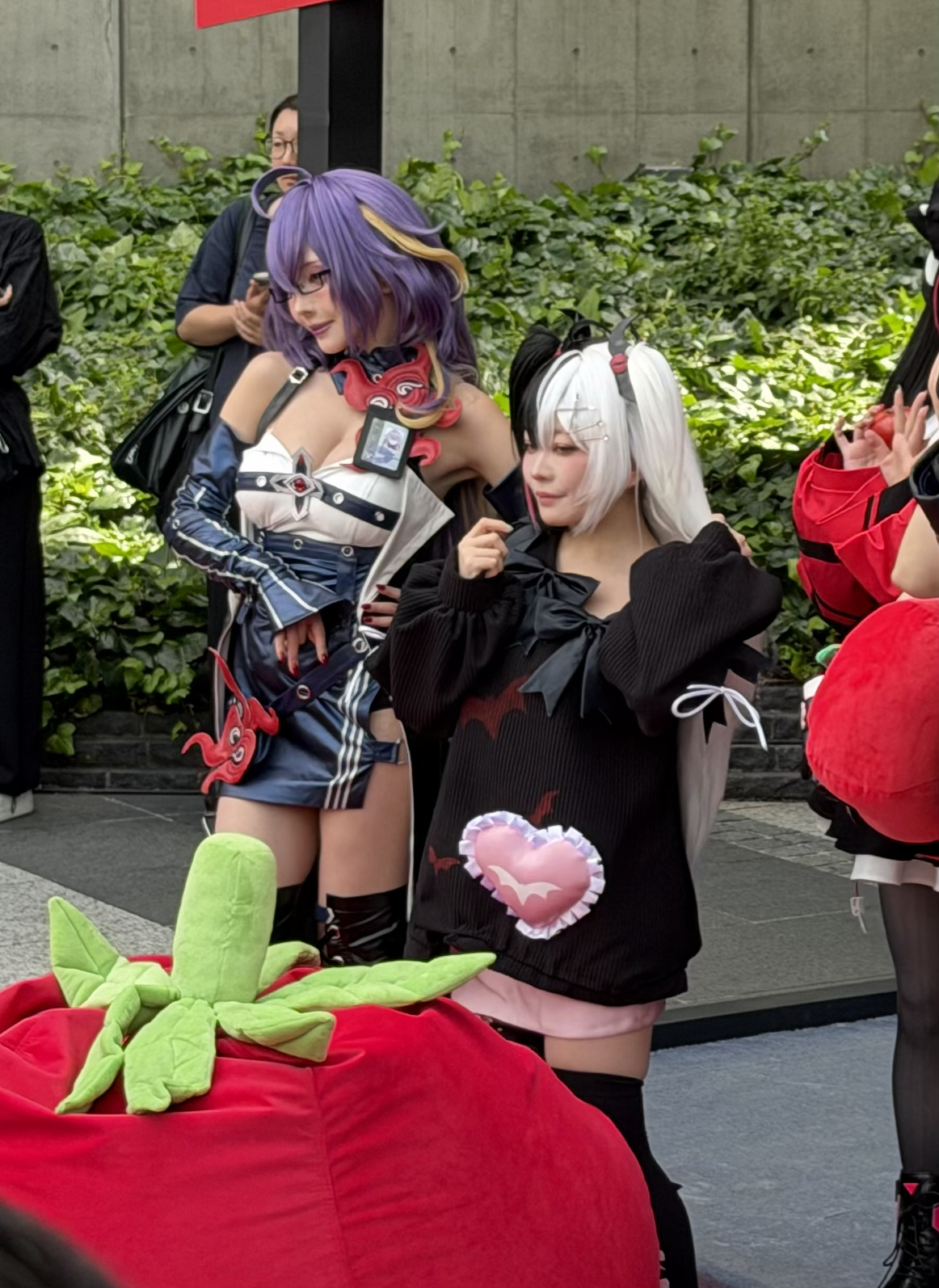
I was too far away to get a good shot, and the above is the best I could do (there were other girls too). Professional cosplayers are impressive these days!
I wandered over to the Good Smile event but the line to get in was blocks long so I immediately gave up. I’d spent more than enough time in the sun today and a hot bath was calling…