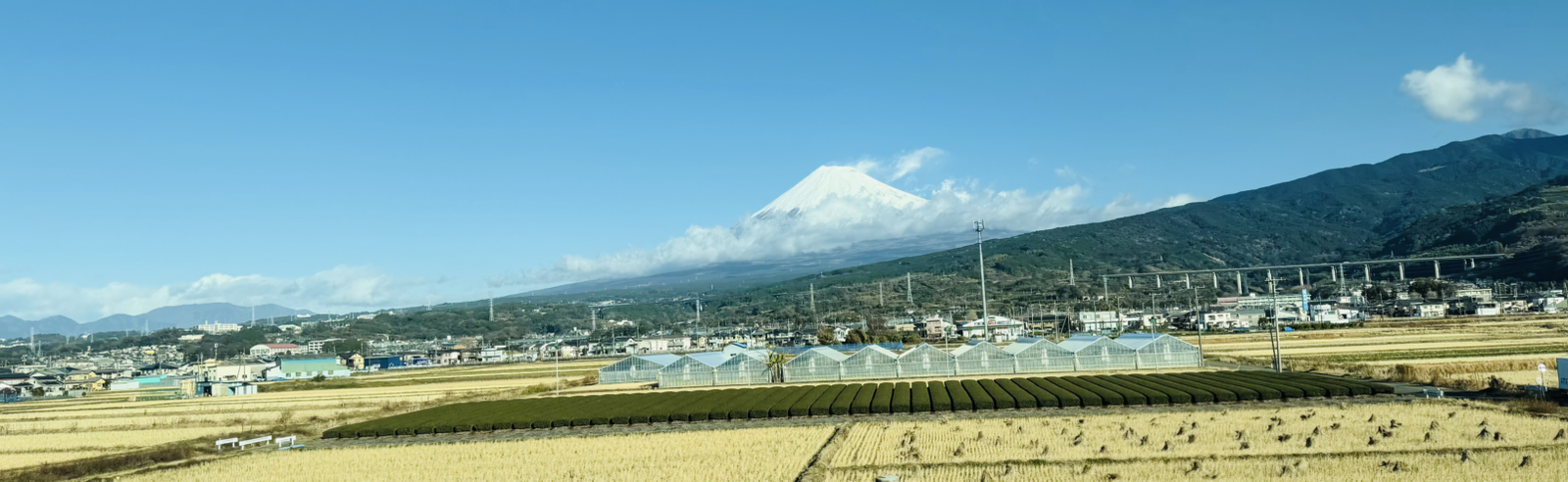
An early start today and we were on the Shinkansen to Kobe, a city we’d never visited before. As usual we rode in the ‘green car’ which was more expensive but extremely comfortable and the trip was wonderful. Look at how majestic Fuji looked on this sunny winter’s day:
And then, maybe half an hour later, something unusual happened:

This is my 7th winter trip to Japan and somehow this was the first time I’d ever seen snow on the ground here! The snow was falling heavily, and the view from our cozy train seats was great. I’ll admit a moment of trepidation since we hardly had snow-weather clothing, but even before we got to Kyoto the blue skies had returned.
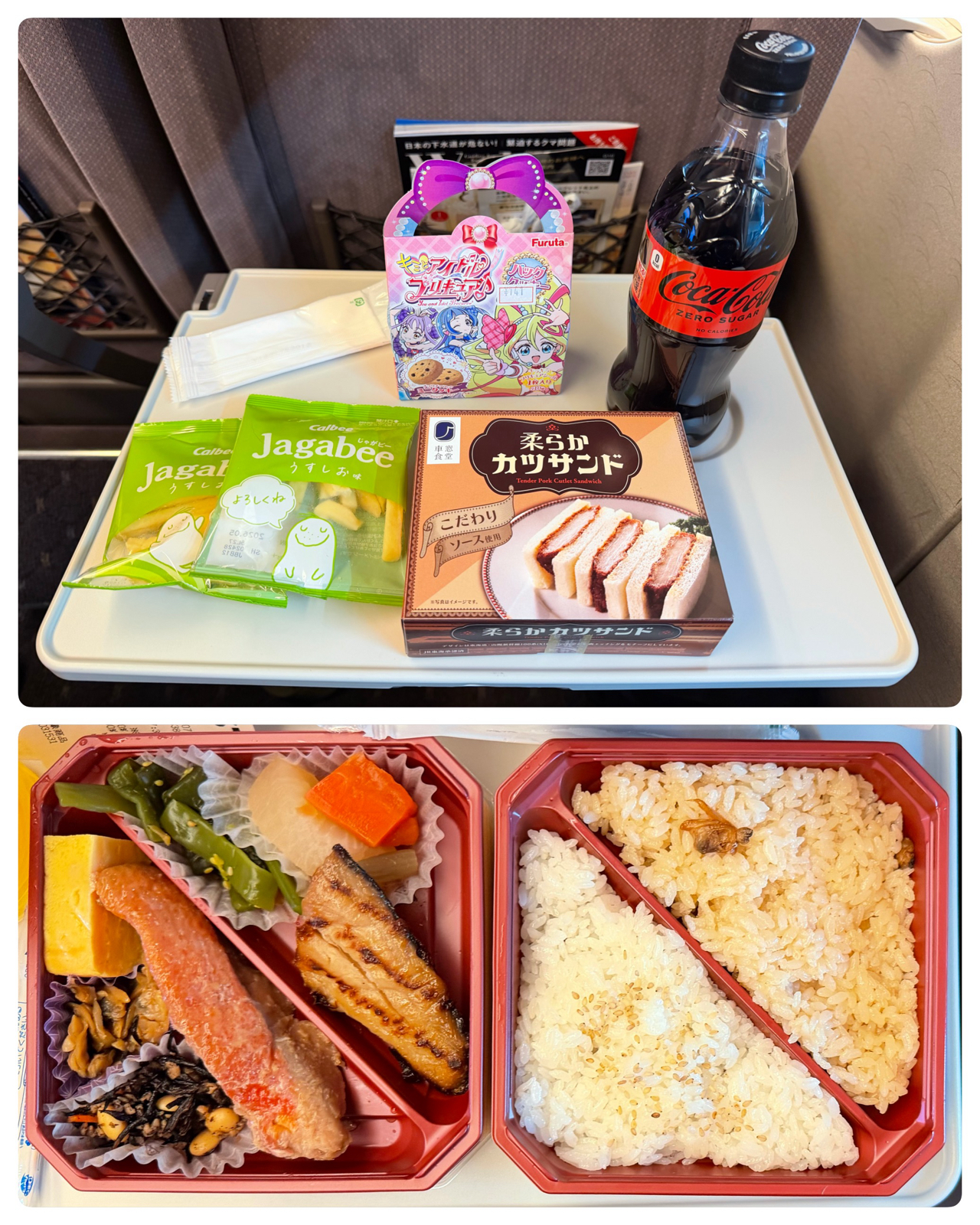
The above shows our two breakfasts (at 9 am?) on the train, and I’ll let you guess which of us ate each of them. We always love eating bento on trains, and if you looked closely a few days ago you would have noticed this was one category on our bingo card (which we still haven’t filled a single line of).
About 2.5 hours after we boarded we arrived in Kobe, but this wasn’t actually our destination. This was only a stop on the way, and shortly after arriving we hopped into a taxi and drove to an onsen (hot spring) town called Arima, which is where we’re staying these next two nights. (It may even be worth its own blog post but I’ll simply add here that the 8km road tunnel under a mountain that the taxi took was fascinating.)
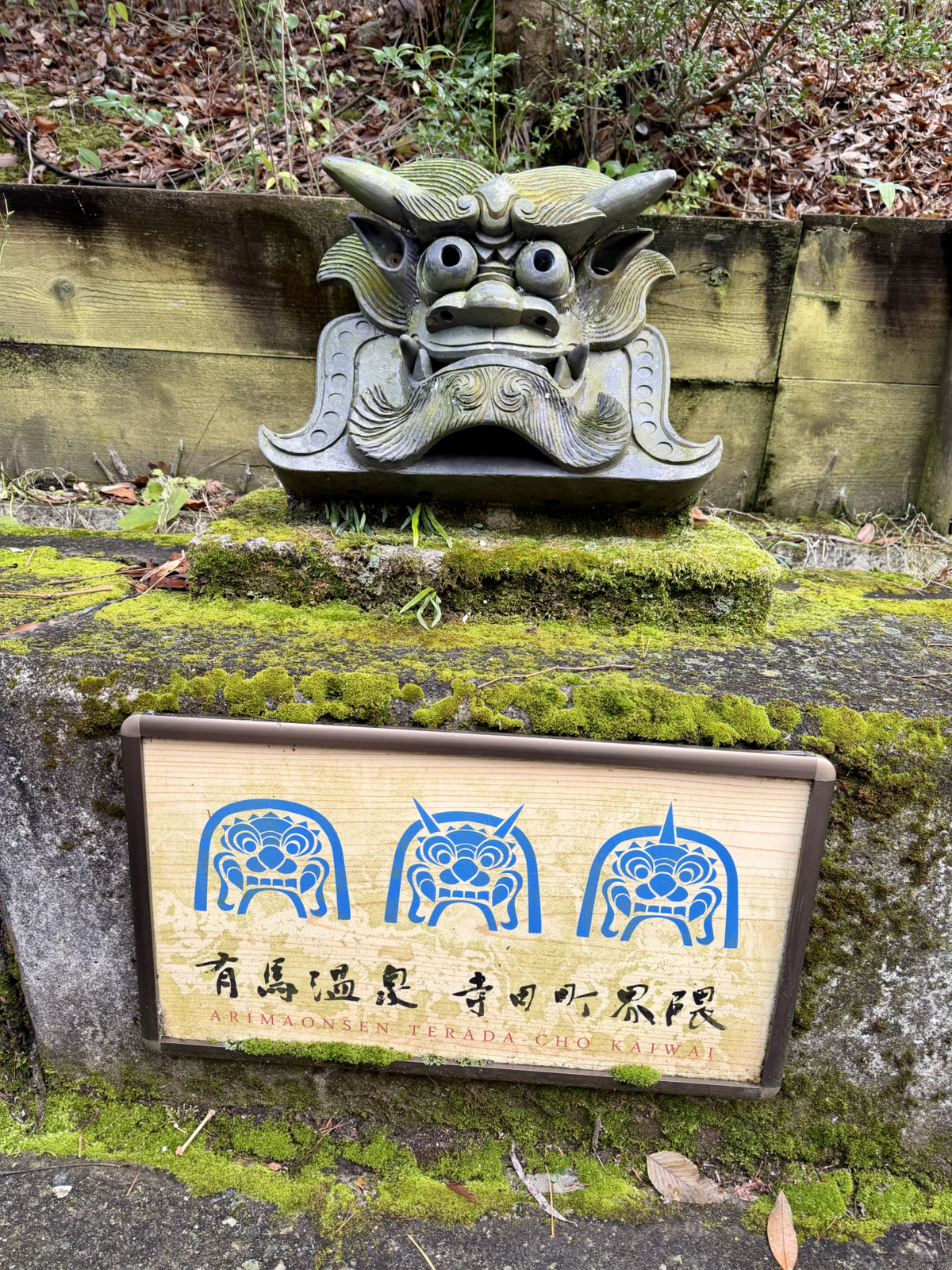
Arima is a small onsen town built into a valley deep in the mountains. Surrounding by 20+ large resort hotels, it has a shopping street full of traditional stores containing Japanese crafts and foods. The place is steeped in history – it’s been a tourist attraction for almost 1500 years – and one of the most popular hot spring resorts in Japan.
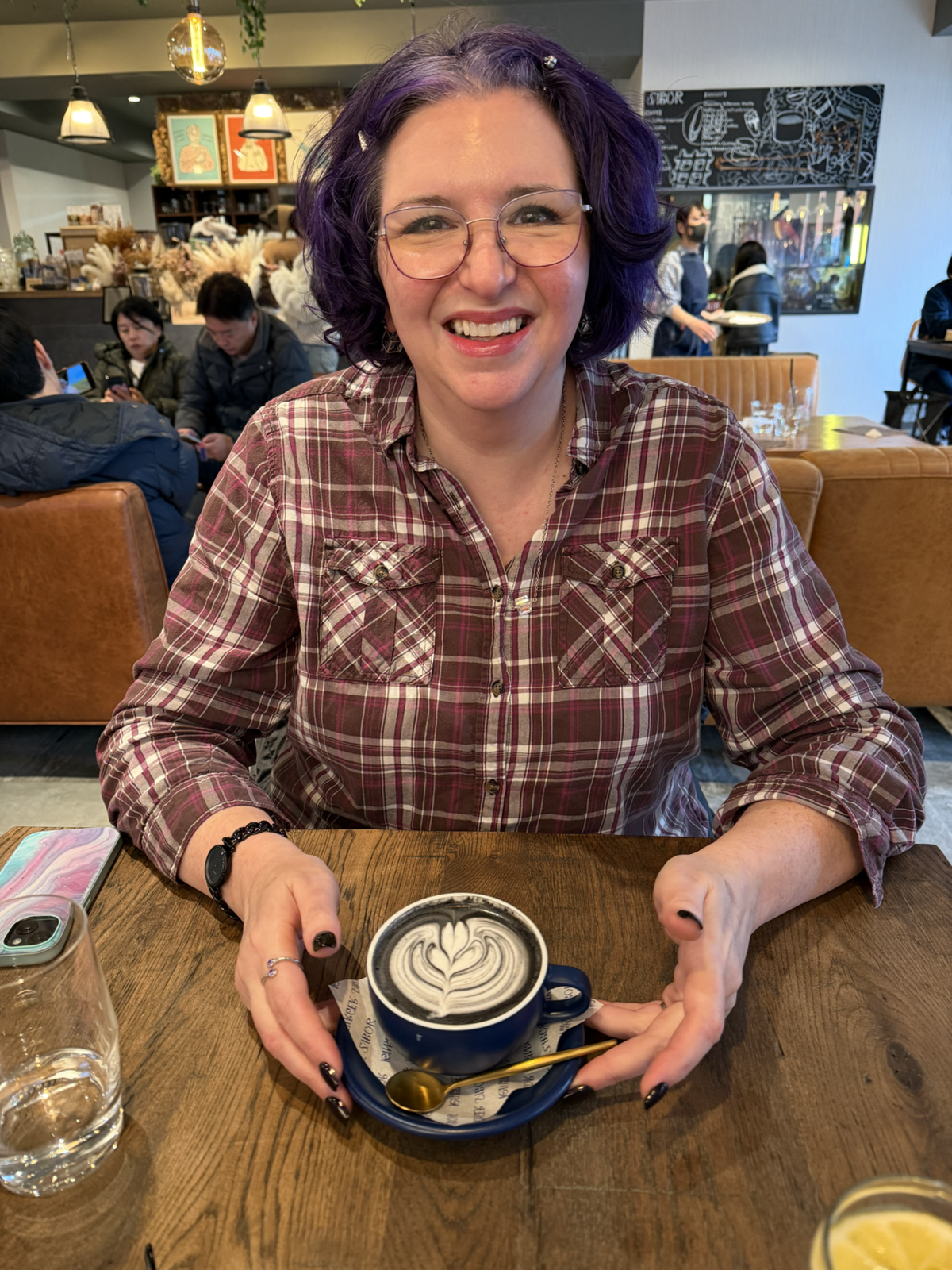
After arriving we walked the tourist street for while and then it began to snow! It wasn’t as heavy as we’d seen from the train but it was very cold, and we took the chance to duck into a restaurant for some lunch (delicious burgers). KLS got an unusual sesame beverage that was black and tasted just like sesame mixed with milk. It was at this place that the title of today’s blog came from, specifically a (mis)translation of a section of their menu!
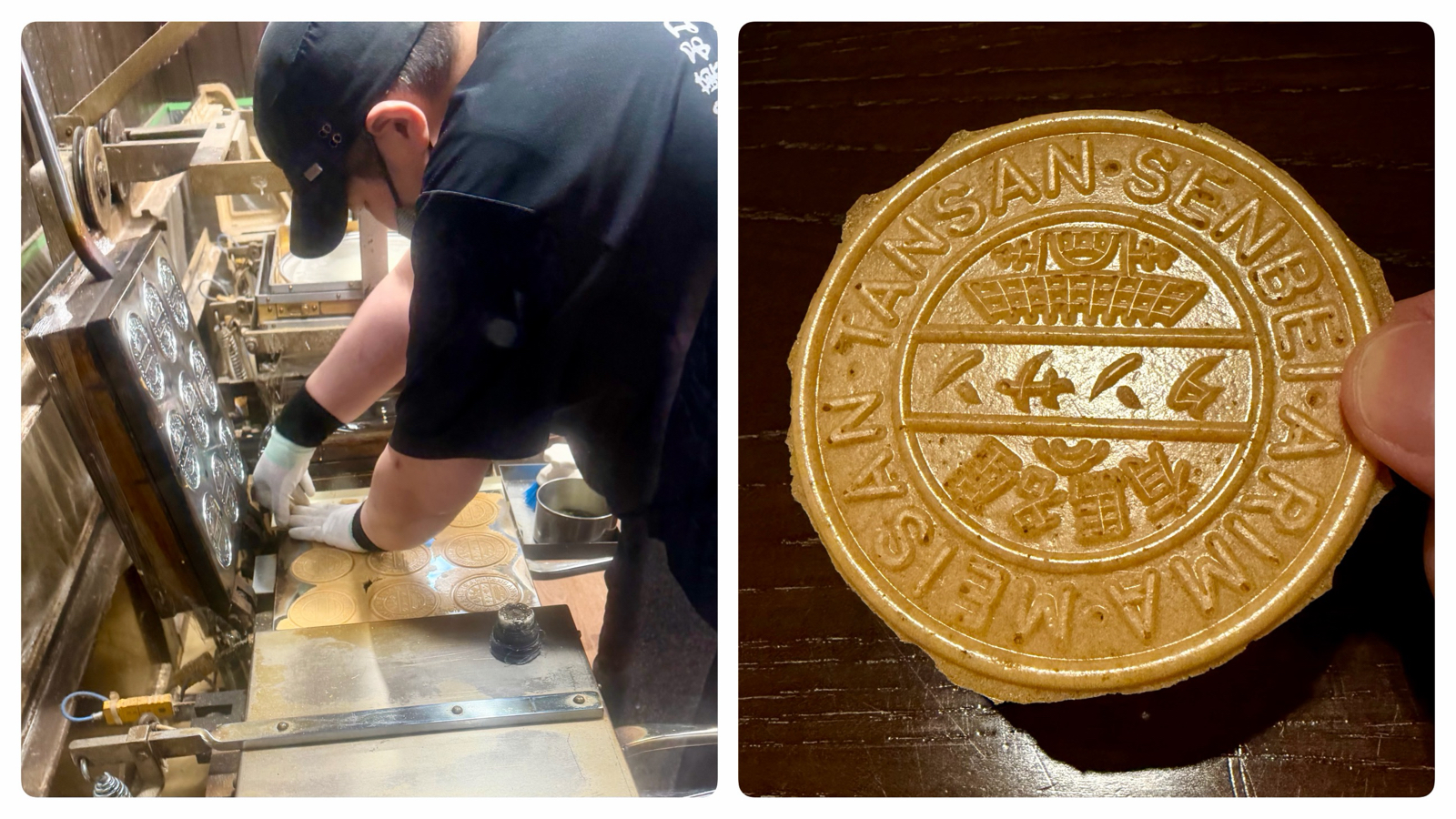
One thing Arima is known for are senbei (rice crackers) made using the carbonated local spring water. These are extremely thin, have a crispy texture and are incredibly moorish. We watched a guy making them in one of the shops and he handed us each one through the window. Naturally we have bought a selection but these won’t travel well except (inevitably) in our bellies 🙂
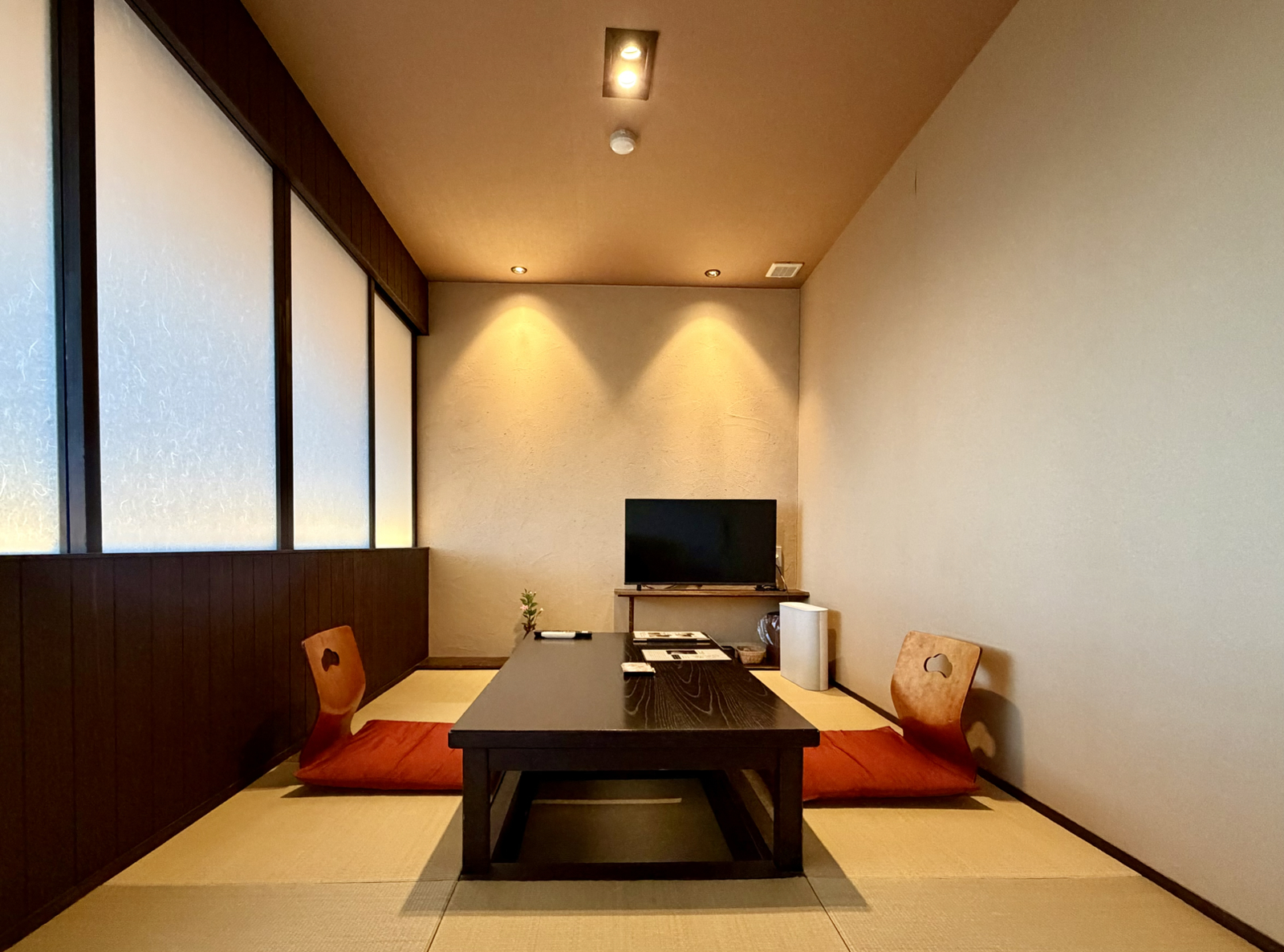
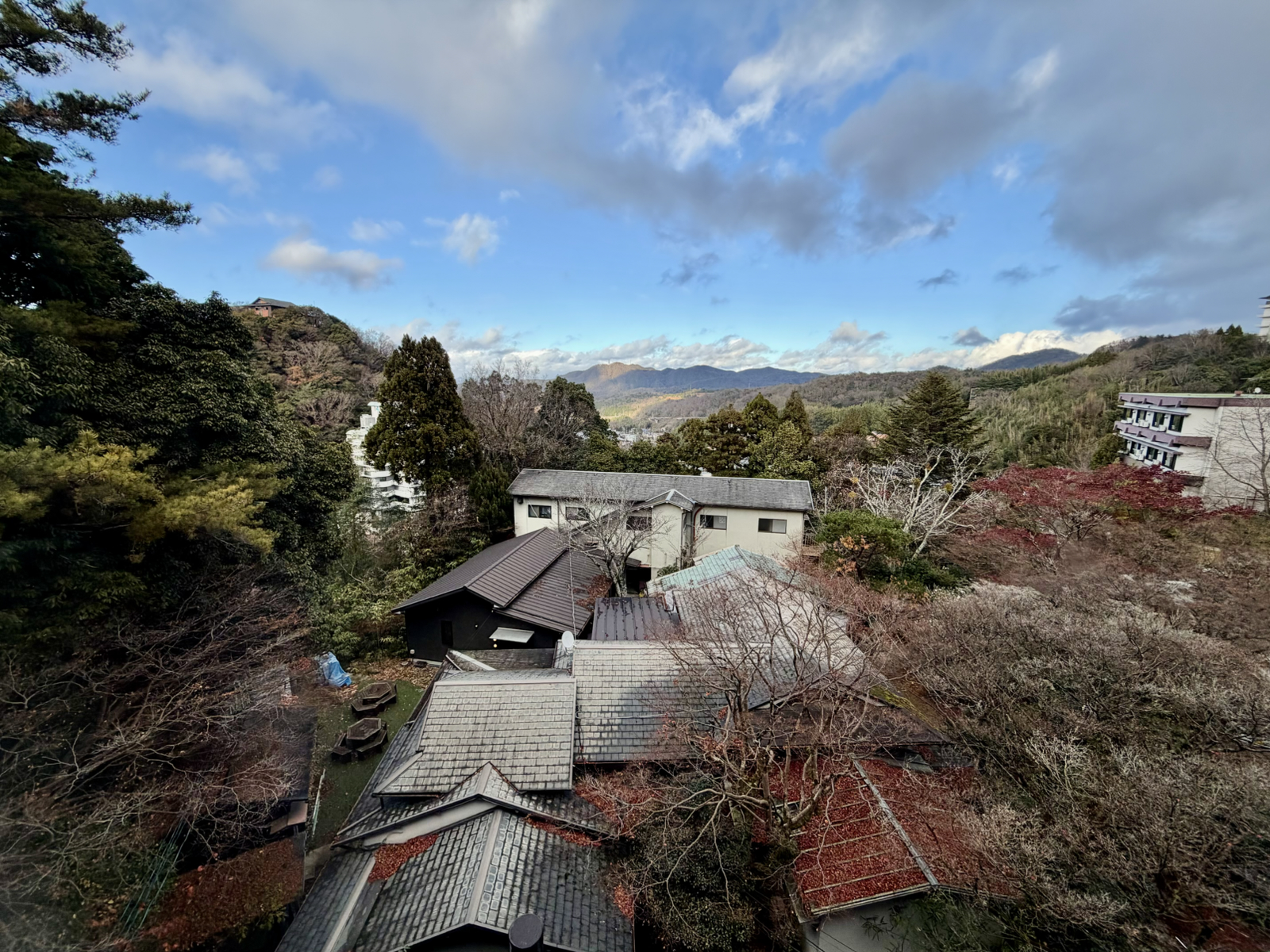
We’re staying in a traditional Japanese ryokan-style hotel, and our room is enormous and very comfy. The above shows the sitting/dining area, which features a low table with a sunken area below for feet. There’s also a large bedroom with one wall essentially a giant window with this view:
As nice as the room is we chose this place for the hot springs, and the hotel has several. There are two types of water in the baths – one clear and one yellow – each containing different minerals. Obviously photos are not permitted, so here’s one I found online showing the outdoor bath I boiled myself in earlier:

We’re up in the mountains and it’s very chilly here and when I was in the bath thick steam was rising from the water. I was the only person at the time and the water was so hot I wondered if it was even safe, but it was so luxurious I hardly cared…
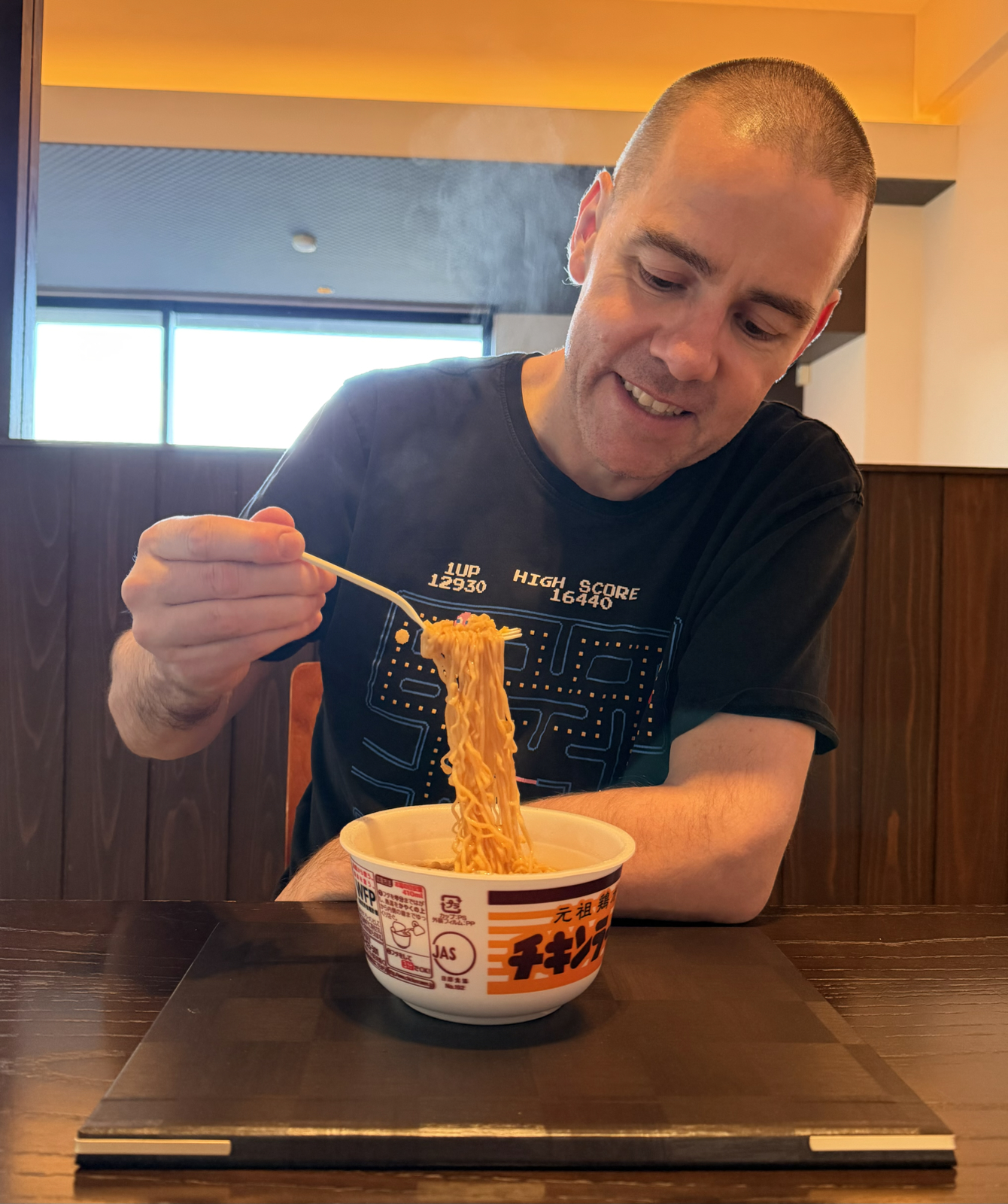
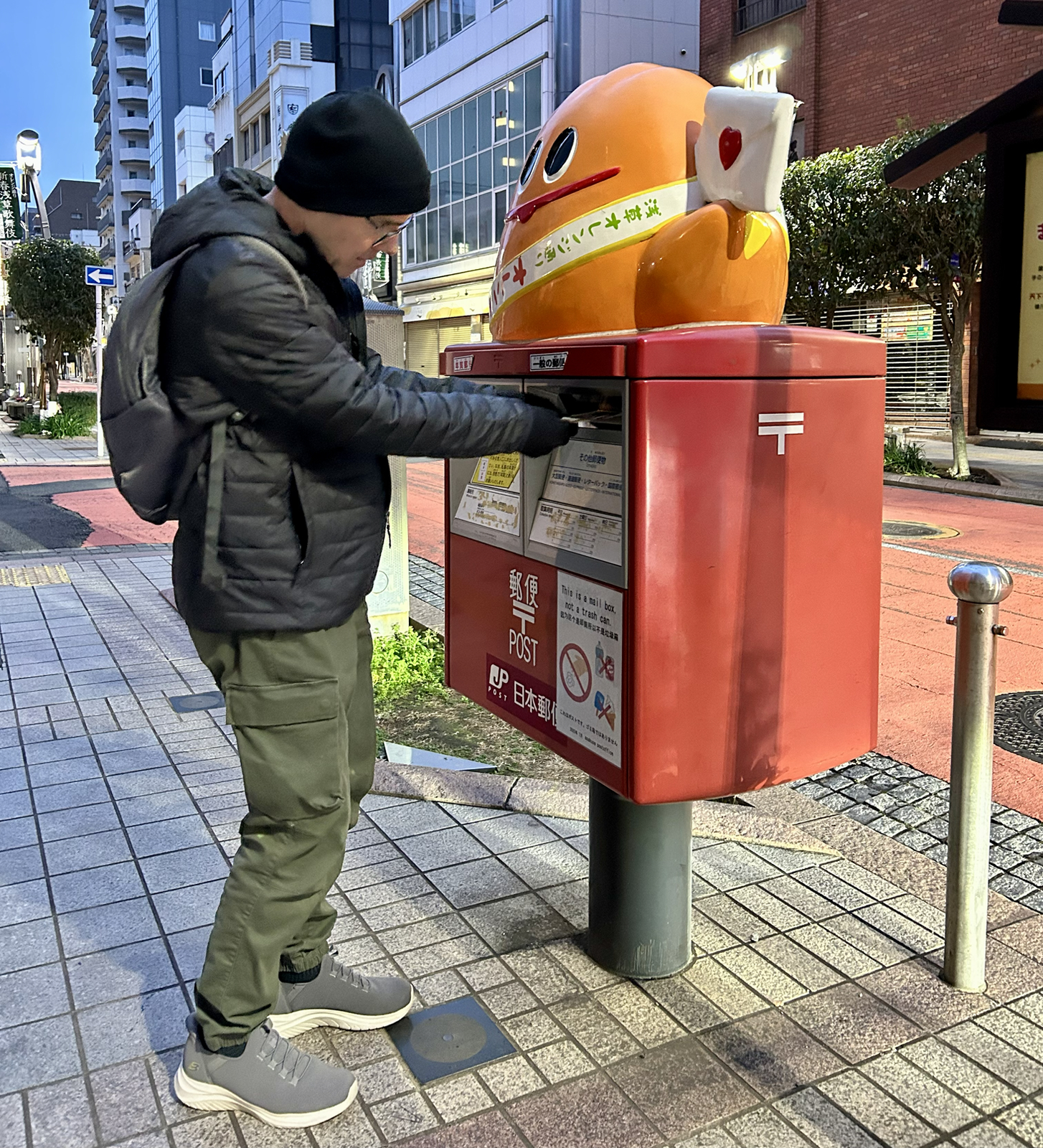
There’s more to say about Arima, and there’ll be even more to say tomorrow, but I’m half-boiled, sleepy, have dozens of postcards to stamp and address and there’s some good anime on the TV so I think I’ll sign off for now and leave the rest for the morrow…